









- Fujian Announces the First Batch of Provincial-Level Cross-Border E-Commerce Industrial Parks and Key Brands for CultivationNov 14, 2026View details
- Amazon Global Store Announces the Launch of the 2026 Black Friday Global Shopping SeasonNov 14, 2026View details
- CCTV.com Examines APEC’s Role in China’s Foreign TradeNov 12, 2026View details
- China’s Tariff Commission of the State Council Adjusts Additional Tariffs on U.S. Goods: 24% Tariff Suspended for Two MonthsNov 10, 2026View details
- APEC Shenzhen Spotlight: Cross-Border E-Commerce Orders Promote Asia-Pacific Trade and Economic CooperationNov 08, 2026View details
- China-Europe Railway Express and CIIE Hold Business Matchmaking Event, Focusing on Cross-Border E-commerce B2B ExportsNov 07, 2026View details
What capabilities and delivery boundaries should companies assess when evaluating AI+SEO optimization services?
When procuring AI+SEO optimization services, it is easy to be persuaded by claims such as “keyword rankings,” “AI-generated content at scale,” and “fully automated site optimization.” However, for businesses genuinely responsible for lead generation, the issue is never simply whether a few keywords can rank. It is whether the service provider can understand the business, access real data, improve the website foundation, and gradually convert traffic into actionable inquiries or orders.
This is especially relevant for export manufacturers, cross-border e-commerce businesses, and brands expanding overseas, which face multilingual pages, varying search behaviors across markets, complex product specifications, and lengthy decision-making processes. When evaluating AI+SEO optimization services, procurement teams should place “capability verification” and “delivery boundaries” on the same checklist: the former determines whether the service has a foundation for growth, while the latter determines whether the project is controllable and acceptable upon delivery.
First clarify: What exactly is AI responsible for in the project?
“Using AI” is not, in itself, a service capability. During procurement discussions, it is advisable to ask the service provider to explain the specific stages where AI is involved: Is it used for keyword clustering, competitor page analysis, initial content drafting, technical issue identification, or page-element testing and data attribution? Different applications require different levels of staff expertise, data quality, and review mechanisms.
Teams that emphasize only “automatically generating massive volumes of content” but cannot explain their methods for content review, fact-checking, and brand tone control warrant caution. For businesses involving industrial products, medical devices, and customized equipment, AI-generated errors in specifications, certifications, or application conditions can not only affect search quality but also damage customer trust. A more reliable mechanism should be “AI improves processing efficiency, while industry professionals ensure professional accuracy,” with the company retaining review authority over key pages.
Another question to ask is: What data does the service provider use to make decisions? If analysis is limited to generic keyword tools and public search results, strategies can easily become homogenized. More mature services should be able to combine the company’s existing website data, search query reports, lead sources, target markets, and sales feedback to identify which terms drive visits and which topics genuinely generate business opportunities.
The website’s technical foundation determines whether SEO recommendations can actually be implemented
The challenge in many SEO projects lies not in strategy, but in execution. A service provider may submit a diagnostic report dozens of pages long, while the website remains impossible to modify because of backend permissions, template limitations, or a disorganized multilingual structure. In the end, all that remains is “recommendations delivered.” Therefore, before procurement, companies should verify whether the provider has the ability to coordinate website development, frontend development, content, and SEO.
- Can it identify and address foundational issues involving indexing, crawling, redirects, duplicate pages, sitemaps, and structured data?
- Will it assess page speed, mobile experience, URL rules, internal-linking structure, and indexing risks associated with product filter pages?
- For website redesigns or new websites, can it complete a migration checklist and SEO acceptance testing before launch rather than remedying issues afterward?
- Does it clearly specify which changes will be implemented by the service provider and which require cooperation from the company’s IT team, website-building platform, or third parties?
For overseas standalone websites, multilingual support is not simply a matter of copying and translating pages. hreflang annotations, the relationship between language and country versions, localized URLs, and expressions of currency and units can all affect search engine understanding and user engagement. If a company plans to cover multiple regional markets simultaneously, it should include the multilingual technical solution as an evaluation item for AI+SEO optimization services rather than leaving it to the content stage.
Content deliverables should not be accepted based on “number of articles” alone
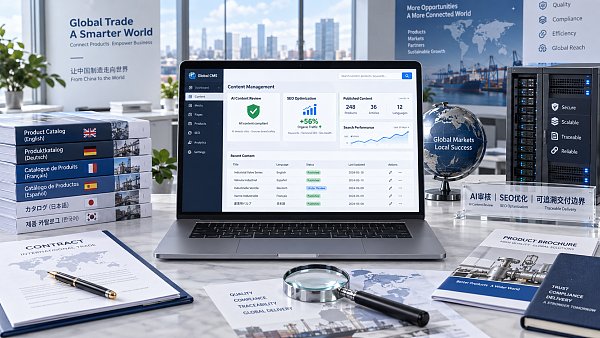
Content is an important asset for long-term SEO growth, yet the most common vague wording in procurement contracts is precisely “publishing a certain number of articles each month.” The number of articles is easy to count, but it is difficult to judge from quantity whether they cover users’ real search intent. It is advisable to require the service provider to provide a topic map during the launch phase: how core product terms, application-scenario terms, solution-comparison terms, purchase-decision terms, and question-answer terms will each be structured; which pages will be responsible for lead generation; and which pages will be responsible for building trust.
For B2B businesses, for example, buyers may not directly search for a specific model. They may first search for the temperature resistance range of a material, equipment selection methods, or common issues with a particular process. Only content that covers such questions has an opportunity to enter the customer’s view at an early stage; product pages, case-study pages, and inquiry pages must then support subsequent conversions. The service provider should explain how content and landing pages will be internally linked, how calls to action will be set up, and how the company will provide product information and review feedback.
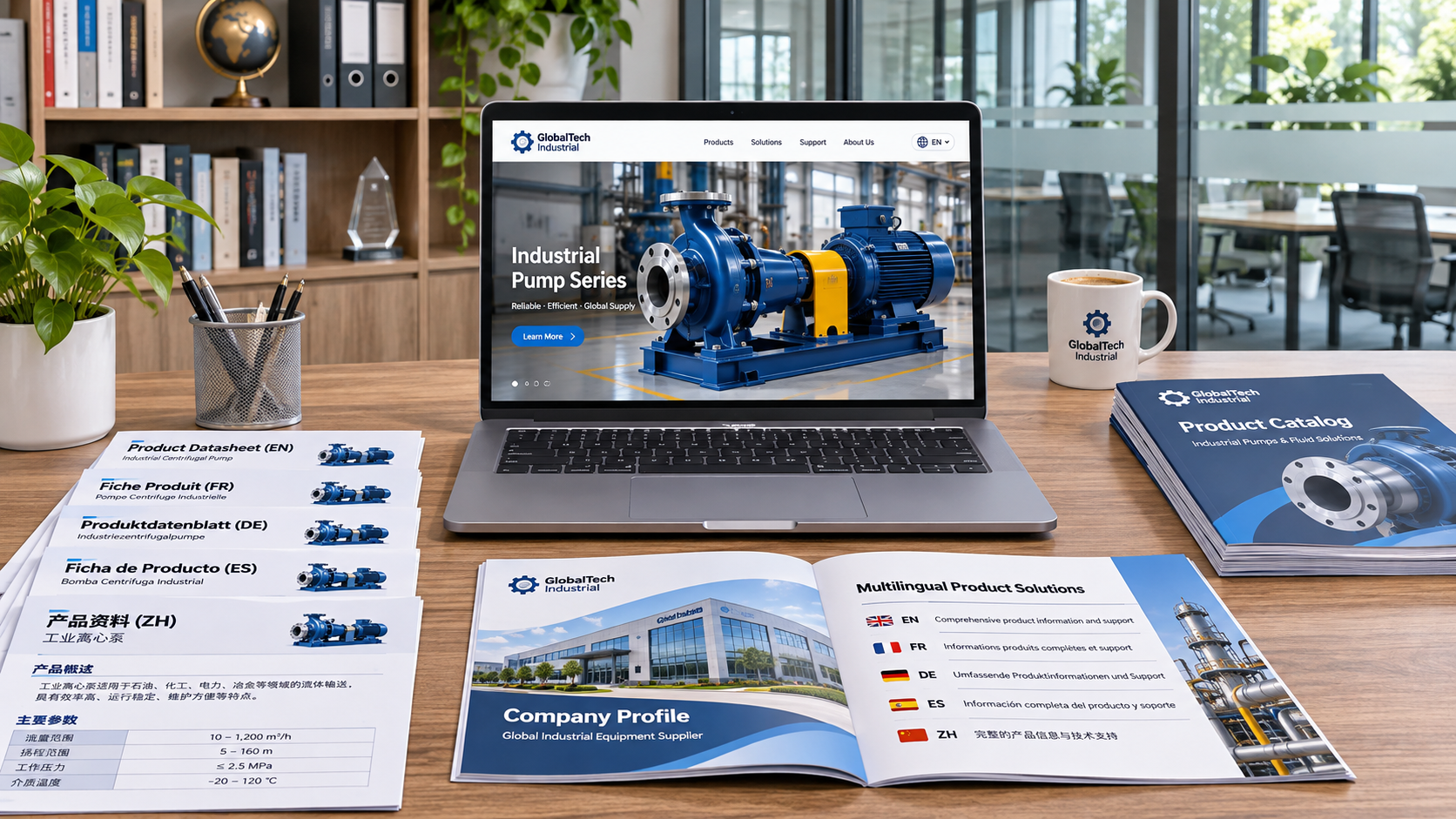
When a business involves 249 languages or multi-regional websites, translation quality and ongoing maintenance are also part of the delivery boundaries. For example, the Yiyingbao AI Translation Center supports multilingual website generation, dynamic content synchronization, and human-AI collaborative editing, while adapting to local measurement units, date formats, and regional terminology. The purchaser still needs to confirm: which languages will receive initial system translation, which key pages require human proofreading, and how newly added products or source-content updates will be synchronized, so as to avoid a situation where “multiple languages are available at launch, but no one maintains them afterward.”
Replace “ranking guarantees” with traceable process metrics
Search rankings are affected by factors including website history, competitive intensity, content quality, search engine algorithms, and market seasonality. Any fixed ranking guarantee detached from prerequisite conditions should be treated with caution. Rather than looking only at the positions of a few terms, procurement teams should require a set of traceable monthly or quarterly reports.
At a minimum, reports should be able to distinguish between branded and non-branded terms; organic traffic from different country or language markets; impressions and clicks for key pages; index coverage; content publishing and technical-fix progress; and form submissions, calls, WhatsApp messages, or other conversion leads generated by organic traffic. For companies with a CRM, the ideal approach is to further review lead quality: which topics generated visits that ultimately entered the quotation or transaction stage.
The key here is not how polished the reports look, but whether the data definitions are transparent. The company should retain ownership of its website, Google Search Console, analytics tools, and advertising accounts whenever possible; the service provider may receive operational access, but core data should not be allowed to accumulate long-term in the provider’s private accounts.
Five boundaries that should be specified in the contract
An executable AI+SEO optimization service agreement should generally clearly state the following: what materials and permissions the company must provide at project launch; what deliverables the service provider will submit during each cycle; review time limits for content and technical changes; how delays caused by third-party platforms, website systems, or internal company approvals will be handled; and how accounts, content, strategy documents, and completed configurations will be handed over after the project ends.
In addition, the strategic boundaries for backlinks or digital PR should be confirmed. If a service provider presents “number of backlinks” as its core selling point but does not explain the sources, relevance, and quality controls, there is a risk of introducing low-quality links. A reliable approach generally places greater emphasis on industry-relevant media, high-quality content distribution, and natural citations rather than short-term volume building.
Validate collaboration through a trial run rather than relying only on a proposal presentation
Before making a procurement decision, a company can select one product line, one language market, or a group of key pages for a small-scale trial run. What should be observed is not only traffic changes, but also whether the issues identified by the service provider are accurate, whether its communication demonstrates an understanding of the business, whether changes can go live on time, and whether reports can explain the reasons behind the data. SEO is ongoing collaboration, not a one-time delivery; the ability to work smoothly with the company’s marketing, sales, and technical teams is often more valuable than the terminology in a presentation.
Yiyingbao provides integrated services including intelligent website development, SEO, advertising, and social media for export businesses, manufacturing factories, and cross-border brands. For purchasers, when selecting this type of integrated service, it is particularly important to confirm the responsibilities for coordination between each module: whether website development reserves a structure for search visibility, whether high-value pages identified through SEO can be included in advertising tests, and whether advertising search terms can inform organic content. Only when boundaries are clear, data is visible, and actions are acceptable upon delivery can AI become an aid in the growth process rather than a layer of difficult-to-verify packaging.
Related Articles
 What Customization Requirements Can a Global Website-Building SaaS Platform Meet?
 How Can You Tell Whether a Service Provider Can Improve Your Foreign Trade Website’s Conversion Rate?
 How can you evaluate the content quality of a Q&A content creation platform?

Related Products
 Yiyingbao SaaS Intelligent Website Building and Marketing SystemYiyingbao SaaS Intelligent Website Building and Marketing System, AI-powered no-code website building, rapid creation of multilingual B2B international websites in 10 minutes, global server acceleration, AI-powered SEO optimization, helping businesses connect efficiently with global markets. The perfect integration of technology and operation makes building an international trade website remarkably simple
 AI+SEM Intelligent Advertising Marketing SystemAI+SEM drives intelligent ad creation, empowering full-funnel precision advertising marketing. The system automatically generates weekly/monthly reports, AI recommends keywords and target countries, monitors core metrics in real-time with intelligent alerts, and enables one-click high-conversion ad solutions to help quickly acquire customers and improve ROI.
 AI+SEO Dual-Engine System Optimization ServicesYiyingbao’s AI+SEO dual-engine optimization system helps foreign trade enterprises acquire high-quality organic traffic through AI-powered keyword research, content generation, and comprehensive technical optimization, significantly improving search rankings and conversion rates.
 AI+SNS Social Media Marketing SystemYingbao AI+SNS Social Media Marketing System - Precision social capture for the social media era. Supports one-click content synchronization across major platforms like Facebook and LinkedIn. AI intelligently rewrites posts for enhanced relevance. 24/7 AI customer service and user profiling analysis empower businesses to efficiently expand into global markets.
 AI+SEO营销解决方案易营宝AI+SEO营销解决方案,通过AI批量写作、智能生成TDK、精准关键词扩词等功能,全面优化网站SEO效果,提升流量与转化率。助力企业构建高效智能网站新生态。
 AI+SEM Advertising Marketing SolutionsAI+SEM Advertising Marketing Solution leverages AI technology to deeply empower SEM ad campaigns. It automatically generates weekly/monthly reports using AI, presenting account data across multiple dimensions for comprehensive insights into campaign performance and trends. The system precisely recommends keywords and target countries, intelligently generates high-conversion ad copy, and enables one-click activation of efficient campaign plans to help businesses rapidly acquire customers. Simultaneously, it monitors core metrics in real time, intelligently identifies abnormal fluctuations, and issues timely alerts to ensure stable, high-return advertising results.
 Domain Name ServicesEasyWin provides professional domain name services, including intelligent queries, one-stop registration, brand protection, and full lifecycle management, helping businesses build a digital brand image.
 EasyOperate B2C Cross-Border E-Commerce Platform & Independent WebsiteEasyStore B2C Cross-border E-commerce Independent Store is an intelligent website building and cross-border e-commerce integrated solution independently developed by EasyStore Information Technology (Beijing) Co., Ltd. The system is specially designed for small and medium-sized as well as large export enterprises, integrating 'website building, operation, marketing, advertising, and conversion' into one, helping enterprises quickly establish cross-border e-commerce independent stores to achieve brand globalization and global sales growth.
The platform supports multiple languages, multiple currencies, and multi-channel marketing, with built-in AI intelligent translation and SEO optimization systems, suitable for mainstream markets such as Southeast Asia, Europe and America, Latin America, and the Middle East, assisting Chinese manufacturing enterprises in efficiently deploying international e-commerce strategies. SSL证书易营宝提供专业SSL安全证书服务,包括单域名和泛域名证书,确保网站数据传输加密、身份验证和完整性保护,助力企业建立安全可信的在线业务环境。









