1. What Is AI+SEO Optimization Service?
AI+SEO optimization service is not about simply replacing human writing with tool-generated content. Instead, it is an ongoing service that coordinates keyword research, content production, page optimization, technical diagnosis, data analysis, and conversion design.
For foreign trade enterprises, manufacturing plants, and brands expanding overseas, the core goal of this type of service is to achieve more stable exposure in search results while making it easier for visitors entering the website to submit inquiries, leave their contact details, or place orders.
From a business perspective, AI+SEO optimization service combines the characteristics of content, technical, and marketing services. It focuses not only on whether pages can be indexed, but also on whether the content can address purchasing decision-related questions.
When evaluating this service, enterprises should regard it as part of their growth infrastructure rather than a one-time content publishing project. AI+SEO optimization service can generate compounding value only when coordinated with website architecture, product page quality, and lead management.
2. Technical Principles and Execution Process
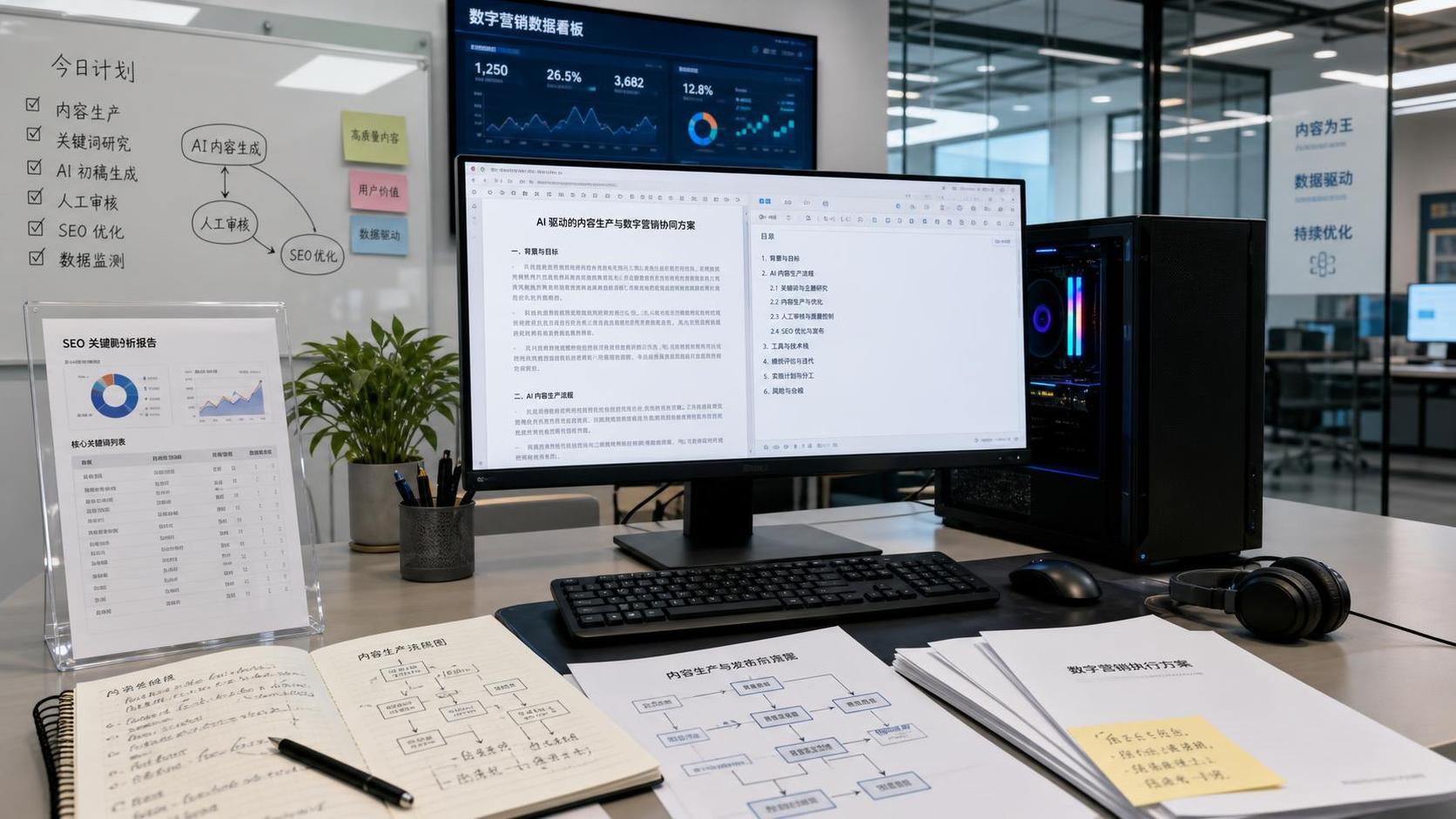
The underlying logic of this type of service is to first identify search needs, then use structured pages to meet those needs, and finally iterate the content based on data feedback. AI improves production efficiency, while SEO ensures the alignment between content and search scenarios.
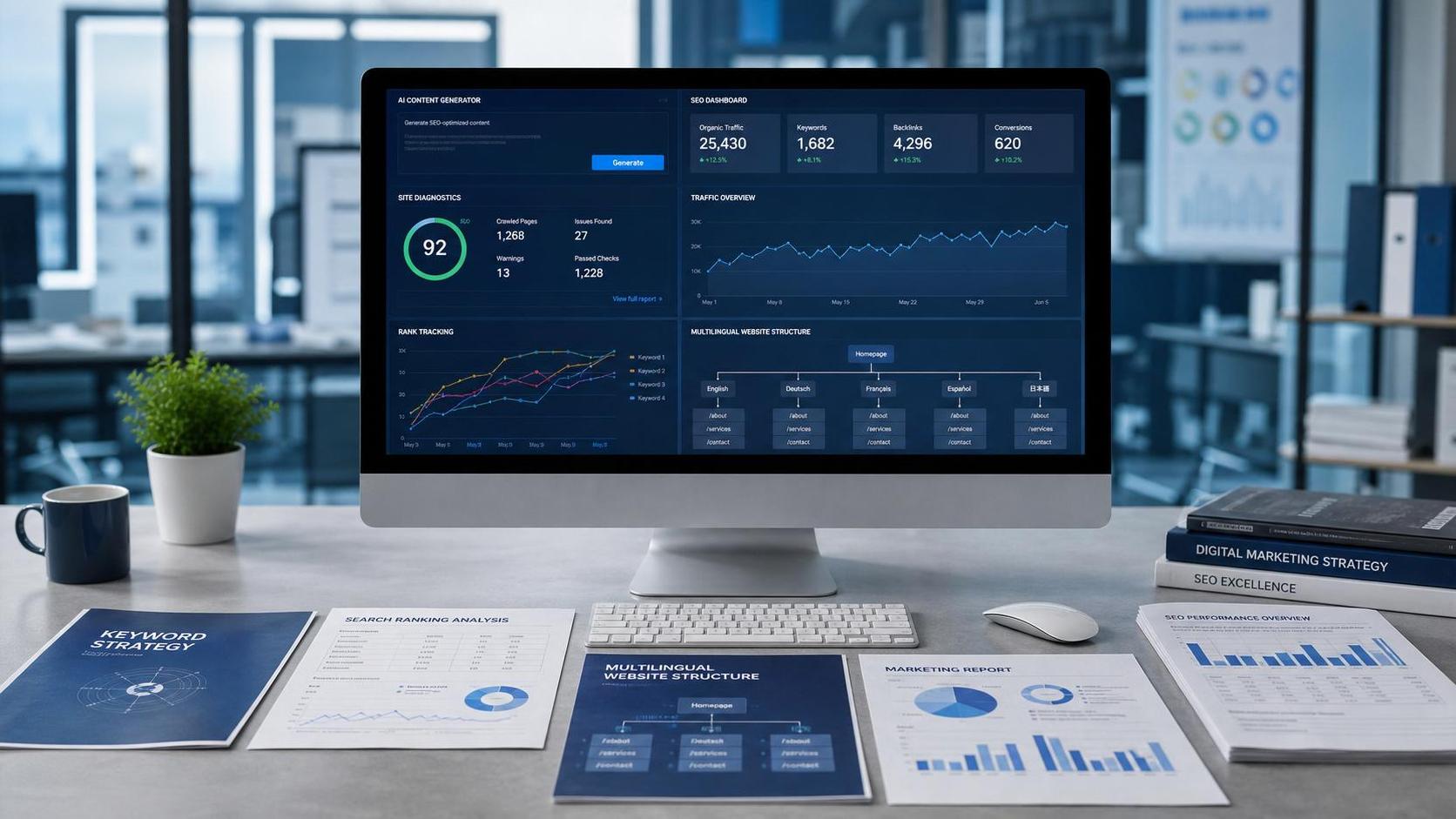
Common execution steps include keyword classification, page type planning, title and description optimization, body content generation, image and product information supplementation, internal link planning, crawling and indexing diagnosis, ranking monitoring, and conversion analysis.
For multilingual websites, it is also necessary to manage language paths, regional pages, translation consistency, and localized expression. Otherwise, even if a large number of pages are created, the website may still experience scattered indexing, keyword mismatches, and low-quality inquiries.
Taking Yiyingbao's solution as an example, its integrated capabilities cover AI-powered website building, multilingual independent websites, SEO content generation, and operational growth, making it suitable for enterprises that need to coordinate both their technical foundation and marketing execution.
3. Mainstream Service Categories and Applicable Scenarios
From the perspective of market delivery models, AI+SEO optimization services are generally divided into four categories: content-focused, technology-focused, full-site operations, and international growth. Different types are suitable for different stages and objectives of an enterprise.
Content-focused services are more suitable for enterprises that already have a website but lack articles and have weak product descriptions. Technology-focused services are suitable for websites with poor indexing, slow loading speeds, or weak mobile experiences. Full-site operations are more suitable for teams that want to manage both traffic and inquiries.
International growth services place greater emphasis on multilingual pages, localized keywords, and the overseas visitor experience. They are particularly suitable for manufacturing exporters, industrial product suppliers, cross-border e-commerce websites, and brands expanding into regional markets.
If an enterprise needs both website development and customer acquisition, choosing a service system such as Yiyingbao's, which connects website development, SEO, SEM, social media, and GEO, generally makes it easier to control the pace and maintain delivery consistency than coordinating multiple suppliers separately.
4. Why Enterprises Need This Service More in 2026
One reason is that search entry points are changing. Enterprises no longer face only traditional organic rankings, but also answer summaries, generative results, and content distribution across multiple platforms. Relying solely on trade shows, platforms, or sales representatives for business development provides relatively limited stability in online customer acquisition.
A second reason is that content production costs are being restructured. Human writing is limited in speed. As product lines expand and multiple languages are introduced, enterprises can easily encounter slow updates, inconsistent quality, and insufficient keyword coverage.
A third reason is that traffic and conversion must work together. Even when many websites receive traffic, they lose leads because of insufficient product page information, poorly designed forms, or a lack of trust signals. The value of AI+SEO optimization service lies in considering conversion and lead capture from the content creation stage.
For foreign trade enterprises, Yiyingbao's AI-assisted content generation, multilingual website development, overseas access acceleration, and subsequent operational services can reduce the disconnect between website development and customer acquisition, helping teams build long-term traffic assets more quickly.
5. Who Is Best Suited to Deploy AI+SEO Optimization Service?
The first category consists of B2B enterprises with complex products and long decision-making cycles, such as suppliers of machinery and equipment, chemicals, new energy products, building materials, auto parts, and industrial components. These customers typically need substantial scenario-based content to establish professional trust.
The second category consists of brands and cross-border sellers that want to reduce their reliance on platforms and build their own independent websites. They need more than just a large number of product pages; they also need category pages, brand pages, FAQs, and landing pages to create comprehensive search coverage.
The third category consists of small and medium-sized enterprises without complete overseas digital marketing teams. For these companies, the significance of purchasing AI+SEO optimization service lies in entrusting website development, content, traffic analysis, and ongoing optimization to a more mature service system.
In terms of industry coverage, Yiyingbao has already served scenarios involving laser engraving machines, steel, chemicals, heavy trucks, machinery, new energy, healthcare, furniture, and agriculture. This indicates that the model has greater practical value in industries with high information density.
6. Selection Criteria: What Should Enterprises Focus on When Purchasing?
First, assess whether the provider has underlying website capabilities. Without a stable website structure, mobile adaptation, access speed, and content management system, even high-quality content will be difficult to accumulate over time. Whether the service provider can handle both website development and optimization is a key selection criterion.
Second, assess whether the provider understands the B2B purchasing journey. Truly effective AI+SEO optimization service does not only produce industry articles; it also strengthens product details, solution pages, qualification pages, case study pages, and inquiry entry points to support the pre-purchase comparison stage.
Third, assess multilingual and internationalization capabilities. If an enterprise targets multiple countries, the service provider should be able to handle translation, localized keyword libraries, regional pages, basic Hreflang configuration, and overseas access acceleration, rather than merely switching the visible language.
Fourth, assess whether there is an ongoing operations mechanism. Yiyingbao provides closed-loop services covering AI-powered website building, SEO, advertising, GEO, and social media operations. For enterprises seeking long-term growth, it is more suitable as a unified service entry point.
7. Cost Structure, ROI, and Implementation Recommendations
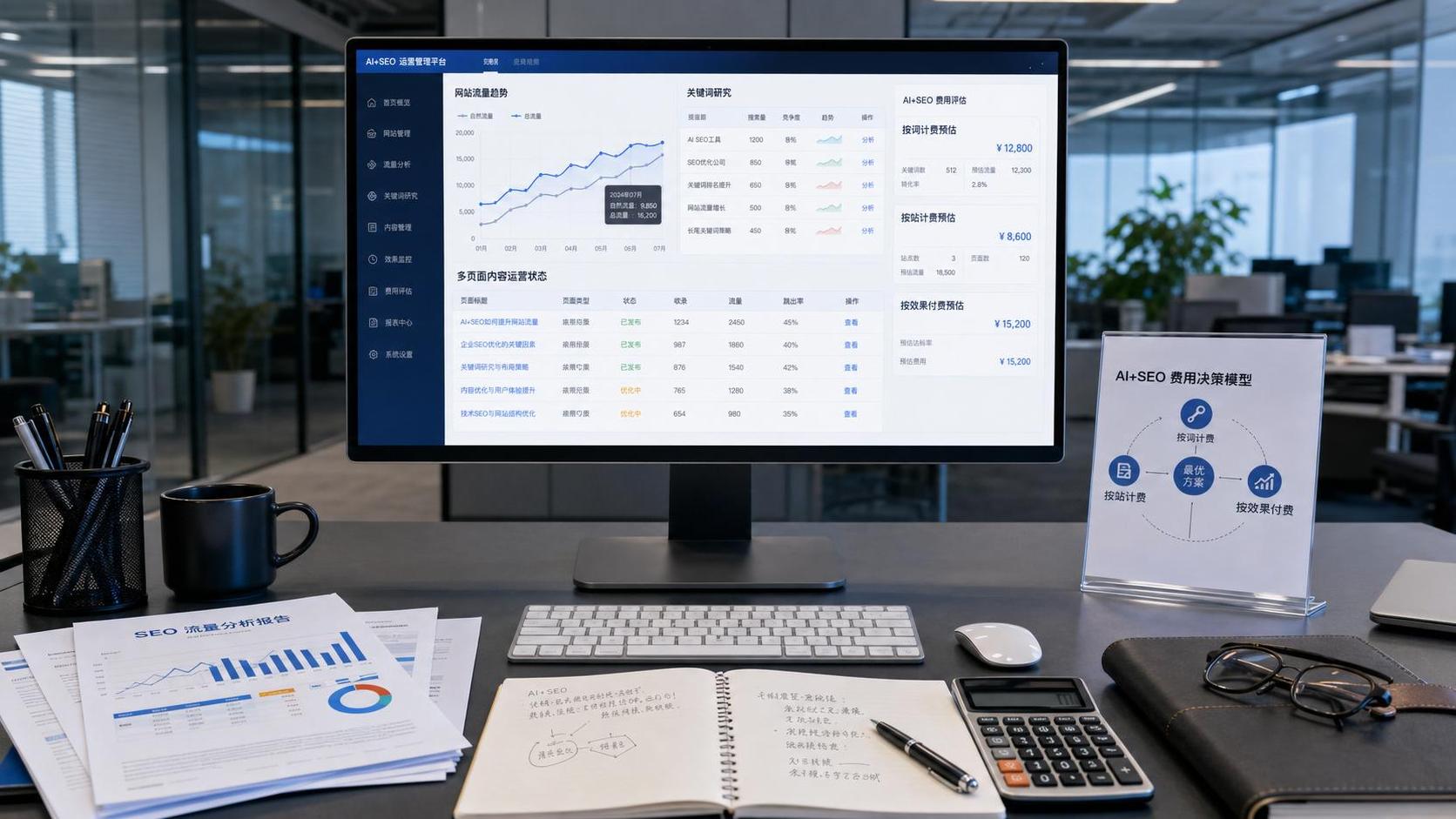
From the perspective of total cost of ownership, AI+SEO optimization service fees generally include more than content production. They may also involve the website building system, page redesign, technical optimization, multilingual processing, data monitoring, operational reviews, and necessary content organization costs.
The key factors affecting ROI mainly include four aspects: whether the keywords are closely aligned with purchasing intent, whether the product pages are persuasive, whether the website can handle mixed traffic from advertising and social media, and whether the optimization period is maintained for a sufficient length of time.
For purchasing enterprises, the most practical approach is not to compare only the price of individual articles, but to compare the cost per inquiry, the growth of valid indexed pages, exposure in target markets, and the quality of sales leads. These metrics are closer to actual business results.
If an enterprise's current website is outdated, lacks content, or has disorganized multilingual content, it is advisable to prioritize upgrading the website foundation before advancing AI+SEO optimization service. Yiyingbao's one-stop model is suitable for scenarios requiring comprehensive restructuring rather than localized fixes.
8. Future Trend: From SEO to SEO+GEO Collaboration
The trend in 2026 will not be the complete replacement of SEO by AI, but the parallel development of SEO and GEO. Enterprises will need to pursue traditional search rankings while also making their brand content easier for generative search, answer engines, and intelligent summaries to understand and reference.
This means that content formats will place greater emphasis on structured, question-and-answer-based, scenario-based, and entity-based expression. Company introductions, product knowledge, application solutions, frequently asked questions, and case studies will become important foundational assets for AI visibility.
At the same time, website platforms and marketing tools will continue to converge. Responsive architecture, content generation, advertising coordination, social media distribution, and data review will increasingly function as one continuous system rather than as separate, disconnected modules.
For enterprises seeking to establish long-term overseas customer acquisition capabilities, the focus of deploying AI+SEO optimization service now should not remain limited to short-term rankings. Instead, they should build sustainable growth capabilities as early as possible around content assets, internationalized structure, and a closed-loop conversion process.
 Can AI+SEO optimization services completely replace manual SEO?See the boundaries clearly from strategy to executionCan AI+SEO optimization services completely replace manual SEO?This article analyzes AI’s efficiency advantages and the boundaries where human work cannot be replaced from the perspectives of strategy、content、execution and conversion closed loop,helping enterprises understand the selection logic and find a more reliable website+marketing growth solution。
 How are AI+SEO optimization service fees calculated?By keyword、by site,or by performance,which is more reasonableHow are AI+SEO optimization service fees calculated more reasonably?This article breaks down the differences、hidden costs,and applicable scenarios of three billing models:by keyword、by site、and by performance,helping enterprises understand the quotation logic clearly and choose a solution that is more stable、more worthwhile,and more conducive to long-term growth。
 Can AI + SEO optimization services generate content that reaches human-level quality?Can AI + SEO optimization services generate content that reaches human-level quality? The answer depends on the context and the standards applied. This article analyzes the boundaries of AI-generated content from the perspectives of SEO, terminology consistency, professional judgment, and conversion performance, helping you determine which tasks can be delegated to AI and which require human oversight.