









- Can the average annual growth rate reflect real opportunities in overseas markets?Oct 07, 2026View details
- Which customer acquisition channels will be affected by cross-border marketing trends in 2026?Sep 06, 2026View details
- Which homogenization risks should be considered in an analysis of the AI-powered website building industry?Aug 30, 2026View details
- How Will AI Marketing Trends 2026 Change Advertising Budget AllocationAug 28, 2026View details
- Is the EV SSL certificate market shrinking or upgrading? How should companies assess certificate procurement?Aug 11, 2026View details
- Why the old AMP SEO 2020 practices no longer work and what has changed in current optimization prioritiesAug 02, 2026View details
Which extensibility capabilities should be prioritized when comparing website building systems?
When comparing website-building systems, what is most easily underestimated is not the number of templates or the first-year price, but whether the system can accommodate continuously emerging needs after the website goes live. In the initial stage, a website may only need to display products and contact information; once promotion begins, it often needs to integrate forms, CRM, ad conversion tracking, inquiry distribution, multilingual content, product catalogs, or data analytics. If the platform lacks extension interfaces at this point, the configuration costs seemingly saved in the early stage may turn into repeated data entry, data gaps, and redesign risks.
The key to assessing extensibility is not the length of the feature list, but confirming four things: whether it can connect to external systems, support business rules, retain and migrate data, and manage content reliably across multiple markets. Website-building system comparisons should focus on these four areas, then weigh them against current business needs and clear requirements for the next one to two years.
First confirm: does extensibility mean “installing plugins” or “integrating business processes”?
Many systems use plugin marketplaces as their primary proof of extensibility, but the number of plugins does not equal usability. During evaluation, two types of needs should first be distinguished: one is page-level extensions, such as carousels, pop-ups, and review components; the other is business-level extensions, such as inquiry synchronization, customer tag feedback, inventory status updates, order data transfer, and marketing attribution. The former usually has lower replacement costs, while unstable integration of the latter can directly affect sales and operational processes.
Suppliers or internal testing environments can be asked to clearly answer whether the system provides standard APIs, Webhooks, and data export mechanisms, and whether it allows business data to be transmitted through custom fields. Systems that only allow manual import and export in the backend often create new manual handoff points when dealing with high-frequency forms, advertising leads, or cross-departmental collaboration.
Interface capabilities depend on the “scope of access”
Interfaces are not simply a matter of whether they exist or not. It is necessary to further confirm which objects can be read and written: whether products, pages, media assets, form leads, users, orders, language versions, and SEO fields can all be accessed; and whether the interface supports pagination, filtering, incremental updates, and permission control. If it can only read public page data but cannot write customer status or receive form events, it offers limited support for marketing and sales coordination.
- After a form is submitted, can it be pushed in real time to a CRM or email automation tool;
- Can advertising landing pages deploy conversion code and transmit custom event parameters;
- When products, inventory, or prices change, can they be synchronously updated by external systems;
- Can leads be recorded by source, language, and product line, avoiding the need to view only a generic message later;
- When an interface call fails, are there logs, retry mechanisms, or traceable error messages?
The last item is often overlooked during system selection. A system that can “theoretically connect” does not necessarily mean it is easy to maintain after launch. Without event logs and failure records, issues can only be investigated one by one across multiple systems, which is especially unfavorable for rapid troubleshooting during advertising campaigns.

Custom fields and content models determine whether future redesigns will be constrained
When a company has a simple product structure, fixed page fields such as “title, body text, and images” are sufficient. However, manufacturing products, cross-border goods, and multilingual materials usually involve more complex content relationships: the same product may have specification parameters, downloadable files, application industries, certification documents, accessories, FAQs, and related products. This information must not only be displayed on product detail pages, but may also be used for filtering, on-site search, structured data, or advertising landing pages.
Therefore, website-building system comparisons should not only demonstrate the page editor, but also test whether the content model can be configured. Ideally, business personnel can add fields, set field types, define required rules, and reuse fields across different page templates; technical personnel can control field naming, calling methods, and data validation. If every new parameter module requires copying a page or modifying the underlying template, content will quickly become unmanageable as it expands.
Multilingual capabilities cannot be judged solely by whether languages can be switched
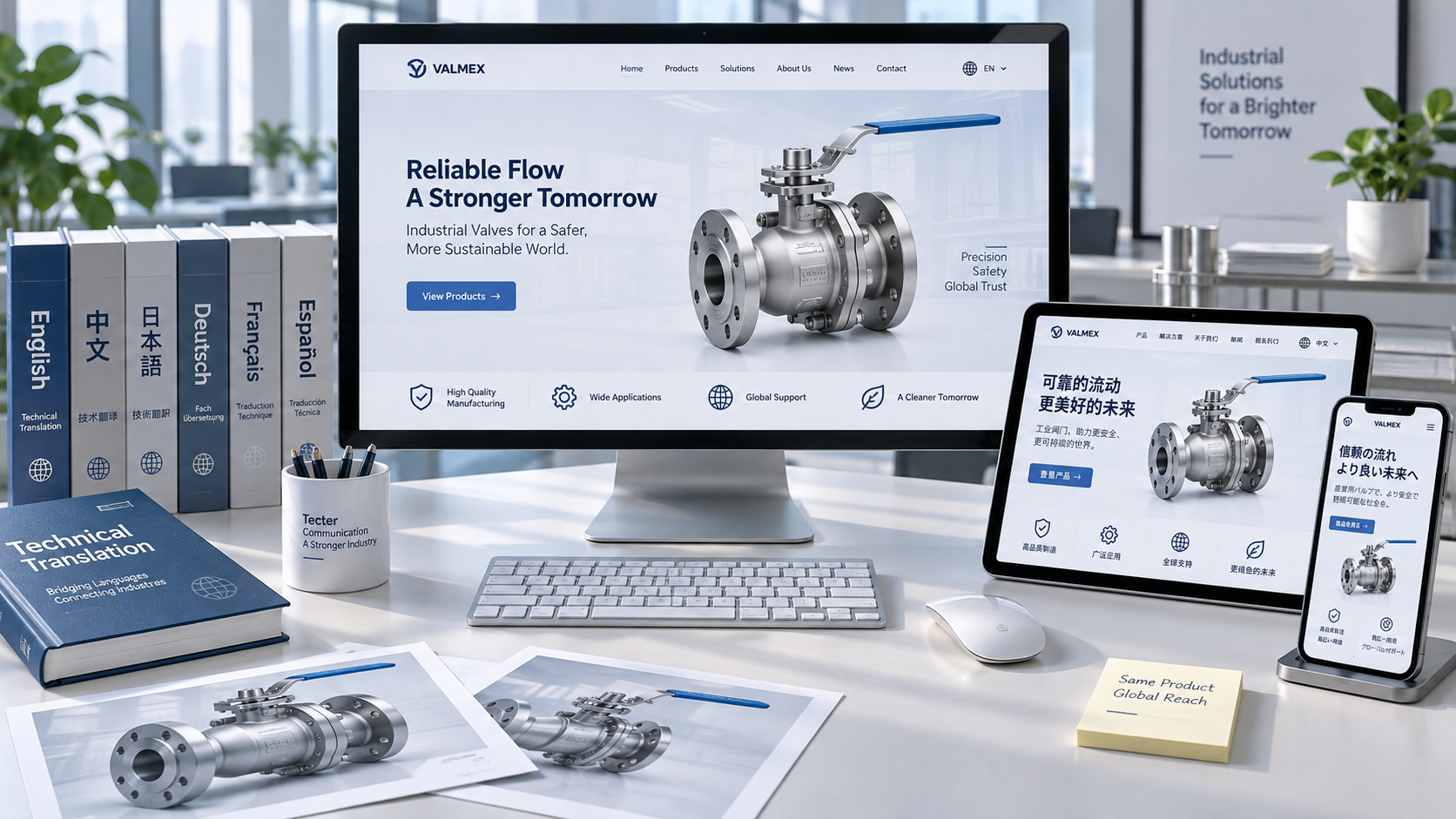
For websites targeting overseas markets, language expansion often involves content, SEO, and conversion processes. Simple browser translation or full-site duplication can only solve reading issues; they cannot address content differences across markets. For example, English and German pages may differ in title length, product selling points, contact information, form fields, and compliance notices; some pages may also need to display different products or downloadable materials depending on the region.
When evaluating multilingual modules, check whether each language version can independently manage URLs, titles, descriptions, image alt text, and structured fields; whether the handling of untranslated pages can be controlled; and whether content relationships between languages are supported, rather than treating each language as a completely unrelated website. Translation update mechanisms should also be examined: after source-language parameters change, can the backend indicate which language versions require review, preventing outdated specifications from continuing to appear on overseas pages.
Data portability is the baseline for avoiding platform lock-in
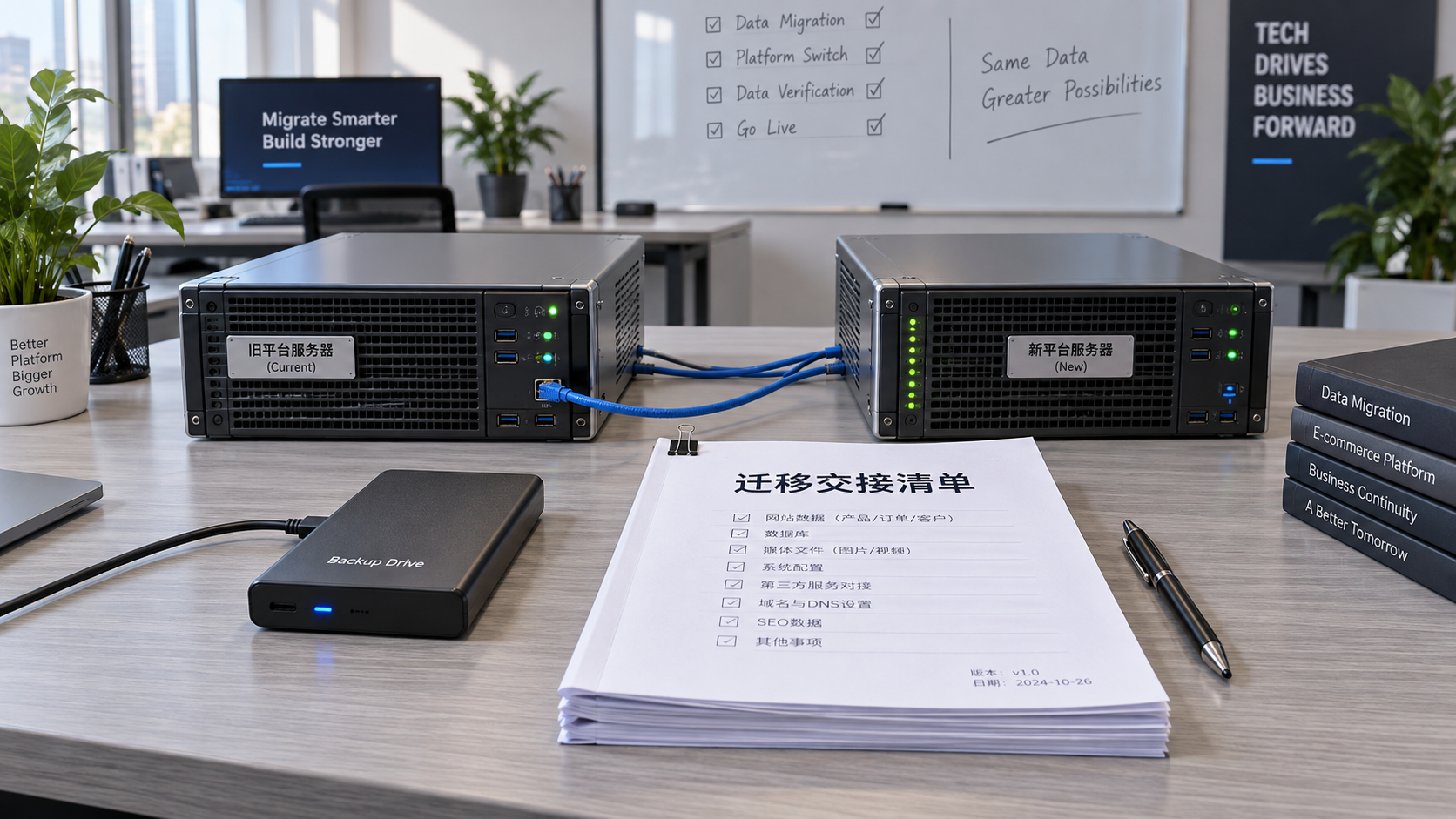
Few people plan to migrate when a system first goes live, but technical evaluations should still treat exit capability as a necessary condition. Portability is not merely exporting page text; it means being able to export content fields, media files, product data, URL mappings, form leads, SEO metadata, and necessary traffic and conversion data. Data export formats should be as clear as possible to facilitate later cleaning and import into other systems.
Particular attention should be paid to ownership and download methods for images and file assets. Some platforms allow page exports but do not allow bulk export of original media; others export content without relationships and historical paths, creating substantial rebuilding and redirection work after migration. For websites that rely on organic search traffic, old URL management, 301 redirects, and sitemap control should not be treated as additional features.
Using a real business workflow for acceptance testing is more effective than watching demonstrations
During the selection stage, prepare a small acceptance scenario instead of only browsing sample websites. For example, create a product page with specification fields and duplicate it into two language versions; set independent SEO information for the page; configure an inquiry form and source parameters; push the form data to a designated system; and finally modify a core field to check whether the frontend display, language versions, data interfaces, and logs respond synchronously.
Such tests can expose many issues that cannot be seen in demonstrations: whether fields can truly be reused, whether code can only be installed site-wide, whether publishing requires developer involvement, whether form events are lost, and whether language pages create duplicate content. For websites planning to conduct SEO, advertising campaigns, and social media traffic acquisition simultaneously, tracking-code isolation and permission control for different landing pages should also be tested, preventing a campaign page from affecting site-wide analytics later.
Ultimately, extensibility should match business complexity. Corporate showcase websites can prioritize editing efficiency and basic integrations; websites with extensive product catalogs, multilingual operations, or lead distribution workflows should prioritize validating content models, interface depth, data governance, and migration capabilities. Only by clarifying these questions during the website-building system comparison stage can a platform be prevented from becoming a new constraint just as the business begins to grow.
Related Articles

Related Products
 Yiyingbao SaaS Intelligent Website Building and Marketing SystemYiyingbao SaaS Intelligent Website Building and Marketing System, AI-powered no-code website building, rapid creation of multilingual B2B international websites in 10 minutes, global server acceleration, AI-powered SEO optimization, helping businesses connect efficiently with global markets. The perfect integration of technology and operation makes building an international trade website remarkably simple
 AI+SEM Intelligent Advertising Marketing SystemAI+SEM drives intelligent ad creation, empowering full-funnel precision advertising marketing. The system automatically generates weekly/monthly reports, AI recommends keywords and target countries, monitors core metrics in real-time with intelligent alerts, and enables one-click high-conversion ad solutions to help quickly acquire customers and improve ROI.
 AI+SEO Dual-Engine System Optimization ServicesYiyingbao’s AI+SEO dual-engine optimization system helps foreign trade enterprises acquire high-quality organic traffic through AI-powered keyword research, content generation, and comprehensive technical optimization, significantly improving search rankings and conversion rates.
 AI+SNS Social Media Marketing SystemYingbao AI+SNS Social Media Marketing System - Precision social capture for the social media era. Supports one-click content synchronization across major platforms like Facebook and LinkedIn. AI intelligently rewrites posts for enhanced relevance. 24/7 AI customer service and user profiling analysis empower businesses to efficiently expand into global markets.
 AI+SEO营销解决方案易营宝AI+SEO营销解决方案,通过AI批量写作、智能生成TDK、精准关键词扩词等功能,全面优化网站SEO效果,提升流量与转化率。助力企业构建高效智能网站新生态。
 AI+SEM Advertising Marketing SolutionsAI+SEM Advertising Marketing Solution leverages AI technology to deeply empower SEM ad campaigns. It automatically generates weekly/monthly reports using AI, presenting account data across multiple dimensions for comprehensive insights into campaign performance and trends. The system precisely recommends keywords and target countries, intelligently generates high-conversion ad copy, and enables one-click activation of efficient campaign plans to help businesses rapidly acquire customers. Simultaneously, it monitors core metrics in real time, intelligently identifies abnormal fluctuations, and issues timely alerts to ensure stable, high-return advertising results.
 Domain Name ServicesEasyWin provides professional domain name services, including intelligent queries, one-stop registration, brand protection, and full lifecycle management, helping businesses build a digital brand image.
 EasyOperate B2C Cross-Border E-Commerce Platform & Independent WebsiteEasyStore B2C Cross-border E-commerce Independent Store is an intelligent website building and cross-border e-commerce integrated solution independently developed by EasyStore Information Technology (Beijing) Co., Ltd. The system is specially designed for small and medium-sized as well as large export enterprises, integrating 'website building, operation, marketing, advertising, and conversion' into one, helping enterprises quickly establish cross-border e-commerce independent stores to achieve brand globalization and global sales growth.
The platform supports multiple languages, multiple currencies, and multi-channel marketing, with built-in AI intelligent translation and SEO optimization systems, suitable for mainstream markets such as Southeast Asia, Europe and America, Latin America, and the Middle East, assisting Chinese manufacturing enterprises in efficiently deploying international e-commerce strategies. SSL证书易营宝提供专业SSL安全证书服务,包括单域名和泛域名证书,确保网站数据传输加密、身份验证和完整性保护,助力企业建立安全可信的在线业务环境。









