









- Which customer acquisition channels will be affected by cross-border marketing trends in 2026?Sep 06, 2026View details
- Which homogenization risks should be considered in an analysis of the AI-powered website building industry?Aug 30, 2026View details
- How Will AI Marketing Trends 2026 Change Advertising Budget AllocationAug 28, 2026View details
- Is the EV SSL certificate market shrinking or upgrading? How should companies assess certificate procurement?Aug 11, 2026View details
- Why the old AMP SEO 2020 practices no longer work and what has changed in current optimization prioritiesAug 02, 2026View details
- How to Choose Topics for an Industry News Section to Attract More Organic Search TrafficJul 29, 2026View details
How to Choose Short-Form Video Marketing Services: Key Metrics for Evaluating Team Capabilities and Conversion Results
When the procurement department receives several short-form video marketing service proposals, the descriptions that most easily attract attention are often claims such as “dozens of monthly updates,” “full-platform coverage,” and “millions of views.” However, once execution begins, companies often find that while many videos have indeed been published and account metrics have increased, the sales team still has no actionable leads to follow up on.
For procurement professionals, the core of selecting short-form video marketing services is not determining which provider offers the lowest quote or the most exciting promises, but confirming whether the provider can connect brand messaging, content production, platform distribution, and conversion capture into a closed loop. Especially for manufacturing companies, foreign trade companies, or cross-border brands targeting overseas markets, short-form video is not merely about “generating exposure”; it should also build trust, explain product value, and guide users to submit inquiries or visit an independent website.
Turn “We Need Short-Form Video” into a Procureable Business Objective
The need to procure short-form video marketing services often starts with the statement, “We also need to use TikTok, YouTube Shorts, or overseas social media.” But opening an account does not mean marketing has begun. Before procurement, the purchasing team should align with marketing, sales, and business leaders: Is the project intended to improve brand awareness, generate B2B inquiries, drive traffic to a cross-border store, or test market response to a new product? Different objectives require entirely different content types, production frequencies, advertising strategies, and evaluation cycles.
For example, industrial equipment, components, or customized services are better suited to content focused on factory capabilities, production processes, application scenarios, technical Q&A, and customer pain points, with the key objective of encouraging potential buyers to learn more. Consumer products, on the other hand, may focus more on product demonstrations, user emotions, creative assets, and purchase paths. If a service provider does not ask about product unit price, sales cycle, target countries, or the conversion capacity of the existing website, but directly offers a “viral content package,” the buyer should remain cautious.
A comparable requirements document should at least specify the target markets and languages, main platforms, target audience, monthly content volume, responsibility for providing materials, whether influencer collaborations or advertising are included, and the conversion actions the company ultimately expects to establish. This ensures that price comparisons are made between the same type of service, rather than comparing a “editing-only quote” with a solution covering “strategy + operations + advertising.”
Assess Team Capabilities, Not Just Portfolio View Counts
Portfolios are worth reviewing, but buyers should not focus only on the one or two most impressive videos. Procurement professionals should ask further: Which industries did this content serve? How far did the team’s responsibility extend? Was view growth the result of organic traffic, influencer impact, or advertising budgets? The reference value of the same video differs across countries and accounts with different foundations.
A more insightful assessment method is to ask the service provider to analyze content based on the company’s actual products. Evaluate whether they can clearly address the following questions:
- What target customers care about most in the first three seconds of viewing, and how to design a reason for them to stay;
- How complex products can use footage, subtitles, cases, or comparisons to reduce barriers to understanding;
- How content pacing, hashtags, publishing times, and engagement mechanisms differ across platforms;
- Whether multilingual content is simply translated or also takes into account local expression habits, cultural taboos, and search terminology;
- Whether the end of the video directs users to direct messages, forms, WhatsApp, store pages, or official website content pages.
A truly mature short-form video marketing service team generally does not view “creativity” in isolation. Instead, it first understands whether product selling points can withstand validation, how long the customer decision-making chain is, and how the sales team handles leads. Creativity solves the challenge of attracting attention, while business understanding determines whether that attention can be converted into opportunities.
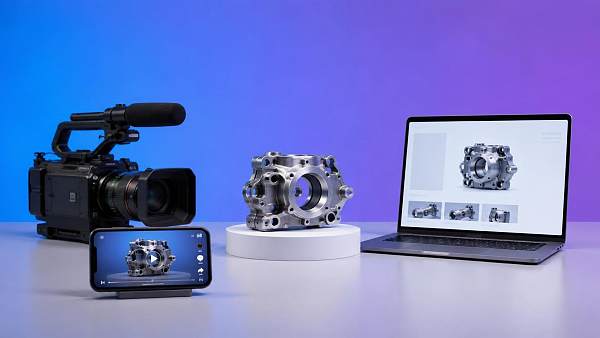
Break Down Content Quality into Verifiable Acceptance Criteria
“Whether a video looks good” is too subjective, so procurement contracts should convert it into executable standards wherever possible. Agreements can be made across four dimensions: scripts, visuals, information accuracy, and compliance. Has the script been approved by the brand? Are product parameters, application descriptions, and competitor comparisons accurate? Who is responsible for material copyrights, music licensing, personal likeness rights, and platform rules? What proportion of completed videos will be delivered, how are revision rounds calculated, and do the original project files and usage rights for materials belong to the company? These issues should not be discussed only after the project has ended.
For B2B companies, excessive entertainment can also create risks. A fast-paced short-form video with high views does not necessarily demonstrate a company’s delivery capabilities. A more sustainable content mix is often to use lightweight scenario-based content to attract attention, professional explanations to establish credibility, and then cases, FAQs, livestream clips, or landing page content to support in-depth decision-making. Whether a provider can plan this kind of content progression is more valuable than monthly production capacity alone.
Evaluate Conversion Performance Through the “Journey,” Not Isolated View Numbers
Views, likes, and follower counts are front-end signals. They can indicate whether content has been seen, but cannot be directly equated with business results. During procurement evaluation, it is recommended to divide metrics into three levels and define calculation standards before the project starts.
Content reach level: Video completion rate, average watch time, engagement rate, profile visit rate, and the share of audiences in target regions. These metrics help determine whether topics and messaging resonate with the intended audience.
Traffic-driving behavior level: Link click-through rate, number of direct-message inquiries, landing page visits, add-to-cart rate, or form-start rate. If an account lacks clear links, automated replies, and tracking parameters, even substantial traffic will be difficult to attribute.
Business outcome level: Number of qualified leads, number of opportunities confirmed by sales, cost per lead, sales cycle, and attributable revenue. B2B projects do not need to demand short-term transactions, but they should at least establish a record-keeping mechanism for “content source—inquiry—sales follow-up—opportunity status” to avoid marketing and sales operating with different narratives.
Therefore, whether the service provider has website and advertising coordination capabilities is also critical. If short-form videos bring users to a page that loads slowly, does not match their language, or has lengthy forms, conversions will be lost at the final step. For companies seeking overseas customer acquisition, a more suitable approach is usually to ensure that short-form videos, social media profiles, advertising landing pages, multilingual independent websites, and SEO content support one another rather than operate in isolation.
Behind the Quotation, Verify Three Categories of Easily Overlooked Costs
Low-priced packages may appear to reduce the threshold for trial and error, but they may exclude core components. Procurement professionals should verify each item: whether filming includes travel and venue costs, whether script planning and multilingual voiceovers are charged separately, whether account registration, daily engagement, and comment management are within the service scope, how advertising budgets are distinguished from ad placement service fees, and whether data dashboards and review frequencies are clearly defined.
Attention should also be paid to “material dependency.” If the company needs to provide a large amount of on-site footage itself, is someone internally responsible for it, can the material quality meet editing requirements, and will response speed delay the schedule? If the service provider promises on-site filming, filming days, equipment configuration, product confidentiality requirements, and safety standards should be confirmed. The clearer the quotation, the less friction will arise later from items considered “not included by default.”
Use a Trial Run Instead of a One-Time Long-Term Commitment
For companies purchasing short-form video marketing services for the first time, it is recommended to establish a clearly defined trial period, such as testing around one product line, one regional market, or one type of customer group. A trial run should not focus only on performance figures; it should also assess the service process: whether strategy is delivered on time, whether communication demonstrates an understanding of the business language, whether revisions are evidence-based, and whether monthly reviews can explain data fluctuations and propose verifiable adjustment hypotheses for the next round.
The procurement team can also request that the service provider provide a phased content asset inventory, including published videos, script libraries, source material files, account data, and advertising records. This ensures that even if the partnership is adjusted later, the company will not lose the accumulated content and data foundation.
In digital marketing projects, data capabilities and collaboration efficiency are increasingly influencing procurement decisions. Personnel responsible for budgeting, costs, and business analysis can also focus on the restructuring of core competencies for corporate finance professionals driven by artificial intelligence, further improving their ability to assess the relationship between marketing investment and returns from the perspectives of data understanding, business collaboration, and intelligent tool application.
Selecting a Service Provider Essentially Means Selecting a Growth Collaboration Mechanism
An integrated service system such as Yiyingbao, covering intelligent website building, SEO optimization, advertising, overseas social media operations, and short-form video marketing, is suitable for companies seeking to consolidate content traffic on overseas independent websites and continuously track inquiry quality. For overseas business operations targeting markets in North America, Europe, Southeast Asia, or the Middle East, coordination among multilingual websites, AI-assisted content optimization, and platform operations can often reduce breaks in the conversion journey more effectively than managing individual accounts alone.
Ultimately, a short-form video marketing service provider worth working with will not merely display attractive screenshots of views. It will be willing to define objectives with the company, clarify responsibilities, establish data tracking, and adjust content based on real feedback. The more thoroughly procurement decisions are made, the greater the likelihood that short-form video can evolve from “brand buzz” into a sustainable customer acquisition asset.
Related Articles



Related Products
 Yiyingbao SaaS Intelligent Website Building and Marketing SystemYiyingbao SaaS Intelligent Website Building and Marketing System, AI-powered no-code website building, rapid creation of multilingual B2B international websites in 10 minutes, global server acceleration, AI-powered SEO optimization, helping businesses connect efficiently with global markets. The perfect integration of technology and operation makes building an international trade website remarkably simple
 AI+SEM Intelligent Advertising Marketing SystemAI+SEM drives intelligent ad creation, empowering full-funnel precision advertising marketing. The system automatically generates weekly/monthly reports, AI recommends keywords and target countries, monitors core metrics in real-time with intelligent alerts, and enables one-click high-conversion ad solutions to help quickly acquire customers and improve ROI.
 AI+SEO Dual-Engine System Optimization ServicesYiyingbao’s AI+SEO dual-engine optimization system helps foreign trade enterprises acquire high-quality organic traffic through AI-powered keyword research, content generation, and comprehensive technical optimization, significantly improving search rankings and conversion rates.
 AI+SNS Social Media Marketing SystemYingbao AI+SNS Social Media Marketing System - Precision social capture for the social media era. Supports one-click content synchronization across major platforms like Facebook and LinkedIn. AI intelligently rewrites posts for enhanced relevance. 24/7 AI customer service and user profiling analysis empower businesses to efficiently expand into global markets.
 AI+SEO营销解决方案易营宝AI+SEO营销解决方案,通过AI批量写作、智能生成TDK、精准关键词扩词等功能,全面优化网站SEO效果,提升流量与转化率。助力企业构建高效智能网站新生态。
 AI+SEM Advertising Marketing SolutionsAI+SEM Advertising Marketing Solution leverages AI technology to deeply empower SEM ad campaigns. It automatically generates weekly/monthly reports using AI, presenting account data across multiple dimensions for comprehensive insights into campaign performance and trends. The system precisely recommends keywords and target countries, intelligently generates high-conversion ad copy, and enables one-click activation of efficient campaign plans to help businesses rapidly acquire customers. Simultaneously, it monitors core metrics in real time, intelligently identifies abnormal fluctuations, and issues timely alerts to ensure stable, high-return advertising results.
 Domain Name ServicesEasyWin provides professional domain name services, including intelligent queries, one-stop registration, brand protection, and full lifecycle management, helping businesses build a digital brand image.
 EasyOperate B2C Cross-Border E-Commerce Platform & Independent WebsiteEasyStore B2C Cross-border E-commerce Independent Store is an intelligent website building and cross-border e-commerce integrated solution independently developed by EasyStore Information Technology (Beijing) Co., Ltd. The system is specially designed for small and medium-sized as well as large export enterprises, integrating 'website building, operation, marketing, advertising, and conversion' into one, helping enterprises quickly establish cross-border e-commerce independent stores to achieve brand globalization and global sales growth.
The platform supports multiple languages, multiple currencies, and multi-channel marketing, with built-in AI intelligent translation and SEO optimization systems, suitable for mainstream markets such as Southeast Asia, Europe and America, Latin America, and the Middle East, assisting Chinese manufacturing enterprises in efficiently deploying international e-commerce strategies. SSL证书易营宝提供专业SSL安全证书服务,包括单域名和泛域名证书,确保网站数据传输加密、身份验证和完整性保护,助力企业建立安全可信的在线业务环境。









