









- Which customer acquisition channels will be affected by cross-border marketing trends in 2026?Sep 06, 2026View details
- Which homogenization risks should be considered in an analysis of the AI-powered website building industry?Aug 30, 2026View details
- How Will AI Marketing Trends 2026 Change Advertising Budget AllocationAug 28, 2026View details
- Is the EV SSL certificate market shrinking or upgrading? How should companies assess certificate procurement?Aug 11, 2026View details
- Why the old AMP SEO 2020 practices no longer work and what has changed in current optimization prioritiesAug 02, 2026View details
- How to Choose Topics for an Industry News Section to Attract More Organic Search TrafficJul 29, 2026View details
How Can Facebook Content Operations Improve Engagement Rates?
To do a good job of Facebook content operations, the key is to master methods for increasing engagement through Facebook content operations. Whether it is topic planning, posting time, comment guidance, or visual presentation, each directly affects user participation and brand communication effectiveness.
For businesses, a high engagement rate is not merely about creating a lively atmosphere. It is an important signal of whether content is being seen, trusted, and further converted. For foreign trade companies, cross-border brands, and global expansion teams in particular, persistently low engagement in Facebook content operations often means that reach efficiency, brand awareness, and inquiry opportunities are all declining.
From the perspective of search intent, readers are not truly interested in abstract methods. They want to know how to steadily increase likes, comments, shares, private messages, and clicks through actionable content operation tactics. Rather than simply saying that businesses should “keep publishing content,” they need a strategy that can be implemented, reviewed, and continuously optimized.
Why Many Businesses Still Struggle to Increase Engagement Despite Operating on Facebook
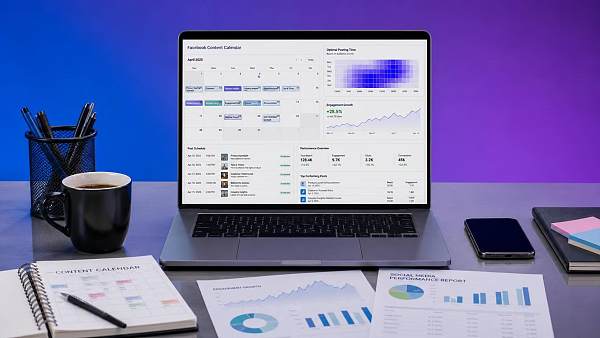
Many businesses post on Facebook frequently, yet their engagement remains mediocre. The core issue is usually not that they “post too little,” but that their content is not aligned with users’ decision-making scenarios. Users do not naturally engage simply because a business continues to publish information.
Common problems include overly product-focused content, arbitrary posting times, visually indistinct materials, and copy that does not create opportunities for interaction. B2B and manufacturing companies, in particular, often treat Facebook as a product catalog rather than as a channel for managing customer relationships.
From the perspective of the platform mechanism, Facebook is more likely to distribute content that generates viewing time, responses, and shares. If content is merely one-way communication without carefully designed questions, emotional value, or practical value, it is difficult to gain more organic exposure. This is also an important reason why engagement rates remain low over the long term.
Methods for Increasing Engagement Through Facebook Content Operations: Start with Content Topics
The first step in truly effective methods for increasing engagement through Facebook content operations is not optimizing wording, but rebuilding the logic behind topic selection. Whether users are willing to engage is often determined when they see the title, image, and first two lines of copy.
For companies expanding overseas, topics should primarily focus on the types of content customers care about most, such as industry trends, purchasing advice, product application scenarios, before-and-after comparisons, customer cases, production processes, and answers to frequently asked questions. This type of content is more likely to trigger discussions and saves.
If a business targets B2B buyers, it can produce more content such as “How to evaluate a supplier,” “How to reduce procurement risks,” and “How to choose between different solutions,” because these topics are closer to customers’ actual decision-making journeys. Content with high engagement is usually highly relevant to users’ questions.
If the target audience consists of cross-border brand consumers, businesses can add more scenario-based content, user feedback, holiday themes, and experience-oriented short videos. Compared with purely promotional posts, content that helps users imagine the experience of using a product is more likely to generate comments and shares.
How Should Posts Be Designed to Encourage Users to Stay and Participate?
After choosing the right content topic, the second key point is the presentation format. Many businesses have plenty of valuable information, but their packaging is too plain, leaving users with little reason to stay. On Facebook, the format itself is an important factor affecting engagement.
In practice, image carousels, short videos, comparison graphics, checklist-style posts, and question-based posts generally generate more engagement than text-only posts. These formats communicate key points more quickly and better suit users’ fragmented browsing habits.
Visually, businesses should avoid turning posts into dense posters or long instruction manuals. A more effective approach is to focus each image on one core information point, such as a product application, real factory scene, case result, or usage detail, so users can understand the value of the content at a glance.
In terms of copy, reduce empty phrases and use direct language whenever possible. For example, instead of simply writing “Welcome to learn more about our products,” write “Which do you value most: delivery time, quality, or customization capabilities?” This type of wording makes it easier to encourage users to respond.
Why Do Posting Times and Frequency Directly Affect Engagement?
When creating content, many teams focus only on what to post while overlooking when to post it. In reality, posting time significantly affects initial engagement, and initial engagement influences the platform’s subsequent distribution. This is particularly important in Facebook content operations.
If the target customers are mainly located in North America, Europe, or Southeast Asia, businesses should not post casually according to domestic working hours. Posting times should be arranged according to the time zones of the primary markets, with priority given to periods when target users are most active, such as local lunch breaks, after work, or active periods during the middle of the week.
Posting frequency should also remain consistent rather than fluctuating. Excessively frequent posting can cause posts to compete with one another, while long periods without updates can reduce account activity. For most business accounts, maintaining a consistent weekly publishing schedule while continuously testing different time periods generally produces more controllable results.
A more practical approach is to establish a basic publishing schedule and then use backend data to identify engagement peaks. The times when different types of content perform best should be confirmed through data reviews rather than guessed based on experience.
Comment Guidance and Engagement Management Are the Key to Increasing Participation
Many businesses think their operation is complete once a post has been published, but post-publication engagement management often determines the actual engagement rate. Facebook does not only evaluate the content itself; it also places considerable importance on whether ongoing interaction occurs after the content is published.
Therefore, businesses should proactively include engagement hooks in their copy, such as either-or questions, invitations to share experiences, scenario-based questions, or requests for opinions. Compared with “Feel free to leave a comment,” more specific questions are more likely to encourage users to respond.
Response speed in the comment section is also important. If users receive no response for a long time after leaving a comment, subsequent engagement often decreases significantly. Timely replies can not only extend the active period of a post, but also help more potential customers perceive the brand’s professionalism and sense of engagement.
For businesses with clear lead-generation needs, comment engagement can also be combined with private-message guidance. For example, answer basic questions in the public comment section first, then guide users with purchasing intentions to private messages for further communication. This is more conducive to conversion.
Which Data Should Businesses Focus on in Facebook Content Operations?
Increasing engagement cannot be evaluated by likes alone. Truly meaningful data should help businesses determine whether their content is attracting the right people and whether that engagement is creating subsequent value. This is also the key to connecting content operations with business growth.
It is recommended to focus on engagement rate, comment rate, share rate, click-through rate, number of private messages, and follower growth trends. B2B businesses should also pay particular attention to high-quality engagement, such as procurement inquiries, quotation requests, sample inquiries, and website visits.
If a certain type of content receives many likes but almost no comments, clicks, or private messages, it may be more focused on superficial reach and may not necessarily benefit the business. Conversely, content with relatively low total engagement but highly targeted inquiries may be more worthy of continued investment.
Therefore, when evaluating methods for increasing engagement through Facebook content operations, businesses should not pursue superficial popularity alone. They should make comprehensive assessments based on brand exposure, customer trust, and conversion potential to avoid taking their operations in the wrong direction.
To Stabilize Engagement, Businesses Need a Continuous Optimization Mechanism
For most companies expanding overseas, improving Facebook engagement does not depend on a single viral post, but on continuous optimization. Truly replicable methods usually come from the long-term coordination of content planning, material accumulation, data analysis, and team collaboration.
Businesses can divide content into several fixed categories, such as brand trust, industry knowledge, product scenarios, customer cases, and activity-based engagement. This can prevent content exhaustion while making it easier to analyze performance differences among different types of posts.
If a business is also responsible for independent website development, SEO, advertising, and social media lead generation, it is recommended to integrate Facebook content operations into the overall overseas marketing system. In this way, content can serve not only engagement, but also brand awareness and inquiry conversion.
Platforms such as 易营宝, which integrate website development and marketing services, can connect AI website building, SEO optimization, Facebook advertising, and overseas social media operations to help businesses create a more complete customer acquisition cycle. For teams seeking to improve content efficiency and actual results, this integration capability has greater practical value.
Conclusion: Increasing Facebook Engagement Is Not About Posting More, but About Posting the Right Content and Managing It Continuously
Returning to the core question of how Facebook content operations can increase engagement, the answer is not simply to increase posting frequency. Instead, businesses should focus on the real concerns of their target audiences and do well in topic selection, format, posting time, comment guidance, and data analysis.
For foreign trade companies, manufacturing factories, cross-border sellers, and brands expanding overseas, truly effective methods for increasing engagement through Facebook content operations should not only improve platform participation, but also support brand trust and business conversion. Only in this way can engagement growth have practical significance.
If a business wants to upgrade Facebook operations from “publishing content” to “generating leads continuously,” it needs to incorporate social media content into a more comprehensive digital marketing system for unified planning. This is the only way to ensure that every interaction is not merely lively, but also creates opportunities for growth.
Related Articles


Related Products
 Yiyingbao SaaS Intelligent Website Building and Marketing SystemYiyingbao SaaS Intelligent Website Building and Marketing System, AI-powered no-code website building, rapid creation of multilingual B2B international websites in 10 minutes, global server acceleration, AI-powered SEO optimization, helping businesses connect efficiently with global markets. The perfect integration of technology and operation makes building an international trade website remarkably simple
 AI+SEM Intelligent Advertising Marketing SystemAI+SEM drives intelligent ad creation, empowering full-funnel precision advertising marketing. The system automatically generates weekly/monthly reports, AI recommends keywords and target countries, monitors core metrics in real-time with intelligent alerts, and enables one-click high-conversion ad solutions to help quickly acquire customers and improve ROI.
 AI+SEO Dual-Engine System Optimization ServicesYiyingbao’s AI+SEO dual-engine optimization system helps foreign trade enterprises acquire high-quality organic traffic through AI-powered keyword research, content generation, and comprehensive technical optimization, significantly improving search rankings and conversion rates.
 AI+SNS Social Media Marketing SystemYingbao AI+SNS Social Media Marketing System - Precision social capture for the social media era. Supports one-click content synchronization across major platforms like Facebook and LinkedIn. AI intelligently rewrites posts for enhanced relevance. 24/7 AI customer service and user profiling analysis empower businesses to efficiently expand into global markets.
 AI+SEO营销解决方案易营宝AI+SEO营销解决方案,通过AI批量写作、智能生成TDK、精准关键词扩词等功能,全面优化网站SEO效果,提升流量与转化率。助力企业构建高效智能网站新生态。
 AI+SEM Advertising Marketing SolutionsAI+SEM Advertising Marketing Solution leverages AI technology to deeply empower SEM ad campaigns. It automatically generates weekly/monthly reports using AI, presenting account data across multiple dimensions for comprehensive insights into campaign performance and trends. The system precisely recommends keywords and target countries, intelligently generates high-conversion ad copy, and enables one-click activation of efficient campaign plans to help businesses rapidly acquire customers. Simultaneously, it monitors core metrics in real time, intelligently identifies abnormal fluctuations, and issues timely alerts to ensure stable, high-return advertising results.
 Domain Name ServicesEasyWin provides professional domain name services, including intelligent queries, one-stop registration, brand protection, and full lifecycle management, helping businesses build a digital brand image.
 EasyOperate B2C Cross-Border E-Commerce Platform & Independent WebsiteEasyStore B2C Cross-border E-commerce Independent Store is an intelligent website building and cross-border e-commerce integrated solution independently developed by EasyStore Information Technology (Beijing) Co., Ltd. The system is specially designed for small and medium-sized as well as large export enterprises, integrating 'website building, operation, marketing, advertising, and conversion' into one, helping enterprises quickly establish cross-border e-commerce independent stores to achieve brand globalization and global sales growth.
The platform supports multiple languages, multiple currencies, and multi-channel marketing, with built-in AI intelligent translation and SEO optimization systems, suitable for mainstream markets such as Southeast Asia, Europe and America, Latin America, and the Middle East, assisting Chinese manufacturing enterprises in efficiently deploying international e-commerce strategies. SSL证书易营宝提供专业SSL安全证书服务,包括单域名和泛域名证书,确保网站数据传输加密、身份验证和完整性保护,助力企业建立安全可信的在线业务环境。









