









- Which customer acquisition channels will be affected by cross-border marketing trends in 2026?Sep 06, 2026View details
- Which homogenization risks should be considered in an analysis of the AI-powered website building industry?Aug 30, 2026View details
- How Will AI Marketing Trends 2026 Change Advertising Budget AllocationAug 28, 2026View details
- Is the EV SSL certificate market shrinking or upgrading? How should companies assess certificate procurement?Aug 11, 2026View details
- Why the old AMP SEO 2020 practices no longer work and what has changed in current optimization prioritiesAug 02, 2026View details
- How to Choose Topics for an Industry News Section to Attract More Organic Search TrafficJul 29, 2026View details
How to optimize a website for the Russian market while balancing technical architecture with local search habits
Don't Rush to Talk About Rankings When Optimizing a Website for the Russian Market
When working on projects targeting Russian-speaking regions, many teams initially focus on keyword positions, indexing, and backlinks. As a result, after a site has been online for three months, it may have traffic but generate very few inquiries. The problem is often not a single optimization action, but the fact that the technical architecture and local search habits were not designed together. Around optimizacion web para rusia, the real challenge is not whether you know how to do SEO, but whether your website can reliably deliver content under the network conditions, device environments, and reading preferences commonly found among Russian users, while encouraging them to continue reading, clicking, and submitting inquiries.
The Russian market differs from the English-speaking markets familiar to many companies. Search performance is not determined by page text alone. Site access speed, mobile presentation, directory structure, the way regional information is expressed, and the credibility of contact details all directly affect how long users stay. This is especially true for B2B corporate websites, whose visitors are often comparing suppliers rather than encountering a brand for the first time. If a page loads half a beat too slowly, the translation feels unnatural, or product categories are difficult to navigate, users can easily return to the search results and continue looking for another supplier.
If the Architecture Is Not Solid, Subsequent Content Optimization Becomes Increasingly Difficult
The most common mistake in Russian market website optimization is treating Russian pages as a translation layer for an English site. This may seem convenient, but it creates many problems later. For example, a single URL structure may contain transliterated directories, English parameters, and automatically translated titles. Search engines can crawl the pages and users can open them, but the semantic relationships within the site remain unclear. As you expand product pages, industry pages, and regional pages, internal links become increasingly disorganized and indexing fluctuations become more noticeable.
A more reliable approach is to plan the Russian website as an independent business unit from the beginning of the project. Whether to use a subdirectory or subdomain depends on the authority of the existing main site, the team's maintenance capabilities, and whether more languages will be added in the future. No single structure works for every company, but one practical judgment is clear: if you plan to continuously publish content, advertising landing pages, and industry topics for Russian-speaking regions, you should not rely only on scattered pages to capture traffic. Categories, filters, content aggregation, and conversion paths must be designed for scalability from the outset.
This is particularly evident for websites promoting manufacturing, agricultural products, and food products overseas. Their product lines usually contain more than one or two SKUs, and users do not only view the homepage. They quickly move to a particular category, specification, packaging method, or application area. If the website supports clearly categorized product grid displays and organizes company qualifications, service commitments, industry content, and inquiry actions clearly enough, optimization work has a solid foundation. Website types such as agriculture, agricultural products, and food, which place equal emphasis on brand presentation and business conversion, depend even more on whether sufficient room for expansion was reserved in the initial architecture.
Local Search Habits Determine How You Should Write, Not Just What You Should Write
When many Chinese teams conduct Russian SEO, they tend to interpret keyword research as translation and replacement. In practice, Russian users place greater importance on whether the wording fits their everyday search logic. A literal translation may not be completely unsearched, but if users click through and find that the page sounds stiff, the terminology is unnatural, and the paragraphs look like machine-assembled text, trust can decline very quickly. For B2B websites, this loss is more damaging than ranking fluctuations because what you lose is a person who originally had purchasing intent.
Therefore, when doing optimizacion web para rusia, the content should address at least three issues. First, titles and descriptions should resemble local business pages rather than translated pages. Second, product descriptions should avoid discussing only specifications without explaining the conditions of use. Third, contact and delivery information should be specific rather than stopping at empty phrases such as “Contact us” or “Quality guaranteed.” When evaluating suppliers, users in Russian-speaking regions usually pay more attention to practical issues such as packaging, shipping, customization, certification support, and communication channels. If your site answers these questions in advance, traffic from search is more likely to develop into qualified inquiries.
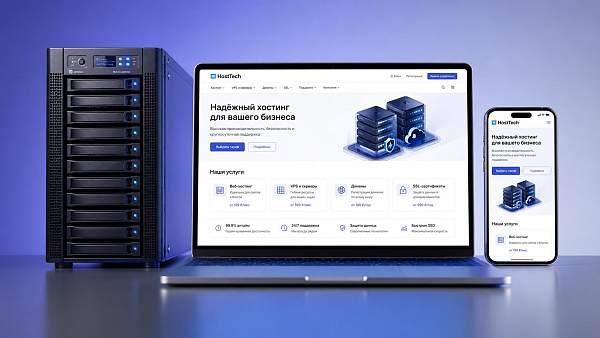
Another detail is often overlooked: Russian content is not suitable for simply copying the information density of an English page. Short sentence clusters and strongly promotional button copy commonly used on English websites may sometimes seem rushed on Russian pages, especially for industrial products, food ingredients, and agricultural products. A more natural approach is to condense the core selling points into the first screen while placing credible information near the top, such as product categories, application scenarios, production capacity, packaging methods, news updates, and inquiry access points. For visually oriented product categories, page color schemes closer to nature and food perception, such as green and warm yellow, combined with high-quality large images and clearly divided content layouts, are often more effective than flashy animations. Users are first judging whether “this company really appears to operate in this industry.”
Speed Is Not Just About the Server Location
When discussing the Russian market, many projects simply attribute the solution to “switching to a local server” or “adding acceleration nodes.” These measures are certainly important, but they are not enough. In real projects, the access experience is often affected by multiple factors: oversized above-the-fold images, excessive JS dependencies, unreasonable font-loading strategies, slow third-party script calls, and unstable page-generation speeds in the backend. The result users see is a page that takes a long time to appear, or a first screen that is initially disorganized before stabilizing, which directly affects their willingness to continue browsing.
For export-oriented corporate websites, especially those with many product images and language versions, the technical team needs to determine in advance which resources must load above the fold and which content can be deferred. Not every page should be built as a visually heavy, long-form page. The performance strategies for an industry homepage, a core category page, an inquiry page, and a blog page should naturally differ. The homepage supports brand evaluation and can retain a certain level of visual presentation. Product listing pages emphasize filtering and scanning, so their structure should be lightweight. Article pages place greater emphasis on readability and internal links. Form pages should reduce distractions. If the site's technical architecture supports differentiated optimization by template type, subsequent SEO and conversion rates will be more stable.
Don't Treat Mobile as a Shrunken Desktop Website
Mobile traffic in Russian-speaking regions is usually significant, yet many corporate websites still apply desktop thinking to their mobile versions: too many horizontal tables, buttons placed too far down, distorted image cropping, and contact details requiring repeated page jumps. The result is not that users are uninterested, but that they simply do not want to continue operating the site. For inquiry-oriented websites, the most important mobile consideration is reducing the cost of understanding. Users need to quickly know what you sell, whether customization is available, how to contact you, and whether genuine content supports your claims.
Some websites for agriculture, agricultural products, and food products are even more likely to encounter problems in this area because teams may overemphasize visual atmosphere. Multiple large images, layered animations, and pop-up prompts may look acceptable on desktop, but they slow down mobile pages. A more reasonable approach is to retain a visual style based on a natural narrative while separating the hierarchy between large images, category entry points, service commitments, news content, and packaging request forms, allowing users to follow the logic screen by screen. A polished page does not mean the information must be complicated. The more restrained the responsive design, the more visible the business information becomes.
Conversion in the Russian Market Cannot Be Solved by a Single Button
After many SEO projects achieve higher rankings, clients still ask: Why is lead quality only average? This usually indicates that the website's conversion design does not match search intent. When users in Russian-speaking regions enter a page through search, they often have specific questions about price ranges, packaging specifications, delivery capabilities, private labeling, or suitability for a particular sales channel. If the page has only a generic “Contact us” option and does not separate different types of questions, the form submission rate is usually unsatisfactory.
A more effective approach is to set different actions according to the role of each page. Product pages are suitable for guiding users to submit specification requirements. Industry solution pages are suitable for initiating communication about project background. Content pages are more suitable for collecting email addresses or offering downloadable materials. For food and agricultural product businesses, a customized packaging request form is more practically valuable than a simple quotation request, because such purchases often involve considering packaging, transportation, presentation, and brand fit in addition to unit price. Once these actions are separated, traffic generated by SEO can be filtered more accurately.
Several Common Misjudgments in Project Implementation
One misconception is that publishing a Russian version means localization has been completed. In fact, language is only the surface. What truly affects performance is whether the content organization, on-site paths, and presentation of business information fit the decision-making pace of local users.
Another misconception is putting all resources into the homepage. Search traffic in the Russian market will not remain focused only on brand terms in the long term. The pages that usually bring stable visits are category pages, application pages, problem-focused pages, and content pages. No matter how complete the homepage is, it cannot replace a clear site structure.
There is also a situation in which companies pursue being “large and comprehensive” too early, creating many languages, sections, and pages all at once, only to find that maintenance cannot keep up. If a Russian-region site is not updated for a long time, its news section is empty, and its blog has stopped at content from a year ago, its credibility may actually be weakened. By contrast, it is generally more stable to focus on a few core product lines, first establish good page quality, loading performance, and inquiry paths, and then expand gradually.
How to Determine Whether the Current Website Is Suitable for Continued Optimization in Russian-Speaking Regions
You can start by examining four things: whether pages open consistently, whether the Russian content reads like business content rather than a translation draft, whether unfamiliar users can find their target within two or three steps through the product categories, and whether conversion entry points correspond to different purchasing questions. If two of these four areas are clearly weak, continuing to add content and external traffic will usually produce limited results.
For teams providing integrated website and marketing services, optimization for the Russian market is never a single-point task. It requires the website-building system, content production, technical performance, advertising coordination, and lead handling to work together. Especially when a company must also manage a multilingual corporate website, independent-site promotion, and overseas advertising, the front end appears to be one website, but the backend is actually an entire growth infrastructure. Once this relationship is understood, discussing optimizacion web para rusia will involve far fewer wrong turns.
If you are already operating a website for Russian-speaking regions, start by investigating the most specific areas: Which types of pages load the slowest? Which types of content have the highest bounce rates? Which inquiry pages have the lowest submission rates? Which products receive traffic but no inquiries? In the end, technical architecture and local search habits must both be translated into these observable questions. Optimization begins to create real value only when the site can answer real questions.
Related Articles



Related Products
 Yiyingbao SaaS Intelligent Website Building and Marketing SystemYiyingbao SaaS Intelligent Website Building and Marketing System, AI-powered no-code website building, rapid creation of multilingual B2B international websites in 10 minutes, global server acceleration, AI-powered SEO optimization, helping businesses connect efficiently with global markets. The perfect integration of technology and operation makes building an international trade website remarkably simple
 AI+SEM Intelligent Advertising Marketing SystemAI+SEM drives intelligent ad creation, empowering full-funnel precision advertising marketing. The system automatically generates weekly/monthly reports, AI recommends keywords and target countries, monitors core metrics in real-time with intelligent alerts, and enables one-click high-conversion ad solutions to help quickly acquire customers and improve ROI.
 AI+SEO Dual-Engine System Optimization ServicesYiyingbao’s AI+SEO dual-engine optimization system helps foreign trade enterprises acquire high-quality organic traffic through AI-powered keyword research, content generation, and comprehensive technical optimization, significantly improving search rankings and conversion rates.
 AI+SNS Social Media Marketing SystemYingbao AI+SNS Social Media Marketing System - Precision social capture for the social media era. Supports one-click content synchronization across major platforms like Facebook and LinkedIn. AI intelligently rewrites posts for enhanced relevance. 24/7 AI customer service and user profiling analysis empower businesses to efficiently expand into global markets.
 AI+SEO营销解决方案易营宝AI+SEO营销解决方案,通过AI批量写作、智能生成TDK、精准关键词扩词等功能,全面优化网站SEO效果,提升流量与转化率。助力企业构建高效智能网站新生态。
 AI+SEM Advertising Marketing SolutionsAI+SEM Advertising Marketing Solution leverages AI technology to deeply empower SEM ad campaigns. It automatically generates weekly/monthly reports using AI, presenting account data across multiple dimensions for comprehensive insights into campaign performance and trends. The system precisely recommends keywords and target countries, intelligently generates high-conversion ad copy, and enables one-click activation of efficient campaign plans to help businesses rapidly acquire customers. Simultaneously, it monitors core metrics in real time, intelligently identifies abnormal fluctuations, and issues timely alerts to ensure stable, high-return advertising results.
 Domain Name ServicesEasyWin provides professional domain name services, including intelligent queries, one-stop registration, brand protection, and full lifecycle management, helping businesses build a digital brand image.
 EasyOperate B2C Cross-Border E-Commerce Platform & Independent WebsiteEasyStore B2C Cross-border E-commerce Independent Store is an intelligent website building and cross-border e-commerce integrated solution independently developed by EasyStore Information Technology (Beijing) Co., Ltd. The system is specially designed for small and medium-sized as well as large export enterprises, integrating 'website building, operation, marketing, advertising, and conversion' into one, helping enterprises quickly establish cross-border e-commerce independent stores to achieve brand globalization and global sales growth.
The platform supports multiple languages, multiple currencies, and multi-channel marketing, with built-in AI intelligent translation and SEO optimization systems, suitable for mainstream markets such as Southeast Asia, Europe and America, Latin America, and the Middle East, assisting Chinese manufacturing enterprises in efficiently deploying international e-commerce strategies. SSL证书易营宝提供专业SSL安全证书服务,包括单域名和泛域名证书,确保网站数据传输加密、身份验证和完整性保护,助力企业建立安全可信的在线业务环境。









