









- APEC Shenzhen Spotlight: Cross-Border E-Commerce Orders Promote Asia-Pacific Trade and Economic CooperationNov 08, 2026View details
- China-Europe Railway Express and CIIE Hold Business Matchmaking Event, Focusing on Cross-Border E-commerce B2B ExportsNov 07, 2026View details
- China’s Ministry of Commerce Responds to Additional Charges on Low-Value Imports Imposed by the EUNov 06, 2026View details
- Two Internet Development Reports Released at the 2026 World Internet ConferenceNov 05, 2026View details
- Internet Business Revenue of Enterprises Above the Designated Size Reached RMB 1.716 Trillion in the First Three Quarters, with Profits Up 17.6%Nov 05, 2026View details
- Shopify's Third-Quarter Revenue and GMV Fall Short of Expectations, Sending Shares Tumbling Before the Market OpensNov 04, 2026View details
How can you evaluate the terminology accuracy of Yiyingbao’s AI translation engine?
How can you objectively evaluate the performance of Yiyingbao’s AI translation engine? For companies expanding overseas, a page that reads smoothly is only the starting point: if product specifications, process names, or application scenarios are mistranslated, buyers may misunderstand the specifications, and sales teams may need to spend more time clarifying them. Evaluation should begin with terminology accuracy, consistency, and suitability for the industry context, with reproducible test records kept throughout.
First, define which terminology errors are unacceptable
The same word may have different translations in different contexts. For example, “sealing” may refer to a sealing structure, sealing performance, or a specific seal; “power” also needs to be assessed in light of qualifiers such as rated value or output value. Checking only whether a particular word appears in the target language can lead to correct variants being marked as wrong, while overlooking cases where the translation refers to an entirely different concept.
Before testing, product, sales, and target-language reviewers should jointly confirm the reference terminology and identify acceptable synonyms, prohibited translations, and applicable contexts. It is advisable to classify errors by business impact: errors involving safety, materials, performance limits, or delivery commitments should be designated high risk, while stylistic differences should not be treated as equivalent to conceptual errors. Reference translations should also include their sources and version numbers to prevent reviewers from scoring based solely on personal preference.
Build a reproducible test set from real webpages
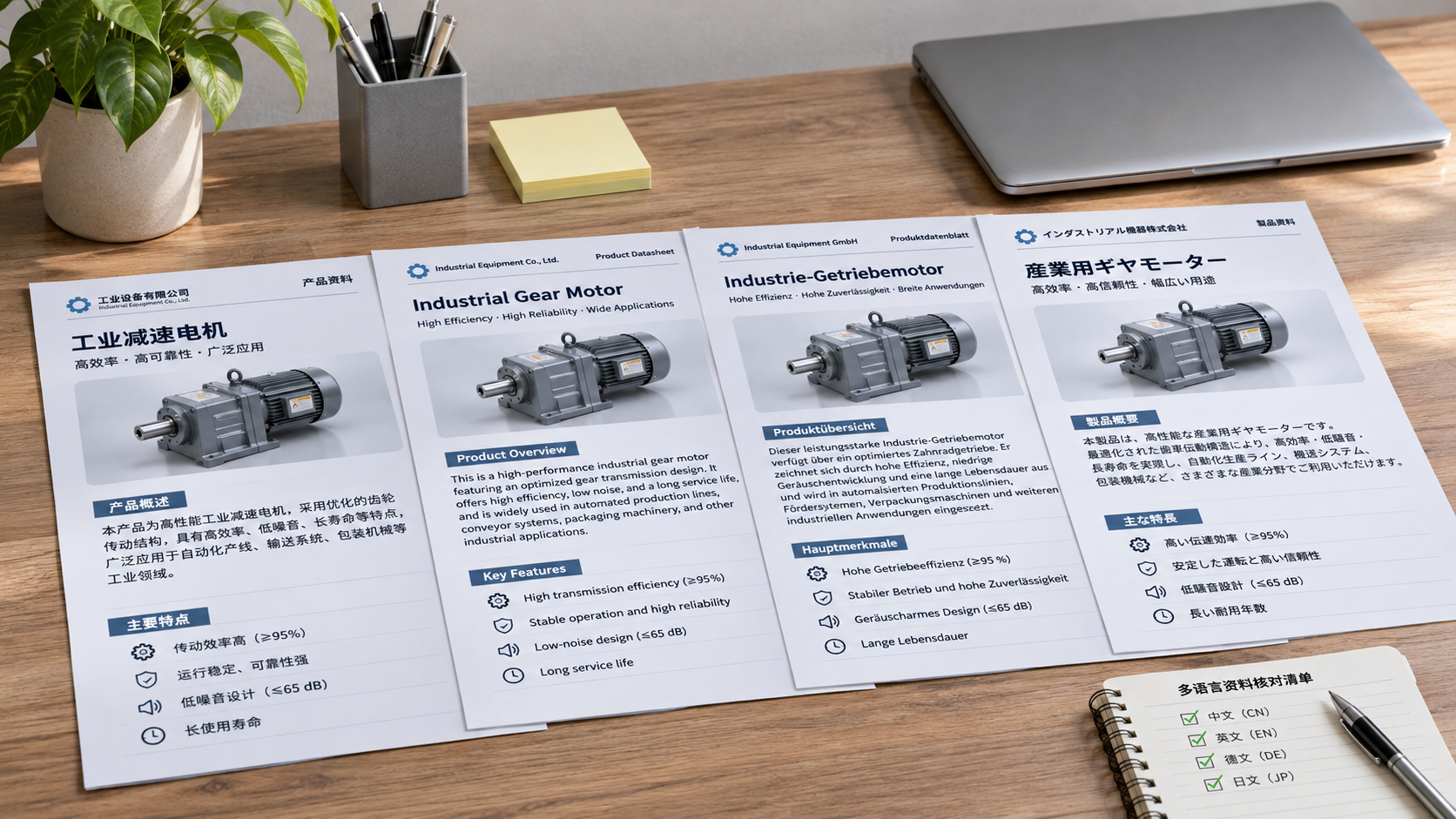
Do not test using only a company introduction. Samples should cover product titles, specification tables, technical descriptions, FAQs, advertising landing pages, and inquiry forms. Preserve the full sentence or table context surrounding each term. For multilingual websites, sample separately for each target market: whether a term is commonly used across different regions usually requires confirmation by local reviewers.
The test set should include high-frequency core terms, as well as abbreviations, words with multiple meanings, similar material names, parameters with units, and negative conditions. You can reserve some samples that have not been provided to the supplier in advance to observe how well the translation handles new content. At the same time, record the source-text version, target language, test date, translation method, and glossary settings to ensure that future retesting is based on the same criteria.
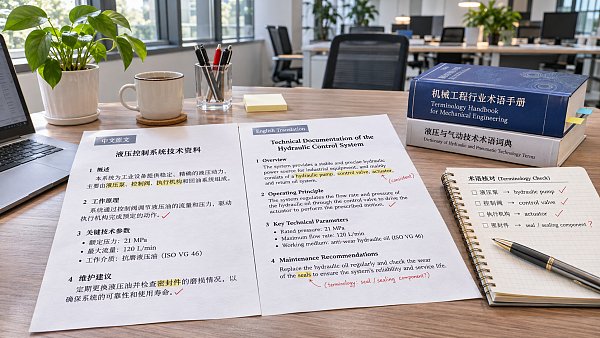
When comparing different solutions, use the same source text, target language, and reference standards, and record whether a terminology database, contextual input, or human post-editing was enabled. If one solution uses a company glossary and another does not, the results show only the differences under the current configurations and cannot be attributed directly to the engines themselves. For translations that can be generated repeatedly, retest with the same settings and record whether the results change.
Check consistency and context, not just accuracy
Terminology accuracy can be calculated as “the number of correctly judged term occurrences ÷ the total number of evaluated term occurrences.” The denominator should include omissions and mistranslations, and the handling of ambiguous or indeterminate items should be agreed in advance. The same term appearing on multiple pages should also be recorded separately. In addition to the overall rate, break down results by language, page type, and risk level; otherwise, a large number of simple terms may mask a small number of serious errors.
Consistency checks focus on whether the same concept uses the approved wording across product pages, navigation, search snippets, and landing pages. Approved synonyms should not automatically be treated as errors, but variants that could cause confusion about product categories should be flagged. Conversely, translating different concepts with the same word may make it difficult for buyers to distinguish between models or processes.
During human review, also check whether terminology fits the surrounding conditions: have units or values changed, has the scope of application been broadened, or has “not suitable for” been translated as an affirmative statement? If a page includes charts, buttons, or short text, confirm whether sufficient context is available during translation; translating a section heading in isolation is often more prone to ambiguity than translating a complete paragraph.
Evaluate test results in the context of your website delivery process
Yiyingbao provides services related to intelligent website building, multilingual websites, and overseas marketing, so evaluation should not stop at a single translation. More useful questions include: after terminology is revised, which pages need to be republished? When product specifications change, can corresponding content in other language versions be located? Who reviews navigation, page titles, body text, and advertising landing pages? The actual support available for these processes should be confirmed in a project demonstration or trial.
Terminology management capabilities should also be verified rather than assumed to be supported by the engine. Ask whether glossaries can be imported and exported, whether languages and regions can be distinguished, whether prohibited terms can be configured, whether versions are recorded, and how previously generated content is handled after rules are updated. If a feature requires manual operation, clarify the person responsible and the workload to avoid discovering after launch that maintenance costs exceed expectations.
Marketing copy also involves a trade-off that is easy to overlook: a technically accurate name may not be the search term commonly used by local buyers. First ensure that the concept is correct, then check page titles and body text against the search terms used in the target market. Do not describe different specifications or unavailable performance under the same term just to match search habits.
Agree on acceptance criteria and retesting methods before selecting a solution
An actionable acceptance record should include, at a minimum, the test set, reference glossary, sampling scope, error classifications, scores, and dispute-handling procedures. The company should set the accuracy threshold based on the language, product risks, and its capacity for human review. For errors involving safety or critical specifications, corrections and retesting should be required even if the overall score is high; such errors should not be offset by an average score.
During a trial, also confirm how source texts and terminology data are stored, whether they are used for model training, who can access them, and how they can be exported or deleted after the engagement ends. If unpublished product information is involved, it is safer to test with anonymized samples first. After the initial evaluation, submit failed items to the supplier for an explanation of the corrective measures, then retest using reserved samples to see whether the changes genuinely improve other pages rather than merely correcting known answers.
Related Articles
 How can you evaluate the terminology accuracy of Yiyingbao’s AI translation engine?
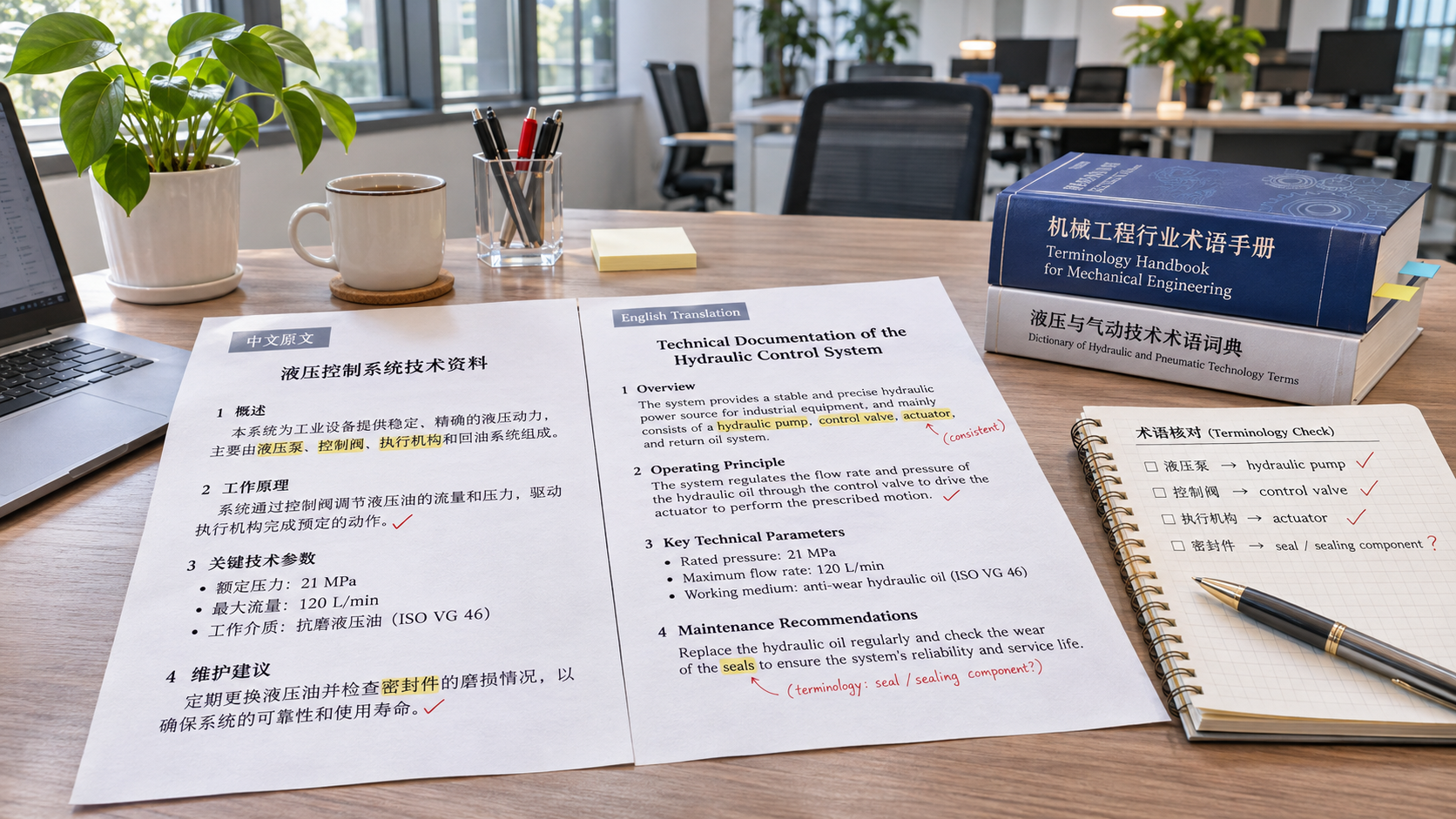
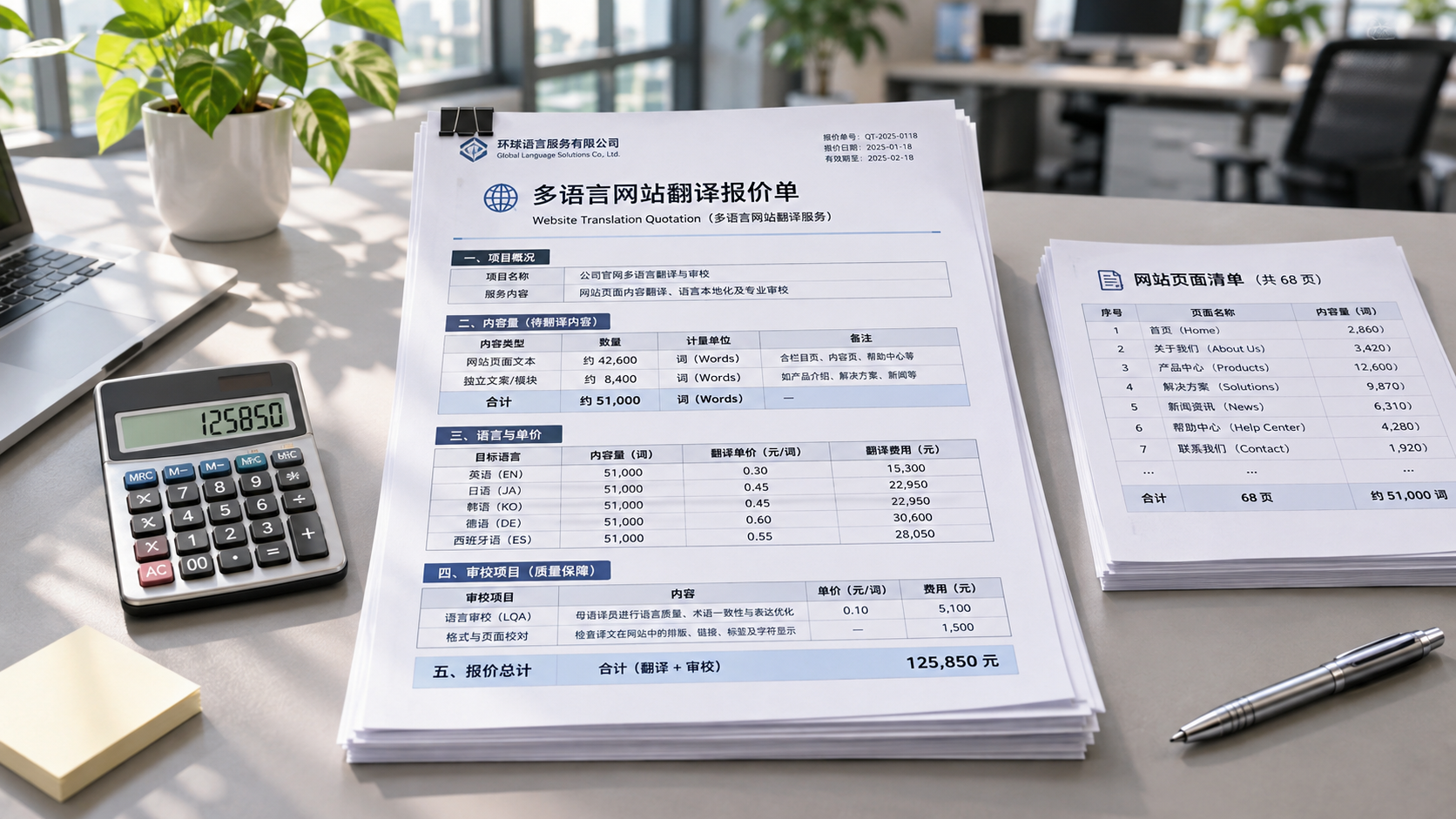
 How Are Translation Costs for Multilingual Website Solutions for International Trade Calculated?
 How do you set up a language switcher for multilingual pages in a smart website builder?
Related Products
 Yiyingbao SaaS Intelligent Website Building and Marketing SystemYiyingbao SaaS Intelligent Website Building and Marketing System, AI-powered no-code website building, rapid creation of multilingual B2B international websites in 10 minutes, global server acceleration, AI-powered SEO optimization, helping businesses connect efficiently with global markets. The perfect integration of technology and operation makes building an international trade website remarkably simple
 AI+SEM Intelligent Advertising Marketing SystemAI+SEM drives intelligent ad creation, empowering full-funnel precision advertising marketing. The system automatically generates weekly/monthly reports, AI recommends keywords and target countries, monitors core metrics in real-time with intelligent alerts, and enables one-click high-conversion ad solutions to help quickly acquire customers and improve ROI.
 AI+SEO Dual-Engine System Optimization ServicesYiyingbao’s AI+SEO dual-engine optimization system helps foreign trade enterprises acquire high-quality organic traffic through AI-powered keyword research, content generation, and comprehensive technical optimization, significantly improving search rankings and conversion rates.
 AI+SNS Social Media Marketing SystemYingbao AI+SNS Social Media Marketing System - Precision social capture for the social media era. Supports one-click content synchronization across major platforms like Facebook and LinkedIn. AI intelligently rewrites posts for enhanced relevance. 24/7 AI customer service and user profiling analysis empower businesses to efficiently expand into global markets.
 AI+SEO营销解决方案易营宝AI+SEO营销解决方案,通过AI批量写作、智能生成TDK、精准关键词扩词等功能,全面优化网站SEO效果,提升流量与转化率。助力企业构建高效智能网站新生态。
 AI+SEM Advertising Marketing SolutionsAI+SEM Advertising Marketing Solution leverages AI technology to deeply empower SEM ad campaigns. It automatically generates weekly/monthly reports using AI, presenting account data across multiple dimensions for comprehensive insights into campaign performance and trends. The system precisely recommends keywords and target countries, intelligently generates high-conversion ad copy, and enables one-click activation of efficient campaign plans to help businesses rapidly acquire customers. Simultaneously, it monitors core metrics in real time, intelligently identifies abnormal fluctuations, and issues timely alerts to ensure stable, high-return advertising results.
 Domain Name ServicesEasyWin provides professional domain name services, including intelligent queries, one-stop registration, brand protection, and full lifecycle management, helping businesses build a digital brand image.
 EasyOperate B2C Cross-Border E-Commerce Platform & Independent WebsiteEasyStore B2C Cross-border E-commerce Independent Store is an intelligent website building and cross-border e-commerce integrated solution independently developed by EasyStore Information Technology (Beijing) Co., Ltd. The system is specially designed for small and medium-sized as well as large export enterprises, integrating 'website building, operation, marketing, advertising, and conversion' into one, helping enterprises quickly establish cross-border e-commerce independent stores to achieve brand globalization and global sales growth.
The platform supports multiple languages, multiple currencies, and multi-channel marketing, with built-in AI intelligent translation and SEO optimization systems, suitable for mainstream markets such as Southeast Asia, Europe and America, Latin America, and the Middle East, assisting Chinese manufacturing enterprises in efficiently deploying international e-commerce strategies. SSL证书易营宝提供专业SSL安全证书服务,包括单域名和泛域名证书,确保网站数据传输加密、身份验证和完整性保护,助力企业建立安全可信的在线业务环境。









