









- EU Customs Code reform to take effect on November 1, with new handling fees for direct-mail small parcelsNov 01, 2026View details
- EU Plans to Raise Tax on Incoming Small Parcels to €5Oct 31, 2026View details
- Maersk Adjusts Middle East Emergency Operating Cost Recovery Surcharge to USD 2,000 per ContainerOct 30, 2026View details
- Ministry of Commerce: Online retail sales grew 4.4% in the first three quarters, while cross-border e-commerce maintained relatively rapid growthOct 29, 2026View details
- CCTV reports: AI-powered smart hardware is expanding overseas at a faster pace, with orders for some best-selling products booked through next yearOct 29, 2026View details
- Alphabet Q3 Earnings: Google Search Advertising Revenue Rises 10.5% to $82 BillionOct 29, 2026View details
Will 易营宝 website translations have inconsistent brand terminology?
Will Yiyingbao website translation lead to inconsistent brand terminology?
Will Yiyingbao website translation lead to inconsistent brand terminology? For business evaluators, this question should not be judged only by whether the content can be translated, but by whether the brand remains consistent after translation, whether all pages use unified terminology, and whether expressions across different markets conflict with one another. Many multilingual websites encounter problems not because of grammatical errors, but because the same product name, feature name, or service name is translated in several different ways across different pages. This ultimately affects customer understanding and subsequent follow-up by the sales team.
If you are evaluating an integrated website and marketing services platform such as Yiyingbao, the focus should not remain on whether it uses AI translation or human translation. More importantly, you should assess whether it has a mechanism for maintaining long-term terminology consistency. The following checklist can be used for supplier evaluation, pre-project planning checks, or pre-launch acceptance.
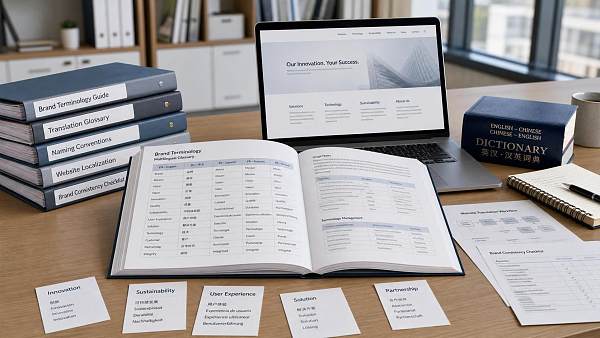
Check the terminology database first, rather than whether the translation looks good
Inconsistent brand terminology is usually not caused by the translator’s ability, but by the lack of a unified glossary beforehand. In particular, for a platform such as Yiyingbao that covers multiple business lines, including AI-powered website building, SEO optimization, advertising, social media operations, cross-border e-commerce stores, and GEO generative engine optimization, translators can easily translate according to their own understanding if no terminology database has been established. One term may be used today and replaced by another tomorrow.
During a business evaluation, you can directly ask three questions:
- Are there fixed rules for retaining brand names, product names, and module names, such as which terms should not be translated and which may be adapted freely?
- Who maintains the terminology database, how frequently is it updated, and will new pages automatically inherit the existing rules?
- Is the same terminology standard used across the website, advertising landing pages, online store, and social media materials?
This step is critical. What truly affects brand consistency is often not the homepage, but detail pages, help pages, campaign pages, download pages, and other content that continues to be added later.
Do not interpret “brand terms” as merely the company name
When developing multilingual corporate websites, many companies focus only on whether the company name has been translated correctly, while overlooking an even more problematic layer: product capability terms, conversion action terms, and industry scenario terms.
Taking Yiyingbao’s business terminology as an example, terms such as “AI-powered website building,” “marketing website,” “overseas independent website,” “inquiry lead generation,” “cross-border online store,” and “AI+SEO/GEO optimization system” are not merely content descriptions. They are themselves part of the brand positioning. If one page says “marketing website,” another changes it to “sales website,” and different expressions are used again when translating into English or other languages, visitors may think these are several different products rather than one integrated solution.
During evaluation, it is recommended to examine terminology at three levels:
- Non-changeable layer: brand names, system names, registered names, and core product names.
- Controlled variation layer: feature descriptions, menu names, and button copy. These may be adjusted slightly for different markets, but must not deviate from the core concept.
- Localization layer: case-study messaging, industry expressions, and calls to action, which need to be adapted to regional conventions.
If a supplier can clearly explain these three layers, it shows that it understands not merely “translation,” but “brand language management.”
AI translation is not the problem; the lack of review rules is
Most multilingual website development projects now use AI, which is perfectly normal. The real questions are: How is terminology locked after AI generates the output? Who reviews it? And can the reviewed results be fed back into the system?
If the process is simply “the machine translates a draft first, and a person gives it a rough review,” inconsistent brand terminology is almost inevitable. AI is highly sensitive to context, so the same Chinese term may be translated differently on a product page, blog page, or advertising page. Each individual sentence may read smoothly, but the entire website becomes inconsistent.
A relatively reliable mechanism should generally include at least the following steps:
You will find that AI itself is not frightening. What is problematic is having to search through pages manually every time a term is changed, fixing one instance while missing three others.
When reviewing multilingual websites, sample-check the “deep pages”
Many demo websites have well-organized homepages, but the real problems are exposed on second- and third-level pages. Examples include industry solution pages, FAQ pages, blog pages, privacy policy pages, form prompts, and checkout pages. Terminology drift is most likely to occur in these areas because the content volume is large, updates are frequent, and different teams often maintain them.
One practical approach is to sample-check how the same term appears in different scenarios during acceptance. Take a core term such as “overseas independent website” and check whether the same expression is used in the navigation, product introduction, case-study page, button, inquiry form, and SEO article. It is impossible to make a judgment by looking at only one page.
If a supplier is willing to cooperate with this type of sampling and can quickly trace the source of a term, it usually indicates that its back-end management and translation asset management are relatively mature.
For different target markets, consistency does not mean identical wording
A common misconception in business evaluations is to understand terminology consistency as using the same literal translation in every language. Actual projects do not work this way. North America, Europe, Southeast Asia, Japan and South Korea, the Middle East, and Latin America differ greatly in their acceptance of industry terms and their language habits. A truly professional approach is to keep the core concept consistent while localizing the external wording.
For example, if the Chinese term “marketing website” is translated too literally, it may not be the wording most commonly searched for or understood by customers in some markets. In this case, the key question is whether the supplier can make a localization-based judgment rather than mechanically pursuing word-for-word correspondence. There is no universally applicable standard answer here, but there is one evaluation criterion: can the adjusted translation still be traced back to the same product definition, the same sales messaging, and the same delivery scope?
If the marketing, sales, and customer service teams each develop their own interpretation after the adjustment, the process has lost control.
Do not overlook buttons, forms, and system prompts
What truly affects conversion is often not a long introduction, but short-form copy. Once terminology becomes inconsistent in buttons, submission prompts, form fields, and email notification titles, visitors may immediately hesitate: Is this the same service? Which one should I click? What process will I enter after submitting?
In practice, a business evaluation should at least examine the following areas:
- Do the navigation menu and landing page title use the same name?
- Do the button copy and form title focus on the same action, such as requesting a consultation, obtaining a solution, or booking a demo, rather than using several inconsistent expressions?
- Are the product names in automated reply emails, inquiry confirmation pages, and download pages consistent with those used on the front end?
- Do the mobile and PC versions use the same terminology rules?
These details best reveal whether a supplier treats translation merely as a content task or has incorporated it into the conversion process for systematic management.
Clarifying who maintains the terminology later is more important than launch day
Multilingual websites are most likely to start losing consistency six months after launch. The reason is simple: new campaign pages, new product lines, new advertising pages, and new blog posts are added, but no one continues to follow the original terminology rules.
Therefore, when evaluating whether Yiyingbao website translation will lead to inconsistent brand terminology, the key issue to investigate is the ongoing maintenance mechanism. For example:
- When customers add pages themselves, can the back end call on the existing terminology rules?
- Does the service team provide ongoing proofreading or regular inspections?
- After historical errors are corrected, will the old pages be updated simultaneously?
- When multilingual SEO pages are expanded, will the same glossary continue to be used?
If these questions cannot be answered, the website may gradually become inconsistent later, no matter how polished the initial work is.
A practical assessment method for business evaluators
You do not necessarily need to review the translation sentence by sentence. Instead, you can use a practical method to determine whether a supplier is reliable: ask the supplier to present a set of core terms and demonstrate how they are standardized across different languages, pages, and channels, then randomly select a page to see whether the source of each term can be traced.
If the supplier can do this, it indicates that it has at least an awareness of terminology management, a closed-loop process, and executable tools. If it cannot, you should be alert to subsequent confusion in brand messaging, inconsistencies in advertising landing page wording, fragmentation of keywords across SEO pages, and even discrepancies between sales follow-up messaging and website content.
So, will Yiyingbao website translation lead to inconsistent brand terminology? In theory, every multilingual project carries this risk. The key is not whether the risk exists, but whether the platform manages it proactively. During evaluation, focus on the terminology database, AI and human collaboration, deep-page sampling, and ongoing maintenance. These areas will generally allow you to determine whether the project is reliable.
Related Articles
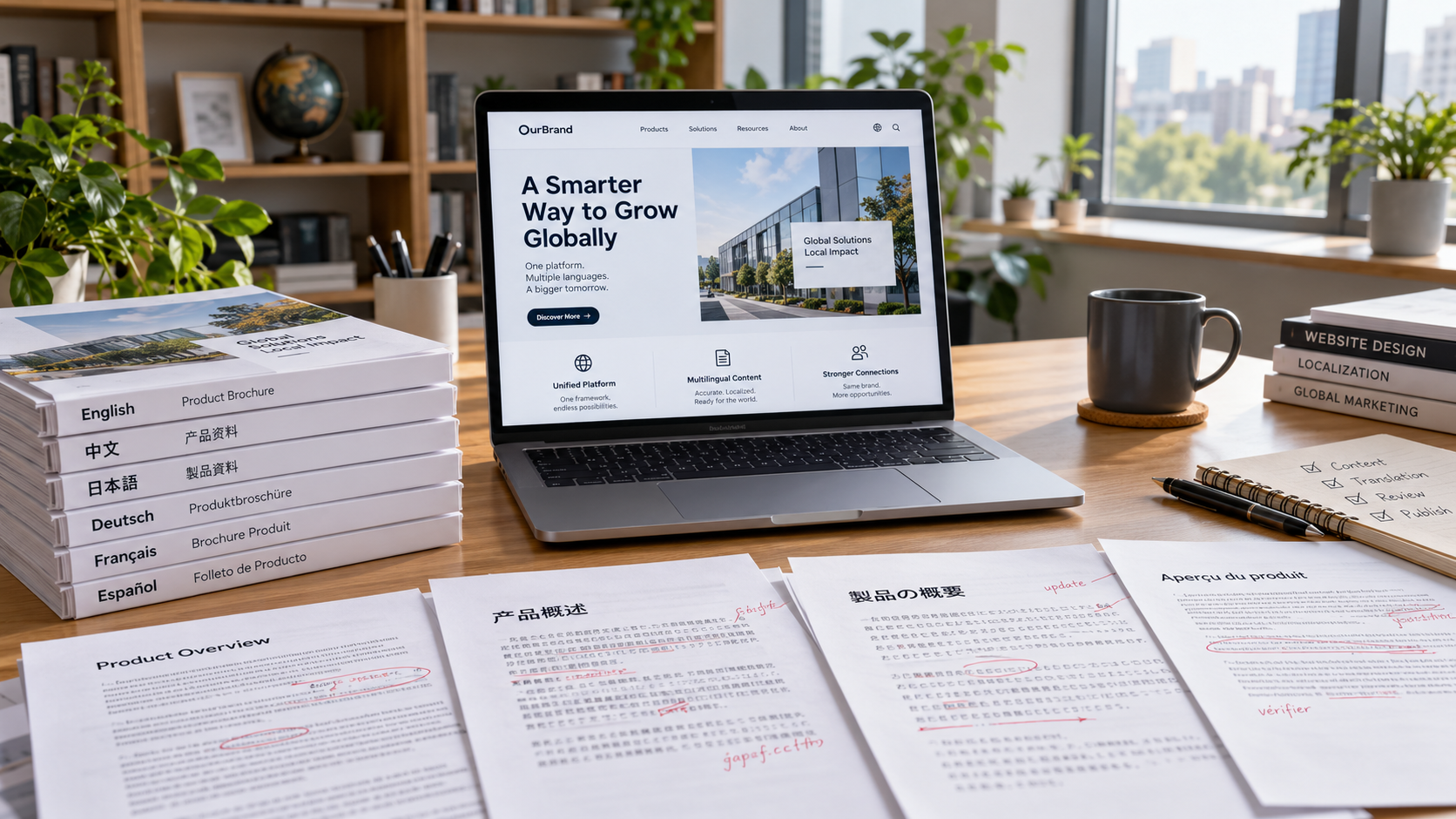
 How Can Localization Services Adapt Website Content to Target Markets?
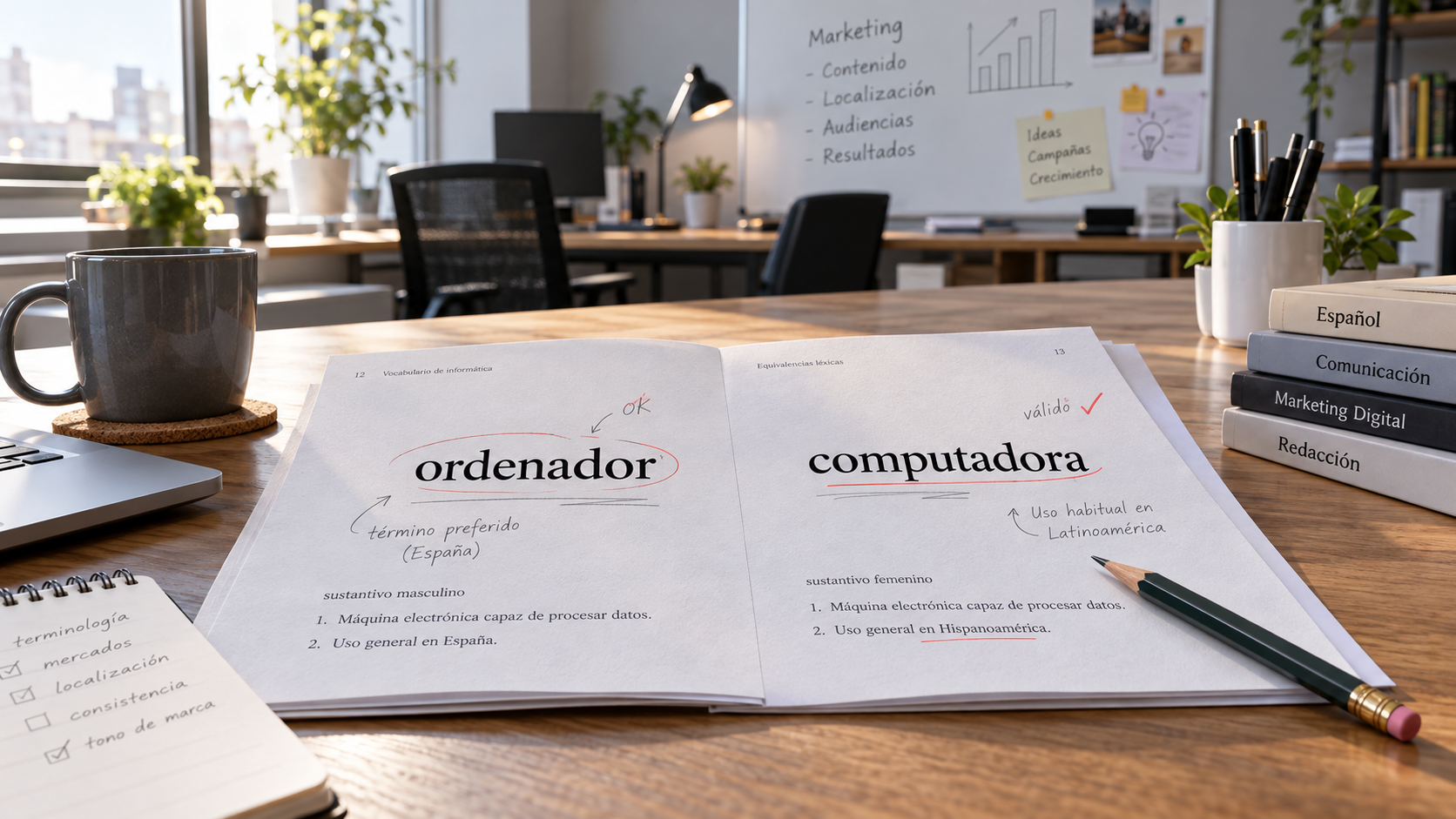
 How Can You Avoid Regional Word Choice Pitfalls When Translating Spanish Web Ad Copy?
 Do the Costs of Building a Multilingual Website for International Trade Increase with the Number of Languages?
Related Products
 Yiyingbao SaaS Intelligent Website Building and Marketing SystemYiyingbao SaaS Intelligent Website Building and Marketing System, AI-powered no-code website building, rapid creation of multilingual B2B international websites in 10 minutes, global server acceleration, AI-powered SEO optimization, helping businesses connect efficiently with global markets. The perfect integration of technology and operation makes building an international trade website remarkably simple
 AI+SEM Intelligent Advertising Marketing SystemAI+SEM drives intelligent ad creation, empowering full-funnel precision advertising marketing. The system automatically generates weekly/monthly reports, AI recommends keywords and target countries, monitors core metrics in real-time with intelligent alerts, and enables one-click high-conversion ad solutions to help quickly acquire customers and improve ROI.
 AI+SEO Dual-Engine System Optimization ServicesYiyingbao’s AI+SEO dual-engine optimization system helps foreign trade enterprises acquire high-quality organic traffic through AI-powered keyword research, content generation, and comprehensive technical optimization, significantly improving search rankings and conversion rates.
 AI+SNS Social Media Marketing SystemYingbao AI+SNS Social Media Marketing System - Precision social capture for the social media era. Supports one-click content synchronization across major platforms like Facebook and LinkedIn. AI intelligently rewrites posts for enhanced relevance. 24/7 AI customer service and user profiling analysis empower businesses to efficiently expand into global markets.
 AI+SEO营销解决方案易营宝AI+SEO营销解决方案,通过AI批量写作、智能生成TDK、精准关键词扩词等功能,全面优化网站SEO效果,提升流量与转化率。助力企业构建高效智能网站新生态。
 AI+SEM Advertising Marketing SolutionsAI+SEM Advertising Marketing Solution leverages AI technology to deeply empower SEM ad campaigns. It automatically generates weekly/monthly reports using AI, presenting account data across multiple dimensions for comprehensive insights into campaign performance and trends. The system precisely recommends keywords and target countries, intelligently generates high-conversion ad copy, and enables one-click activation of efficient campaign plans to help businesses rapidly acquire customers. Simultaneously, it monitors core metrics in real time, intelligently identifies abnormal fluctuations, and issues timely alerts to ensure stable, high-return advertising results.
 Domain Name ServicesEasyWin provides professional domain name services, including intelligent queries, one-stop registration, brand protection, and full lifecycle management, helping businesses build a digital brand image.
 EasyOperate B2C Cross-Border E-Commerce Platform & Independent WebsiteEasyStore B2C Cross-border E-commerce Independent Store is an intelligent website building and cross-border e-commerce integrated solution independently developed by EasyStore Information Technology (Beijing) Co., Ltd. The system is specially designed for small and medium-sized as well as large export enterprises, integrating 'website building, operation, marketing, advertising, and conversion' into one, helping enterprises quickly establish cross-border e-commerce independent stores to achieve brand globalization and global sales growth.
The platform supports multiple languages, multiple currencies, and multi-channel marketing, with built-in AI intelligent translation and SEO optimization systems, suitable for mainstream markets such as Southeast Asia, Europe and America, Latin America, and the Middle East, assisting Chinese manufacturing enterprises in efficiently deploying international e-commerce strategies. SSL证书易营宝提供专业SSL安全证书服务,包括单域名和泛域名证书,确保网站数据传输加密、身份验证和完整性保护,助力企业建立安全可信的在线业务环境。









