









- Which customer acquisition channels will be affected by cross-border marketing trends in 2026?Sep 06, 2026View details
- Which homogenization risks should be considered in an analysis of the AI-powered website building industry?Aug 30, 2026View details
- How Will AI Marketing Trends 2026 Change Advertising Budget AllocationAug 28, 2026View details
- Is the EV SSL certificate market shrinking or upgrading? How should companies assess certificate procurement?Aug 11, 2026View details
- Why the old AMP SEO 2020 practices no longer work and what has changed in current optimization prioritiesAug 02, 2026View details
- How to Choose Topics for an Industry News Section to Attract More Organic Search TrafficJul 29, 2026View details
Which localization issues should be prioritized when building a Spanish-language standalone website?
Which Localization Issues Should Be Prioritized When Building a Spanish-Language Standalone Website?
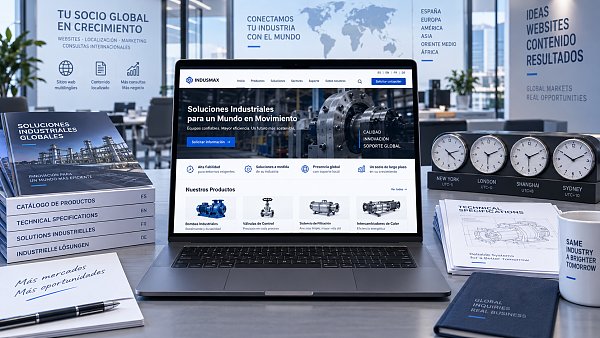
When developing a Spanish-language standalone website, the aspect most often underestimated by project leaders is not page design or website launch, but the fact that the “Spanish-speaking market” is not a single market. Spain, Mexico, Chile, Colombia, Argentina, and other regions all use Spanish, yet their purchasing terminology, price presentation, contact methods, delivery expectations, and compliance boundaries differ. Directly translating an English or Chinese website into Spanish may make the pages accessible, but it may not persuade buyers to submit an inquiry.
For companies in manufacturing, engineering equipment, industrial components, and technical services, a standalone website usually does not primarily serve to close transactions directly. Instead, it builds credibility, explains technical capabilities, screens requirements, and drives the next round of communication. Before starting the project, one question should be answered first: Will the website mainly serve the Spanish market, or multiple countries in Latin America? This decision will affect language versions, domain strategy, content structure, advertising targeting, and even the allocation of sales leads.
Language Localization Is Not the Same as Sentence-by-Sentence Translation
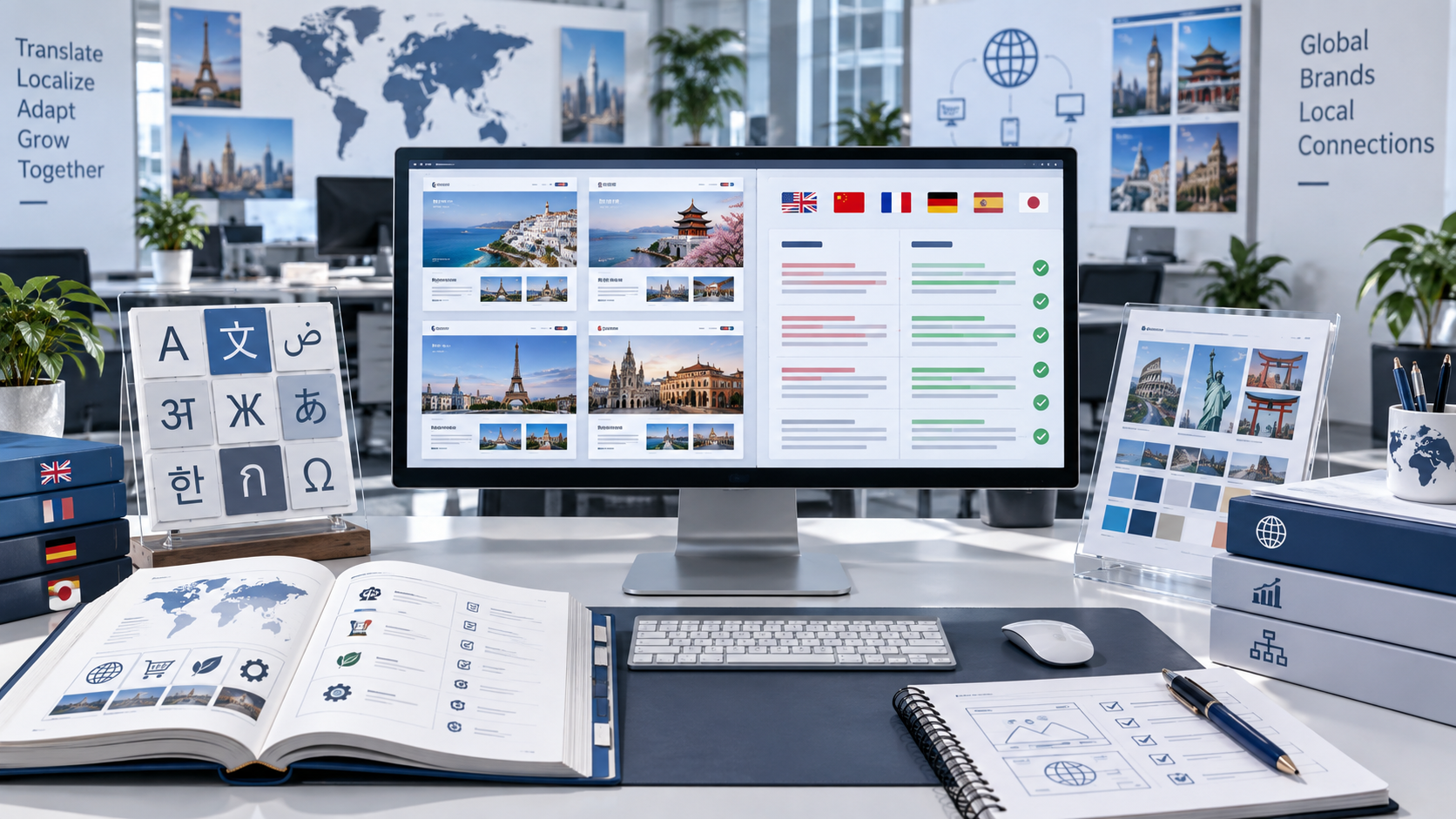
Differences in Spanish are first reflected in word choice. Terms commonly used in Spain may not sound natural in Latin America; forms of address, measurement expressions, and business tone also vary significantly across some regions. For example, an industrial website targeting Spain can use wording that better aligns with local technical documentation practices; if the main customers are from Mexico or the Andean region, overly Europeanized language should be avoided. For information such as equipment models, material grades, pressure, temperature, dimensions, and tolerances, the translation team must also understand the original parameters rather than merely processing the surface text.
Tone deserves even greater attention. Many Chinese corporate websites tend to use broad statements such as “leading,” “high quality,” and “one-stop.” Even after translation, these statements still offer little purchasing value. Spanish-language pages need to communicate information more specifically: what operating conditions the product is suitable for, what customization options are supported, how drawing confirmation is handled, and who is responsible for samples, minimum order quantities, lead times, and after-sales response. For engineering procurement personnel, such information reduces communication costs more effectively than brand slogans.
It is recommended to establish a terminology glossary during the project initiation stage and have it jointly reviewed by sales, technical, and local language personnel. At a minimum, the glossary should cover product names, core components, industry applications, certification names, fault descriptions, after-sales terminology, and inquiry fields. Although this may appear to increase the initial workload, it prevents the same valve, mold, or equipment component from being referred to in multiple ways across different pages, which can affect the professional impression and create obstacles for subsequent search promotion.
Define the Market Scope First, Then Determine the Site Architecture
Many projects discover only after launch that one “Spanish-language version” cannot accommodate all countries. If Spain is the priority market, content can be configured around local application industries, euro pricing logic, service areas, and regulatory notices; if the business covers multiple Latin American countries, it is more suitable to use neutral Spanish as the main version and add landing pages, case scenarios, contact details, or advertising pages for key countries. Whether separate country websites are needed should not be determined by language alone, but by local sales investment, inventory and delivery capabilities, keyword differences, and lead volume.
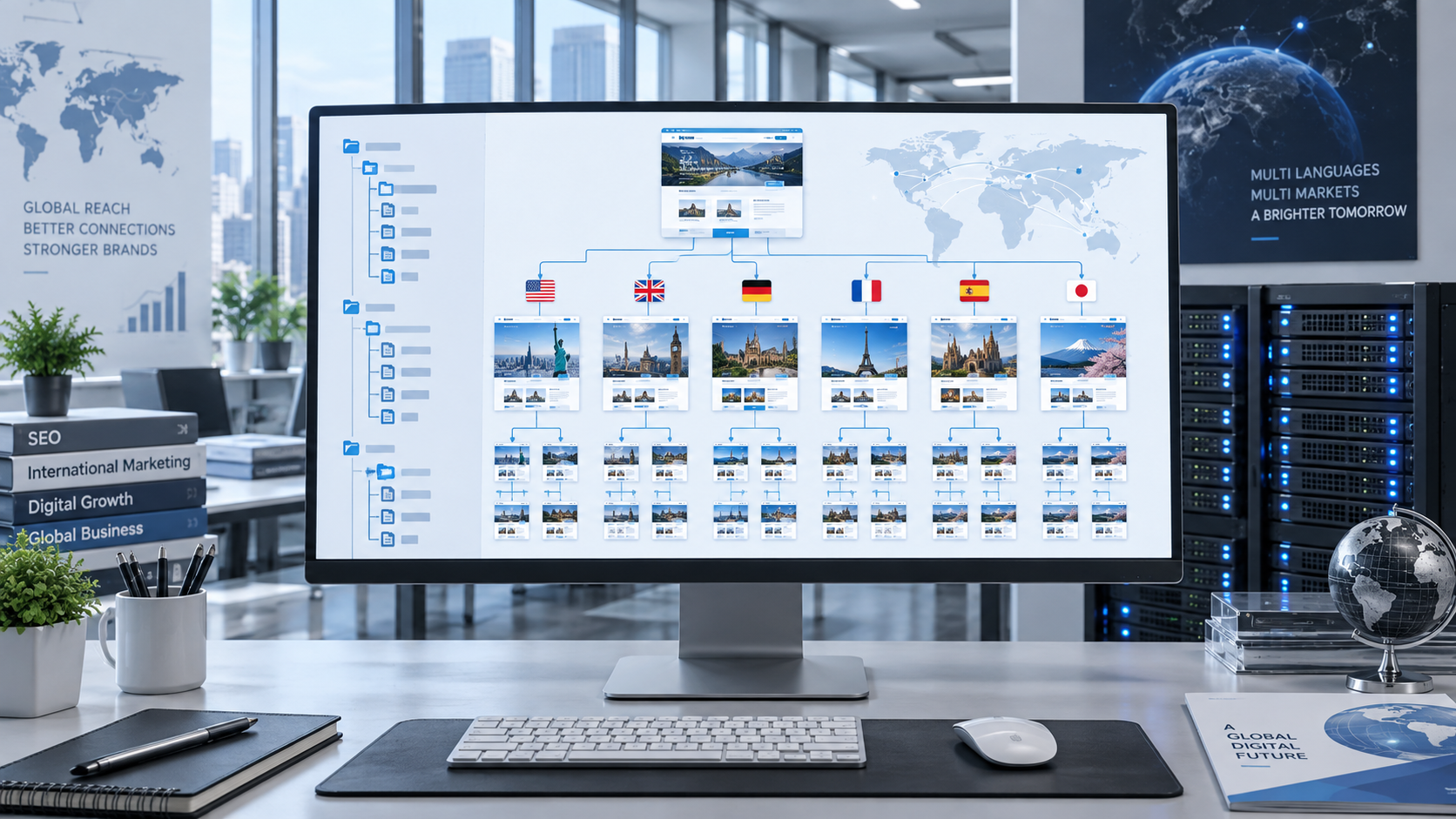
Technically, multilingual pages need clear corresponding relationships. Language switching should not merely change navigation text; product pages, solution pages, and resource pages should all link to the correct versions. Page URLs, canonical tags, language and regional annotations, and sitemaps should be planned consistently during the development stage; otherwise, subsequent remediation often results in content in different language versions competing with one another or search engines failing to crawl key pages. For content in the same language targeting different countries, whether to create regional versions should be determined based on content differences and operational capabilities, rather than simply duplicating pages to “cover more countries.”
The Inquiry Path Should Match Local Customers’ Decision-Making Habits
For B2B standalone websites, the focus of conversion design is not making forms as short as possible, but enabling customers to obtain sufficient information before they are willing to submit them. Complex equipment, engineering projects, or customized parts usually require information such as models, technical parameters, annual purchasing volume, target applications, and delivery locations. Forms can be layered: retain essential fields for an initial inquiry, and request more detailed information when users download selection materials, request a quote, or submit drawings. This both avoids turning away potential customers and enables the sales team to distinguish between general inquiries and qualified projects.
Contact methods also need to be localized. A publicly available corporate email address, international dialing code, response hours, and instant communication methods are more important than unattended online customer service. When targeting the Latin American market, response arrangements affected by time zones should also be considered. If the website promises a “fast response,” internal procedures must clarify who receives leads and when, how they are assigned, and how technical questions are routed back. Website conversion is not a task completed by the design department alone; it is an interface between website, marketing, and sales processes.
Payment, Pricing, and Trust Information Cannot Simply Copy Domestic Pages
If a standalone website also supports online transactions, payment methods, currencies, tax explanations, delivery coverage, and return and exchange policies must align with actual fulfillment capabilities. Payment preferences in Spain and Latin American countries are not entirely the same. A payment method should not be enabled by default in all regions simply because the system supports it. For industrial websites primarily focused on inquiries, public pricing also requires caution: standardized products can provide a reference range or a “Request a Quote” entry point; highly customized projects should explain that pricing is affected by specifications, quantities, transportation, and certification requirements, preventing customers from treating a single number on the webpage as the final quotation.
Trust is generally built through verifiable information rather than densely placed icons. Factory capabilities, testing conditions, export experience, scope of document support, quality processes, and after-sales boundaries should all be clearly stated according to actual circumstances. When certifications, environmental requirements, or industry standards are involved, they must be based on documents actually held by the company and the requirements of the target project. Especially for engineering procurement, vague statements such as “compliant with all international standards” can instead increase review risks.
Privacy, Cookies, and Data Collection Should Be Addressed During Development
If a website targets users in Spain and collects names, email addresses, phone numbers, or form content, the EU General Data Protection Regulation and relevant local requirements generally need to be taken seriously. Privacy policies, Cookie notices, marketing subscription consent, and the triggering methods for third-party analytics and advertising code cannot be addressed casually by adding a paragraph after launch. In particular, form pages should explain the purpose of information use, data retention, and contact channels; when using remarketing ads, it is also necessary to confirm whether user consent matches the tool configuration.
Data protection requirements vary among Latin American countries. If a company plans to run advertising campaigns or build customer databases over the long term, it should include target countries, data processing entities, connected platforms, and internal permission management in the project checklist. Legal text should not be copied directly from other websites; specific applicability still needs to be verified in light of the business model and local requirements.
Search Visibility Should Begin with Content Planning, Not Adding Keywords After Launch
To obtain sustained traffic, a Spanish-language standalone website cannot focus only on company introductions and product catalogs. Procurement personnel search for product categories, application scenarios, causes of faults, selection methods, material differences, installation requirements, and supplier capabilities. Breaking down these real questions into product pages, application pages, technical articles, and downloadable materials can both help customers understand and more easily create clear page topics.
Advertising landing pages and organic search pages should not be used in exactly the same way. Advertising pages can quickly explain advantages, parameters, and inquiry actions around one clear scenario; long-term content pages should retain more complete technical explanations and internal links. Yiyingbao has long provided multilingual website development, search optimization, advertising, and social media operation services. Its value lies not only in building the website, but also in connecting language structure, page indexability, lead attribution, and subsequent promotion paths in advance during website development. For teams that need to manage pages for multiple countries at the same time, this integrated approach to website and marketing services generally saves more project rework than “launch first and redo promotion later.”
Project Leaders Should Focus Acceptance Criteria on “Whether It Can Be Continuously Operated”
A deliverable Spanish-language website does not necessarily mean an overseas website that can be operated effectively. During acceptance, in addition to checking whether pages are complete and whether the mobile version is usable, teams should actually test language switching, form emails, attachment uploads, inquiry assignment, tracking records, script status after Cookie consent, and whether product information can be updated conveniently. If Portuguese, English, or versions for other regions are planned for future expansion, backend permissions, content reuse, and version management should also be confirmed in advance.
Yiyingbao Information Technology (Beijing) Co., Ltd. was established in 2013 and provides services including intelligent website development, SEO optimization, advertising placement, and social media marketing based on artificial intelligence and big data. Its clients include foreign trade companies, manufacturing plants, and globalizing brands. For Spanish-language projects, a more reasonable approach is to first clarify target countries and customer acquisition scenarios, then incorporate language, content, compliance, technology, and promotion responsibilities into the same implementation plan. In this way, what is seen after launch is not merely a translated website, but a business entry point capable of handling genuine overseas demand.
Related Articles
 Website Localization Is More Than Translation: What Else Should Be Adjusted Before Entering a New Market?
 How Can Multilingual Website Translation Avoid Machine Translation Distortion and Brand Messaging Inconsistencies
 How Can a Multilingual Website SEO Architecture Prevent Country Sites from Competing for Rankings?

Related Products
 Yiyingbao SaaS Intelligent Website Building and Marketing SystemYiyingbao SaaS Intelligent Website Building and Marketing System, AI-powered no-code website building, rapid creation of multilingual B2B international websites in 10 minutes, global server acceleration, AI-powered SEO optimization, helping businesses connect efficiently with global markets. The perfect integration of technology and operation makes building an international trade website remarkably simple
 AI+SEM Intelligent Advertising Marketing SystemAI+SEM drives intelligent ad creation, empowering full-funnel precision advertising marketing. The system automatically generates weekly/monthly reports, AI recommends keywords and target countries, monitors core metrics in real-time with intelligent alerts, and enables one-click high-conversion ad solutions to help quickly acquire customers and improve ROI.
 AI+SEO Dual-Engine System Optimization ServicesYiyingbao’s AI+SEO dual-engine optimization system helps foreign trade enterprises acquire high-quality organic traffic through AI-powered keyword research, content generation, and comprehensive technical optimization, significantly improving search rankings and conversion rates.
 AI+SNS Social Media Marketing SystemYingbao AI+SNS Social Media Marketing System - Precision social capture for the social media era. Supports one-click content synchronization across major platforms like Facebook and LinkedIn. AI intelligently rewrites posts for enhanced relevance. 24/7 AI customer service and user profiling analysis empower businesses to efficiently expand into global markets.
 AI+SEO营销解决方案易营宝AI+SEO营销解决方案,通过AI批量写作、智能生成TDK、精准关键词扩词等功能,全面优化网站SEO效果,提升流量与转化率。助力企业构建高效智能网站新生态。
 AI+SEM Advertising Marketing SolutionsAI+SEM Advertising Marketing Solution leverages AI technology to deeply empower SEM ad campaigns. It automatically generates weekly/monthly reports using AI, presenting account data across multiple dimensions for comprehensive insights into campaign performance and trends. The system precisely recommends keywords and target countries, intelligently generates high-conversion ad copy, and enables one-click activation of efficient campaign plans to help businesses rapidly acquire customers. Simultaneously, it monitors core metrics in real time, intelligently identifies abnormal fluctuations, and issues timely alerts to ensure stable, high-return advertising results.
 Domain Name ServicesEasyWin provides professional domain name services, including intelligent queries, one-stop registration, brand protection, and full lifecycle management, helping businesses build a digital brand image.
 EasyOperate B2C Cross-Border E-Commerce Platform & Independent WebsiteEasyStore B2C Cross-border E-commerce Independent Store is an intelligent website building and cross-border e-commerce integrated solution independently developed by EasyStore Information Technology (Beijing) Co., Ltd. The system is specially designed for small and medium-sized as well as large export enterprises, integrating 'website building, operation, marketing, advertising, and conversion' into one, helping enterprises quickly establish cross-border e-commerce independent stores to achieve brand globalization and global sales growth.
The platform supports multiple languages, multiple currencies, and multi-channel marketing, with built-in AI intelligent translation and SEO optimization systems, suitable for mainstream markets such as Southeast Asia, Europe and America, Latin America, and the Middle East, assisting Chinese manufacturing enterprises in efficiently deploying international e-commerce strategies. SSL证书易营宝提供专业SSL安全证书服务,包括单域名和泛域名证书,确保网站数据传输加密、身份验证和完整性保护,助力企业建立安全可信的在线业务环境。









