









- AI Is Eating SaaS: Three Real-World Cases in One AfternoonOct 25, 2026View details
- Exiger CEO: The SaaS Apocalypse Is Real, but It Means Something DifferentOct 25, 2026View details
- Hengqin Cooperation Zone Shares Cross-Border E-Commerce Developments, Focusing on Macao-Hengqin Collaboration and International MarketsOct 24, 2026View details
- A Shenyang study highlights the development of the “cross-border e-commerce + industrial cluster” modelOct 24, 2026View details
- Three China Advertising Association GEO group standards take effect on October 23Oct 24, 2026View details
- Amazon Raises Fulfillment Fees Twice, Yet the Median Platform Fee Remains Around 40%Oct 22, 2026View details
What localization is needed for an independent website for a fragrance brand expanding overseas?
What Localization Does an Independent Website for an International Fragrance Brand Need?
Cross-border fragrance business is often mistakenly seen as simply translating a Chinese website into English and adding payment and logistics options. Those who have actually operated overseas independent websites usually soon realize that fragrance is not a standardized accessory: consumers are buying an imagined scent, a usage scenario, and trust in the brand. How a "woody" scent is explained on a page, which occasions a gift set is suitable for, whether a candle's burn time is clearly stated, and whether returns or exchanges are available during shipping can all directly affect purchase decisions.
Therefore, the localization required for an independent website taking a fragrance brand overseas involves more than multilingual content. A more mature approach is to connect language, content, product information, compliance disclosures, payment and logistics, and customer acquisition channels into an experience designed for local consumers. Especially for brands entering the North American, European, Japanese, Korean, or Middle Eastern markets, determining which content must be adapted and which can be reused is more practical than launching sites for many countries all at once.
First, Understand That Translation, Localization, and Local Market Operations Are Not the Same
Translation makes content understandable; localization makes it easier to buy; local market operations focus on where users come from, why they trust you, and whether they are willing to repurchase after ordering. The most common issue with fragrance websites is that the copy may be grammatically correct but reads like a product specification. Expressions such as "premium long-lasting fragrance" or "maximum atmosphere" often lack a concrete image when translated literally, making it difficult for overseas users to judge the scent profile.
A more effective approach is usually to place the scent in a relatable setting: suitable for a bedroom in the morning, reading on a rainy day, the living room before dinner, or as a reliable gifting choice. At the same time, clearly state the top, middle, and base notes or key fragrance materials, but do not merely pile up terminology. Consumers need to know whether it smells fresh, dry, or sweet, how strong the scent diffusion is, and whether it is better suited to small spaces or open areas.
Different Markets Have Different Understandings of "Scent," So One Product Detail Page Cannot Be Used Everywhere
The order of selling points for the same reed diffuser may differ across markets. North American users often focus on home-use scenarios, gifting, subscription replenishment, and authentic reviews; some European consumers care more about ingredient transparency, packaging materials, refills, and whether a brand makes excessive claims; Japanese and Korean markets are often more sensitive to restrained visuals, spatial suitability, and usage details; Middle Eastern markets may be more receptive to rich, layered scent expressions. This is not about simply labeling markets, but a reminder to brands: do not copy one English product detail page across every country site.
A practical test is this: if users still do not know after reading the page, "How is this different from the fragrances I already have at home?", "What happens if I choose the wrong scent?", or "How long will delivery take?", then the content remains a brand showcase rather than an independent website that can generate sales.
Product Pages Should Reduce the Uncertainty of Not Being Able to Smell
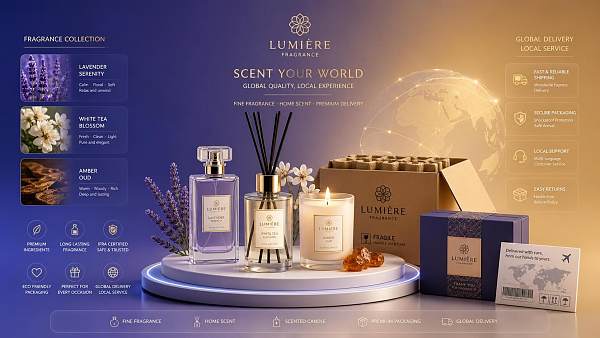
Fragrance sold online has an inherent limitation: consumers cannot smell it through a screen. The core of an excellent localized product page is not more elaborate writing, but reducing the cost of trial and error for users. In addition to the fragrance-note structure, it is advisable to build clear "scent navigation"—for example, allowing filtering by fresh, floral, woody, citrus, smoky, and sweet profiles, while indicating intensity, suitable seasons, and spaces.
Candles, diffusers, sprays, perfumes, and car fragrances also require different information. Candle pages should place burning and care recommendations where they are easy to find; diffuser products need to explain the relationship between the number of reeds, turning frequency, and room size; perfumes require clearer explanations that skin feel, projection, and longevity may vary depending on the environment and individual condition. Overstating claims such as "lasts all day" or "suitable for everyone" may attract clicks in the short term but can easily lead to complaints and low ratings later.
Discovery sets, sample bundles, scent quizzes, and gift set combinations are common conversion tools, but whether to use them depends on supply chain and fulfillment capabilities. Especially when cross-border shipping costs are high, low-priced samples without a subsequent credit mechanism or repurchase path may generate many orders but not necessarily meaningful profits.
Payment, Logistics, and Compliance Information Determine Whether Trust Can Be Established
Many brands treat payment methods as the final step in website development, but they should actually be planned when the target market is selected. Users in different regions have different preferences for credit cards, digital wallets, local bank transfers, or installment payments. If a checkout page offers only a few payment options, or taxes and shipping charges appear only at the final step, cart abandonment is often unavoidable.
Logistics communication also needs to be localized. Do not simply state "free worldwide shipping"; instead, clearly specify the shipping origin, estimated delivery window, whether tracking is available, how remote areas are handled, and the after-sales process if products are damaged, leak, or fail to meet scent expectations. When fragrance products involve liquids, glass containers, alcohol-based formulas, or fragile packaging, different carriers and destinations may impose different restrictions. The actual serviceable areas, declaration requirements, and packaging solutions should be confirmed item by item before launch.
Compliance disclosures likewise cannot rely on templates. Perfumes, home fragrances, and scented candles do not have exactly the same regulatory focus. Ingredients, warning statements, instructions for use, responsible-party information, and labeling requirements must also be verified in accordance with the sales location, product format, and local rules. Websites can provide clear and honest disclosures, but unverified claims such as "natural," "non-toxic," or "zero-allergen" should not be presented as absolute promises.
Website Structure Should Serve Customer Acquisition, Not Only Brand Presentation
From a marketing perspective, fragrance independent websites usually need to distinguish at least three types of entry points: people directly searching for the brand name, people searching for specific scent profiles or usage scenarios, and people arriving from social media short videos, influencer content, or advertising landing pages. The above-the-fold information these three groups see should not be exactly the same. People who already know the brand need access to new products, collections, and repurchases; people searching questions such as "recommended bedroom fragrances" need buying guides; people arriving through ads need to quickly see the product benefits, reviews, prices, and delivery promises.
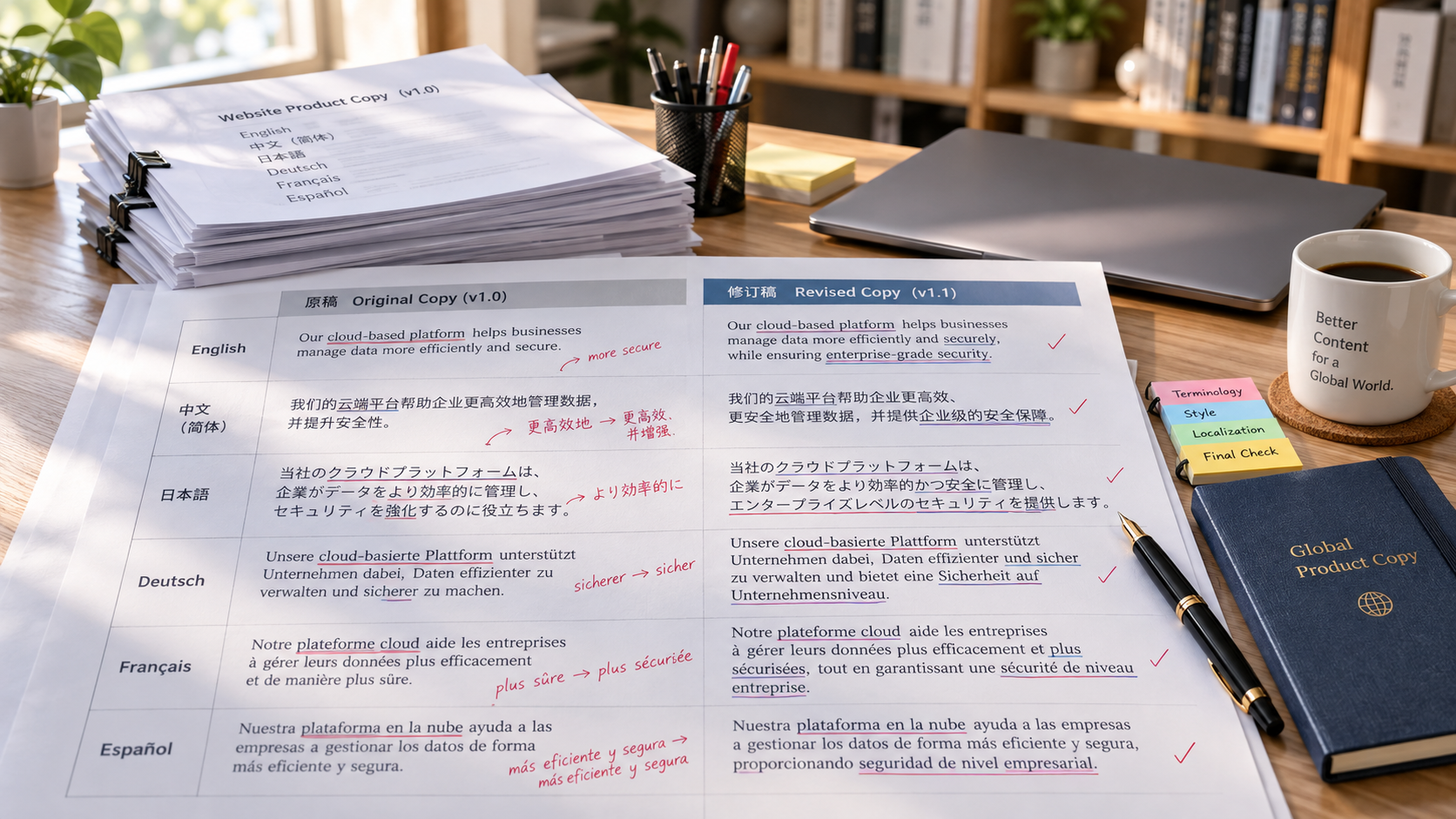
A multilingual site also does not simply mean adding a language switcher to every page. Language, currency, shipping rules, measurement units, date formats, customer service time zones, and content recommendations should ideally remain consistent. If resources are limited, prioritize developing key markets in depth: first complete the core product pages, collection pages, shipping and returns pages, frequently asked questions, and several high-intent content pages, then expand into more languages. Launching more than a dozen languages at once while maintaining no content on each site usually will not produce ideal search visibility or conversion results.
Website Development and Marketing Need to Be Planned on the Same Map
Localization for a fragrance brand's independent website is not complete when the design team, translation team, and advertising team each finish their own part. Scent terminology on the page, scenarios in advertising materials, narratives in social media content, and topics in search content should use similar but non-repetitive consumer language. Otherwise, an advertisement may say "evening relaxation" while the landing page only introduces craftsmanship; social media may emphasize gifting while no gift set page can be found on the site. Even if traffic arrives, it will be difficult to form a closed loop.
Service platforms such as Yiyingbao, which cover intelligent website building, multilingual websites, SEO, advertising, and overseas social media operations, are better suited to play a coordinating role in actual projects: using a unified website architecture to support content for different markets, then continuously adjusting pages based on feedback from search, advertising, and social media. For brands, the key is not having more tools, but whether products, content, data, and channels can operate around the same target markets.
If only one thing can be done first, it is recommended to select the three best-selling and most representative scent profiles, rewrite their product pages in ways consumers in the target market can understand, and complete the information on shipping, returns and exchanges, instructions for use, and realistic scent expectations. Independent website localization truly begins to work not by adding more languages, but by reducing every moment of user hesitation.
Related Articles
 Can I learn to use a multilingual content management system without a technical background?
 How can you evaluate a provider’s translation editing capabilities for AI-powered multilingual website services?
 Building a Website for the Russian-Speaking Market: Is Translating the Website Enough?

Related Products
 Yiyingbao SaaS Intelligent Website Building and Marketing SystemYiyingbao SaaS Intelligent Website Building and Marketing System, AI-powered no-code website building, rapid creation of multilingual B2B international websites in 10 minutes, global server acceleration, AI-powered SEO optimization, helping businesses connect efficiently with global markets. The perfect integration of technology and operation makes building an international trade website remarkably simple
 AI+SEM Intelligent Advertising Marketing SystemAI+SEM drives intelligent ad creation, empowering full-funnel precision advertising marketing. The system automatically generates weekly/monthly reports, AI recommends keywords and target countries, monitors core metrics in real-time with intelligent alerts, and enables one-click high-conversion ad solutions to help quickly acquire customers and improve ROI.
 AI+SEO Dual-Engine System Optimization ServicesYiyingbao’s AI+SEO dual-engine optimization system helps foreign trade enterprises acquire high-quality organic traffic through AI-powered keyword research, content generation, and comprehensive technical optimization, significantly improving search rankings and conversion rates.
 AI+SNS Social Media Marketing SystemYingbao AI+SNS Social Media Marketing System - Precision social capture for the social media era. Supports one-click content synchronization across major platforms like Facebook and LinkedIn. AI intelligently rewrites posts for enhanced relevance. 24/7 AI customer service and user profiling analysis empower businesses to efficiently expand into global markets.
 AI+SEO营销解决方案易营宝AI+SEO营销解决方案,通过AI批量写作、智能生成TDK、精准关键词扩词等功能,全面优化网站SEO效果,提升流量与转化率。助力企业构建高效智能网站新生态。
 AI+SEM Advertising Marketing SolutionsAI+SEM Advertising Marketing Solution leverages AI technology to deeply empower SEM ad campaigns. It automatically generates weekly/monthly reports using AI, presenting account data across multiple dimensions for comprehensive insights into campaign performance and trends. The system precisely recommends keywords and target countries, intelligently generates high-conversion ad copy, and enables one-click activation of efficient campaign plans to help businesses rapidly acquire customers. Simultaneously, it monitors core metrics in real time, intelligently identifies abnormal fluctuations, and issues timely alerts to ensure stable, high-return advertising results.
 Domain Name ServicesEasyWin provides professional domain name services, including intelligent queries, one-stop registration, brand protection, and full lifecycle management, helping businesses build a digital brand image.
 EasyOperate B2C Cross-Border E-Commerce Platform & Independent WebsiteEasyStore B2C Cross-border E-commerce Independent Store is an intelligent website building and cross-border e-commerce integrated solution independently developed by EasyStore Information Technology (Beijing) Co., Ltd. The system is specially designed for small and medium-sized as well as large export enterprises, integrating 'website building, operation, marketing, advertising, and conversion' into one, helping enterprises quickly establish cross-border e-commerce independent stores to achieve brand globalization and global sales growth.
The platform supports multiple languages, multiple currencies, and multi-channel marketing, with built-in AI intelligent translation and SEO optimization systems, suitable for mainstream markets such as Southeast Asia, Europe and America, Latin America, and the Middle East, assisting Chinese manufacturing enterprises in efficiently deploying international e-commerce strategies. SSL证书易营宝提供专业SSL安全证书服务,包括单域名和泛域名证书,确保网站数据传输加密、身份验证和完整性保护,助力企业建立安全可信的在线业务环境。









