









- Can the average annual growth rate reflect real opportunities in overseas markets?Oct 07, 2026View details
- Which customer acquisition channels will be affected by cross-border marketing trends in 2026?Sep 06, 2026View details
- Which homogenization risks should be considered in an analysis of the AI-powered website building industry?Aug 30, 2026View details
- How Will AI Marketing Trends 2026 Change Advertising Budget AllocationAug 28, 2026View details
- Is the EV SSL certificate market shrinking or upgrading? How should companies assess certificate procurement?Aug 11, 2026View details
- Why the old AMP SEO 2020 practices no longer work and what has changed in current optimization prioritiesAug 02, 2026View details
Should a logistics equipment export website be in English or multilingual?
Whether a logistics equipment export website needs an English version or multiple languages is usually not an either-or question. It depends first on where the main orders come from, how customers make purchases, and whether the company has the capability to continuously operate in different markets. English is the basic language of international trade, but for high-ticket, long-decision-cycle products such as warehouse racking, conveyor lines, forklift attachments, sorting systems, and packaging equipment, whether customers can understand the solution in their native language often directly affects lead quality and purchase confidence.
If a company currently develops markets such as North America, the United Kingdom, and Australia mainly through trade shows, referrals from existing customers, or Google searches, it is more prudent to establish a strong English version first. If it has clearly entered markets such as Germany, France, Spain, Russia, the UAE, Japan, South Korea, or Latin America, a multilingual website is no longer merely an added benefit, but part of reducing communication barriers.
Should a logistics equipment export website use English or multiple languages? Look at the market before the number of languages.
When building a website, many companies ask, “Will using more than a dozen languages reach more customers?” On the surface, more languages mean a larger market. In practice, however, if language pages lack localized content, relevant product strategies, and personnel to follow up on inquiries, even a large number of pages will struggle to generate effective business.
Purchasing logistics equipment is unlike purchasing fast-moving consumer goods. Customers generally need to confirm equipment dimensions, load capacity, conveying speed, site layout, control methods, installation requirements, after-sales response, and spare parts supply. Even if purchasing managers can read English, they may prefer to review technical materials in their native language, particularly in Europe, Latin America, Russian-speaking regions, and some Asian markets. Native-language pages convey more than just readability; they also indicate whether a company genuinely serves that region.
A simple set of criteria can be used for an initial assessment:
- Main customers are concentrated in English-speaking countries, and products are highly standardized: prioritize a high-quality English website.
- There are already stable inquiries, distributors, or project opportunities from non-English-speaking countries: add pages in the relevant languages.
- There are plans to run Google ads or social media ads in specific countries: landing pages should preferably match the local language.
- Products require solution design, on-site installation, or complex technical communication: multilingual content should prioritize core markets rather than broad, unfocused coverage.
For most logistics equipment companies just beginning to establish independent overseas websites, the English website should generally be the primary site in the first phase, rather than being replaced by multilingual versions. If English content, product architecture, inquiry paths, case materials, and technical specifications are not well established, directly duplicating them into multiple languages will only magnify the original problems.
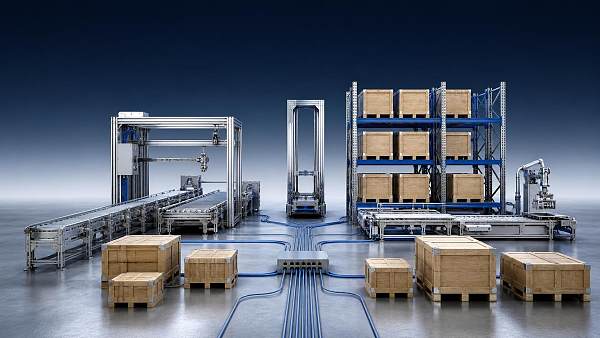
Which logistics equipment exporters are suited to an English website?
An English website is suitable for companies whose markets have not yet been clearly focused, whose budgets are limited, or whose products are mainly standard models. For example, standard conveyors, pallets, turnover boxes, racking accessories, and packaging auxiliary equipment are products for which customers initially assess compatibility through models, specifications, images, and quotations. English pages can cover a broad range of initial search demand.
However, an “English version” does not mean simply translating Chinese materials and publishing them online. A common issue with logistics equipment websites is that the homepage is written in grand terms, while product pages contain only a few images and a single phrase such as “high quality.” What buyers truly seek is useful information: applicable industries, materials that can be handled, specification ranges, optional configurations, delivery methods, customization scope, certification documents, and the site data that must be provided before making an inquiry.
An English product page capable of generating inquiries should at least tell customers what problem the equipment solves, whether it is suitable for their project, and what information they should submit next. For example, an automated conveyor line should not merely state that it is “used for warehouse transportation”; it should also explain the processes it can connect with, line configurations, load ranges, whether non-standard designs are supported, and whether the layout plan requires an engineer's assessment.
If the English content itself is incomplete, multilingual versions will only translate incomplete information into more languages. In this case, investing first in English website content development, product categorization, technical document downloads, and inquiry form optimization will usually deliver more direct returns.
These signals indicate it is time to put a multilingual website on the agenda
When a company finds that traffic and inquiries from certain countries continue to increase, it should not treat this merely as an occasional occurrence. In particular, if customers from non-English-speaking markets frequently ask about basic specifications, installation instructions, or after-sales details, the issue may not be that the product lacks competitiveness, but that the existing English pages create too high a comprehension cost.
Another signal comes from the sales team's actual experience. If customers from Spanish-speaking, French-speaking, or Russian-speaking regions repeatedly need to use translation tools to confirm requirements, or distributors constantly request local-language catalogs, case studies, and installation materials, the website should take on part of the preliminary communication work.
Multilingual development should not be limited to the homepage and menus. A more reasonable approach is to follow market priorities and first complete core product pages, industry solution pages, typical project case studies, FAQs, contact details, and inquiry forms. For pages with many professional terms, direct machine translation can easily misrepresent terms such as “load capacity,” “cycle time,” “roller spacing,” and “maintenance interval.” It is advisable to have someone familiar with the products proofread the content before localizing and polishing it.
It is also important to note that language is not the same as region. Spanish can cover multiple markets, but price conventions, commonly used specifications, delivery terms, and customer priorities may differ; Arabic and Portuguese pages also need to be configured according to the actual target regions. Without clear market actions, building language versions first is less effective than first validating whether the local market has sustained search demand and customer acquisition opportunities.
Do not treat multilingual content as an SEO page duplication tool
Some websites automatically translate the same English content into more than twenty languages, with page structures, images, specifications, and even errors remaining exactly the same. This approach may appear to expand the number of pages quickly, but both search engines and real users place greater value on whether the content is useful. If language versions lack clear relationships, regional targeting, and independent content, it is difficult to generate stable organic traffic.
Technical considerations also cannot be ignored. Each language should have a clear and accessible URL structure, and pages need correct language and regional targeting relationships to prevent visitors from being incorrectly redirected between English pages and other language pages. Product specifications, downloadable files, form prompts, privacy notices, and automatic email replies must also be synchronized. Otherwise, customers may click on a page in their native language but ultimately receive an email in English or even Chinese, causing the experience to break down at the most critical step.
Maintenance is an even more practical issue. When equipment models are discontinued, specifications are updated, case studies are added, or certification documents are replaced, all live language versions need to be updated simultaneously. If a company is temporarily unable to maintain five languages, it is better to first do English plus one or two key languages well than pursue superficial “global coverage.”
A more prudent implementation sequence
In practice, logistics equipment export websites can be developed according to “three layers of content.” The first layer is the English main website, covering brand introduction, product categories, core product pages, technical capabilities, case studies, and inquiry conversion. The second layer selects one to three validated priority languages and develops content around key products and target industries. The third layer then expands the language scope based on advertising data, organic search terms, distributor feedback, and actual inquiries.
For example, if a company focuses on warehouse racking and automated warehousing systems, the English website establishes a complete product and solution framework. If there are already project leads in the German market, it can prioritize adding German system solutions, industry case studies, and consultation pages. If it only occasionally receives inquiries from Brazilian customers, it can first observe whether demand continues before deciding whether to invest in Portuguese content. This sequence can prevent budgets from being spent on unvalidated markets.
Website development and overseas promotion should ideally be considered together. Yiyingbao provides services including AI-powered website building, multilingual website development, Google SEO, advertising, and overseas social media operations, making it suitable for companies that need to integrate website development, content, and multi-channel customer acquisition into a single plan. The key is not how many languages are launched at once, but whether each priority market has corresponding pages, promotional entry points, and an inquiry handling mechanism.
Frequently Asked Questions
Can an English website cover European customers?
It can cover some of them, especially technical buyers and multinational companies. However, in markets such as Germany, France, Italy, and Spain, native-language content is generally more likely to build initial trust. Whether to add languages should depend on local inquiries and promotion plans, rather than regional names alone.
Does every page of a multilingual website need to be translated?
Not necessarily. Translate the core pages that generate traffic and conversions first, including key products, solutions, case studies, FAQs, and inquiry pages. News, low-value archive pages, and product pages that are not yet being promoted can be handled later.
Can AI translation be published directly?
AI can improve the efficiency of first drafts, but logistics equipment involves technical terminology and project conditions, so it still requires review by product personnel or professional translators. In particular, specifications, units, load capacity, lead times, certifications, and safety-related wording cannot rely solely on automatic translation.
Which language should be selected first when starting in overseas markets?
Start with English, then select one non-English-speaking market with the strongest order base or a clear promotion plan as the second language. The selection should be based on the distribution of existing customers, historical inquiries, trade show leads, and sales strategy.
Returning to the original question: whether a logistics equipment export website needs English or multiple languages should not be judged by the idea that “the more languages, the better.” An English version is the foundation for most companies entering overseas markets; multilingual versions should serve markets that have been validated or are clearly targeted for entry. First make the English website a business tool that can explain products, handle inquiries, and support promotion, then concentrate resources on language markets most likely to generate orders. Only then can website investment be more easily converted into real opportunities.
Related Articles
Related Products
 Yiyingbao SaaS Intelligent Website Building and Marketing SystemYiyingbao SaaS Intelligent Website Building and Marketing System, AI-powered no-code website building, rapid creation of multilingual B2B international websites in 10 minutes, global server acceleration, AI-powered SEO optimization, helping businesses connect efficiently with global markets. The perfect integration of technology and operation makes building an international trade website remarkably simple
 AI+SEM Intelligent Advertising Marketing SystemAI+SEM drives intelligent ad creation, empowering full-funnel precision advertising marketing. The system automatically generates weekly/monthly reports, AI recommends keywords and target countries, monitors core metrics in real-time with intelligent alerts, and enables one-click high-conversion ad solutions to help quickly acquire customers and improve ROI.
 AI+SEO Dual-Engine System Optimization ServicesYiyingbao’s AI+SEO dual-engine optimization system helps foreign trade enterprises acquire high-quality organic traffic through AI-powered keyword research, content generation, and comprehensive technical optimization, significantly improving search rankings and conversion rates.
 AI+SNS Social Media Marketing SystemYingbao AI+SNS Social Media Marketing System - Precision social capture for the social media era. Supports one-click content synchronization across major platforms like Facebook and LinkedIn. AI intelligently rewrites posts for enhanced relevance. 24/7 AI customer service and user profiling analysis empower businesses to efficiently expand into global markets.
 AI+SEO营销解决方案易营宝AI+SEO营销解决方案,通过AI批量写作、智能生成TDK、精准关键词扩词等功能,全面优化网站SEO效果,提升流量与转化率。助力企业构建高效智能网站新生态。
 AI+SEM Advertising Marketing SolutionsAI+SEM Advertising Marketing Solution leverages AI technology to deeply empower SEM ad campaigns. It automatically generates weekly/monthly reports using AI, presenting account data across multiple dimensions for comprehensive insights into campaign performance and trends. The system precisely recommends keywords and target countries, intelligently generates high-conversion ad copy, and enables one-click activation of efficient campaign plans to help businesses rapidly acquire customers. Simultaneously, it monitors core metrics in real time, intelligently identifies abnormal fluctuations, and issues timely alerts to ensure stable, high-return advertising results.
 Domain Name ServicesEasyWin provides professional domain name services, including intelligent queries, one-stop registration, brand protection, and full lifecycle management, helping businesses build a digital brand image.
 EasyOperate B2C Cross-Border E-Commerce Platform & Independent WebsiteEasyStore B2C Cross-border E-commerce Independent Store is an intelligent website building and cross-border e-commerce integrated solution independently developed by EasyStore Information Technology (Beijing) Co., Ltd. The system is specially designed for small and medium-sized as well as large export enterprises, integrating 'website building, operation, marketing, advertising, and conversion' into one, helping enterprises quickly establish cross-border e-commerce independent stores to achieve brand globalization and global sales growth.
The platform supports multiple languages, multiple currencies, and multi-channel marketing, with built-in AI intelligent translation and SEO optimization systems, suitable for mainstream markets such as Southeast Asia, Europe and America, Latin America, and the Middle East, assisting Chinese manufacturing enterprises in efficiently deploying international e-commerce strategies. SSL证书易营宝提供专业SSL安全证书服务,包括单域名和泛域名证书,确保网站数据传输加密、身份验证和完整性保护,助力企业建立安全可信的在线业务环境。









