









- CBP Finalizes Electronic Rail Export Manifest Rule, Effective October 26, 2026Oct 26, 2026View details
- Amazon’s 2026 peak season surcharge takes effect on October 25Oct 26, 2026View details
- AI Is Eating SaaS: Three Real-World Cases in One AfternoonOct 25, 2026View details
- Exiger CEO: The SaaS Apocalypse Is Real, but It Means Something DifferentOct 25, 2026View details
- Hengqin Cooperation Zone Shares Cross-Border E-Commerce Developments, Focusing on Macao-Hengqin Collaboration and International MarketsOct 24, 2026View details
- A Shenyang study highlights the development of the “cross-border e-commerce + industrial cluster” modelOct 24, 2026View details
Is Q&A content development useful for multilingual websites?
Is Q&A Content Development Useful for Multilingual Websites? The Key Is Not “Writing More,” but “Answering Correctly”
Is Q&A content development useful for multilingual websites? The answer is yes, but only if it addresses questions that local users genuinely ask, rather than translating common Chinese FAQs sentence by sentence and spreading them evenly across pages in every language.
After launching English, German, French, or Arabic websites, many companies expanding overseas find that their product pages look complete, yet traffic and inquiries show no significant improvement. The issue is often not the number of pages, but that the website only explains “what I sell” without addressing buyers’ concerns during the decision-making process: whether the product meets local usage conditions, whether the minimum order quantity is acceptable, how lead times are calculated, whether customization is available, how after-sales service is handled, and whether it is compatible with existing solutions.
These are exactly the areas that Q&A content is best suited to address. For multilingual websites, it can both supplement details that are difficult to elaborate on in product pages and help visitors in different markets confirm more quickly whether “this is the right supplier for me.”
“Q&A” on a Multilingual Website Does Not Simply Mean an FAQ Page
When people mention Q&A content, they often think of placing a dozen expandable questions at the bottom of a page, such as “Are you a factory?”, “Do you support customization?”, and “How can we contact you?” Such content can be retained, but it is usually not enough to support content development for a multilingual website.
Truly valuable Q&A content should appear where users need it. For example, product detail pages for B2B manufacturers can answer questions about materials, dimensional tolerances, suitable environments, and sample procedures; solution pages can explain how to choose between different models; blogs or knowledge centers can provide in-depth answers to questions such as “What applications is this type of equipment suitable for?” and “What technical parameters need to be confirmed before purchasing?” E-commerce pages, meanwhile, need to explain delivery coverage, return and exchange policies, tax notices, and payment methods.
In other words, Q&A is not an isolated section, but a method of organizing content. It turns sales responses, technical communications, and pre-sales concerns that already exist within a company into content that customers can find through search or on-site browsing.
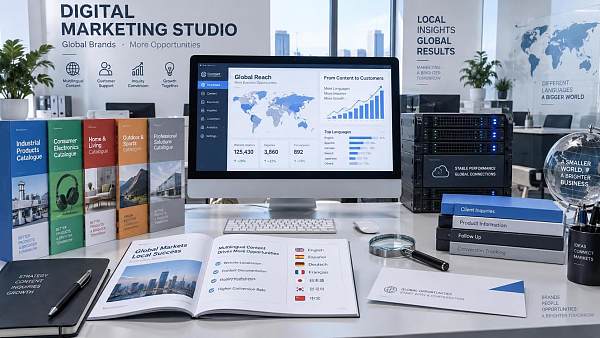
Why Multilingual Contexts Require Questions to Be Clearly Explained
Cross-language access naturally increases the cost of understanding. Customers cannot simply make a phone call to confirm details as they might with local purchasing; especially for industrial products, customized products, and high-value products, buyers often complete an initial round of screening on the website. If key concerns are not answered in advance, they may not necessarily submit an inquiry. More commonly, they return to the search results and continue comparing other suppliers.
The focus of buyers also varies from market to market. North American buyers may be more accustomed to first assessing delivery efficiency, ease of use, and the scope of service; some European customers may examine material information, compatibility requirements, and documentation more carefully; while customers in the Middle East, Latin America, and Southeast Asia may more often ask about payment, shipping, distributor cooperation, or the feasibility of small-batch purchasing. There is no universal question list that applies everywhere. Companies need to find answers from actual inquiries, sales chat records, customer service emails, and on-site search terms.
Therefore, the challenge of multilingual content is not translation speed, but localization judgment. Directly translating “Do you support customization?” into multiple languages is certainly not a problem, but if local customers care more about certification documents, installation methods, or warranty responsibilities, the website still fails to address what matters.
How Does It Help Organic Search and Conversion?
From a search perspective, users’ search behavior is becoming more specific. Rather than searching only for a broad product term, buyers may enter queries such as “Can a certain product be used in humid environments?”, “What is the difference between one material and another?”, or “How do I choose a model suitable for a particular industry?” The search volume for these long-tail questions may not be high, but they are usually closer to actual needs. Providing clear, credible answers that are highly relevant to the product is often more meaningful than repeatedly stacking product names.
From a conversion perspective, good Q&A content can reduce ineffective communication. It is not intended to replace sales, but to help customers form more accurate expectations before making contact. For example, clearly stating “what drawings or parameters are required for customization,” “which factors usually affect quotations,” and “that sample policies need to be confirmed based on the specific product” can prevent customers from bringing vague requirements into the communication process. For sales teams, the quality of such inquiries is also usually easier to assess.
However, Q&A content must not overpromise. When it involves lead times, prices, compliance documents, performance limits, or the scope of after-sales service, necessary conditions should be retained. Technical issues should be confirmed through technical documentation, while shipping and tax issues should be verified based on the destination and order details. This is more professional than making an absolute promise and can better prevent subsequent disputes.
Which Questions Are Worth Prioritizing, and Which Content Is Likely to Be Wasted Effort?
If a website is just beginning to be built, it is not advisable to generate hundreds of Q&A entries all at once. Although this may appear content-rich, it often results in repeated meanings, awkward translations, and content disconnected from the products. A more reliable approach is to first organize questions that repeatedly arise during the pre-sales process, directly affect purchasing decisions, and can genuinely be answered accurately by the company.
- Whether a product is suitable for a particular industry, environment, or piece of equipment;
- How specifications, materials, dimensions, installation, or maintenance should be confirmed;
- How customization, sampling, minimum order quantities, packaging, and delivery processes are handled;
- The differences between choosing different models, solutions, or purchasing methods;
- What information customers need to prepare for their first cooperation.
Conversely, questions with overly vague answers do not need to occupy too much page space. Expressions such as “Why choose us?” or “Is the quality the best?” are difficult to provide with verifiable information and rarely resolve customers’ concerns. Rather than writing a long brand statement, it is better to explain specifically which documentation quality control is based on, what needs to be confirmed before quotation, and who is responsible for coordination if an issue occurs.
The Three Most Common Mistakes in Multilingual Q&A
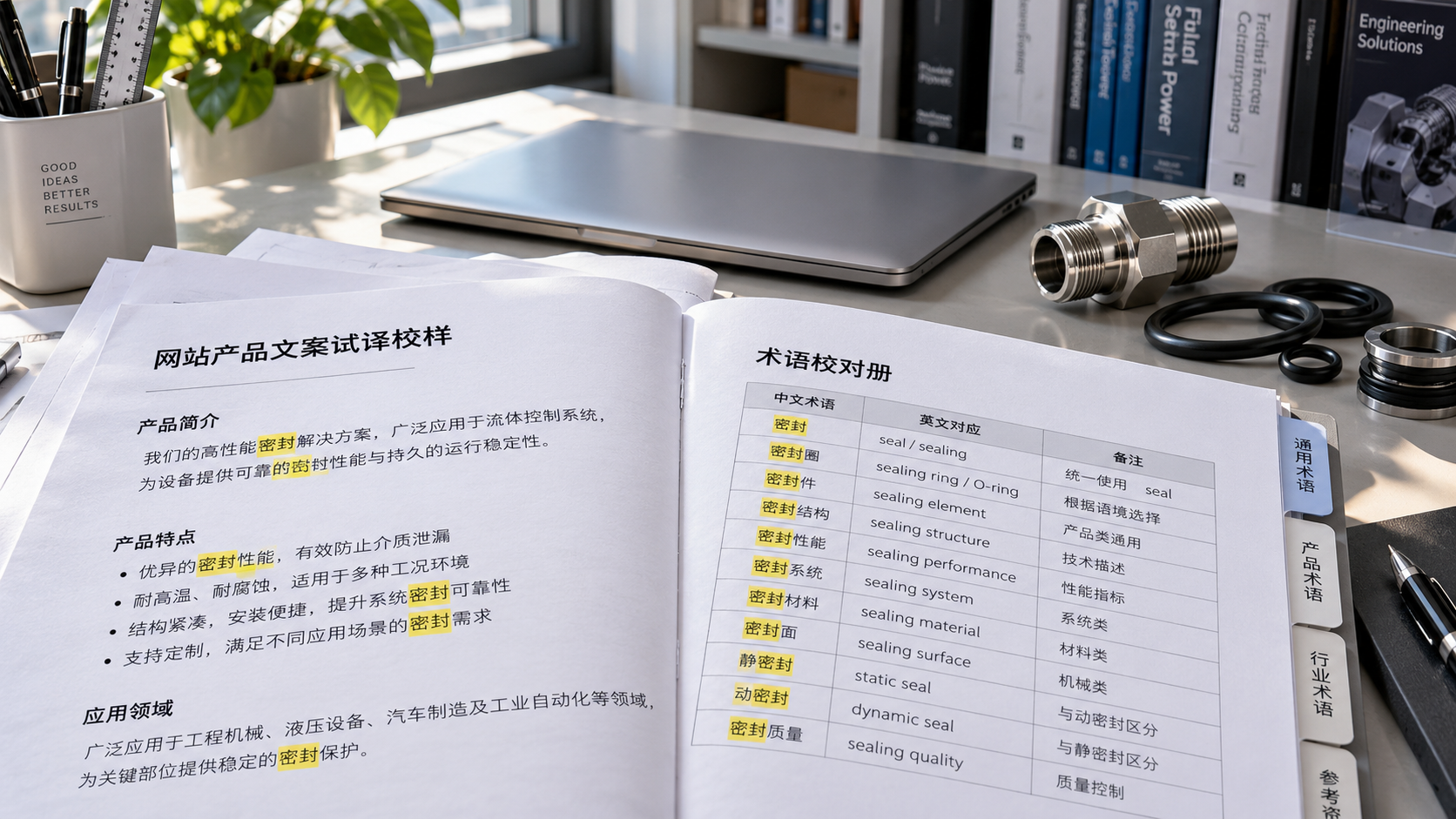
The first mistake is “one draft, multiple translations.” Source-language content can be managed centrally, but every language should be reviewed for question phrasing, units of measurement, expression habits, and the concerns of local customers. Mechanically translated pages may be grammatically correct, yet they do not sound like the way users in the target market would ask questions.
The second mistake is separating Q&A from landing pages. A customer may see a selling point on an ad page, then be unable to find information on applicable conditions, price components, or delivery methods after clicking through, causing traffic to be lost. Ads, social media content, product pages, and the Q&A library should work together around the same set of core questions, rather than being created independently.
The third mistake is failing to update content over time. After product upgrades, logistics adjustments, or changes in target markets, old answers may instead become misleading. Q&A content needs an assigned owner and a review schedule, especially for content involving inventory, lead times, qualifications, policies, and charges.
From Website Development to Promotion, Q&A Content Should Become Part of Daily Operations
For foreign trade companies, a multilingual website should not simply be a translated version of a product catalog. A more practical approach is to first identify core markets and key products, then establish content priorities based on real customer questions; place basic questions on product pages, turn questions that require an explanation of selection logic into dedicated topic pages, and consolidate continuously emerging questions in the knowledge center. The content assets created in this way serve not only search traffic, but also sales, advertising landing pages, and social media lead generation.
Service platforms such as E-Yingbao, which cover intelligent website building, multilingual websites, search optimization, advertising, and overseas social media operations, are better suited in actual projects to handle content structure and channel coordination: enabling different language versions to have manageable page systems while observing which questions cause users to stay, leave, or submit inquiries after entering the website from search, ads, or social platforms. Technical tools can improve development and maintenance efficiency, but the questions themselves still need to be calibrated by people who understand both products and markets.
Therefore, Q&A content development is certainly useful for multilingual websites, but it is not a task that can be completed simply by “adding an FAQ section.” What is truly worth investing in is clearly explaining, in ways that different markets can understand, the matters customers do not want to repeatedly clarify, sales teams answer every day, and buyers must confirm before making a decision. Only when a website can continuously answer these questions does it have a better chance of becoming part of the customer acquisition process, rather than merely a display window.
Related Articles
 Where Do the Costs of Building a Portuguese-Language Standalone Website Go?
 Can website content translation tools accurately handle industry terminology?
 Can I learn to use a multilingual content management system without a technical background?

Related Products
 Yiyingbao SaaS Intelligent Website Building and Marketing SystemYiyingbao SaaS Intelligent Website Building and Marketing System, AI-powered no-code website building, rapid creation of multilingual B2B international websites in 10 minutes, global server acceleration, AI-powered SEO optimization, helping businesses connect efficiently with global markets. The perfect integration of technology and operation makes building an international trade website remarkably simple
 AI+SEM Intelligent Advertising Marketing SystemAI+SEM drives intelligent ad creation, empowering full-funnel precision advertising marketing. The system automatically generates weekly/monthly reports, AI recommends keywords and target countries, monitors core metrics in real-time with intelligent alerts, and enables one-click high-conversion ad solutions to help quickly acquire customers and improve ROI.
 AI+SEO Dual-Engine System Optimization ServicesYiyingbao’s AI+SEO dual-engine optimization system helps foreign trade enterprises acquire high-quality organic traffic through AI-powered keyword research, content generation, and comprehensive technical optimization, significantly improving search rankings and conversion rates.
 AI+SNS Social Media Marketing SystemYingbao AI+SNS Social Media Marketing System - Precision social capture for the social media era. Supports one-click content synchronization across major platforms like Facebook and LinkedIn. AI intelligently rewrites posts for enhanced relevance. 24/7 AI customer service and user profiling analysis empower businesses to efficiently expand into global markets.
 AI+SEO营销解决方案易营宝AI+SEO营销解决方案,通过AI批量写作、智能生成TDK、精准关键词扩词等功能,全面优化网站SEO效果,提升流量与转化率。助力企业构建高效智能网站新生态。
 AI+SEM Advertising Marketing SolutionsAI+SEM Advertising Marketing Solution leverages AI technology to deeply empower SEM ad campaigns. It automatically generates weekly/monthly reports using AI, presenting account data across multiple dimensions for comprehensive insights into campaign performance and trends. The system precisely recommends keywords and target countries, intelligently generates high-conversion ad copy, and enables one-click activation of efficient campaign plans to help businesses rapidly acquire customers. Simultaneously, it monitors core metrics in real time, intelligently identifies abnormal fluctuations, and issues timely alerts to ensure stable, high-return advertising results.
 Domain Name ServicesEasyWin provides professional domain name services, including intelligent queries, one-stop registration, brand protection, and full lifecycle management, helping businesses build a digital brand image.
 EasyOperate B2C Cross-Border E-Commerce Platform & Independent WebsiteEasyStore B2C Cross-border E-commerce Independent Store is an intelligent website building and cross-border e-commerce integrated solution independently developed by EasyStore Information Technology (Beijing) Co., Ltd. The system is specially designed for small and medium-sized as well as large export enterprises, integrating 'website building, operation, marketing, advertising, and conversion' into one, helping enterprises quickly establish cross-border e-commerce independent stores to achieve brand globalization and global sales growth.
The platform supports multiple languages, multiple currencies, and multi-channel marketing, with built-in AI intelligent translation and SEO optimization systems, suitable for mainstream markets such as Southeast Asia, Europe and America, Latin America, and the Middle East, assisting Chinese manufacturing enterprises in efficiently deploying international e-commerce strategies. SSL证书易营宝提供专业SSL安全证书服务,包括单域名和泛域名证书,确保网站数据传输加密、身份验证和完整性保护,助力企业建立安全可信的在线业务环境。









