









- CBP Finalizes Electronic Rail Export Manifest Rule, Effective October 26, 2026Oct 26, 2026View details
- Amazon’s 2026 peak season surcharge takes effect on October 25Oct 26, 2026View details
- AI Is Eating SaaS: Three Real-World Cases in One AfternoonOct 25, 2026View details
- Exiger CEO: The SaaS Apocalypse Is Real, but It Means Something DifferentOct 25, 2026View details
- Hengqin Cooperation Zone Shares Cross-Border E-Commerce Developments, Focusing on Macao-Hengqin Collaboration and International MarketsOct 24, 2026View details
- A Shenyang study highlights the development of the “cross-border e-commerce + industrial cluster” modelOct 24, 2026View details
Can website content translation tools accurately handle industry terminology?
Can website content translation tools accurately handle industry terminology?
They can, but fluency alone is not enough to judge the results. Website content translation tools can handle many common terms. The real challenge is that the same word can mean different things in different product, process, and purchasing contexts. For a global trade website, mistranslating a sentence in a company introduction may simply make it sound awkward; mistranslating a material grade, compatibility condition, or warranty scope could misdirect an inquiry from the outset.
When choosing a tool, rather than asking “How many languages does it support?”, ask whether it can enforce key translations, understand page context, and track and correct errors in bulk. These capabilities are more worth verifying than fluent copy on a demo page.
Accuracy means not just getting the words right, but preserving the boundaries
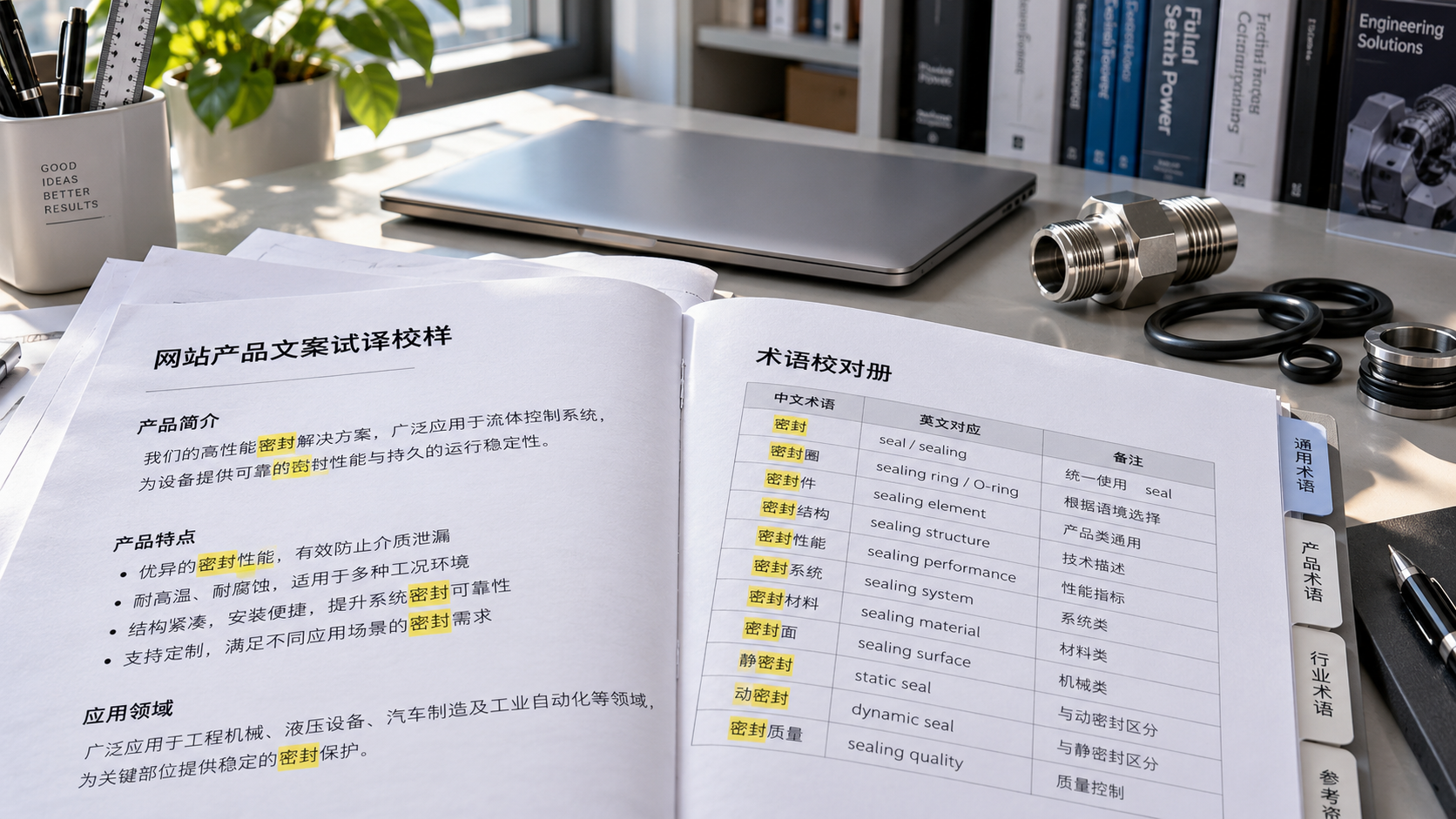
Take a manufacturer’s product page, for example. “Tolerance” should not be interpreted as general leniency, and “sealing” must be distinguished by structure, material, and action. If a tool receives only a heading or table cell, without the product category and adjacent specifications, it may convey the wrong technical meaning even when it uses the correct industry term.
More difficult to spot is the loss of qualifying conditions. “Optional configuration” becomes “standard configuration,” or “suitable for some models” becomes “suitable for all models.” The wording may still read smoothly, but the business meaning has changed. During review, check negations, scope of applicability, units, model numbers, and performance claims separately. Do not let fluent language conceal factual errors.
The source text also needs to be checked. If claims such as “high precision,” “food grade,” or “complies with a certain standard” lack clear supporting evidence, a translation tool cannot fill in the facts for the company. For certifications, regulatory requirements, and safety statements, use valid documentation as the basis; do not let the system expand on its own.
Test whether the terminology database can enforce rules—not just accept uploads
A terminology database should at least record the source term, target translation, relevant product or field, prohibited translations, and usage notes. A two-column glossary quickly falls short when a term has multiple meanings. Brand names, material grades, and part numbers also need clear rules on what must remain unchanged and what may be adapted according to the target language.
During evaluation, place the same term in a product title, body text, specification table, and inquiry form, then check whether the translation is consistent. Next, update the terminology database and reprocess some pages to see whether old translations are updated and whether content that has been manually approved is overwritten. This tests not translation quality, but whether ongoing maintenance is controllable.
Also clarify the scope of terminology rules: do they apply across the entire website, or can they be configured separately by language and product line? When a company sells both mechanical equipment and electronic components, enforcing one translation of a polysemous term across the entire site may actually create errors.
A small-scale trial using real pages is more reliable than a demo
We recommend selecting product detail pages, technical specifications, application descriptions, after-sales terms, and ad landing pages as a test set, then adding content that is prone to errors: abbreviations, values with units, similar model numbers, negative sentences, and trademarks that must remain unchanged. The sample does not need to be large, but it should cover business risks rather than consist only of pages with neatly formatted text.
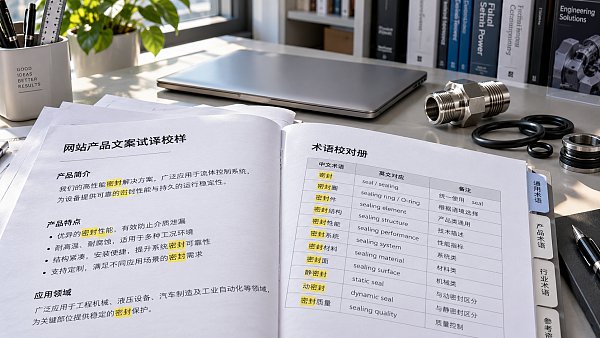
Review should follow two tracks: people familiar with the product check the technical meaning, while people familiar with the target market check the wording and purchasing habits. Neither can replace the other. Natural-sounding language does not mean the reviewer understands the process, and approval from technical staff does not mean local buyers would search using those terms.
When recording errors, distinguish between factual errors that must be corrected and wording that can be improved. Errors in key specifications, negations, or the scope of commitments must be resolved before publication; minor awkwardness in general descriptions can be scheduled for later. Do not rely on a single overall score for acceptance, or strong performance on low-risk copy may obscure problems on critical pages.
After integrating with a multilingual website, check publishing and search as well
A standalone translation tool delivers a block of text, but a website system also needs to handle titles, navigation, image alt text, form prompts, and dynamic product fields. Confirm which fields it can read, whether translations can be previewed on the page, and whether it supports publishing after review and version rollback. Layout overflow, missing buttons, and altered placeholder variables can all occur after translation is complete.
Search content cannot simply be copied over either. Technical names must be accurate, while category and marketing pages should also reflect the terms commonly used by local buyers—but product facts must not be changed to accommodate search terms. Also check whether each language has its own crawlable URL, language-version markup, and appropriate internal links. Correct terminology does not guarantee that search engines can discover a page properly.
For a service platform like 易营宝, which covers intelligent website building, multilingual websites, SEO, and ad placement, its value lies in whether these stages work together: whether names are consistent across ads, landing pages, and product catalogs, and which languages need to be reviewed again after a product update. Whether terminology locking, approval workflows, and incremental updates are supported should be confirmed through a practical demo; the word “integrated” alone is not enough to judge.
Make the final decision based on long-term maintenance, not the cost of a single translation
Catalogs with stable terminology and highly repetitive pages are suitable for machine translation with spot checks. Pages involving safety, warranties, and complex technical commitments should retain page-by-page review. When comparing quotes, also calculate the costs of terminology preparation, human review, repeated translation, and system integration, and confirm whether submitted content will be retained or used to train models.
Before signing, have each shortlisted solution complete a round of “trial translation—correction—update—rollback.” If correcting one term still requires searching page by page, or updating the source text overwrites translations that have already been reviewed, then even a polished first draft is not suitable for maintaining a multilingual website over the long term.
Related Articles
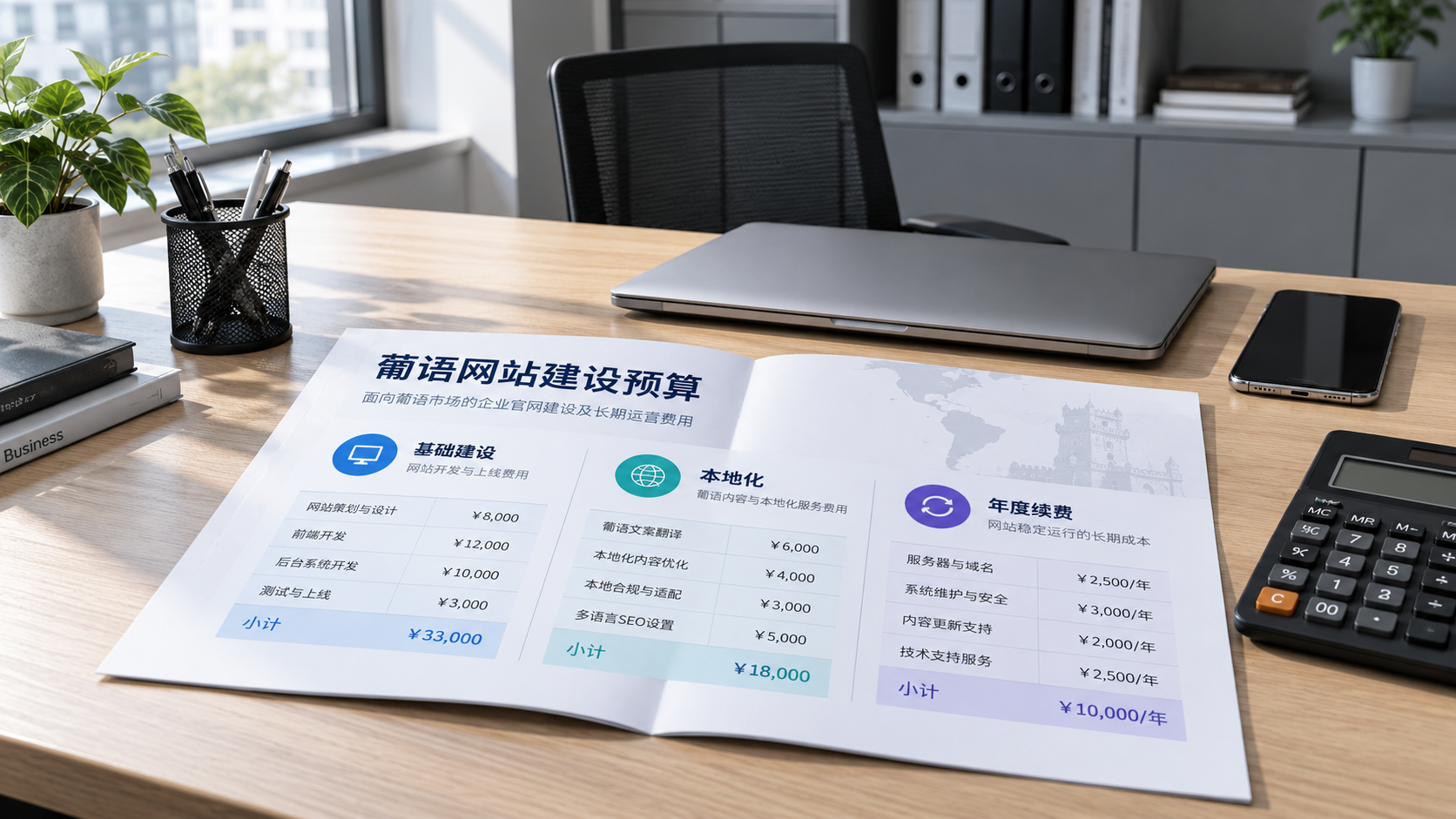
 Where Do the Costs of Building a Portuguese-Language Standalone Website Go?
 Can website content translation tools accurately handle industry terminology?
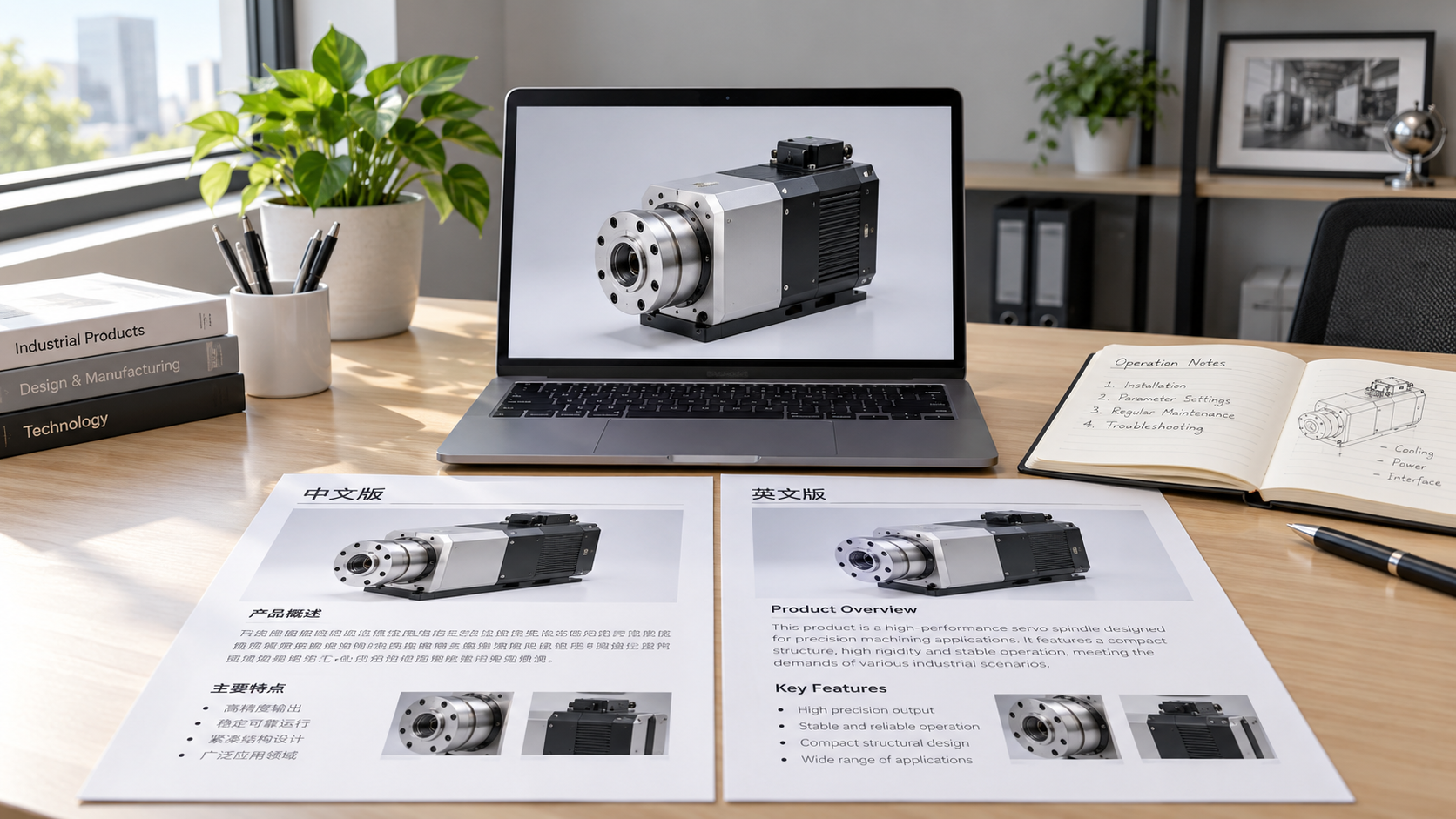
 Can I learn to use a multilingual content management system without a technical background?
Related Products
 Yiyingbao SaaS Intelligent Website Building and Marketing SystemYiyingbao SaaS Intelligent Website Building and Marketing System, AI-powered no-code website building, rapid creation of multilingual B2B international websites in 10 minutes, global server acceleration, AI-powered SEO optimization, helping businesses connect efficiently with global markets. The perfect integration of technology and operation makes building an international trade website remarkably simple
 AI+SEM Intelligent Advertising Marketing SystemAI+SEM drives intelligent ad creation, empowering full-funnel precision advertising marketing. The system automatically generates weekly/monthly reports, AI recommends keywords and target countries, monitors core metrics in real-time with intelligent alerts, and enables one-click high-conversion ad solutions to help quickly acquire customers and improve ROI.
 AI+SEO Dual-Engine System Optimization ServicesYiyingbao’s AI+SEO dual-engine optimization system helps foreign trade enterprises acquire high-quality organic traffic through AI-powered keyword research, content generation, and comprehensive technical optimization, significantly improving search rankings and conversion rates.
 AI+SNS Social Media Marketing SystemYingbao AI+SNS Social Media Marketing System - Precision social capture for the social media era. Supports one-click content synchronization across major platforms like Facebook and LinkedIn. AI intelligently rewrites posts for enhanced relevance. 24/7 AI customer service and user profiling analysis empower businesses to efficiently expand into global markets.
 AI+SEO营销解决方案易营宝AI+SEO营销解决方案,通过AI批量写作、智能生成TDK、精准关键词扩词等功能,全面优化网站SEO效果,提升流量与转化率。助力企业构建高效智能网站新生态。
 AI+SEM Advertising Marketing SolutionsAI+SEM Advertising Marketing Solution leverages AI technology to deeply empower SEM ad campaigns. It automatically generates weekly/monthly reports using AI, presenting account data across multiple dimensions for comprehensive insights into campaign performance and trends. The system precisely recommends keywords and target countries, intelligently generates high-conversion ad copy, and enables one-click activation of efficient campaign plans to help businesses rapidly acquire customers. Simultaneously, it monitors core metrics in real time, intelligently identifies abnormal fluctuations, and issues timely alerts to ensure stable, high-return advertising results.
 Domain Name ServicesEasyWin provides professional domain name services, including intelligent queries, one-stop registration, brand protection, and full lifecycle management, helping businesses build a digital brand image.
 EasyOperate B2C Cross-Border E-Commerce Platform & Independent WebsiteEasyStore B2C Cross-border E-commerce Independent Store is an intelligent website building and cross-border e-commerce integrated solution independently developed by EasyStore Information Technology (Beijing) Co., Ltd. The system is specially designed for small and medium-sized as well as large export enterprises, integrating 'website building, operation, marketing, advertising, and conversion' into one, helping enterprises quickly establish cross-border e-commerce independent stores to achieve brand globalization and global sales growth.
The platform supports multiple languages, multiple currencies, and multi-channel marketing, with built-in AI intelligent translation and SEO optimization systems, suitable for mainstream markets such as Southeast Asia, Europe and America, Latin America, and the Middle East, assisting Chinese manufacturing enterprises in efficiently deploying international e-commerce strategies. SSL证书易营宝提供专业SSL安全证书服务,包括单域名和泛域名证书,确保网站数据传输加密、身份验证和完整性保护,助力企业建立安全可信的在线业务环境。









