









- Which customer acquisition channels will be affected by cross-border marketing trends in 2026?Sep 06, 2026View details
- Which homogenization risks should be considered in an analysis of the AI-powered website building industry?Aug 30, 2026View details
- How Will AI Marketing Trends 2026 Change Advertising Budget AllocationAug 28, 2026View details
- Is the EV SSL certificate market shrinking or upgrading? How should companies assess certificate procurement?Aug 11, 2026View details
- Why the old AMP SEO 2020 practices no longer work and what has changed in current optimization prioritiesAug 02, 2026View details
- How to Choose Topics for an Industry News Section to Attract More Organic Search TrafficJul 29, 2026View details
How to solve multilingual field mapping for foreign trade marketing websites? Practical ideas for linking product catalogs and forms.
Why does multilingual field mapping always get stuck on the linking of the product library and the form?

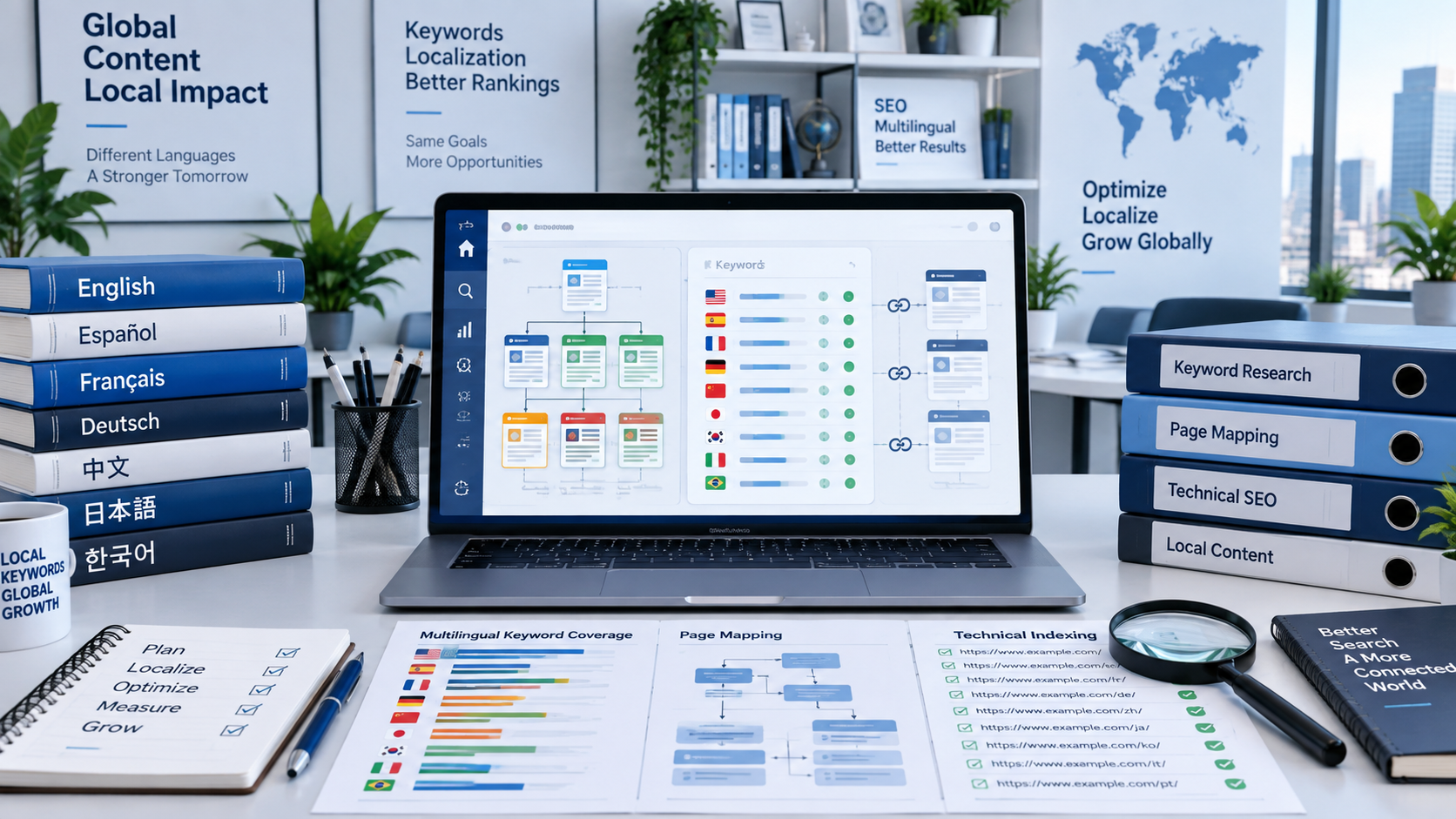
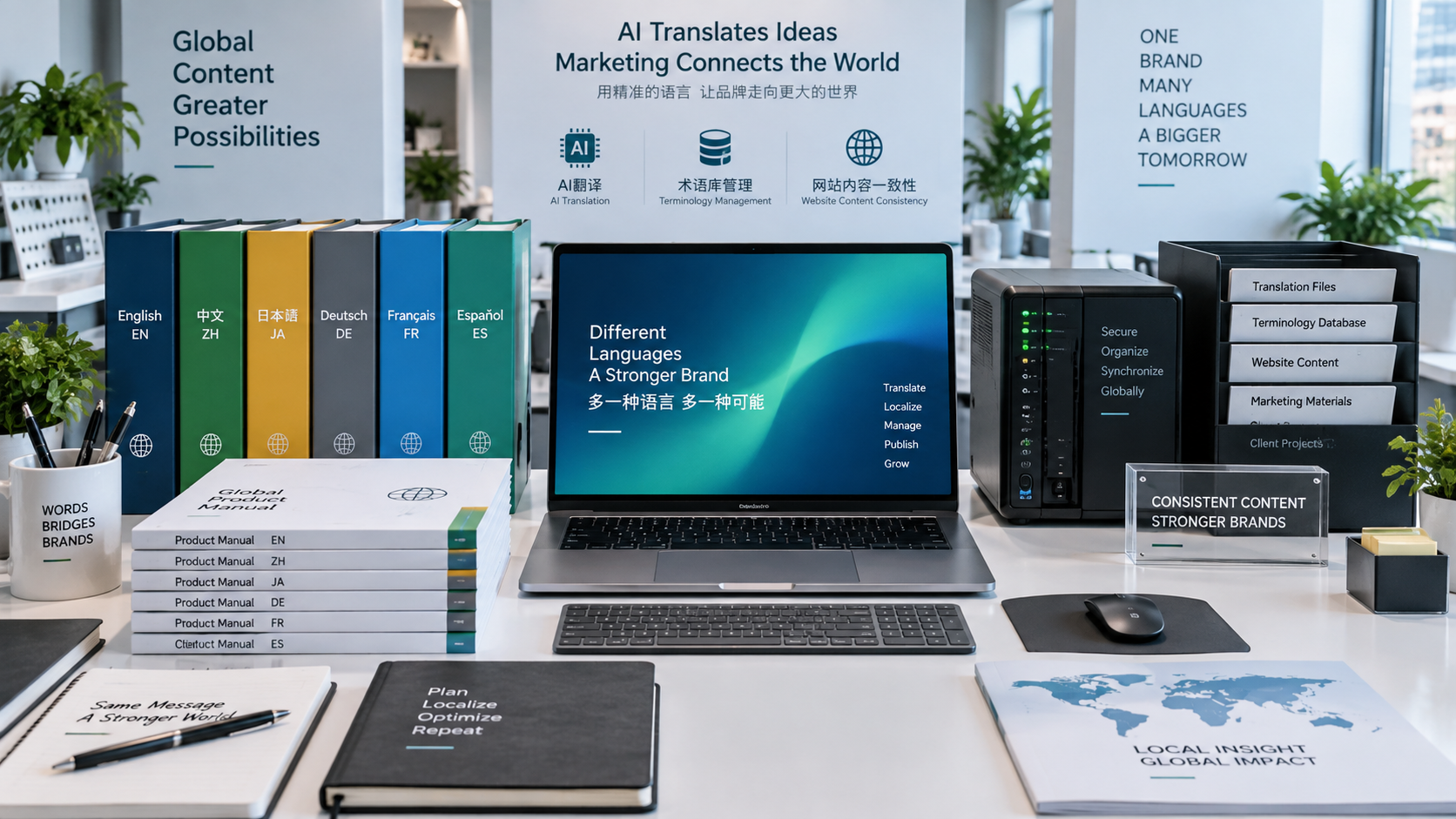
How to solve multilingual field mapping for foreign trade marketing websites? On the surface, it seems like a translation issue, but it's actually more like a data structure problem. What truly impacts launch efficiency is often not the page text, but whether product fields, inquiry forms, and SEO information can remain consistent across different languages.
In practical applications, once multilingual websites reach a stage with a large product volume and multiple market regions, loosely designed field mappings will quickly lead to heavy backend maintenance. A change in a product name will cause multilingual versions to become out of sync; a missing specification field will result in misaligned landing page displays; and the inability to link form sources with product information will make it difficult to transmit sales leads.
This is why many companies are increasingly emphasizing the "master data + language layer" when building foreign trade marketing websites. Website building and marketing platforms like YiYingBao, which have long served independent websites in multiple regions, emphasize intelligent website building, SEO, and advertising synergy, essentially to place site content, promotional landing pages, and conversion data within the same manageable structure.
First, we need to understand: what exactly does the multilingual field mapping map map to?
Understanding it simply as "Chinese to English" usually underestimates its complexity. More commonly, a product object needs to be split into three levels of fields.
- The first layer consists of global master fields, such as product code, category number, pricing rules, and inventory status.
- The second layer consists of language fields, such as title, selling points, parameter descriptions, and download material names.
- The third layer consists of channel fields, such as page title, description, URL alias, and form tracking parameters.
How can a foreign trade marketing website handle multilingual field mapping? A relatively safe approach is to fix data that won't change due to language variations as primary fields, and treat content that needs adjustment based on market expression differences as a separate language layer. This way, changes to the basic product database will be inherited by all multilingual pages; parts requiring localization optimization can then be maintained separately for each language.
It's important to note that SEO fields should not be directly reused from the page content. Search titles, descriptions, and structured summaries often need to be rewritten according to regional search habits; otherwise, even if the page is indexed, the click-through rate may not be ideal.
How should a product catalog be designed to avoid becoming increasingly disorganized over time?
The product repository is the core of multilingual mapping. Many projects prioritize speed in the early stages, simply copying a product for each language. While this may allow for short-term deployment, later maintenance becomes extremely painful because the same product will have multiple records, leading to confusion in version control, app store listings, and statistical methods.
A more suitable approach for export marketing websites is "one main product, multiple language versions of content." The main table only retains a unique product identifier, while the language tables are expanded by language. This is beneficial for both website construction and subsequent SEO and the reuse of advertising landing pages.
This structure is even more advantageous if the site also needs to handle customer acquisition through inquiries, advertising, and social media distribution. Because the product content only needs to be maintained once, when targeting North American, European, or Middle Eastern markets, the wording can be adjusted across different language levels, rather than creating a completely new site database.
To what extent should form cascading functionality be considered truly usable?
Many website forms can be submitted, but lack contextualization. The problem isn't with the front-end display, but with the submitted data lacking context. How can an international trade marketing website solve the problem of multilingual field mapping? The key step is to simultaneously associate the form with the product, page, and language version.
A usable linkage model should retain at least the following information.
- The product ID used when submitting, not just the product name.
- The language and site region of the current page.
- Source page address, ad parameters, search source tags.
- The original and standardized values of the fields facilitate subsequent CRM integration.
The value of doing this is direct. When sales see a lead, they can know which language page, product detail page, or promotional entry point the customer came from. Subsequent decisions, whether identifying high-intent pages or optimizing conversion paths for a particular language, are made possible by more complete data.
For platforms that integrate website building, SEO, advertising, and social media operations, this synergy is not an add-on feature, but the foundation of the growth chain. Otherwise, site traffic and inquiry data will remain in two isolated systems, making analysis difficult.
Should SEO fields be automatically translated along with the main text? This step is the easiest to fall into a trap.
Many projects ask whether the SEO-optimized title and description can be automatically populated since there is already multilingual content. The answer is usually no. Automatic inheritance can be used as an initial value, but it is not recommended to deploy it directly.
The reason is simple. The main content of a page is for reading, while SEO fields are for displaying search results. They focus on different things. For example, for the same product, searches in the German-speaking market tend to focus on technical specifications, while searches in the Southeast Asian market place more emphasis on usage and delivery time terms. Directly mapping these keywords to search results would lead to a mismatch between keywords and click intent.
A more robust approach is to include SEO fields in the multilingual field mapping system, but allow independent editing. It's recommended to at least split these fields: page title, description, URL alias, image alternative text, and breadcrumb name.
Platforms like YiYingBao, which cover intelligent website building and AI+SEO optimization, typically consider both indexing friendliness and conversion page structure together. This is because a multilingual website isn't just about being able to switch languages; it's also about ensuring that each language page is suitable for searching, clicking, and converting.
What boundaries need to be confirmed before implementation to avoid rework?
If you're planning to implement this solution, it's advisable not to rush into creating fields; clarify the boundaries first. Many reworks occur when business rules aren't defined in advance.
- Does the same product catalog exist for all languages, or do regional sites allow for local differences?
- Should pricing, inventory, and delivery time be displayed separately by country or channel?
- Are the fields in the inquiry form standardized, or should they be differentiated to meet market compliance requirements?
- Whether to integrate with CRM, advertising feedback, customer service systems or ERP in the future.
- Is multilingual content maintained manually, assisted by machine translation, or a hybrid process?
If these issues aren't addressed first, solutions for multilingual field mapping on foreign trade marketing websites will remain at the page level, making it difficult to reach a truly operational stage. This is especially true when conducting global advertising and long-term SEO; field standards determine whether subsequent data can be retained and utilized.
In terms of implementation timeline, small and medium-sized websites typically start by completing the main product table, language table, form associations, and basic SEO fields, before gradually expanding to advertising parameters, regional directories, and automated distribution. This makes it easier to control the rollout pace and verify whether the structure is suitable for business growth.
How do you determine if a solution is reliable during implementation? You can look at these four results.
The quality of a solution isn't determined by how complex the backend looks, but by how easy it is to maintain and how well marketing activities can be integrated. A practical way to judge this is to look at four results.
- Can the pages for the relevant language be stably synchronized after modifying basic product information?
- When adding a new language, should we only expand the language layer instead of rebuilding the entire product?
- Can inquiry leads be accurately traced back to products, pages, languages, and channels?
- Does the SEO field support independent optimization by region without affecting the maintenance of the main content?
Ultimately, the solution for multilingual field mapping on foreign trade marketing websites isn't about adding more translation features, but rather about establishing a scalable data organization method. The product database provides a unified foundation, the language layer handles localized expression, and forms and SEO connect traffic with conversions.
If you are currently evaluating a development plan, the next step is to compile a list of existing product fields, page fields, and form fields, and then determine which belong to master data and which must be maintained independently by language. Once the boundaries are clearly defined, implementation costs, timelines, and risks will be easier to control, regardless of whether you choose to develop your own system or adopt a mature platform.
Related Articles

Related Products
 Yiyingbao SaaS Intelligent Website Building and Marketing SystemYiyingbao SaaS Intelligent Website Building and Marketing System, AI-powered no-code website building, rapid creation of multilingual B2B international websites in 10 minutes, global server acceleration, AI-powered SEO optimization, helping businesses connect efficiently with global markets. The perfect integration of technology and operation makes building an international trade website remarkably simple
 AI+SEM Intelligent Advertising Marketing SystemAI+SEM drives intelligent ad creation, empowering full-funnel precision advertising marketing. The system automatically generates weekly/monthly reports, AI recommends keywords and target countries, monitors core metrics in real-time with intelligent alerts, and enables one-click high-conversion ad solutions to help quickly acquire customers and improve ROI.
 AI+SEO Dual-Engine System Optimization ServicesYiyingbao’s AI+SEO dual-engine optimization system helps foreign trade enterprises acquire high-quality organic traffic through AI-powered keyword research, content generation, and comprehensive technical optimization, significantly improving search rankings and conversion rates.
 AI+SNS Social Media Marketing SystemYingbao AI+SNS Social Media Marketing System - Precision social capture for the social media era. Supports one-click content synchronization across major platforms like Facebook and LinkedIn. AI intelligently rewrites posts for enhanced relevance. 24/7 AI customer service and user profiling analysis empower businesses to efficiently expand into global markets.
 AI+SEO营销解决方案易营宝AI+SEO营销解决方案,通过AI批量写作、智能生成TDK、精准关键词扩词等功能,全面优化网站SEO效果,提升流量与转化率。助力企业构建高效智能网站新生态。
 AI+SEM Advertising Marketing SolutionsAI+SEM Advertising Marketing Solution leverages AI technology to deeply empower SEM ad campaigns. It automatically generates weekly/monthly reports using AI, presenting account data across multiple dimensions for comprehensive insights into campaign performance and trends. The system precisely recommends keywords and target countries, intelligently generates high-conversion ad copy, and enables one-click activation of efficient campaign plans to help businesses rapidly acquire customers. Simultaneously, it monitors core metrics in real time, intelligently identifies abnormal fluctuations, and issues timely alerts to ensure stable, high-return advertising results.
 Domain Name ServicesEasyWin provides professional domain name services, including intelligent queries, one-stop registration, brand protection, and full lifecycle management, helping businesses build a digital brand image.
 EasyOperate B2C Cross-Border E-Commerce Platform & Independent WebsiteEasyStore B2C Cross-border E-commerce Independent Store is an intelligent website building and cross-border e-commerce integrated solution independently developed by EasyStore Information Technology (Beijing) Co., Ltd. The system is specially designed for small and medium-sized as well as large export enterprises, integrating 'website building, operation, marketing, advertising, and conversion' into one, helping enterprises quickly establish cross-border e-commerce independent stores to achieve brand globalization and global sales growth.
The platform supports multiple languages, multiple currencies, and multi-channel marketing, with built-in AI intelligent translation and SEO optimization systems, suitable for mainstream markets such as Southeast Asia, Europe and America, Latin America, and the Middle East, assisting Chinese manufacturing enterprises in efficiently deploying international e-commerce strategies. SSL证书易营宝提供专业SSL安全证书服务,包括单域名和泛域名证书,确保网站数据传输加密、身份验证和完整性保护,助力企业建立安全可信的在线业务环境。









