









- Which customer acquisition channels will be affected by cross-border marketing trends in 2026?Sep 06, 2026View details
- Which homogenization risks should be considered in an analysis of the AI-powered website building industry?Aug 30, 2026View details
- How Will AI Marketing Trends 2026 Change Advertising Budget AllocationAug 28, 2026View details
- Is the EV SSL certificate market shrinking or upgrading? How should companies assess certificate procurement?Aug 11, 2026View details
- Why the old AMP SEO 2020 practices no longer work and what has changed in current optimization prioritiesAug 02, 2026View details
- How to Choose Topics for an Industry News Section to Attract More Organic Search TrafficJul 29, 2026View details
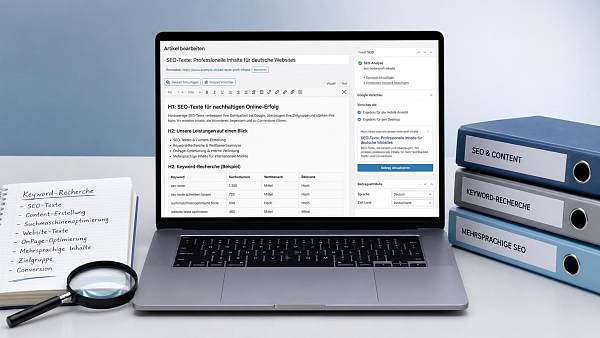
German SEO copywriting: Why is it so difficult for literal translations to rank?
Why German SEO Copywriting Is Difficult to Rank with Literal Translations
Many companies take the wrong first step when creating German-language content: they hand Chinese website copy to a translation tool, or ask a translator to translate it sentence by sentence into German, then publish it directly and expect search traffic to come automatically. On the surface, this approach appears efficient and cost-controllable, and the grammar may not even contain obvious errors. However, once the page enters search results, it often gets stuck with limited indexing, low rankings, and high bounce rates. When discussing rédaction seo allemand, the difficulty has never been simply “translating the words correctly”; it is making both search engines and local German users feel that the page was originally written in German.
This is also something many international teams only realize later: for the same product, expressions such as “high cost performance,” “direct from the manufacturer,” and “one-stop service” may sound natural in Chinese, but their literal German translations may not correspond to local search habits, let alone support purchasing decisions. Search engines evaluate query terms, semantic relevance, page structure, and click feedback, while users assess whether the wording is natural, the information is credible, and the page makes it easy to continue learning. If both dimensions miss the mark, rankings become difficult—and conversions even more so.
The Biggest Problem with Literal Translation Is Not Language, but Misaligned Search Logic
In Chinese content production, companies often like to start by explaining who they are, how many years they have been in business, and how comprehensive their services are before gradually moving on to product details. In German search scenarios, however, many queries are problem-oriented or specification-oriented from the outset. Users may not search for a “quality supplier,” but for more specific terms involving materials, models, applications, certifications, compatibility, delivery methods, after-sales terms, and more. If you translate a promotional Chinese page without adapting it, the page topic becomes scattered, making it difficult for search engines to determine which types of searches it should match.
To put it more directly, literal translations often create the problem that “every sentence is correct, but the page as a whole does not look like an answer.” This is especially true in B2B manufacturing, cross-border e-commerce stores, and brand-owned websites for international markets, where German users generally pay more attention to parameter limits, application scenarios, conditions and restrictions, and delivery details. Broad statements commonly used in Chinese can easily seem vague when translated into German without sufficient specific context.
Therefore, rédaction seo allemand is essentially not a translation task, but a rewriting task. Keyword research, content structure, heading hierarchy, internal linking, and page intent should all be remodeled within the context of the German market.
In the German Market, Semantic Structure Matters More Than Literal Accuracy
German has one easily underestimated characteristic: it contains many compound words and offers highly precise expression, but actual search usage does not always correspond to standard written terminology. A common mistake companies make is to rely only on the “standard translation” in their terminology list without examining real search combinations. As a result, the page may be filled with technically correct terms while failing to cover the variant terms, question-based terms, and scenario-based terms that users actually enter.
For example, the wording used for an industrial product in technical documentation may not be exactly the same as the wording used in a search box. Terms aimed at procurement users may also reflect completely different intent from terms aimed at end consumers. If German content only pursues sentence-by-sentence alignment with the source text, it will usually lose this flexibility at the search level. The page may look professional, but its semantic relevance to user searches remains weak.
This is particularly evident on multilingual websites. Many companies use the same information architecture for their Chinese, English, and German pages, with nearly identical URLs, titles, and paragraph order. This may be convenient for management, but it does not necessarily benefit rankings. Search entry points differ across language markets. German pages should organize information around German users’ questions rather than around the chapter order of the Chinese original.
Not Every Page That Is “Well Translated” Is Suitable for SEO
Many teams confuse language quality with SEO usability. The two overlap, but they are not the same. A page written naturally in German does not necessarily have search competitiveness; conversely, a page with complete keyword placement may affect engagement and conversion if it reads awkwardly.
Truly usable rédaction seo allemand must pass at least three tests. The first is search intent matching: is the page addressing an informational query, a product comparison, or a commercial inquiry? The second is content granularity matching: does the user want a basic definition, or information about model differences, pricing factors, and deployment methods? Only the third is language expression: do the title, summary, body text, and FAQ read as though they were written by a local team rather than produced from a translation draft?
If these three layers are not handled separately, a common situation arises: the article contains a great deal of information and includes many keywords, but search engines can only classify it as a “general introduction page.” Such pages are not completely without value, but they are unlikely to perform well for competitive terms or high-intent long-tail keywords.
From a Page Structure Perspective, Several Areas of Literal Translations Are Especially Problematic
Let us start with the title. Chinese titles tend to express a concept in a comprehensive way, whereas German search titles place greater emphasis on putting the core term first and clearly defining the information scope. Translating a Chinese title according to its original word order often dilutes the primary keyword and makes the click intent ambiguous.
Next is the first screen of the body content. Many literally translated pages spend the first two or three paragraphs discussing the company background, while the actual answer appears later. Users do not see the key point as soon as they arrive, and search engines also find it difficult to quickly identify the page’s core topic. This is especially true for integrated website and marketing service projects, where the content already involves multiple stages, including website development, technology, advertising, and conversion. If the topic is not focused on the first screen, the page will appear scattered.
Another overlooked point is internal linking. Chinese websites often use generic anchor text such as “Learn More” and “Click to View,” which remains vague when translated. In German SEO, internal-link anchor text should ideally reflect the topic of the target page; otherwise, semantic transmission across the site will be much weaker. For multilingual websites, technical elements such as hreflang, canonical URLs, sitemaps, and broken-link fixes also affect the final performance. No matter how well the content is written, incorrect underlying structures can still hinder indexing and rankings.
This is why many companies later choose to rebuild their content production process and website system together. Systems such as Yingyibao B2C Cross-Border E-Commerce Store and Independent Website, which are designed for overseas markets, provide value not only through website-building efficiency, but also through details such as multilingual switching, Meta generation, URL normalization, structured data, and sitemaps. These functions can help reduce situations where content localization is done correctly but points are lost at the technical level.
How to Determine Whether German Content Has an “Translated” SEO Tone
Several practical methods can help make this judgment.
First, see whether the subheadings can stand on their own. In effective German SEO content, a subheading itself often resembles a question users might ask or a subtopic that might appear in search results. The subheadings in literal translations, by contrast, often extend Chinese thinking, using phrases such as “Company Advantages,” “Service Philosophy,” and “Solution Overview,” which provide limited search value.
Second, check whether there are excessive abstract adjectives. If terms such as “efficient,” “professional,” “high-quality,” and “comprehensive” appear too frequently while conditions, scope, and target groups are not clearly explained, the page should be treated with caution. German users do not reject marketing language, but they are more accustomed to seeing the factual framework first and accepting conclusions afterward.
Third, check whether the FAQ exists merely to increase word count. A genuinely valuable FAQ supplements the limitations, delivery issues, compatibility issues, and after-sales questions not fully addressed in the main search copy, rather than simply repeating the body text in different words.
A More Reliable Approach Is to Combine “Local Keyword Research + Rewriting + Technical Adaptation”
If a company genuinely wants to target the German market, it should not understand the process as “write in Chinese first, then translate into German.” A more reasonable sequence is usually to first determine which searches the page should address in the German market, then decide which Chinese information should be retained, and finally have someone with industry expertise rewrite it into a version suitable for search and reading. The most time-consuming part is often not translation, but cutting and restructuring.
For international teams, the website system also directly affects execution costs. Since 2013, Yiyingbao Information Technology (Beijing) Co., Ltd. has provided overseas digital marketing and multilingual website services over the long term. The value of this type of company’s experience is often reflected in knowing which tasks cannot rely solely on direct machine output: which languages can initially be drafted with AI assistance, which core landing pages require manual correction, which markets should first establish an indexing foundation, and which pages need to be validated through a combination of advertising and organic traffic. This judgment is more important than simply “knowing how to translate.”
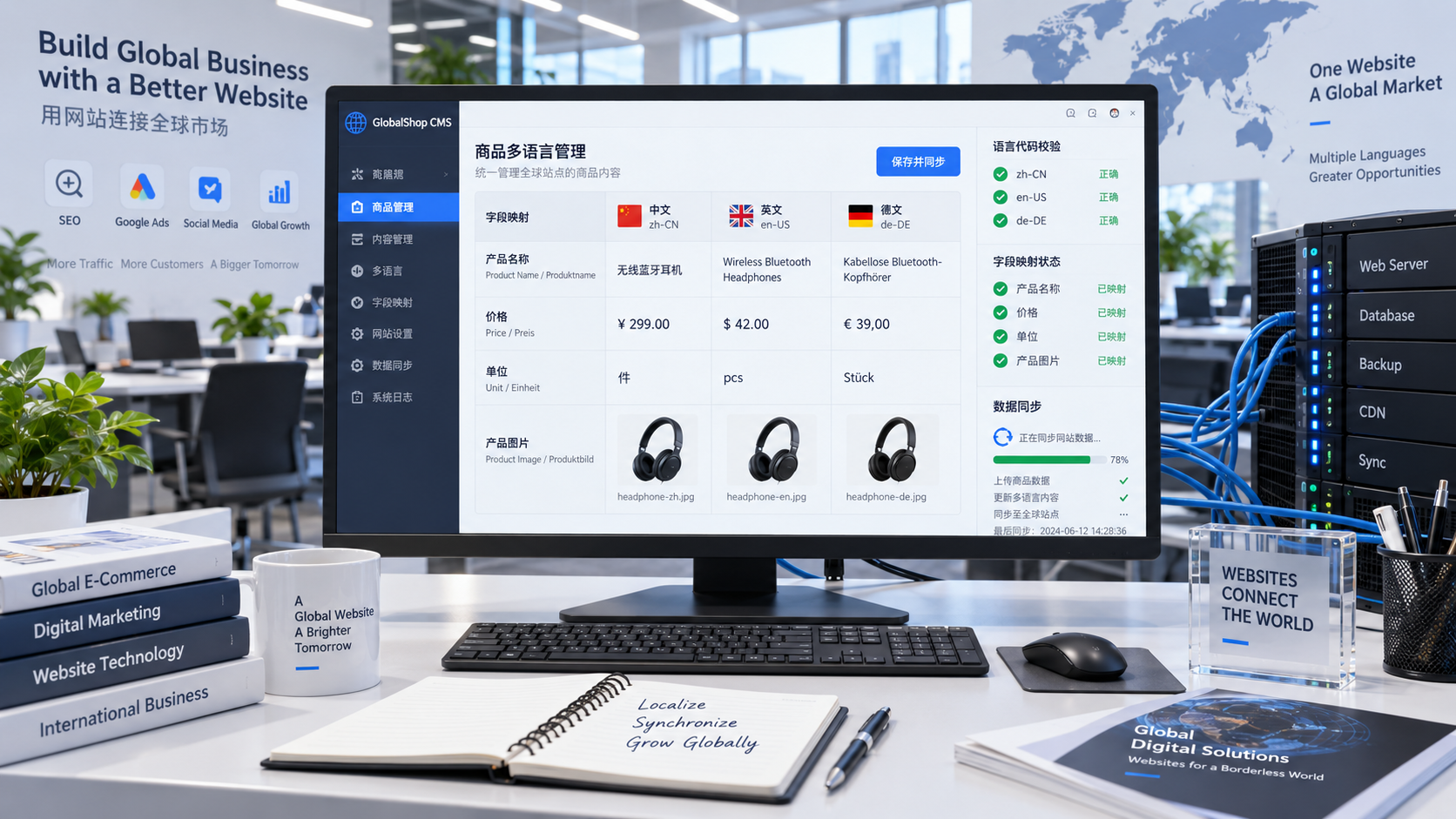
For cross-border e-commerce stores or brand-owned websites, content and technology should ideally not be separated. Capabilities such as automatic multilingual adaptation, visitor language detection, local currency display, global CDN, and responsive design may appear to be experience-related features, but they also affect page accessibility, time on page, and subsequent conversion. For teams that need to continuously create pages in multiple languages, execution will be much smoother if the system can retain keyword structures, automatically generate basic Meta information, and fix broken links. The prerequisite, however, remains that the content strategy cannot take shortcuts.
One Final Reminder: German Ranking Problems Are Often Not Caused by “Missing Keywords,” but by a Page That Does Not Look Trustworthy to German Users
When working on rédaction seo allemand, one of the easiest mistakes is to attribute the problem to keyword frequency, backlinks, or indexing speed. These factors are certainly important, but if the page itself clearly follows a translation path, both search engines and users will sense that something is wrong. You may see impressions without clicks, clicks without inquiries, or engagement without conversions. The root cause is still that the content has not been genuinely localized.
Therefore, literal translation is not unusable; it is simply unsuitable as the final version when published directly. For product parameter pages, policy pages, and after-sales terms pages, literal translation followed by manual proofreading is generally sufficient. However, homepages, category pages, core service pages, and in-depth article pages should ideally be rewritten for the German market. Once this level is understood, keyword and ranking work can proceed without repeatedly reworking German content.
Related Articles
Related Products
 Yiyingbao SaaS Intelligent Website Building and Marketing SystemYiyingbao SaaS Intelligent Website Building and Marketing System, AI-powered no-code website building, rapid creation of multilingual B2B international websites in 10 minutes, global server acceleration, AI-powered SEO optimization, helping businesses connect efficiently with global markets. The perfect integration of technology and operation makes building an international trade website remarkably simple
 AI+SEM Intelligent Advertising Marketing SystemAI+SEM drives intelligent ad creation, empowering full-funnel precision advertising marketing. The system automatically generates weekly/monthly reports, AI recommends keywords and target countries, monitors core metrics in real-time with intelligent alerts, and enables one-click high-conversion ad solutions to help quickly acquire customers and improve ROI.
 AI+SEO Dual-Engine System Optimization ServicesYiyingbao’s AI+SEO dual-engine optimization system helps foreign trade enterprises acquire high-quality organic traffic through AI-powered keyword research, content generation, and comprehensive technical optimization, significantly improving search rankings and conversion rates.
 AI+SNS Social Media Marketing SystemYingbao AI+SNS Social Media Marketing System - Precision social capture for the social media era. Supports one-click content synchronization across major platforms like Facebook and LinkedIn. AI intelligently rewrites posts for enhanced relevance. 24/7 AI customer service and user profiling analysis empower businesses to efficiently expand into global markets.
 AI+SEO营销解决方案易营宝AI+SEO营销解决方案,通过AI批量写作、智能生成TDK、精准关键词扩词等功能,全面优化网站SEO效果,提升流量与转化率。助力企业构建高效智能网站新生态。
 AI+SEM Advertising Marketing SolutionsAI+SEM Advertising Marketing Solution leverages AI technology to deeply empower SEM ad campaigns. It automatically generates weekly/monthly reports using AI, presenting account data across multiple dimensions for comprehensive insights into campaign performance and trends. The system precisely recommends keywords and target countries, intelligently generates high-conversion ad copy, and enables one-click activation of efficient campaign plans to help businesses rapidly acquire customers. Simultaneously, it monitors core metrics in real time, intelligently identifies abnormal fluctuations, and issues timely alerts to ensure stable, high-return advertising results.
 Domain Name ServicesEasyWin provides professional domain name services, including intelligent queries, one-stop registration, brand protection, and full lifecycle management, helping businesses build a digital brand image.
 EasyOperate B2C Cross-Border E-Commerce Platform & Independent WebsiteEasyStore B2C Cross-border E-commerce Independent Store is an intelligent website building and cross-border e-commerce integrated solution independently developed by EasyStore Information Technology (Beijing) Co., Ltd. The system is specially designed for small and medium-sized as well as large export enterprises, integrating 'website building, operation, marketing, advertising, and conversion' into one, helping enterprises quickly establish cross-border e-commerce independent stores to achieve brand globalization and global sales growth.
The platform supports multiple languages, multiple currencies, and multi-channel marketing, with built-in AI intelligent translation and SEO optimization systems, suitable for mainstream markets such as Southeast Asia, Europe and America, Latin America, and the Middle East, assisting Chinese manufacturing enterprises in efficiently deploying international e-commerce strategies. SSL证书易营宝提供专业SSL安全证书服务,包括单域名和泛域名证书,确保网站数据传输加密、身份验证和完整性保护,助力企业建立安全可信的在线业务环境。









