









- Is the EV SSL certificate market shrinking or upgrading? How should companies assess certificate procurement?Aug 11, 2026View details
- Why the old AMP SEO 2020 practices no longer work and what has changed in current optimization prioritiesAug 02, 2026View details
- How to Choose Topics for an Industry News Section to Attract More Organic Search TrafficJul 29, 2026View details
- Digital Marketing Shenzhen Market Insights: Why Are Companies Expanding Overseas Looking for Growth Teams in Shenzhen?Jul 31, 2026View details
- Can Zhejiang foreign trade independent websites still be developed today? Look at changes in traffic and lead generationJul 28, 2026View details
- What New Signals Are Emerging in Enterprise Services SaaS Marketing ReportsJul 27, 2026View details
How to Assess Whether a Local Team in Lille Providing German référencement Is Reliable
For German SEO in Lille, what truly determines whether a partnership succeeds is usually not who presents the more attractive proposal, but who can implement the German market, website technology, and execution process down to the details. Many teams present “multilingual SEO expertise” as a general capability, but German search optimization is not as simple as translating French or English pages and then publishing content. If the initial assessment is inaccurate, the common results are slow indexing, irrelevant keywords, poor-quality inquiries, and even repeated rework caused by disorganized technical changes to the site.
First, assess whether the other party truly understands how German users search. When a reliable team discusses German SEO in Lille, it usually does not simply provide a list of core keywords. Instead, it first breaks down search intent: which pages correspond to brand terms, category terms, specification terms, application terms, location terms, and question-based terms; which keywords are suitable for category pages; which require dedicated landing pages; and which may appear to have good search volume but lack strong commercial intent in a German-language environment. If the other party immediately turns the keyword list into a simple translation from Chinese, or focuses only on homepage rankings, its experience is probably not sufficiently solid.
Ask about the pages first, not the rankings
In German SEO projects, page structure often provides more useful evidence than verbal promises. You can directly assess whether a local team is reliable by examining how it handles the following page levels: the homepage, product category pages, product detail pages, industry application pages, case study pages, contact pages, and privacy and legal information pages. If the team focuses only on publishing articles but cannot clearly explain how to write category-page titles, how to arrange detail-page specifications, or whether German navigation terms match industry usage, the project can easily end up with “a lot of content published but no effective entry points for indexing.”
This is particularly important for B2B or multi-specification product websites. Information such as parameters, materials, dimensions, tolerances, processing methods, and application scenarios cannot be written only in a PDF, much less placed only in images. German search engines are more sensitive to the consistency of structured text, internal links, and page topics. A genuinely experienced team will move information about materials, surface treatment, shipping methods, installation conditions, and maintenance cycles back into crawlable HTML pages instead of using visual design to conceal gaps in the information.
If the project involves a high proportion of mobile traffic, slow loading speeds, or a high bounce rate, you can also ask whether the team has considered lightweight page architectures such as AMP or MIP. For example, in certain cross-border e-commerce or local service scenarios, it may evaluate solutions such as 易营宝 AMP/MIP mobile smart website building to handle multilingual mobile pages, a unified backend, image compression, lazy loading, and compatibility with acceleration standards. Whether such a solution is adopted is one matter, but if the team cannot even explain the scenarios for which this technical route is suitable or its limitations, it is more likely to be a content outsourcing provider than a comprehensive website and marketing partner.
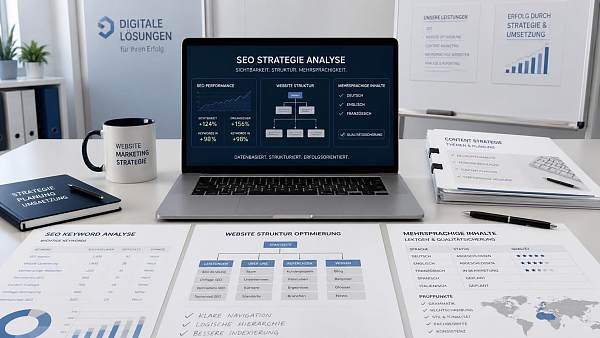
Is “German native-language proofreading” far more important than simply “being able to translate”?
A common misjudgment among local teams in Lille is to understand German content production as translation management. In reality, the difficulty of German SEO lies in accurate terminology, natural sentence structure, and search expressions that closely match the actual industry context. This is especially true in fields such as machinery, components, manufacturing, medical accessories, and industrial consumables. If a term is selected incorrectly, the issue is not merely awkward wording; it may also direct the page toward completely different traffic.
The evaluation method is straightforward: ask the team to show the production process for a page of German content rather than screenshots of the finished product. A reliable team will usually clearly explain who is responsible for each stage, from breaking down keyword intent and drafting the initial copy to terminology review, SEO element implementation, and final pre-publication checks. If the process has no German proofreading stage, or if the so-called proofreading only consists of reading through the content once before delivery, caution is warranted. The biggest risk for German pages is not a minor grammatical error, but inconsistency among the words used in the title, URL, H tags, anchor text, and body copy, which ultimately fragments the page topic.
Look at the collaboration process: accountability matters more than order-taking capacity
Many cooperation problems arise not from technology but from an opaque process. A team worth working with will usually explain the collaboration milestones in concrete terms: which pages will go live first, which content requires the company to provide original specifications, which images need to be retaken, which old URLs must not be deleted casually, when 301 redirects will be implemented, how often the sitemap will be updated, and who will investigate log or crawling anomalies. The more specific the explanation, the less likely disputes will arise later.
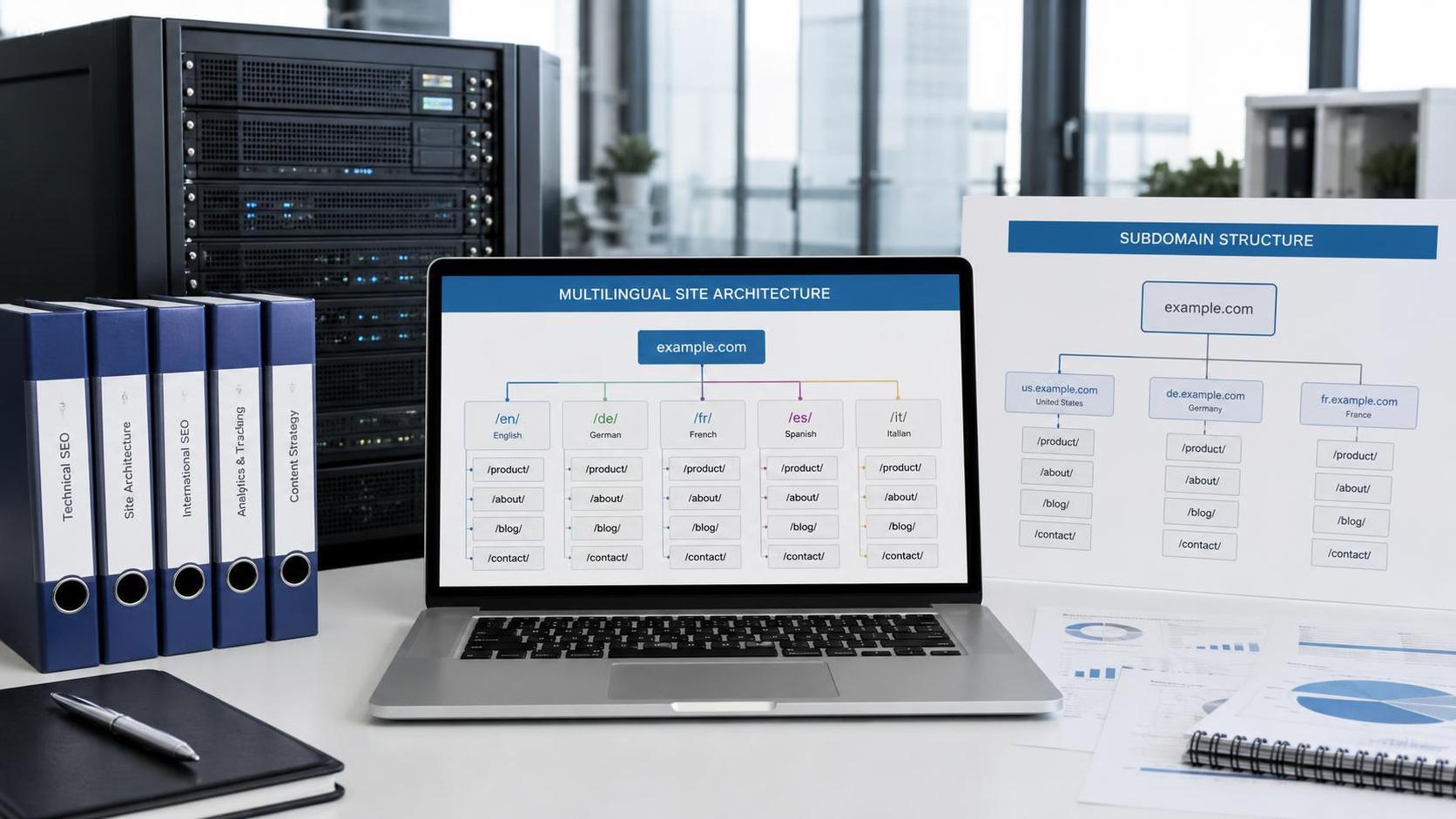
If the other party habitually gives vague answers such as “we handle everything uniformly,” “we will optimize it later,” or “it will naturally be adjusted after launch,” the risk has already appeared. Once German SEO enters the on-site redesign stage, details such as URL naming, directory hierarchy, canonical, hreflang, redirect rules, image alt text, and breadcrumb navigation must all be agreed on in advance. Otherwise, the frontend may revise one version, the developers another, and the content team add a third version, potentially interrupting the site’s indexing history.
Another easily overlooked point is the division of access rights. A reliable team will generally accept tiered access to site analytics, search data, and page-code management rather than requiring all content to be hosted and managed solely by it. The reason is practical: once accounts, assets, page versions, and keyword history are all held by the other party, the handover can become very difficult if the cooperation ends. To assess whether the team is reliable, ask directly whether it can provide modification records and publication checklists by page, directory, and project stage.
Whether a local team truly understands “local” depends on how it handles regional signals
The label “local team in Lille” does not itself mean that the team understands the German market. Valuable local expertise is reflected in whether it can handle practical issues in European business communication, such as time-zone coordination, French-German bilingual collaboration, GDPR-related page notices, consistency between the address and regional signals on the contact page, how logistics and service coverage are presented on the page, and the impact of local telephone numbers, maps, and form fields on conversion.
If the project targets Germany but the execution team only knows how to perform local optimization in French and then copies the template to the German site, the results are usually unstable. The German market often places greater emphasis on information completeness and page credibility. Content such as technical specifications, delivery conditions, after-sales response, installation requirements, and downloadable materials can affect time on page and inquiry quality if any part is missing. A reliable team will proactively ask whether these materials are complete instead of assuming they can be added gradually later.
Do not be misled by monthly reports; examine the underlying deliverables first
In many proposals, the most prominent elements are weekly reports, monthly reports, and visual charts, but these do not directly prove execution quality. What is more worth verifying are the underlying deliverables: keyword mapping tables, page revision notes, original content files, backlink screening criteria, redirect lists, technical issue tickets, and log analysis records. If these materials cannot be provided, even an attractive summary may simply be packaging around the results.
This is particularly true of backlinks. Many teams use “German site network resources” and “high-authority publishing channels” as selling points without explaining the structure of their sources. When evaluating them, ask three questions: Are the links editorial or directory-based? Are they relevant to the business topic? Are the anchor texts overly concentrated? If backlinks for German SEO are built too quickly, too densely, or too uniformly, they may produce short-term fluctuations but create abnormal risks in the long term. A genuinely prudent approach is usually more restrained, focusing on relevance and pace rather than simply accumulating quantity.
Whether the technical side can be implemented determines future costs
In integrated website and marketing service projects, the most common hidden costs come from insufficient technical implementation capabilities. On the surface, all teams may be able to provide keyword strategies and content plans. The real difference lies in the launch stage: Can they directly modify templates? Can they handle multilingual directories? Can they support mobile speed optimization? Do they understand how image formats and caching strategies affect crawling? If the technical work depends on repeated handoffs to third parties, the publication schedule will slow down, and SEO adjustments may be forced into phases or delayed for several weeks.
Experienced teams generally do not treat “loading speed” merely as a development metric. They assess it together with indexing efficiency, bounce behavior, and form-submission experience. For example, when German pages contain relatively long content and many specification tables, mobile users can easily be lost above the fold if image compression, static-resource optimization, and lazy loading are not implemented. For local service pages, the loading order of appointment, map, and instant communication modules may also need to be considered. Otherwise, the more functions the page has, the more confused the conversion path may become.
Finally, listen for one thing: Is the other party willing to discuss limitations?
One of the most effective signals for assessing whether a local team is reliable is whether it proactively explains the limitations. A team that has genuinely worked on German SEO usually does not overstate the results. Instead, it clearly points out that a disorganized legacy site structure can slow the initial progress, insufficient German content sources can delay page expansion, missing product specifications can weaken long-tail keyword planning, frequent redesigns can interrupt accumulated indexing, and directly transferring French approaches to a German site may also produce inaccurate results.
Being able to clarify these issues in advance is usually more trustworthy than promising “quick results.” After all, projects such as German SEO in Lille essentially test market understanding, technical collaboration, and sustained execution—not the names of several line items on a quotation. A genuinely reliable team can usually put uncertainty on the table and link every change to a specific page, a specific time point, and a specific person responsible.
Related Articles
Related Products
 Yiyingbao SaaS Intelligent Website Building and Marketing SystemYiyingbao SaaS Intelligent Website Building and Marketing System, AI-powered no-code website building, rapid creation of multilingual B2B international websites in 10 minutes, global server acceleration, AI-powered SEO optimization, helping businesses connect efficiently with global markets. The perfect integration of technology and operation makes building an international trade website remarkably simple
 AI+SEM Intelligent Advertising Marketing SystemAI+SEM drives intelligent ad creation, empowering full-funnel precision advertising marketing. The system automatically generates weekly/monthly reports, AI recommends keywords and target countries, monitors core metrics in real-time with intelligent alerts, and enables one-click high-conversion ad solutions to help quickly acquire customers and improve ROI.
 AI+SEO Dual-Engine System Optimization ServicesYiyingbao’s AI+SEO dual-engine optimization system helps foreign trade enterprises acquire high-quality organic traffic through AI-powered keyword research, content generation, and comprehensive technical optimization, significantly improving search rankings and conversion rates.
 AI+SNS Social Media Marketing SystemYingbao AI+SNS Social Media Marketing System - Precision social capture for the social media era. Supports one-click content synchronization across major platforms like Facebook and LinkedIn. AI intelligently rewrites posts for enhanced relevance. 24/7 AI customer service and user profiling analysis empower businesses to efficiently expand into global markets.
 AI+SEO营销解决方案易营宝AI+SEO营销解决方案,通过AI批量写作、智能生成TDK、精准关键词扩词等功能,全面优化网站SEO效果,提升流量与转化率。助力企业构建高效智能网站新生态。
 AI+SEM Advertising Marketing SolutionsAI+SEM Advertising Marketing Solution leverages AI technology to deeply empower SEM ad campaigns. It automatically generates weekly/monthly reports using AI, presenting account data across multiple dimensions for comprehensive insights into campaign performance and trends. The system precisely recommends keywords and target countries, intelligently generates high-conversion ad copy, and enables one-click activation of efficient campaign plans to help businesses rapidly acquire customers. Simultaneously, it monitors core metrics in real time, intelligently identifies abnormal fluctuations, and issues timely alerts to ensure stable, high-return advertising results.
 Domain Name ServicesEasyWin provides professional domain name services, including intelligent queries, one-stop registration, brand protection, and full lifecycle management, helping businesses build a digital brand image.
 EasyOperate B2C Cross-Border E-Commerce Platform & Independent WebsiteEasyStore B2C Cross-border E-commerce Independent Store is an intelligent website building and cross-border e-commerce integrated solution independently developed by EasyStore Information Technology (Beijing) Co., Ltd. The system is specially designed for small and medium-sized as well as large export enterprises, integrating 'website building, operation, marketing, advertising, and conversion' into one, helping enterprises quickly establish cross-border e-commerce independent stores to achieve brand globalization and global sales growth.
The platform supports multiple languages, multiple currencies, and multi-channel marketing, with built-in AI intelligent translation and SEO optimization systems, suitable for mainstream markets such as Southeast Asia, Europe and America, Latin America, and the Middle East, assisting Chinese manufacturing enterprises in efficiently deploying international e-commerce strategies. SSL证书易营宝提供专业SSL安全证书服务,包括单域名和泛域名证书,确保网站数据传输加密、身份验证和完整性保护,助力企业建立安全可信的在线业务环境。









