









- General Administration of Customs Issues New Rules on Import and Export Cosmetic Labeling, Effective December 1Nov 26, 2026View details
- U.S. to Announce Section 301 Investigation Findings on 16 Economies, Potentially Proposing New TariffsNov 26, 2026View details
- Hapag-Lloyd’s $4.2 billion acquisition of ZIM faces a closing delay; ZIM reports third-quarter net profit of $830 millionNov 24, 2026View details
- SCFI falls for a third straight week to 3,503.78 points, with blank sailings on trans-Pacific routes rising to 10Nov 24, 2026View details
- Lazada 11.11 Mega Sale: LazMall Contributes Nearly Two-Thirds of GMVNov 23, 2026View details
- Shein’s European Revenue Falls 16% as Tighter Rules on Low-Value Direct Shipments Take EffectNov 23, 2026View details
How to Do SEO for a Japanese Website: A Beginner’s Guide to Keyword Selection and On-Page Optimization
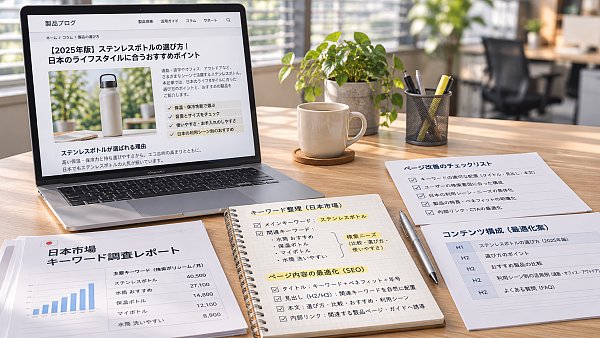
How can a Japanese-language website attract search traffic? This article introduces practical methods for choosing Japanese keywords and optimizing pages, starting with search engine optimization. When getting started, first find out how users in Japan search and whether your pages solve their problems, then check whether search engines can crawl and understand them.
Step 1: Find the keywords Japanese users actually use
Do not simply translate Chinese keywords into Japanese and start writing pages. The same product may be referred to by industry-specific terms, common abbreviations, or different spellings. The terms used by corporate buyers may also differ from those used by general consumers. Start by compiling candidate keywords based on your products, applications, and target customers.
For example, a company selling industrial pumps could start with “industrial pumps” (「工業用ポンプ」) and then look for product or application terms such as “chemical-resistant pumps” (「耐薬品ポンプ」) and “factory pumps” (「工場用ポンプ」). Whether these terms are appropriate depends on the actual product specifications and the commonly used terms in the Japanese market.
To gather keywords, review the categories and product titles on Japanese competitors’ websites, user questions, and related searches in search results. You can also use keyword planning tools to understand search demand and competition. Tool data is only an estimate, so assess it alongside actual search results.
Japanese keywords also have variations in kanji, hiragana, katakana, English abbreviations, and full-width and half-width characters. Do not assume that every variation needs its own page: search for the terms first, compare the results, and then decide whether to cover them together or create separate content.
How do you decide which keywords to prioritize?
When selecting keywords, do not look only at search volume; consider what the searcher wants to accomplish. “How pumps work” (「ポンプ 仕組み」) typically indicates an interest in understanding the principles, while “pump manufacturers” (「ポンプ メーカー」) is more likely to indicate a search for suppliers. These two types of queries need different pages.
We recommend organizing candidate keywords in a spreadsheet and recording the keyword, search intent, target page, competing pages, and business relevance. Prioritize terms that directly relate to your core products, that your company can answer clearly, and that can be supported by a page designed to convert. Then gradually expand into informational content.
To assess difficulty, search for the target term and review the content types and competitors on the first few pages of results. If the results are mainly product catalogs, prioritize improving your product listings. If they are mostly selection guides, consider providing parameter comparisons and selection advice rather than forcing company information into the page.
A page should usually be organized around one main topic and naturally cover related expressions. If different pages repeatedly target the same need, both users and search engines may have trouble distinguishing their purposes. If an existing page already answers the question sufficiently, prioritize updating it.
How do you write Japanese pages that are readable and have a chance to rank?
First, define the primary audience and next action for each page. A product page should answer questions about applications, specifications, suitability, and how to request a quote. A selection guide should explain the decision-making steps and direct readers to relevant products where appropriate, rather than focusing throughout on the company’s strengths.
Include the main keyword and the page’s specific value in the title tag where possible, for example, “How to Choose a Chemical-Resistant Pump | Explained by Material and Application” (「耐薬品ポンプの選び方|材質・用途別に解説」). Make sure the title matches the body. Use how it appears in search results and how easily users understand it as your guide to length, and avoid sacrificing natural wording to fit in keywords.
The main heading should clearly state the topic. Subheadings can address users’ questions, such as “Choosing a Material” (「材質の選び方」) or “What to Check Before Installation” (「導入前に確認すること」). Provide specific answers, parameters, or examples in each section so readers can quickly find the information they need.
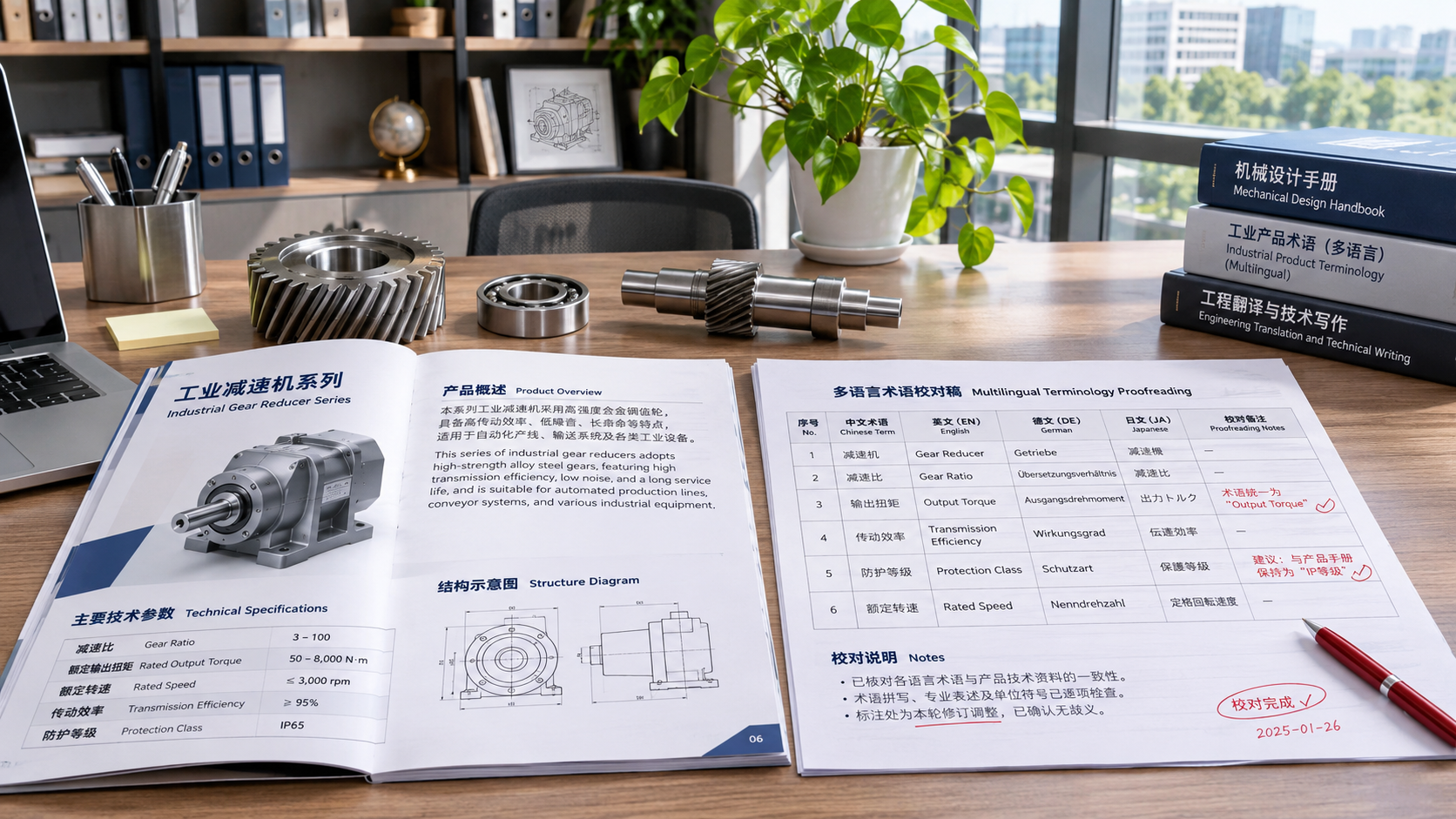
Have Japanese copy reviewed by someone familiar with the industry and Japanese market. Pay particular attention to honorific language, units, specification names, and industry conventions. Machine translation can help with an initial draft, but inaccurate terminology or awkward wording can make content harder to understand and weaken trust among potential inquiry submitters.
Include details that help readers make decisions, such as size ranges, operating environments, delivery terms, and after-sales support. Do not invent information that has not yet been confirmed. Dates, prices, and service coverage on the page should also be checked regularly to avoid sending search traffic to outdated content.
Images should clearly show the product or how it is used. Where appropriate, add alt text that describes the image. Tables are useful for comparing specifications, but do not place essential explanations only in images; this helps users read the content and search engines understand it.
What basic settings should you check on a multilingual website?
Japanese content should ideally have a stable, dedicated URL, such as a separate Japanese-language directory. Keep navigation and internal links consistent so visitors can move from the Japanese homepage to Japanese category and product pages, and search engines can discover those pages.
If your website has corresponding pages for different languages or regions, configure hreflang correctly to indicate the language and applicable region, for example, “ja” or, where appropriate, “ja-JP.” The versions should reference one another and be consistent with the canonical URL settings.
Do not force redirects based only on a visitor’s location in a way that prevents users and search engines from accessing other language versions. Provide a clear language switcher and check that Japanese pages have not been mistakenly set to noindex or pointed by canonical tags to pages in another language.
Submit a sitemap that includes valid URLs for Japanese pages, and check indexing status in Google Search Console. A sitemap can help with URL discovery but does not guarantee indexing. If a page has not been indexed, also check content quality, duplicate pages, and crawl restrictions.
Page speed also affects the experience of users in Japan. Before launch, test loading, mobile layouts, button clicks, and form submissions on actual devices. Pay particular attention to oversized images, hard-to-read text, and inquiry forms that do not work properly.
How do you turn search visits into qualified inquiries?
Do not make users finish reading product information and then search for your contact details themselves. Add a clear Japanese call-to-action button to relevant pages, such as “Contact Us” (「お問い合わせ」) or “Request a Quote” (「見積もりを依頼する」), and explain what purchasing information they will typically need to provide.
Form fields should match your business needs. For an initial inquiry, you can start by collecting the person’s name, company, email address, and inquiry details. Add fields for specifications, quantity, or delivery region only when necessary. Show a confirmation message after submission and make sure your team can follow up on Japanese-language inquiries.
For international trade businesses, traffic is not the only consideration; transaction terms, payment, and fulfillment also matter. Readers who want to examine these issues further can refer to An Exploration of Risk Management and Prevention for International Trade Enterprises and assess them in the context of their actual business.
How can you tell whether optimization is working after launch?
First, record baseline data, then track changes by page and keyword. Search Console can show impressions, clicks, and queries in Google Search. Website analytics tools can help you understand what visitors do after arriving, while your form system can be used to verify actual inquiries.
If impressions increase but clicks remain low, check whether the title is accurate and compelling. If you are getting visits but few inquiries, review the page content, audience fit, and form experience. Changes in the data may be affected by seasonality and competition, so avoid focusing only on short-term fluctuations.
We recommend periodically reviewing important pages: add questions that real customers often ask, update product information, consolidate duplicate content, and fix broken links. If a page is already receiving impressions but its content is still incomplete, prioritize improving it and then monitor performance over time.
Summary: Start with keywords and pages, then keep validating
Search engine optimization for a Japanese-language website should start with the search terms and actual needs of users in Japan. Match keywords to appropriate pages, then serve visitors with natural Japanese, reliable information, and a smooth inquiry process. Search performance requires ongoing monitoring, and fixed rankings cannot be guaranteed.
If your team manages website development, SEO, and overseas promotion at the same time, you could consider using a service platform such as 易营宝 to help build a multilingual website and run marketing activities. When selecting a platform, pay particular attention to Japanese content review, page editing permissions, data access, and responsibility for ongoing maintenance.
Related Articles
 Can AI website translation tools accurately handle industry terminology?
 How can cross-border e-commerce businesses localize product descriptions for overseas markets?
 How to Evaluate the Localization Capabilities of a Russian Website Development Company


Related Products
 Yiyingbao SaaS Intelligent Website Building and Marketing SystemYiyingbao SaaS Intelligent Website Building and Marketing System, AI-powered no-code website building, rapid creation of multilingual B2B international websites in 10 minutes, global server acceleration, AI-powered SEO optimization, helping businesses connect efficiently with global markets. The perfect integration of technology and operation makes building an international trade website remarkably simple
 AI+SEM Intelligent Advertising Marketing SystemAI+SEM drives intelligent ad creation, empowering full-funnel precision advertising marketing. The system automatically generates weekly/monthly reports, AI recommends keywords and target countries, monitors core metrics in real-time with intelligent alerts, and enables one-click high-conversion ad solutions to help quickly acquire customers and improve ROI.
 AI+SEO Dual-Engine System Optimization ServicesYiyingbao’s AI+SEO dual-engine optimization system helps foreign trade enterprises acquire high-quality organic traffic through AI-powered keyword research, content generation, and comprehensive technical optimization, significantly improving search rankings and conversion rates.
 AI+SNS Social Media Marketing SystemYingbao AI+SNS Social Media Marketing System - Precision social capture for the social media era. Supports one-click content synchronization across major platforms like Facebook and LinkedIn. AI intelligently rewrites posts for enhanced relevance. 24/7 AI customer service and user profiling analysis empower businesses to efficiently expand into global markets.
 AI+SEO营销解决方案易营宝AI+SEO营销解决方案,通过AI批量写作、智能生成TDK、精准关键词扩词等功能,全面优化网站SEO效果,提升流量与转化率。助力企业构建高效智能网站新生态。
 AI+SEM Advertising Marketing SolutionsAI+SEM Advertising Marketing Solution leverages AI technology to deeply empower SEM ad campaigns. It automatically generates weekly/monthly reports using AI, presenting account data across multiple dimensions for comprehensive insights into campaign performance and trends. The system precisely recommends keywords and target countries, intelligently generates high-conversion ad copy, and enables one-click activation of efficient campaign plans to help businesses rapidly acquire customers. Simultaneously, it monitors core metrics in real time, intelligently identifies abnormal fluctuations, and issues timely alerts to ensure stable, high-return advertising results.
 Domain Name ServicesEasyWin provides professional domain name services, including intelligent queries, one-stop registration, brand protection, and full lifecycle management, helping businesses build a digital brand image.
 EasyOperate B2C Cross-Border E-Commerce Platform & Independent WebsiteEasyStore B2C Cross-border E-commerce Independent Store is an intelligent website building and cross-border e-commerce integrated solution independently developed by EasyStore Information Technology (Beijing) Co., Ltd. The system is specially designed for small and medium-sized as well as large export enterprises, integrating 'website building, operation, marketing, advertising, and conversion' into one, helping enterprises quickly establish cross-border e-commerce independent stores to achieve brand globalization and global sales growth.
The platform supports multiple languages, multiple currencies, and multi-channel marketing, with built-in AI intelligent translation and SEO optimization systems, suitable for mainstream markets such as Southeast Asia, Europe and America, Latin America, and the Middle East, assisting Chinese manufacturing enterprises in efficiently deploying international e-commerce strategies. SSL证书易营宝提供专业SSL安全证书服务,包括单域名和泛域名证书,确保网站数据传输加密、身份验证和完整性保护,助力企业建立安全可信的在线业务环境。









