









- Four Annual Industry Reports Released at the 14th Digital Marketing Development ForumNov 29, 2026View details
- Sichuan Announces 2026 Provincial Cross-Border E-Commerce Parks; Two Chengdu Industrial Parks SelectedNov 29, 2026View details
- People’s Daily Focuses on Liaoning Cross-Border E-Commerce: Xiaobeihe Hosiery Reaches Overseas Markets Through Digital ChannelsNov 29, 2026View details
- What Are the Ranking Criteria for China's Top 100 SaaS Companies?Nov 28, 2026View details
- Eight Departments, Including the Ministry of Commerce, Issue the 15th Five-Year Plan for the Development of Trade in ServicesNov 27, 2026View details
- General Administration of Customs Issues New Rules on Import and Export Cosmetic Labeling, Effective December 1Nov 26, 2026View details
How Can You Manage Multilingual Content Updates Across Global Websites?
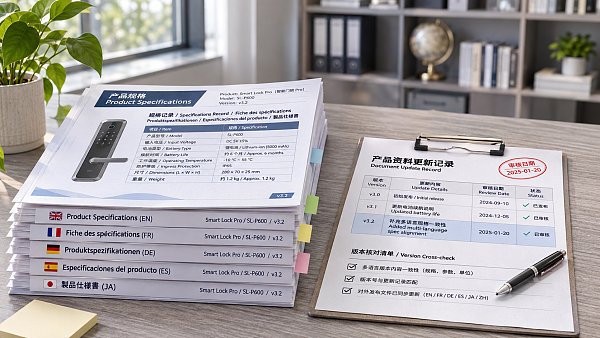
The product specifications have changed, and the English page has already been published, but the Spanish page still shows the old data. After a promotion ends, some country sites may still display expired offers. When managing content across global websites in multiple languages, what needs to be standardized is not the copy on every page, but the content source, update status, and publishing responsibilities. Operators should first determine which content must be synchronized, then establish a traceable update process for each language version.
First, define the boundaries between standardized and localized content
Treat each product, solution, or promotion as a content record, assign it a stable content ID, and link the pages in each language to it. This makes it possible to tell whether pages correspond to the same content even when their titles or URLs differ, and to identify which versions need attention when the source content is updated.
Specifications, model numbers, certification information, and other details that affect purchasing decisions are usually best maintained from a unified source. When these details change, all language pages that reference them should be notified. Marketing headlines, case studies, images, and calls to action can be adapted to each market and do not need to match line by line. Prices, delivery terms, and contact information may vary by region, so assign a maintenance owner for each market to avoid overwriting local information.
If a product model is sold in one market but not in other regions, you cannot simply synchronize all specifications. First map the models to their respective markets, then decide which fields can be shared. There is also no need to create a page in a language for a product that is not sold in that region.
Establish a process from source content changes to publication in each language
The key to unified management is to turn a single change into a set of actionable tasks. The following process works well for companies where headquarters maintains core information and local markets participate in translation and review:
- Log the change: Record the content ID, fields changed, reason for the change, owner, and planned effective date. Changes involving discontinued products, safety information, or critical specifications should be marked as high priority.
- Determine the scope of impact: Find the associated language pages, downloadable materials, and campaign landing pages, then identify which versions need to be synchronized, locally adapted, or are unaffected.
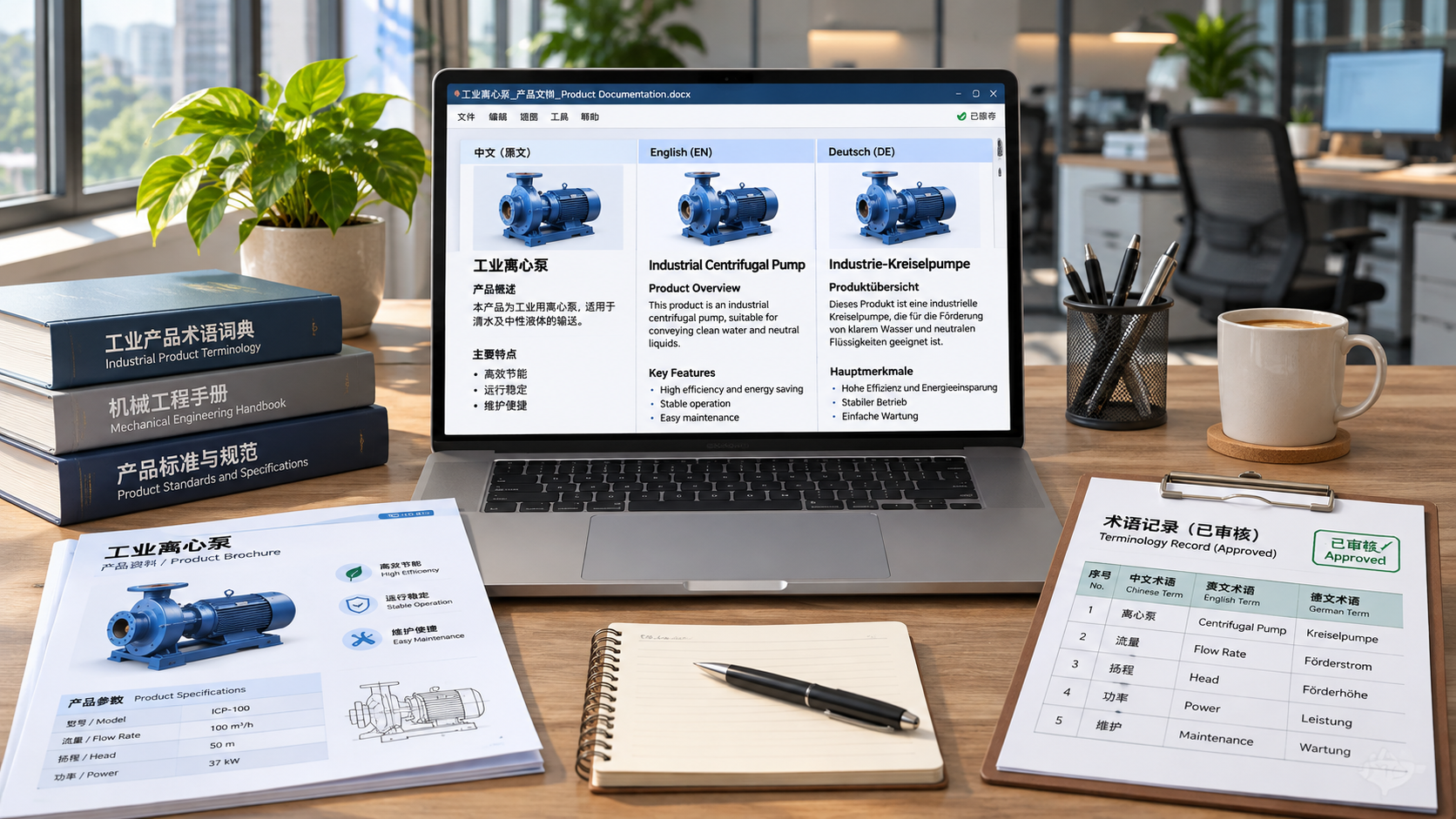
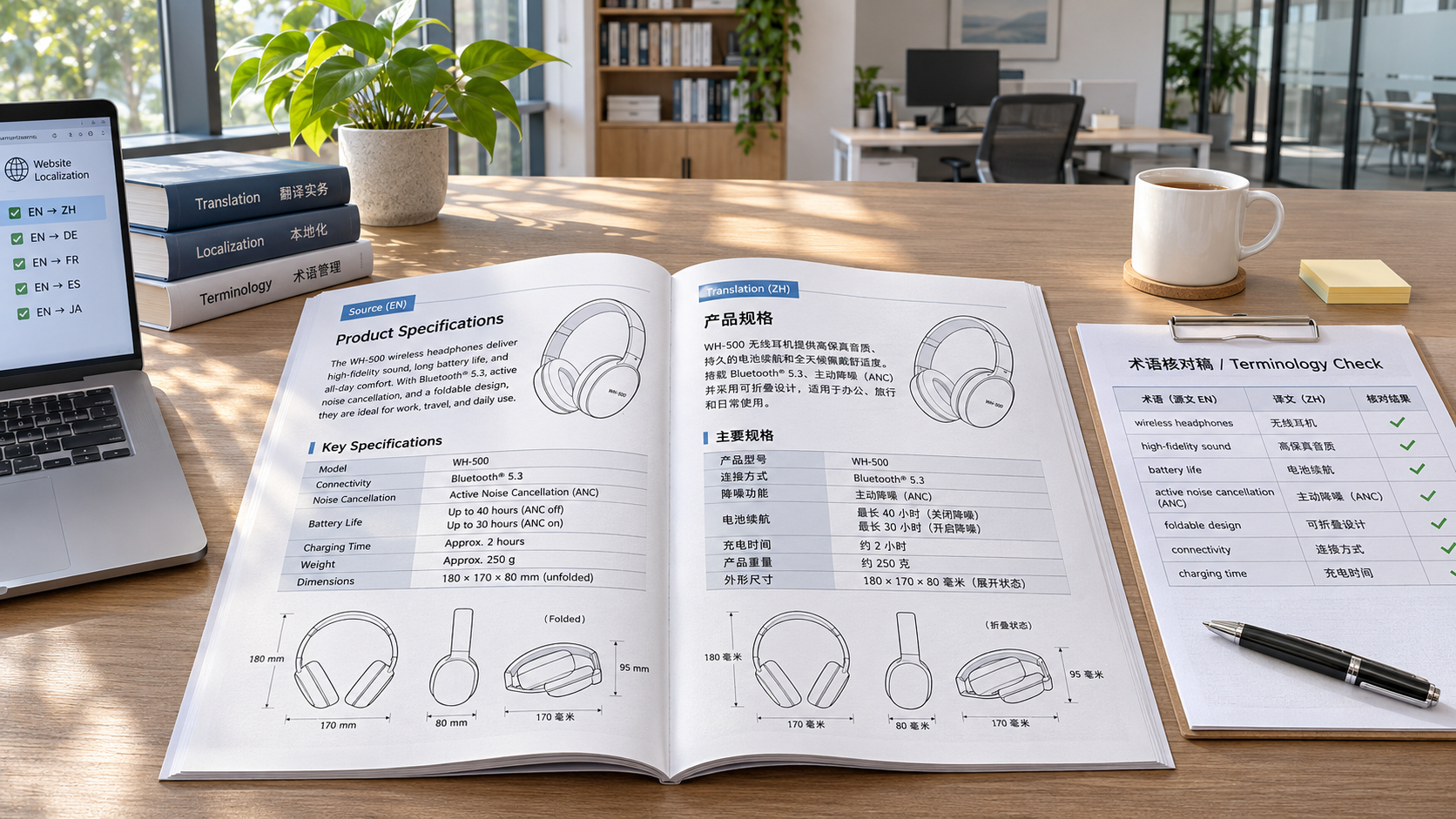
- Assign translation and review: Provide the relevant language owners with the content before and after the change, terminology, and context. Machine translation can be used to generate a first draft, but key product information should still be reviewed by people familiar with the business and target language.
- Check and publish: Verify specifications, links, forms, contact information, and page display, then schedule publication by market. After publication, update the status in the record and retain the source content version used for the update.
- Handle incomplete versions: Assign an owner and deadline to pages that cannot be updated immediately. If outdated information could mislead customers, remove the relevant content or temporarily take it offline to prevent incorrect information from continuing to circulate while translation is pending.
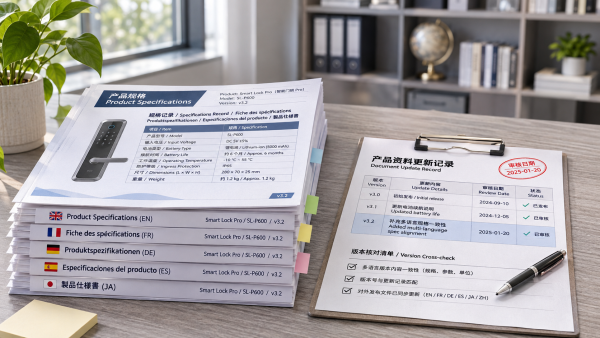
For example, if a product's dimensions change, after updating the English source page, check the product pages, specification sheets, and related landing pages in other languages as well. If the model is sold in only one market, only the affected versions need to be updated. Promotional copy may require each region to set its own effective dates, so it should not be overwritten uniformly.
If the content system supports version history, task assignment, and publication statuses, the process can be managed within the system. Smaller teams can start with a shared tracking sheet. At a minimum, it should include the content ID, source version, language, owner, status, planned publication date, and published version. The complexity of the tool does not determine whether the process works; what matters is that someone is assigned to each change and that completion is recorded for future reference.
Reduce omissions with status and version control
Do not track progress using only “translated” and “not translated.” More useful statuses include pending, in translation, awaiting review, awaiting publication, published, and expired. The assigned owner should update the status. If content is sent back for revision, record the reason so translators do not have to guess repeatedly.
If the source content changes again, pages currently being translated may also become outdated. Operators should compare the source version used for the translation with the latest version. If only formatting has changed and the meaning is unaffected, review can continue. If specifications, scope of application, or commitments have changed, the translation should be updated and reviewed again. Published pages should also be marked as awaiting an update; being online does not mean the content is still valid.
For short-term promotions, record the start and end dates at the same time as the change and schedule a check to take the content down. Long-term product materials can be reviewed periodically by product line, rather than requiring every language owner to review every page each time.
Balance local user experience and search engine recognition when publishing
Each language or regional version should have its own accessible, shareable URL, with a clear language-switching option between pages. If hreflang tags are used to identify language or regional versions, make sure they point to pages that actually exist and correspond to those versions, and keep the associations between versions consistent. If no corresponding page exists, do not point all language tags to the homepage.
When translating page titles, descriptions, body copy, and buttons, use expressions common in the target market while retaining accurate product names and model numbers. A multilingual website does not require every market to have exactly the same number of articles. If there are no local case studies or a service is not offered, keeping content that is genuinely relevant is better than copying a page that does not apply.
After publication, also check that forms can be submitted, inquiries reach the right team, and phone numbers, email addresses, and time zone information are appropriate for that market. Search traffic can bring visitors to the site, but whether customers can easily contact the right team also depends on these details.
Choose management tools based on how your teams collaborate
If the website has few languages and updates are infrequent, the existing website platform and a shared tracking sheet are usually sufficient. If product information changes frequently and teams in multiple locations are involved, focus on whether the system can link language versions, retain change history, set review permissions, and identify affected pages. For multiple websites or sales channels, also consider whether content can be reused and exported to prevent information from becoming scattered across different backends.
Yiyingbao provides intelligent website building, multilingual website development, and overseas marketing services, and can serve as a reference when evaluating options for businesses seeking to coordinate their websites and promotional activities. When configuring a solution, assess your needs based on the number of languages currently in use, update frequency, and review responsibilities. In cross-departmental collaboration, responsibilities for maintaining content and product information also need to be clearly defined. For related management ideas, read Strategies for Applying Lean Cost Principles to Business Inventory Management.
To get started, choose a product line with frequent updates, fill in the content IDs, owners for each language, and current versions, then run a real change through the process. As long as you can quickly identify affected pages and clearly determine who will complete the review and by when, it will be easier to keep multilingual updates consistent.
Related Articles
 How should a website for global brand expansion adapt its content to target regions?
 How can AI multilingual translation solutions address inconsistent product terminology?
 How to Check Translation Quality After Building a Multilingual B2B Website with AI
Related Products
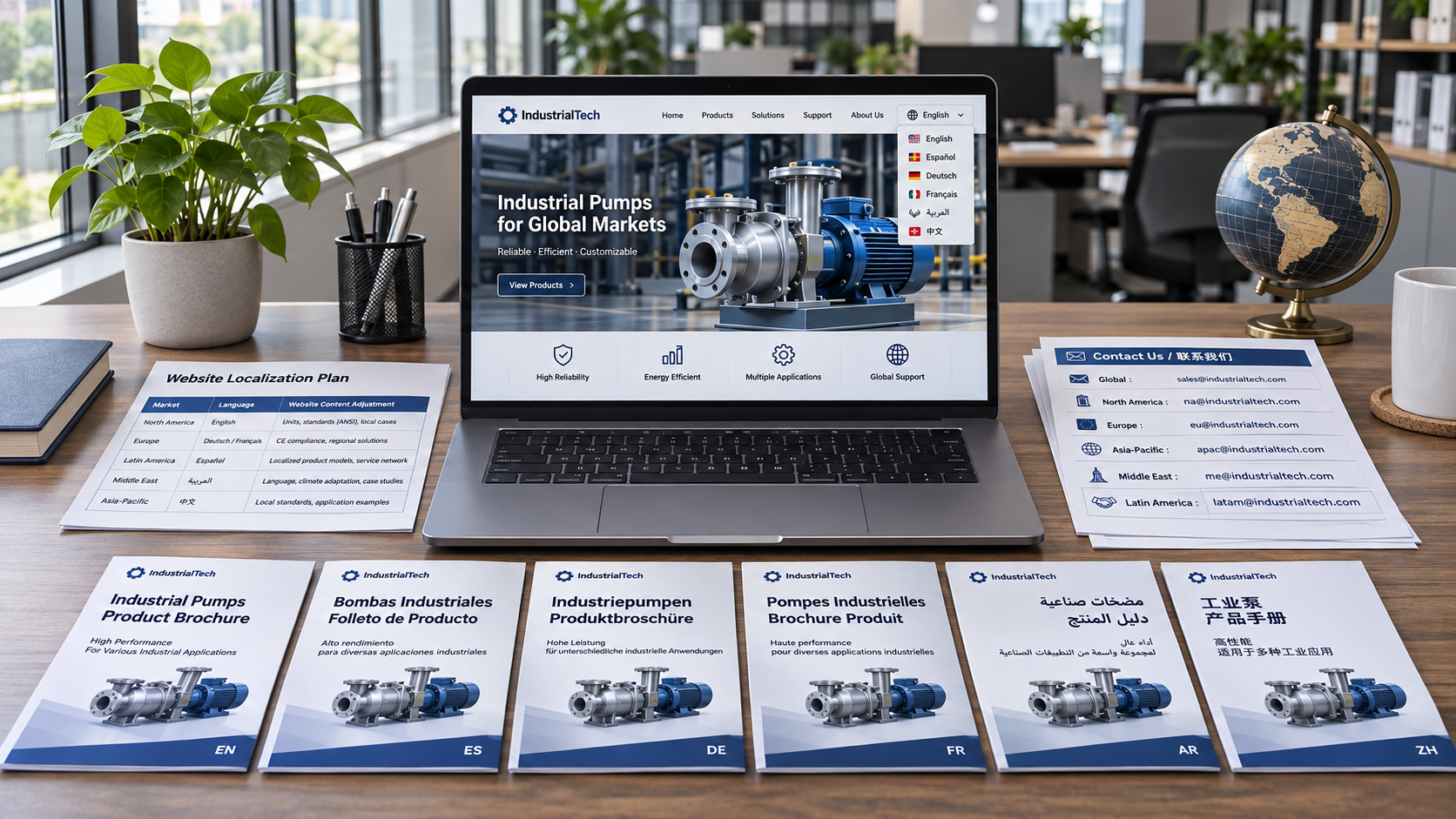
 Yiyingbao SaaS Intelligent Website Building and Marketing SystemYiyingbao SaaS Intelligent Website Building and Marketing System, AI-powered no-code website building, rapid creation of multilingual B2B international websites in 10 minutes, global server acceleration, AI-powered SEO optimization, helping businesses connect efficiently with global markets. The perfect integration of technology and operation makes building an international trade website remarkably simple
 AI+SEM Intelligent Advertising Marketing SystemAI+SEM drives intelligent ad creation, empowering full-funnel precision advertising marketing. The system automatically generates weekly/monthly reports, AI recommends keywords and target countries, monitors core metrics in real-time with intelligent alerts, and enables one-click high-conversion ad solutions to help quickly acquire customers and improve ROI.
 AI+SEO Dual-Engine System Optimization ServicesYiyingbao’s AI+SEO dual-engine optimization system helps foreign trade enterprises acquire high-quality organic traffic through AI-powered keyword research, content generation, and comprehensive technical optimization, significantly improving search rankings and conversion rates.
 AI+SNS Social Media Marketing SystemYingbao AI+SNS Social Media Marketing System - Precision social capture for the social media era. Supports one-click content synchronization across major platforms like Facebook and LinkedIn. AI intelligently rewrites posts for enhanced relevance. 24/7 AI customer service and user profiling analysis empower businesses to efficiently expand into global markets.
 AI+SEO营销解决方案易营宝AI+SEO营销解决方案,通过AI批量写作、智能生成TDK、精准关键词扩词等功能,全面优化网站SEO效果,提升流量与转化率。助力企业构建高效智能网站新生态。
 AI+SEM Advertising Marketing SolutionsAI+SEM Advertising Marketing Solution leverages AI technology to deeply empower SEM ad campaigns. It automatically generates weekly/monthly reports using AI, presenting account data across multiple dimensions for comprehensive insights into campaign performance and trends. The system precisely recommends keywords and target countries, intelligently generates high-conversion ad copy, and enables one-click activation of efficient campaign plans to help businesses rapidly acquire customers. Simultaneously, it monitors core metrics in real time, intelligently identifies abnormal fluctuations, and issues timely alerts to ensure stable, high-return advertising results.
 Domain Name ServicesEasyWin provides professional domain name services, including intelligent queries, one-stop registration, brand protection, and full lifecycle management, helping businesses build a digital brand image.
 EasyOperate B2C Cross-Border E-Commerce Platform & Independent WebsiteEasyStore B2C Cross-border E-commerce Independent Store is an intelligent website building and cross-border e-commerce integrated solution independently developed by EasyStore Information Technology (Beijing) Co., Ltd. The system is specially designed for small and medium-sized as well as large export enterprises, integrating 'website building, operation, marketing, advertising, and conversion' into one, helping enterprises quickly establish cross-border e-commerce independent stores to achieve brand globalization and global sales growth.
The platform supports multiple languages, multiple currencies, and multi-channel marketing, with built-in AI intelligent translation and SEO optimization systems, suitable for mainstream markets such as Southeast Asia, Europe and America, Latin America, and the Middle East, assisting Chinese manufacturing enterprises in efficiently deploying international e-commerce strategies. SSL证书易营宝提供专业SSL安全证书服务,包括单域名和泛域名证书,确保网站数据传输加密、身份验证和完整性保护,助力企业建立安全可信的在线业务环境。









