









- Amazon Raises Fulfillment Fees Twice, Yet the Median Platform Fee Remains Around 40%Oct 22, 2026View details
- AliExpress and YouTube Partner to Expand Marketing Opportunities for Chinese Brands Going GlobalOct 22, 2026View details
- Publicis says AI marketing is developing at two speeds, with agentic AI helping win clientsOct 21, 2026View details
- Salesforce Plans to Acquire Braze for $5.66 Billion to Enhance AI Marketing CapabilitiesOct 21, 2026View details
- Levanta’s Inaugural China Summit Held in Shenzhen, Focusing on AI and Cross-Border Brand GrowthOct 20, 2026View details
- The October Edition of the 2026 GGE Shenzhen Cross-Border E-Commerce Expo OpensOct 20, 2026View details
How Can Beauty Brand Independent Websites Deliver Effective Localized Content?
For beauty brands building overseas direct-to-consumer websites, the most easily underestimated aspect of localization is not language, but “how consumers determine whether a product is right for them.” The same serum, foundation, or sunscreen faces different skin-type terminology, makeup preferences, ingredient awareness, and purchase concerns in different markets. Simply translating a Chinese product detail page into English, Japanese, or French may appear to provide multilingual coverage, but it does not necessarily build understanding, trust, or reasons to purchase.
Truly effective localized content for a beauty brand’s direct-to-consumer website should be restructured around local consumers’ decision-making journeys: what concerns them first, what terms they use to describe their needs, what evidence they expect to see, and what missing information causes them to abandon a purchase. The core of content localization is enabling product value to be accurately understood in the context of the local market, rather than making every page merely “look like the local language.”
Address consumer concerns before introducing product selling points
Beauty consumers do not always search for products according to the selling points defined by brands. A brand may emphasize a “high-performance complex formula” or “technology-driven skincare,” while users may actually search for “moisturizer for sensitive skin,” “sunscreen that does not pill,” “summer foundation for oily skin,” or “concealer shades for deep skin tones.” If the website’s categories, titles, FAQs, and product descriptions still follow the expression logic of the Chinese market, products may have content while users are unable to find the answers they need.
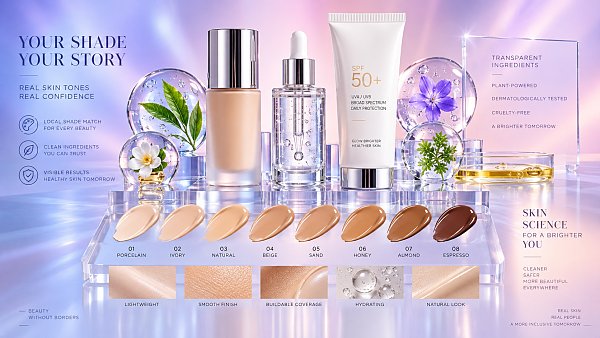
Before localization, it is necessary to break down the actual problems a product solves. Taking liquid foundation as an example, a page should not only state coverage, wear time, and the number of shades, but should also answer more specific questions relevant to local users:
- Are shades categorized by undertone, brightness, or skin depth;
- Does the finish lean toward natural radiance, soft-focus matte, or full coverage;
- How does it perform in humid, hot, cold and dry, or commuting conditions;
- Is it suitable for oily, dry, combination, or redness-prone skin;
- Does it work well with sunscreens and makeup primers commonly used by local consumers;
- Are shade matching, returns and exchanges, and shade-selection mechanisms sufficiently clear.
This information does not add length to the copy; it reduces consumers’ trial-and-error costs. Beauty products are highly experience-driven. Since a direct-to-consumer website cannot replace in-store testing, content must provide a “pre-experience”: enabling users to understand as much as possible about the results after application on the face and skin, layering, and everyday use before placing an order.
Skin-type labels should not be copied directly; they need to be converted into locally understandable language of needs
Terms such as “sensitive skin,” “repair,” “early anti-aging,” and “dewy glow” are common in the Chinese beauty context, but their meanings and acceptance are not entirely consistent across markets. Some consumers are more accustomed to assessing products through specific concerns, such as dryness and tightness, redness and discomfort, care after barrier damage, or post-acne discoloration. In some markets, descriptions such as “sensitive,” “fragrance-free,” and “low-irritation” are treated more cautiously, with consumers further focusing on ingredients, testing evidence, or usage restrictions.
Therefore, content teams should not treat skin-type terms as a glossary that can be directly substituted. A more reliable approach is to establish a chain of expression linking “concern—formula characteristics—how to use—expected results.” For example, rather than broadly claiming that a product is “suitable for sensitive skin,” it is better to explain, based on the actual product, its texture, fragrance content, moisturizing system, recommended frequency of use, and information such as discontinuing use if discomfort occurs. For efficacy-focused products, cosmetic descriptions should also avoid being written as treatment claims.
This directly affects trust and compliance risk. In beauty content, terms such as “repair,” “anti-inflammatory,” “acne treatment,” “treatment,” and “medical grade” may be subject to stricter regulatory boundaries in different markets. Direct-to-consumer website localization is not only about adjusting tone; it should also keep product pages, advertising materials, social media content, and packaging information consistent, avoiding website claims that exceed what labels, formula evidence, or applicable regulations can support.
Aesthetic localization determines whether visual content can drive conversion
Visual content for beauty direct-to-consumer websites is often produced centrally by headquarters, but consistency does not equal effectiveness. Preferences for foundation coverage, eyebrow shapes, lip colors, contouring, skin radiance, and filter effects vary by region. If page models represent a limited range of skin tones or makeup styles are disconnected from local everyday settings, consumers may find it difficult to imagine the results on themselves even if they recognize the product’s ingredients.
Visual localization does not mean that a complete set of advertising videos must be reshot for every market. Instead, priority should be given to filling gaps in materials that affect purchase decisions. Color products especially require authentic swatches, results on different skin tones, differences between natural and indoor lighting, and performance when applied lightly or built up. Skincare products need to show texture, amount used, application order, and usage scenarios. For “before and after” content, avoid excessively edited images, inconsistent lighting, or materials that fail to explain conditions of use; otherwise, they may attract clicks in the short term but undermine reviews and repeat purchases in the long term.
The people, settings, and language on a page should also be aligned. For sunscreen pages targeting hot-climate regions, emphasizing winter moisturizing scenarios is not entirely ineffective, but it is unlikely to serve as the main narrative. In markets that value quick commuting makeup looks, a lengthy ritualistic skincare routine may not be more persuasive than “finished in minutes and compatible with your existing products.”
The challenge of multilingual websites lies in information architecture, not the volume of translation
After launching multilingual websites, many brands still place all products under the same category structure and only switch language versions. This overlooks differences in how categories are understood across markets. Some markets are accustomed to shopping by product format, such as toner, essence, and cream; others more commonly enter pages by efficacy, skin type, or set-based scenarios. If website navigation, filters, and on-site search terms do not match local habits, users may leave before reaching product detail pages.
A more appropriate approach is to allow different language sites to have adjustable ways of organizing information. The focus is not on creating a completely independent website for every country, but on allowing category names, filter labels, featured combinations, content entry points, and FAQ priorities to vary by market. For example, one market may need to highlight shade navigation and swatch content, while another may need more explanation of ingredient sources, application order, or delivery times.
On-site search also deserves separate attention. Users may enter ingredient names, skin concerns, makeup-finish terms, competitor-style descriptions, or spelling variations. If the search system recognizes only the internal standardized product names used by the brand, it will waste high-intent traffic that has already reached the website. Product aliases, common need-based terms, and localized spellings should be incorporated into search-term mapping and page content development.
Trust content is not a “brand story”; it is evidence that reduces purchase concerns
Hesitation around cross-border beauty orders typically centers on several questions: whether products are authentic, whether ingredients are transparent, whether shipping is available, how taxes are calculated, how long delivery takes, whether returns or exchanges are possible after opening, and what to do if discomfort occurs. A brand story can build an image, but it cannot replace content that directly affects transactions.
A direct-to-consumer website should place trust information where users need it to make decisions, rather than only in footer links. Near product pages, users should be able to clearly find ingredient or key formula information, suitability recommendations, precautions, review policies, and delivery instructions. Checkout pages should avoid revealing shipping fees, taxes, or regional restrictions only at the final step. After-sales pages should clearly state which items are eligible for returns or exchanges, which circumstances do not qualify, as well as contact channels and response mechanisms.
Localization of user reviews also cannot be limited to translating star ratings and short sentences. If a review system can present product-related information such as skin type, skin tone, purchase motivation, period of use, and location, its reference value will be significantly higher than a generic “works great.” However, review content should maintain boundaries of authenticity and must not replace genuine feedback with standardized “positive review templates.”
Content localization should progress according to market priorities, rather than being rolled out all at once
A common waste of resources among beauty brands is producing complete content for multiple markets simultaneously without first validating which pages, products, and messaging actually generate effective traffic and conversions. A more controllable approach is to start with core categories and high-intent pages in the target market: the homepage value proposition, core product pages, shade or skin-type guides, delivery and return information, frequently asked questions, and topic pages corresponding to search demand.
After launch, content effectiveness should not be judged by page views alone. More valuable indicators include whether organic search terms for different language versions more closely match product needs, whether users use filters and on-site search, where drop-off occurs between product pages and add-to-cart pages, which FAQs are frequently visited, and whether questions about shades, ingredients, logistics, or pricing are concentrated in different markets. The purpose of data is not to mechanically copy better-performing pages, but to identify questions from local consumers that have not yet been answered.
The value of localized content for a beauty brand’s direct-to-consumer website is not to make the website look more “like an overseas brand,” but to allow products, evidence, scenarios, and transaction rules to be understood and verified by local consumers with minimal effort. Language can be switched quickly, but trust and suitability must be built gradually through content details. Only when consumers can clearly determine “whether this product is right for me, how to buy it, and what to do if something goes wrong” does localization truly begin to serve a growth function.
Related Articles
 Building a Website for the Russian-Speaking Market: Is Translating the Website Enough?
 Does the quote for building a website in a less commonly used language include localization and translation?
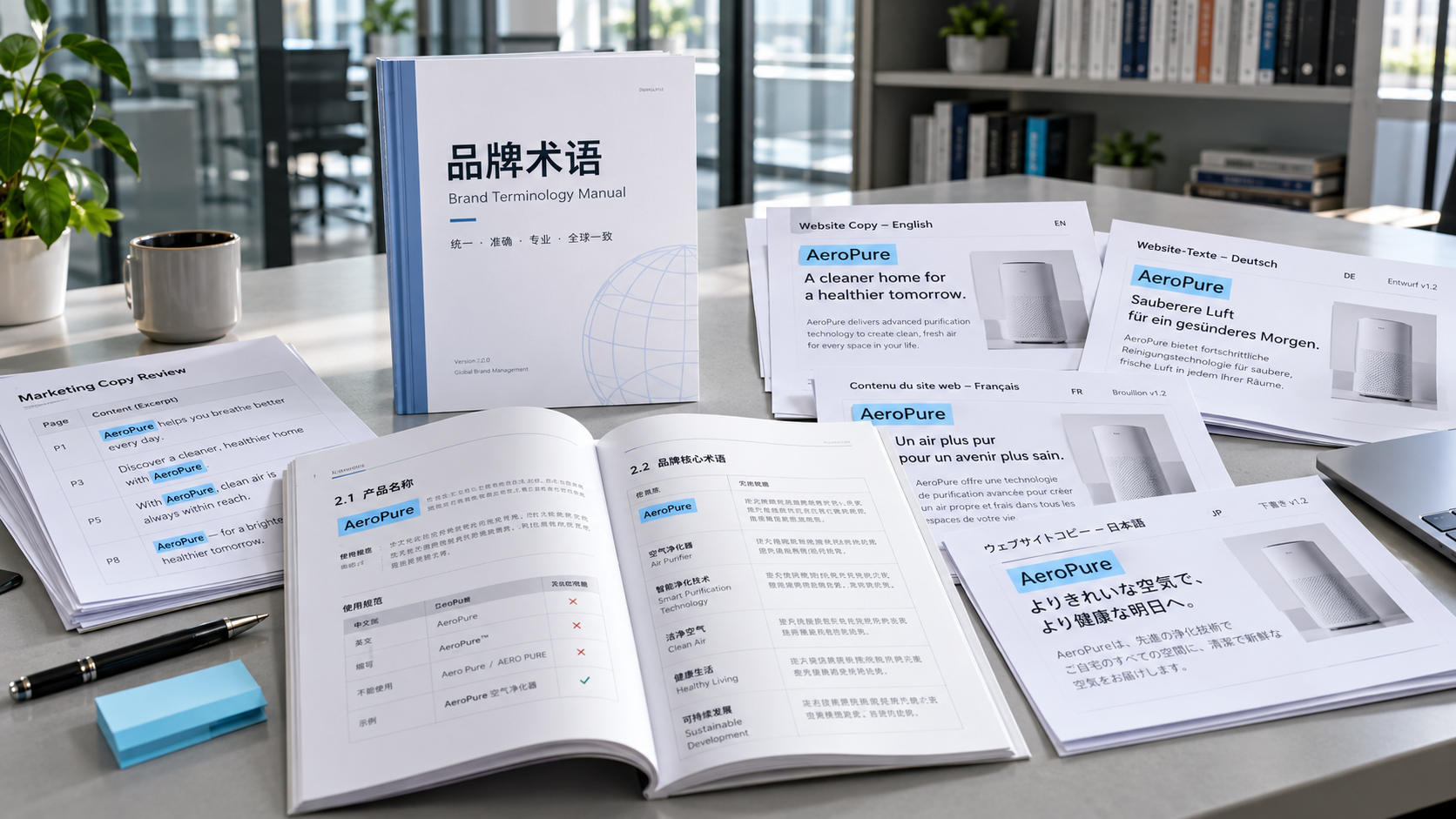
 Can an AI translation platform standardize brand terminology across multilingual websites?


Related Products
 Yiyingbao SaaS Intelligent Website Building and Marketing SystemYiyingbao SaaS Intelligent Website Building and Marketing System, AI-powered no-code website building, rapid creation of multilingual B2B international websites in 10 minutes, global server acceleration, AI-powered SEO optimization, helping businesses connect efficiently with global markets. The perfect integration of technology and operation makes building an international trade website remarkably simple
 AI+SEM Intelligent Advertising Marketing SystemAI+SEM drives intelligent ad creation, empowering full-funnel precision advertising marketing. The system automatically generates weekly/monthly reports, AI recommends keywords and target countries, monitors core metrics in real-time with intelligent alerts, and enables one-click high-conversion ad solutions to help quickly acquire customers and improve ROI.
 AI+SEO Dual-Engine System Optimization ServicesYiyingbao’s AI+SEO dual-engine optimization system helps foreign trade enterprises acquire high-quality organic traffic through AI-powered keyword research, content generation, and comprehensive technical optimization, significantly improving search rankings and conversion rates.
 AI+SNS Social Media Marketing SystemYingbao AI+SNS Social Media Marketing System - Precision social capture for the social media era. Supports one-click content synchronization across major platforms like Facebook and LinkedIn. AI intelligently rewrites posts for enhanced relevance. 24/7 AI customer service and user profiling analysis empower businesses to efficiently expand into global markets.
 AI+SEO营销解决方案易营宝AI+SEO营销解决方案,通过AI批量写作、智能生成TDK、精准关键词扩词等功能,全面优化网站SEO效果,提升流量与转化率。助力企业构建高效智能网站新生态。
 AI+SEM Advertising Marketing SolutionsAI+SEM Advertising Marketing Solution leverages AI technology to deeply empower SEM ad campaigns. It automatically generates weekly/monthly reports using AI, presenting account data across multiple dimensions for comprehensive insights into campaign performance and trends. The system precisely recommends keywords and target countries, intelligently generates high-conversion ad copy, and enables one-click activation of efficient campaign plans to help businesses rapidly acquire customers. Simultaneously, it monitors core metrics in real time, intelligently identifies abnormal fluctuations, and issues timely alerts to ensure stable, high-return advertising results.
 Domain Name ServicesEasyWin provides professional domain name services, including intelligent queries, one-stop registration, brand protection, and full lifecycle management, helping businesses build a digital brand image.
 EasyOperate B2C Cross-Border E-Commerce Platform & Independent WebsiteEasyStore B2C Cross-border E-commerce Independent Store is an intelligent website building and cross-border e-commerce integrated solution independently developed by EasyStore Information Technology (Beijing) Co., Ltd. The system is specially designed for small and medium-sized as well as large export enterprises, integrating 'website building, operation, marketing, advertising, and conversion' into one, helping enterprises quickly establish cross-border e-commerce independent stores to achieve brand globalization and global sales growth.
The platform supports multiple languages, multiple currencies, and multi-channel marketing, with built-in AI intelligent translation and SEO optimization systems, suitable for mainstream markets such as Southeast Asia, Europe and America, Latin America, and the Middle East, assisting Chinese manufacturing enterprises in efficiently deploying international e-commerce strategies. SSL证书易营宝提供专业SSL安全证书服务,包括单域名和泛域名证书,确保网站数据传输加密、身份验证和完整性保护,助力企业建立安全可信的在线业务环境。









