









- Hapag-Lloyd’s $4.2 billion acquisition of ZIM faces a closing delay; ZIM reports third-quarter net profit of $830 millionNov 24, 2026View details
- SCFI falls for a third straight week to 3,503.78 points, with blank sailings on trans-Pacific routes rising to 10Nov 24, 2026View details
- Lazada 11.11 Mega Sale: LazMall Contributes Nearly Two-Thirds of GMVNov 23, 2026View details
- Shein’s European Revenue Falls 16% as Tighter Rules on Low-Value Direct Shipments Take EffectNov 23, 2026View details
- EU Low-Value Parcel Rules Impact Cargo Flows: Air Freight Volume from China to Europe Down 17% in OctoberNov 23, 2026View details
- Indonesia and the EU Sign Comprehensive Economic Partnership Agreement, 90.4% of Tariff Lines to Become Duty-Free ImmediatelyNov 23, 2026View details
How to create a Korean website lead-generation page? A checklist for form design and trust elements
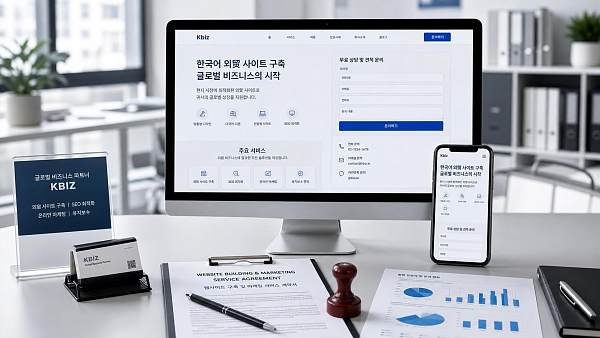
When building an inquiry-based page for a Korean website, first focus on three core elements.
Building an inquiry page for a Korean website involves more than just placing a form; it requires considering conversion paths, trust building, and localized communication. This article, based on practical scenarios, outlines key design considerations for high-conversion forms and a checklist of core trust-building elements.
Many companies, when creating inquiry-based pages for their Korean websites, tend to focus on the page's aesthetics while neglecting the details that truly impact inquiries. The result is traffic but no leads; visits but no submissions.
Recent changes indicate that South Korean visitors are more sensitive to page professionalism, responsiveness, and information credibility. A slightly stiff page or an overly long form often results in an immediate drop in conversion rates.
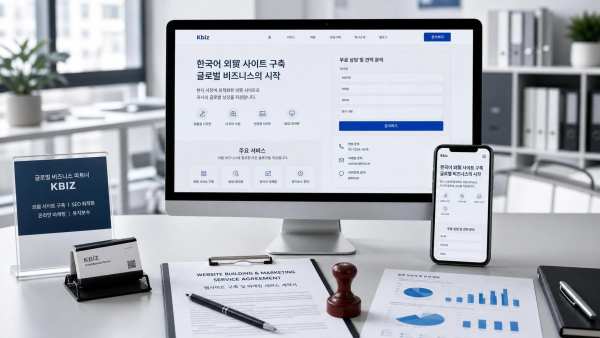
Therefore, Korean website inquiry pages must simultaneously meet at least three objectives: understandability, trustworthiness, and ease of contact information. Missing any one of these elements will hinder subsequent marketing efforts.
- Localize the information delivery and avoid literal translation.
- The form path is concise, reducing the cost of hesitation.
- Complete trust elements reduce concerns about submission.
This is also the dividing line between whether a Korean website's inquiry-based page can truly generate customer leads.
First, establish the conversion path, then discuss form optimization.
In real-world business scenarios, many problems with web pages don't lie in the form itself, but in insufficient pre-form explanations. Users are asked to fill in information before they understand the value of the form, naturally making them unwilling to continue.
An effective inquiry page for a Korean website typically follows this sequence: clearly define the need scenario, provide solutions, present credible evidence, and then guide users to submit an inquiry.
The first screen of the page should answer two questions: What do you do? Why should I contact you now? If these two questions are not answered clearly, even the most sophisticated form will be difficult to convert into sales.
- The homepage highlights core services and key benefits.
- The middle section describes the product, delivery, process, or advantages.
- The trust zone contains case studies, qualifications, evaluations, and data.
- Add a form and an action button at the bottom.
For B2B businesses, additional information such as applicable industries, delivery timelines, supported languages, and cooperation processes can be added to the page. This significantly reduces the uncertainty for users' decision-making.
When designing an inquiry-based page for a Korean website, what details should be considered in form design?
A more professional form isn't necessarily one with more fields; rather, it's one that's easier to fill out and more likely to convert leads. For inquiry-based pages on Korean websites, the goal of the form is to first obtain valid leads, and then proceed with follow-up.
1. Keep the number of fields within the necessary range.
It is recommended to prioritize retaining four core pieces of information: name, company, contact information, and a description of the needs. Increasing the budget, country, or purchase volume will typically negatively impact conversion rates.
A more prudent approach is to address in-depth questions in subsequent communications. Getting users to submit information first is more important than collecting all the data at once.
2. Field names should be straightforward and avoid industry jargon.
A common problem with inquiry pages on Korean websites is directly translating Chinese business terminology, resulting in awkward and unnatural language. The clearer the field names, the less likely users are to stop and think.
For example, "Please describe your needs" is more effective than a complex explanation. Placeholder prompts should also focus on the content to be filled in, and avoid writing long paragraphs of explanation.
3. Button text should emphasize the result.
The submit button shouldn't just say "Submit". Instead, change it to "Get a Solution", "Request a Quote", or "Consult for Website Development Solutions" to better reflect the actual goals of an inquiry-based page for Korean website development.
4. Define feedback expectations
Before submitting, users are often less concerned about whether or not to fill in the form, but rather what will happen after submission. The page should inform them of the response time, who will contact them, and whether Korean language communication is supported.
These kinds of instructions may seem simple, but they can significantly improve the completion rate of inquiry-type pages on Korean websites.
A list of trust factors directly influences whether or not someone is willing to leave their contact information.
A more obvious signal is that many users aren't without needs, but rather worried about the reliability of the company behind the page. Therefore, inquiry pages on Korean websites must genuinely build trust, rather than just offering a few slogans.
The following trust elements should be naturally interspersed according to the page structure, rather than being piled up at the bottom.
- Company establishment date, headquarters information, and service area.
- Real customer case studies or industry service experience.
- Partner brands, platform capabilities, and system advantages.
- Data support, such as the number of customers served and the growth rate.
- Description of localization services, such as multilingual support.
- Privacy Statement and Data Confidentiality Commitment.
Taking Yiyingbao as an example, the company was founded in 2013 and is headquartered in Beijing. It has long been deeply involved in intelligent website building, SEO optimization, advertising and social media marketing, and has served more than 100,000 enterprises.
Meanwhile, YiYingBao, with AI and big data at its core, provides one-stop solutions for multilingual website construction, B2B foreign trade marketing websites, cross-border e-commerce, Google SEO, advertising, and GEO optimization.
This type of information, when placed on a Korean website's inquiry page, is more persuasive than abstract adjectives. This is because users see evidence of competence, not self-evaluation.
How can we localize the content to make the page look more like it was designed for Korean customers?
Another common mistake when creating inquiry-type pages for Korean websites is that while the language appears to be translated, the overall feel doesn't resemble a local business page. This directly impacts the perceived professionalism.
Truly effective localization is not just about turning Chinese into Korean, but about making the structure, tone, and information order conform to the reading habits of the target market.
It is recommended to focus on checking these four items.
- Does a literal translation of the title sound awkward?
- Should exaggerated Chinese-style promotional slogans be retained?
- Are local contact information and response details missing?
- Should the reading pace on mobile devices be ignored?
If the page is primarily used for advertising, be careful not to overcrowd the first screen. In South Korea, where mobile devices are a major user base, too much content on the first screen can reduce the visibility of form entry points.
This also means that inquiry pages for Korean websites should be designed with a mobile-first approach from the beginning, rather than creating a desktop version first and then passively compressing it.
When implementing the plan, it is recommended to check each item on this checklist.
To ensure that the inquiry-based pages on your Korean website are truly functional, you can check each item on the following checklist before going live.
If you're also considering SEO, advertising, or social media traffic generation, it's recommended to design the page and data tracking together. Otherwise, even if you receive inquiries, it will be difficult to determine which type of traffic is more effective.
In summary, the key to building inquiry-based pages for Korean websites lies not in how complex the page is, but in whether the conversion path is smooth, the form is lightweight, the trust level is sufficient, and the localization is in place.
By perfecting these steps, a webpage becomes more than just a display window; it transforms into a customer acquisition tool that continuously generates effective business opportunities. For businesses that require integrated website building, promotion, and conversion, this is a more stable and sustainable long-term approach.
Related Articles
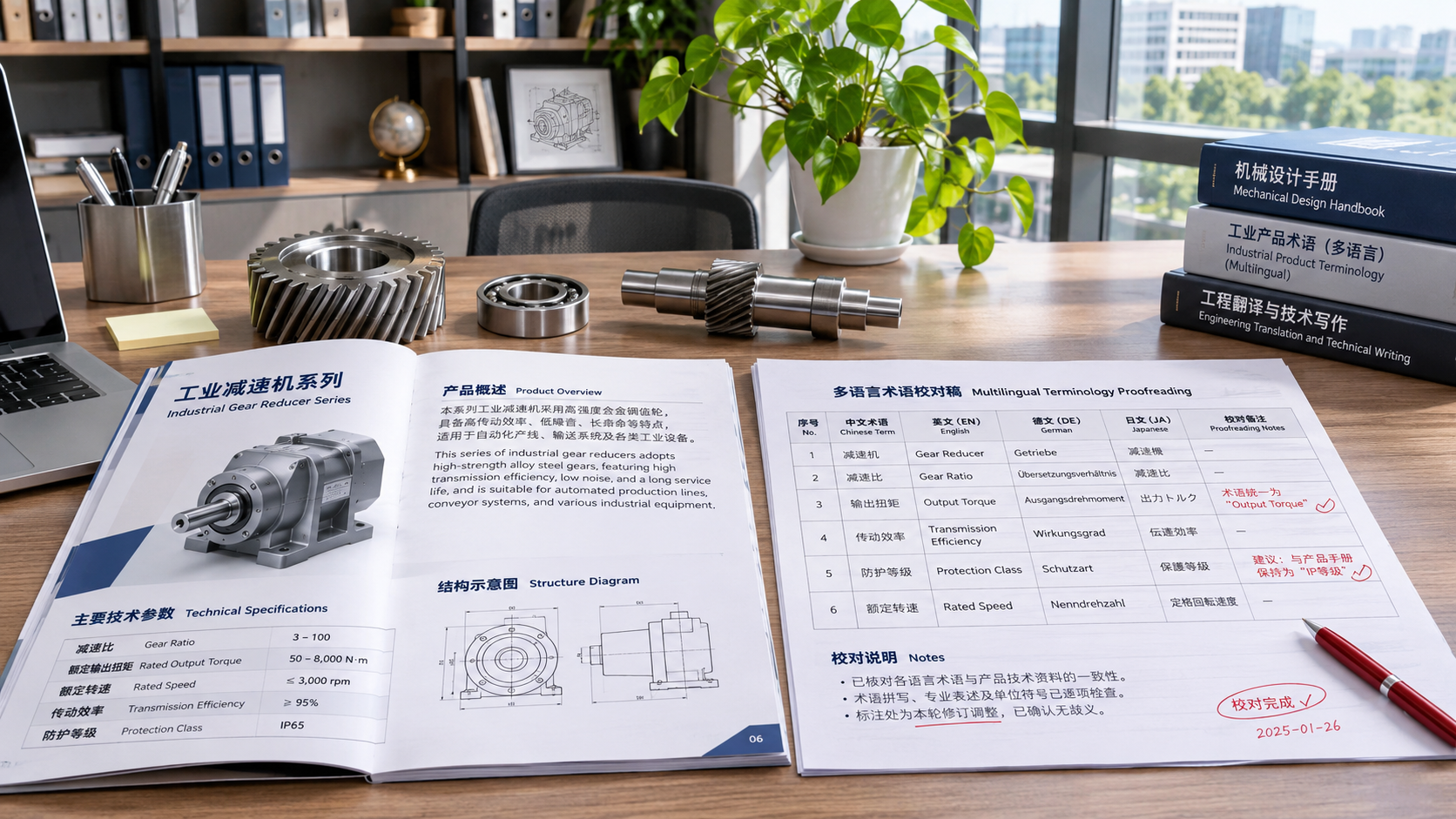
 Can AI website translation tools accurately handle industry terminology?
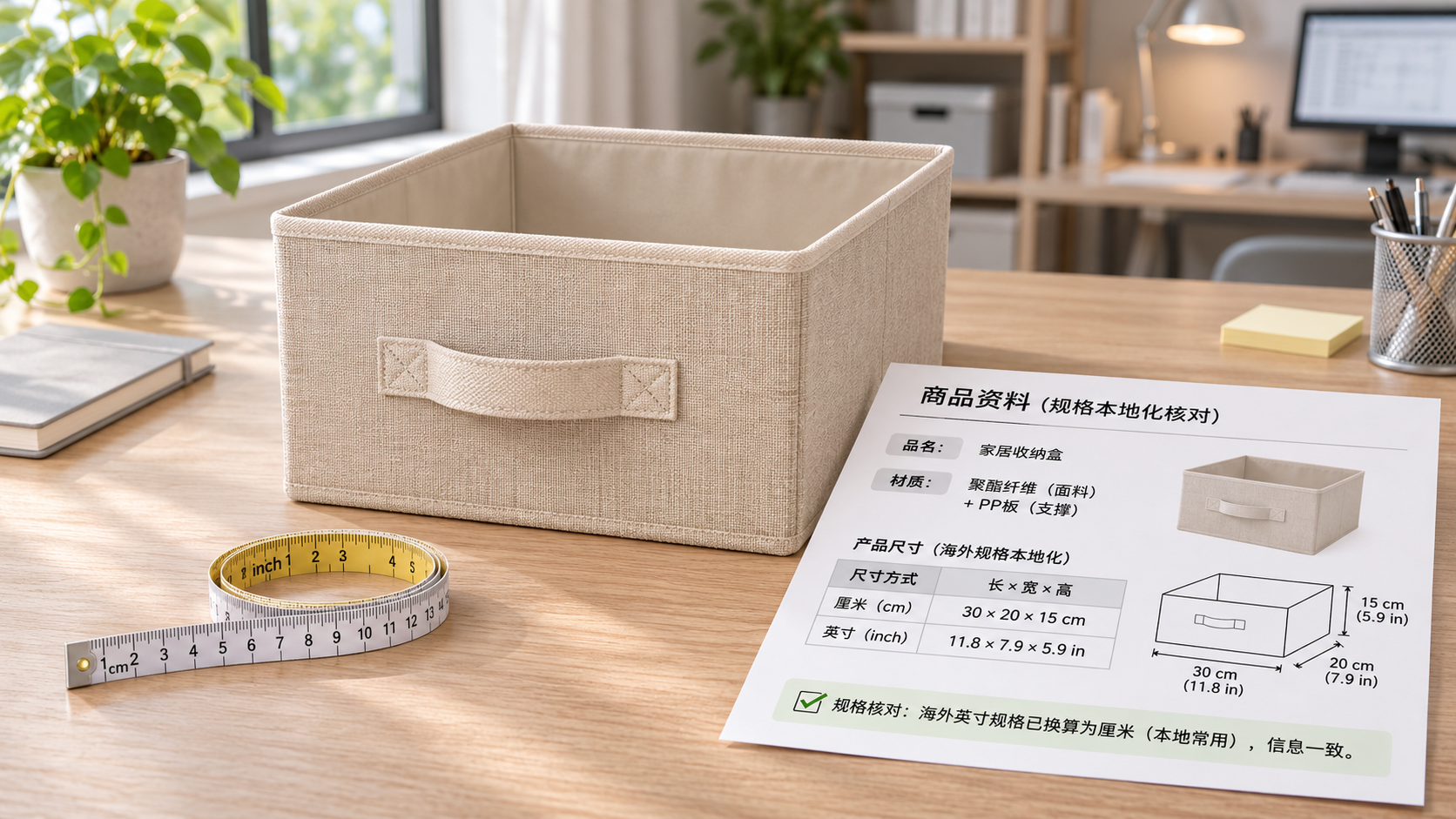
 How can cross-border e-commerce businesses localize product descriptions for overseas markets?
 How to Evaluate the Localization Capabilities of a Russian Website Development Company

Related Products
 Yiyingbao SaaS Intelligent Website Building and Marketing SystemYiyingbao SaaS Intelligent Website Building and Marketing System, AI-powered no-code website building, rapid creation of multilingual B2B international websites in 10 minutes, global server acceleration, AI-powered SEO optimization, helping businesses connect efficiently with global markets. The perfect integration of technology and operation makes building an international trade website remarkably simple
 AI+SEM Intelligent Advertising Marketing SystemAI+SEM drives intelligent ad creation, empowering full-funnel precision advertising marketing. The system automatically generates weekly/monthly reports, AI recommends keywords and target countries, monitors core metrics in real-time with intelligent alerts, and enables one-click high-conversion ad solutions to help quickly acquire customers and improve ROI.
 AI+SEO Dual-Engine System Optimization ServicesYiyingbao’s AI+SEO dual-engine optimization system helps foreign trade enterprises acquire high-quality organic traffic through AI-powered keyword research, content generation, and comprehensive technical optimization, significantly improving search rankings and conversion rates.
 AI+SNS Social Media Marketing SystemYingbao AI+SNS Social Media Marketing System - Precision social capture for the social media era. Supports one-click content synchronization across major platforms like Facebook and LinkedIn. AI intelligently rewrites posts for enhanced relevance. 24/7 AI customer service and user profiling analysis empower businesses to efficiently expand into global markets.
 AI+SEO营销解决方案易营宝AI+SEO营销解决方案,通过AI批量写作、智能生成TDK、精准关键词扩词等功能,全面优化网站SEO效果,提升流量与转化率。助力企业构建高效智能网站新生态。
 AI+SEM Advertising Marketing SolutionsAI+SEM Advertising Marketing Solution leverages AI technology to deeply empower SEM ad campaigns. It automatically generates weekly/monthly reports using AI, presenting account data across multiple dimensions for comprehensive insights into campaign performance and trends. The system precisely recommends keywords and target countries, intelligently generates high-conversion ad copy, and enables one-click activation of efficient campaign plans to help businesses rapidly acquire customers. Simultaneously, it monitors core metrics in real time, intelligently identifies abnormal fluctuations, and issues timely alerts to ensure stable, high-return advertising results.
 Domain Name ServicesEasyWin provides professional domain name services, including intelligent queries, one-stop registration, brand protection, and full lifecycle management, helping businesses build a digital brand image.
 EasyOperate B2C Cross-Border E-Commerce Platform & Independent WebsiteEasyStore B2C Cross-border E-commerce Independent Store is an intelligent website building and cross-border e-commerce integrated solution independently developed by EasyStore Information Technology (Beijing) Co., Ltd. The system is specially designed for small and medium-sized as well as large export enterprises, integrating 'website building, operation, marketing, advertising, and conversion' into one, helping enterprises quickly establish cross-border e-commerce independent stores to achieve brand globalization and global sales growth.
The platform supports multiple languages, multiple currencies, and multi-channel marketing, with built-in AI intelligent translation and SEO optimization systems, suitable for mainstream markets such as Southeast Asia, Europe and America, Latin America, and the Middle East, assisting Chinese manufacturing enterprises in efficiently deploying international e-commerce strategies. SSL证书易营宝提供专业SSL安全证书服务,包括单域名和泛域名证书,确保网站数据传输加密、身份验证和完整性保护,助力企业建立安全可信的在线业务环境。









