









- Which customer acquisition channels will be affected by cross-border marketing trends in 2026?Sep 06, 2026View details
- Which homogenization risks should be considered in an analysis of the AI-powered website building industry?Aug 30, 2026View details
- How Will AI Marketing Trends 2026 Change Advertising Budget AllocationAug 28, 2026View details
- Is the EV SSL certificate market shrinking or upgrading? How should companies assess certificate procurement?Aug 11, 2026View details
- Why the old AMP SEO 2020 practices no longer work and what has changed in current optimization prioritiesAug 02, 2026View details
- How to Choose Topics for an Industry News Section to Attract More Organic Search TrafficJul 29, 2026View details
What localization pitfalls should be avoided when building a Colombian Spanish website?
After a Spanish-language website targeting the Colombian market goes live, the page language may appear to have no issues, yet it may still fail to generate qualified inquiries, or visitors arriving through ads may leave quickly. Investigation often reveals that the problem is not whether it has been “translated into Spanish,” but that the content, pricing, contact details, forms, and trust information still follow the logic of the original market.
The core of building a Colombian Spanish-language website is not replacing Chinese or English sentence by sentence, but enabling local visitors to understand it, feel confident contacting you, and complete the next step. During the business evaluation stage, priority should be given to reviewing five areas: language localization, transaction information, data collection, technical markup, and conversion paths. If any of these is handled carelessly, subsequent promotional budgets will be consumed by low-quality traffic.
Treating “general Spanish” as local expression is the most common initial mistake
Spanish is used in many Latin American countries, but business tone, forms of address, and commonly used terms are not exactly the same. Directly using copy intended for the Spanish market may result in awkward wording, overly formal expressions, or even ambiguity in product names. Conversely, using machine translation without human proofreading can also make specifications, delivery terms, or after-sales commitments unclear.
Colombian business websites are generally better suited to clear, polite, and direct language. Call-to-action buttons, inquiry prompts, and form fields should use terms that target customers can easily understand, rather than copying buttons from the original website. For example, intentions such as “Get a Quote,” “Request Information,” and “Contact the Sales Team” should be explicit, avoiding broad expressions that make the next action difficult to determine.
Language review should not focus only on the homepage. Product specifications, downloadable materials, error messages, privacy notices, automated email replies, and form confirmation pages are more likely to contain errors. If visitors receive an email in another language after submitting information, or are redirected to an English page, the localized trust established on the front end will be interrupted immediately.
Pricing and payment information cannot be handled by simply replacing the currency symbol
Some websites change the currency symbol before prices to “$” without specifying the currency. Since the same symbol may be used for US dollars, Colombian pesos, and other currencies, purchasers cannot confirm the basis of the quotation and may develop concerns before even making an inquiry. Pages involving prices should clearly state the currency, whether taxes are included, whether shipping is charged separately, the quotation validity period, and applicable conditions.
If the website supports online transactions or deposit payments, it is also necessary to confirm whether payment methods familiar to local users can be integrated and whether the checkout page supports commonly used local formats for identity, address, and payment information. Necessary fields should not be removed merely to simplify forms, nor should postal code, state/province, or identity document formats from other countries be copied directly.
- The quotation page should display a clear currency name or international code, rather than retaining only the currency symbol;
- For products requiring manual price verification, the process of “confirming the price after submitting requirements” should be explained;
- For corporate procurement, delivery lead time, minimum order quantity, and trade terms should correspond to the inquiry fields;
- Descriptions of orders, refunds, delivery, and other matters should align with actual fulfillment capabilities and must not use default commitments from templates.
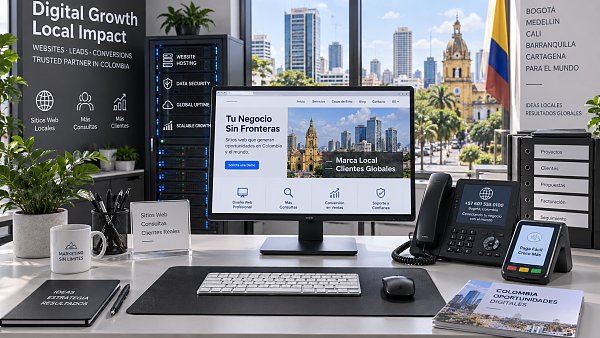
Without local trust information, traffic is also difficult to convert
Overseas visitors cannot verify suppliers as quickly as they can through offline procurement, so trust elements on a website serve to screen visitors and reduce concerns. Some pages only emphasize factory photos and product advantages, without explaining the company identity, service scope, response methods, or after-sales boundaries. Others have phone numbers that cannot be reached, use email addresses with free domains, or display contact addresses that clearly do not match the language market of the page. All of these increase the effort required for visitors to make a judgment.
A more reliable approach is to place verifiable information near the points where customers make decisions: explain how to obtain samples, technical materials, or quotations near product pages; provide complete international phone number formats, working hours, and response channels on the contact page; and clearly explain the process for obtaining certification documents, product materials, or contract documents on pages involving corporate procurement. The focus here is not on piling up supporting materials, but on letting visitors know who will handle their questions, how long it will take to receive a response, and what information they need to provide next.
Overly “domestic-oriented” form design can result in the loss of qualified leads
Many foreign trade websites still require visitors to fill in extensive information at once, including the full company name, procurement budget, job title, address, and product model. For users who have just entered the website and are still comparing suppliers, this threshold is too high. Another misconception is having too few fields, such as only name and phone number, leaving the sales team unable to determine whether the need is genuine and resulting in very low follow-up communication efficiency.
A more appropriate approach is to set up different forms based on page intent. Product detail pages are suitable for collecting the product name, required quantity, intended use, and contact information; download pages may retain only necessary contact information; appointment consultation pages for high-value projects can additionally include company name, procurement timeline, and project description. Field names should support Spanish input conventions, and error messages should clearly indicate what needs to be corrected.
Do not overlook telephone, instant communication, and mobile form-completion experience
When Colombian users primarily access websites through mobile devices, filling out complex forms, downloading oversized files, or finding contact information becomes more difficult. Check whether phone numbers include the correct international dialing code prompt, whether click-to-call functions work, whether consultation entry points obstruct content, and whether verification codes and attachment uploads can be completed properly on mobile networks. In particular, the confirmation message after form submission must state the expected response method, rather than displaying only a vague “Submission successful.”
Incorrect technical multilingual settings can confuse both search engines and users
A language version is not created simply by copying a set of page paths. Pages for the Colombian market should have clear Spanish regional markup and corresponding relationships with versions in other languages. Common issues include Spanish pages still inheriting English titles and descriptions, completely duplicate content across Spanish pages for different countries, language switching that returns users to the homepage, and search engines indexing test pages or parameter pages.
During the development stage, at a minimum, check whether the page encoding displays accented letters and special characters correctly, whether URLs remain stable, whether language switching leads to the corresponding content page, and whether canonical tags and language-region markup point to the correct pages. For content targeting Colombia, es-CO can be used as a language and region identification reference; if there is currently only one Spanish website, it should also avoid masquerading as multiple country versions merely to cover search terms by duplicating pages.
Data collection and disclosure text must not reuse old templates
Inquiry forms, subscription functions, online chat, and remarketing code all involve user data. A common misconception is to directly copy privacy policies from other markets, creating contradictions between the page language, collection purpose, contact channels, and actual processing methods; or to explain that marketing emails will be received only after users submit a form.
The website should first identify what information is actually collected, why it is collected, who processes it, how long it is retained, and how users can request access, correction, or deletion, then prepare Spanish-language explanations accordingly. Where cross-border transfers, payment information, minors’ data, or industry regulatory requirements are involved, applicable rules should be further verified according to the actual business model. Do not directly publish unverified compliance wording as a “safe template.”
Conduct a real user-path test before launch
When evaluating the quality of a Colombian Spanish-language website, it is advisable to have testers complete a journey as first-time visitors: enter a product page from search results, understand the product’s use, view pricing or request a quotation, complete a form, receive a confirmation email, and then return to the website to find after-sales or company information. If language switching, unclear prices, field errors, or invalid contact information occur at any step, they should be corrected before promotional campaigns are launched.
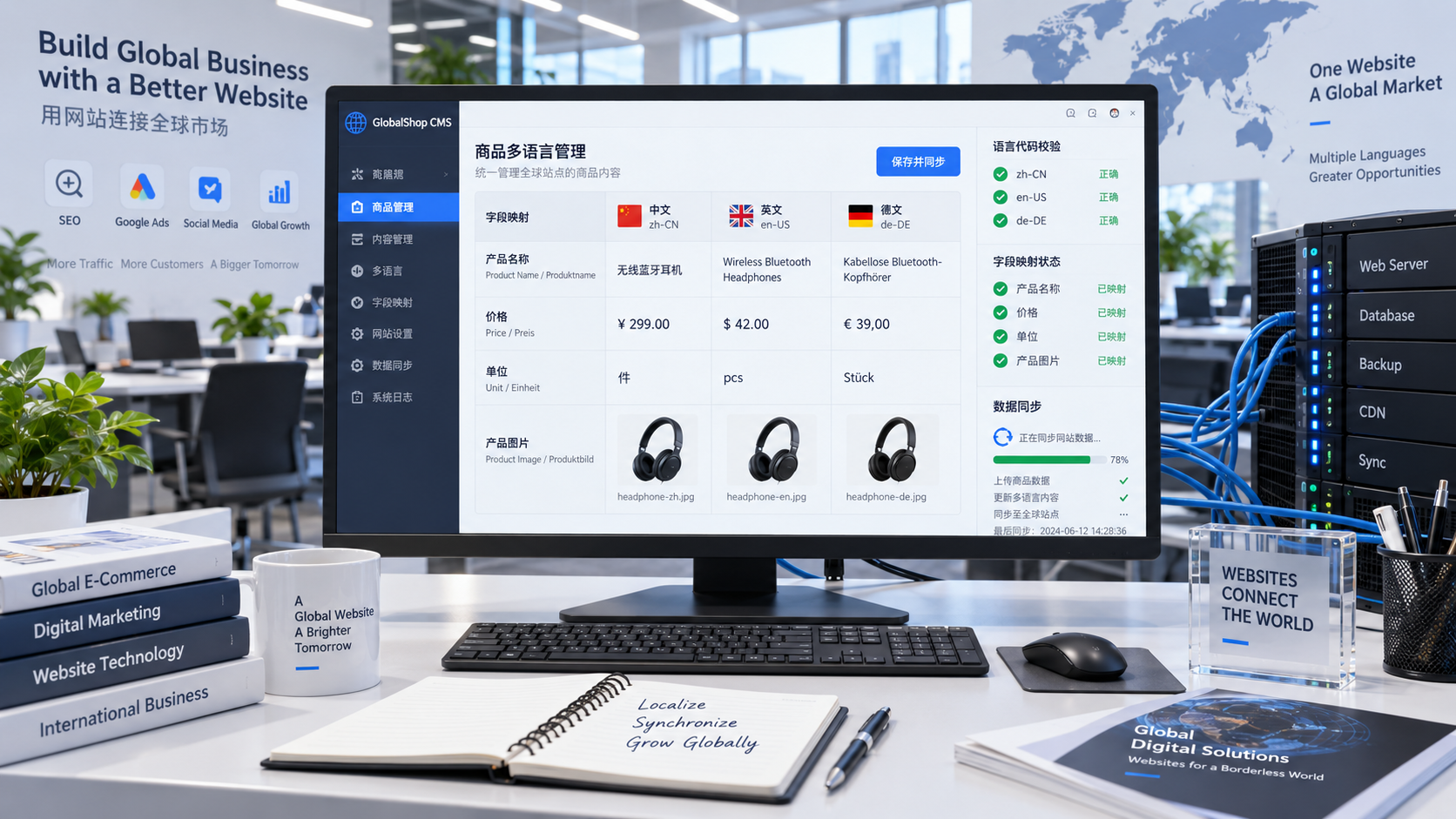
For companies that need to continuously expand multilingual pages, the website-building system should ideally support centralized management of page versions, forms, technical markup, and content review, avoiding reliance on manual copying whenever a new language is added. The multilingual website-building and overseas marketing services provided by 易营宝 can be used to centrally manage overseas website content and promotional pages, but before launch, the business team should still confirm the pricing basis, delivery commitments, and data processing procedures for the Colombian market, as technical configuration cannot replace these business judgments.
Related Articles
Related Products
 Yiyingbao SaaS Intelligent Website Building and Marketing SystemYiyingbao SaaS Intelligent Website Building and Marketing System, AI-powered no-code website building, rapid creation of multilingual B2B international websites in 10 minutes, global server acceleration, AI-powered SEO optimization, helping businesses connect efficiently with global markets. The perfect integration of technology and operation makes building an international trade website remarkably simple
 AI+SEM Intelligent Advertising Marketing SystemAI+SEM drives intelligent ad creation, empowering full-funnel precision advertising marketing. The system automatically generates weekly/monthly reports, AI recommends keywords and target countries, monitors core metrics in real-time with intelligent alerts, and enables one-click high-conversion ad solutions to help quickly acquire customers and improve ROI.
 AI+SEO Dual-Engine System Optimization ServicesYiyingbao’s AI+SEO dual-engine optimization system helps foreign trade enterprises acquire high-quality organic traffic through AI-powered keyword research, content generation, and comprehensive technical optimization, significantly improving search rankings and conversion rates.
 AI+SNS Social Media Marketing SystemYingbao AI+SNS Social Media Marketing System - Precision social capture for the social media era. Supports one-click content synchronization across major platforms like Facebook and LinkedIn. AI intelligently rewrites posts for enhanced relevance. 24/7 AI customer service and user profiling analysis empower businesses to efficiently expand into global markets.
 AI+SEO营销解决方案易营宝AI+SEO营销解决方案,通过AI批量写作、智能生成TDK、精准关键词扩词等功能,全面优化网站SEO效果,提升流量与转化率。助力企业构建高效智能网站新生态。
 AI+SEM Advertising Marketing SolutionsAI+SEM Advertising Marketing Solution leverages AI technology to deeply empower SEM ad campaigns. It automatically generates weekly/monthly reports using AI, presenting account data across multiple dimensions for comprehensive insights into campaign performance and trends. The system precisely recommends keywords and target countries, intelligently generates high-conversion ad copy, and enables one-click activation of efficient campaign plans to help businesses rapidly acquire customers. Simultaneously, it monitors core metrics in real time, intelligently identifies abnormal fluctuations, and issues timely alerts to ensure stable, high-return advertising results.
 Domain Name ServicesEasyWin provides professional domain name services, including intelligent queries, one-stop registration, brand protection, and full lifecycle management, helping businesses build a digital brand image.
 EasyOperate B2C Cross-Border E-Commerce Platform & Independent WebsiteEasyStore B2C Cross-border E-commerce Independent Store is an intelligent website building and cross-border e-commerce integrated solution independently developed by EasyStore Information Technology (Beijing) Co., Ltd. The system is specially designed for small and medium-sized as well as large export enterprises, integrating 'website building, operation, marketing, advertising, and conversion' into one, helping enterprises quickly establish cross-border e-commerce independent stores to achieve brand globalization and global sales growth.
The platform supports multiple languages, multiple currencies, and multi-channel marketing, with built-in AI intelligent translation and SEO optimization systems, suitable for mainstream markets such as Southeast Asia, Europe and America, Latin America, and the Middle East, assisting Chinese manufacturing enterprises in efficiently deploying international e-commerce strategies. SSL证书易营宝提供专业SSL安全证书服务,包括单域名和泛域名证书,确保网站数据传输加密、身份验证和完整性保护,助力企业建立安全可信的在线业务环境。









