









- Which customer acquisition channels will be affected by cross-border marketing trends in 2026?Sep 06, 2026View details
- Which homogenization risks should be considered in an analysis of the AI-powered website building industry?Aug 30, 2026View details
- How Will AI Marketing Trends 2026 Change Advertising Budget AllocationAug 28, 2026View details
- Is the EV SSL certificate market shrinking or upgrading? How should companies assess certificate procurement?Aug 11, 2026View details
- Why the old AMP SEO 2020 practices no longer work and what has changed in current optimization prioritiesAug 02, 2026View details
- How to Choose Topics for an Industry News Section to Attract More Organic Search TrafficJul 29, 2026View details
Is an AI-powered site generator with templates suitable for building a brand website?
AI-powered site generator with templates can be used to build a brand website, but whether it is suitable does not depend on whether it has templates or whether it can generate a site with one click using AI. It depends on whether the templates allow brand expression, content structure, and marketing workflows to continue evolving.
For companies entering overseas markets and needing to launch an official website quickly, AI website-building tools can significantly reduce the time required to design pages from scratch, prepare basic copy, and adapt the site for mobile devices. They are suitable for moving a website from “not yet available” to a state where it can be visited and receive inquiries. However, if a brand website is viewed as a long-term digital asset, choosing a tool based only on generation speed can easily lead to the wrong decision.
A brand website is not simply a visually appealing page containing a company introduction, product images, and a contact form. It must also answer more practical questions for visitors: Who are you? Why are your products trustworthy? How do you differ from similar solutions? What content should users in different regions see? What should they do next to submit an inquiry or place an order? Templates and AI can help build the framework, while brand value needs to be gradually established through content, visual design, information architecture, and ongoing operations.
The value of template-based website building lies in first solving the question of “where to start”
Templates are essentially predefined page structures, such as homepages, product pages, industry solution pages, case study pages, About Us pages, and contact pages. For brand websites with a high degree of standardization, this structure is not simplistic. Instead, it can prevent teams from getting caught up in visual details at the outset while overlooking product information, conversion paths, and site launch schedules.
AI-powered site generator with templates typically generates initial pages, basic copy, and module combinations based on industry, business descriptions, style preferences, or target languages. It is particularly suitable for the following situations:
- The brand is just getting started, and the current primary goal is to establish a formal and complete online presence;
- The product line is clear, and the website mainly serves to showcase capabilities, generate inquiries, or guide visitors to get in touch;
- The team has no dedicated design or development personnel but needs to update products, news, or landing pages frequently;
- The business targets overseas customers and needs to first complete multilingual pages and basic search visibility;
- Advertising or social media promotion is already being planned, and landing pages matching specific campaigns need to be created quickly.
In these scenarios, the purpose of templates is to lower the barrier to website building, not to limit the brand. The issue is that some tools only allow users to replace images, colors, and a few lines of text, while leaving page structures almost impossible to change. Although such sites can go live quickly, they struggle to accommodate increasingly rich product content and can easily look similar to many other sites using the same template.
Brand perception is not simply about changing the logo and color scheme
Many people assess whether a template is suitable for a brand website only by looking at whether they can upload a logo, modify the primary colors, and select fonts. These capabilities are certainly necessary, but they only address part of the visual identity. Brand perception is more readily conveyed in the following areas.
The first is information priority. The homepage focus of a manufacturing company differs from that of a consumer brand. The former often needs to present product categories, application industries, production or delivery capabilities, technical support, and inquiry entry points more quickly. The latter relies more on product selling points, usage scenarios, product line relationships, content atmosphere, and purchase paths. If a template can only provide a fixed combination of “banner + three advantages + image gallery,” it will be difficult to accurately convey business priorities.
The second is content scalability. A brand website may initially have only a few product pages, but it may later add segmented industry pages, technical documentation, frequently asked questions, regional language pages, and campaign landing pages. If every new page requires manual code modifications or can only duplicate the same layout, operating costs will gradually rise. Reusable content modules, product categorization capabilities, and page hierarchy management are more important than how attractive the homepage looks when generated.
The third is whether conversion actions align with brand positioning. High-value B2B businesses may not be suited to placing “Buy Now” in the most prominent position on every page. Booking a consultation, requesting a catalog, or submitting specification requirements may be more appropriate. Independent websites targeting end consumers, on the other hand, should place greater emphasis on product details, the shopping process, review content, and after-sales information. Templates must support different goals for different pages so that a brand website can maintain its image while fulfilling business objectives.
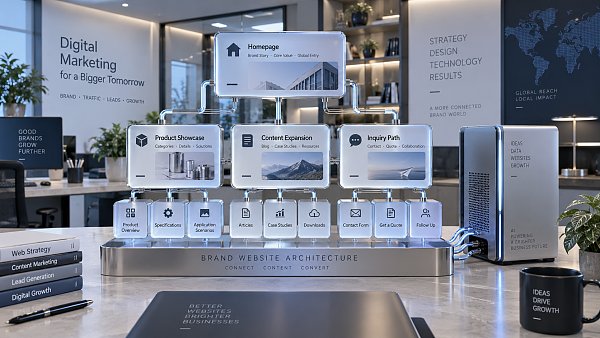
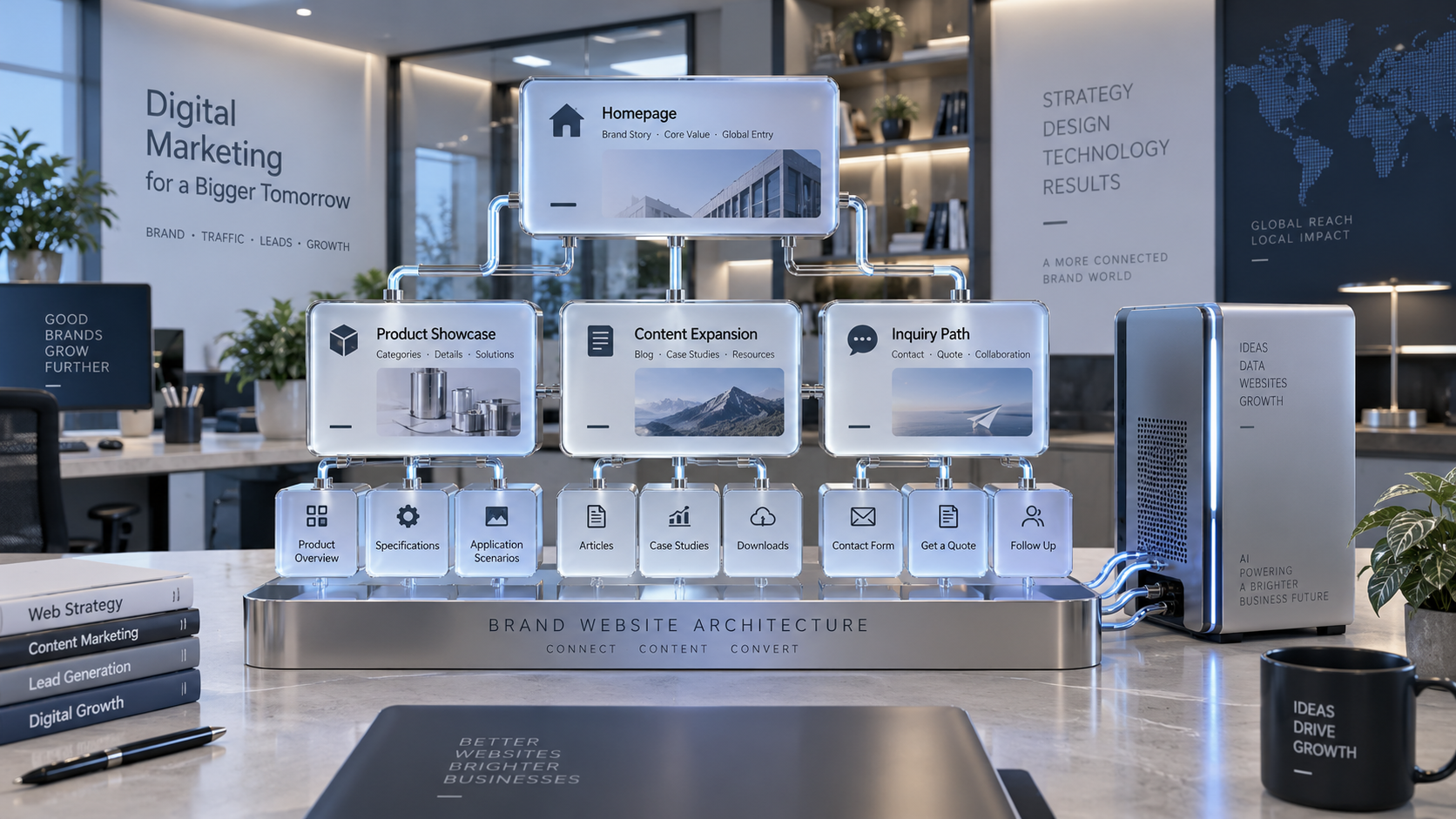
What determines long-term usability is the flexibility available “after the template”
When choosing an AI template website-building platform, shift attention from “how many pages it generates” to “what can still be changed after generation.” The following aspects are more worth reviewing in practice than demo pages.
Among these factors, multilingual capability is not simply about adding a language switch button. Buyers in different markets may care about different certification statements, specification units, case study types, and shipping or delivery information. AI can serve as a first-draft assistant, but product parameters, commercial terms, and professional terminology still need to be reviewed by people familiar with the business. If a website for overseas brand expansion treats translation as the final step, there will usually be a gap between “having many pages” and “having credible content.”
Which brands are more suitable, and which situations require caution
Standardized templates combined with AI assistance are particularly suitable for companies whose products and services are already relatively clear and that want to quickly validate their online customer acquisition paths. For example, export-oriented factories may need to establish product catalogs and inquiry channels, cross-border sellers may need to complete their independent brand websites, or service companies may need to publish professional introductions and campaign pages for different markets. In such cases, using a mature structure to first establish an operable website is usually more aligned with business timing than waiting for a fully customized design.
However, if a brand relies on highly distinctive interactive experiences, complex product configuration logic, membership systems, or deep integration with internal ERP, CRM, and inventory systems, a general-purpose template generator may only be suitable as an initial presentation layer. Such projects require businesses to first sort out workflows, data interfaces, and content governance methods before deciding whether to use a scalable enterprise website-building platform or pursue custom development.
There is also a common misconception: the more a brand values its image, the less it should use templates. In fact, templates do not conflict with brand uniqueness. The real issue is not “whether to start from a template,” but whether a template is treated as the final answer. A brand website can begin with a template, but it cannot remain at the stage of default copy, generic image libraries, and uniform page sequences.
Use these three questions first to determine whether a platform is a good fit
When preparing to select a platform, it is useful to first clarify three things. First, what is the most important business action in the three to six months after the website goes live: generating inquiries, selling products, building brand trust, or receiving advertising traffic? Second, who will continuously maintain the content, and can they conveniently add product pages, update multilingual content, and create promotional landing pages? Third, will SEO, advertising, social media, or customer data need to be incorporated into the same operating workflow in the future?
If the website is only for one-time presentation, a lightweight AI template tool is sufficient. If the website supports overseas customer acquisition and long-term brand building, website-building capabilities should be evaluated together with marketing capabilities. Platforms such as Yiyingbao, which are designed for export trade and overseas brand expansion scenarios, place AI-powered website building, multilingual websites, search optimization, advertising, and social media marketing within the same service workflow. They are suitable as a reference for companies that want to use their official websites as ongoing customer acquisition channels. When making a choice, businesses should still return to their own product complexity, content maintenance capabilities, and target markets, rather than simply comparing the number of templates.
A usable brand website must first help users understand you. An effective brand website must also be discoverable, trustworthy, and able to turn visits into the next stage of communication. AI and templates can make getting started faster, but the ability to continuously adjust content, optimize search performance, and support marketing activities is what determines whether the site can accompany the brand further over time.
Related Articles


Related Products
 Yiyingbao SaaS Intelligent Website Building and Marketing SystemYiyingbao SaaS Intelligent Website Building and Marketing System, AI-powered no-code website building, rapid creation of multilingual B2B international websites in 10 minutes, global server acceleration, AI-powered SEO optimization, helping businesses connect efficiently with global markets. The perfect integration of technology and operation makes building an international trade website remarkably simple
 AI+SEM Intelligent Advertising Marketing SystemAI+SEM drives intelligent ad creation, empowering full-funnel precision advertising marketing. The system automatically generates weekly/monthly reports, AI recommends keywords and target countries, monitors core metrics in real-time with intelligent alerts, and enables one-click high-conversion ad solutions to help quickly acquire customers and improve ROI.
 AI+SEO Dual-Engine System Optimization ServicesYiyingbao’s AI+SEO dual-engine optimization system helps foreign trade enterprises acquire high-quality organic traffic through AI-powered keyword research, content generation, and comprehensive technical optimization, significantly improving search rankings and conversion rates.
 AI+SNS Social Media Marketing SystemYingbao AI+SNS Social Media Marketing System - Precision social capture for the social media era. Supports one-click content synchronization across major platforms like Facebook and LinkedIn. AI intelligently rewrites posts for enhanced relevance. 24/7 AI customer service and user profiling analysis empower businesses to efficiently expand into global markets.
 AI+SEO营销解决方案易营宝AI+SEO营销解决方案,通过AI批量写作、智能生成TDK、精准关键词扩词等功能,全面优化网站SEO效果,提升流量与转化率。助力企业构建高效智能网站新生态。
 AI+SEM Advertising Marketing SolutionsAI+SEM Advertising Marketing Solution leverages AI technology to deeply empower SEM ad campaigns. It automatically generates weekly/monthly reports using AI, presenting account data across multiple dimensions for comprehensive insights into campaign performance and trends. The system precisely recommends keywords and target countries, intelligently generates high-conversion ad copy, and enables one-click activation of efficient campaign plans to help businesses rapidly acquire customers. Simultaneously, it monitors core metrics in real time, intelligently identifies abnormal fluctuations, and issues timely alerts to ensure stable, high-return advertising results.
 Domain Name ServicesEasyWin provides professional domain name services, including intelligent queries, one-stop registration, brand protection, and full lifecycle management, helping businesses build a digital brand image.
 EasyOperate B2C Cross-Border E-Commerce Platform & Independent WebsiteEasyStore B2C Cross-border E-commerce Independent Store is an intelligent website building and cross-border e-commerce integrated solution independently developed by EasyStore Information Technology (Beijing) Co., Ltd. The system is specially designed for small and medium-sized as well as large export enterprises, integrating 'website building, operation, marketing, advertising, and conversion' into one, helping enterprises quickly establish cross-border e-commerce independent stores to achieve brand globalization and global sales growth.
The platform supports multiple languages, multiple currencies, and multi-channel marketing, with built-in AI intelligent translation and SEO optimization systems, suitable for mainstream markets such as Southeast Asia, Europe and America, Latin America, and the Middle East, assisting Chinese manufacturing enterprises in efficiently deploying international e-commerce strategies. SSL证书易营宝提供专业SSL安全证书服务,包括单域名和泛域名证书,确保网站数据传输加密、身份验证和完整性保护,助力企业建立安全可信的在线业务环境。









