









- The U.S. has ended the $800 de minimis exemption for non-postal shipments; express courier packages must be formally declared.Nov 16, 2026View details
- ASEAN Signs Digital Economy Framework Agreement, Moving Toward Harmonized Cross-Border E-Commerce RulesNov 15, 2026View details
- Shenzhen Becomes the First City in Mainland China to Exceed RMB 5 Trillion in Foreign TradeNov 15, 2026View details
- Fujian Announces the First Batch of Provincial-Level Cross-Border E-Commerce Industrial Parks and Key Brands for CultivationNov 14, 2026View details
- Amazon Global Store Announces the Launch of the 2026 Black Friday Global Shopping SeasonNov 14, 2026View details
- CCTV.com Examines APEC’s Role in China’s Foreign TradeNov 12, 2026View details
What do you need to prepare to build a corporate website with the Yiyingbao AI Website Builder?
What materials should you prepare in advance to build a corporate website with Yiyingbao AI Website Builder? In addition to your brand name and product images, you should think about who the website is for, what you want visitors to do, and who will maintain it after launch. The more closely your materials reflect your actual business, the easier it will be to edit the pages generated by AI and the less time you will spend adding content repeatedly after the website goes live.
Define the purpose of your website before organizing your materials
Before building your website, answer one question: What do you want visitors to do after they arrive? Export-oriented manufacturers may prioritize inquiries and sample requests; brand showcase websites may need to encourage distributors to get in touch; cross-border ecommerce stores need to account for product, payment, and shipping information. Different goals call for different page structures and materials.
If your main goal is to generate B2B inquiries, start by listing your key products, target markets, typical customer types, and common purchasing questions. For example, buyers are usually interested in product specifications, applications, customization options, and delivery terms. The homepage can highlight your core business and key strengths, product pages can answer specific questions, and the contact page can provide a clear way to submit an inquiry.
Don't try to fit everything onto the homepage from the outset. If you have a wide product range, start with the most representative categories and confirm the classification logic before adding long-tail products gradually. This will make ongoing maintenance easier.
Brand and product information: The foundation for AI-generated content
At a minimum, your basic company information should include your company name in Chinese and English, brand logo, main business, contact details, and company profile. If you are targeting overseas customers, also prepare the English address used for external communications, a business email address, and photos of your factory, team, or office that can be made public. Provide the original brand logo file in a clear format, and confirm that you have the rights to use the images and fonts.
For product information, don't rely solely on a brochure or a few white-background product images. Organize details by product category, including product names, model numbers, applications, key specifications, optional configurations, packaging, and frequently asked questions. For information such as dimensions and materials, use details that have been confirmed internally. Images showing product details, application scenarios, and any necessary documentation can also help reduce repeated questions from customers.
For trust-building materials such as certifications, test reports, patents, or customer references, verify their validity period, applicable products, and permission to display them publicly. A certificate for one model does not mean it applies to all products; do not display a customer's logo on your website without confirming authorization.
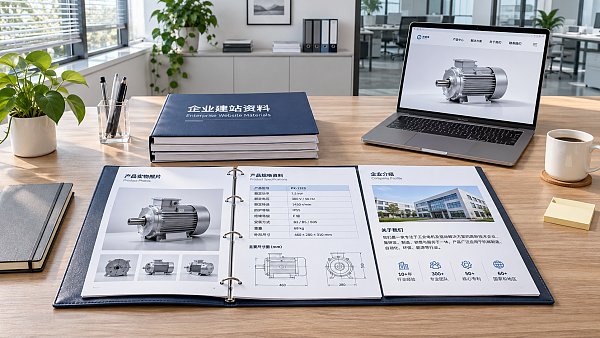
AI can help organize copy, but it cannot verify facts on behalf of your company. Product or sales staff should review the generated pages, paying particular attention to performance claims, lead times, minimum order requirements, and after-sales commitments. If you are unsure about something, don't fill in a guess just to make the page look complete.
Confirm your domain, email, and account permissions in advance
If your company already has a domain, confirm the registrar, management account, expiration date, and DNS access. If you don't have a domain, first choose a name that is easy to recognize and enter, then check whether it is available for registration. The company should retain control of the domain. Use a company email address for related accounts and enable appropriate security measures to prevent renewal or DNS management issues when staff members leave.
If your website already uses a business email service, be sure to check the email-related DNS records before changing DNS settings to avoid disrupting email delivery. Before the switch, review the DNS plan and changeover time with the implementation team. If you are migrating an existing website, also list important URLs from the old site and confirm how they will map to pages on the new site to prevent old links from suddenly becoming unavailable.
Assign clear owners for the website, domain, analytics, and advertising accounts instead of relying solely on personal accounts. Before launch, also confirm website security, certificate configuration, and account handover procedures. Specific access permissions are subject to the actual service plan and backend settings.
A multilingual website involves more than simply translating Chinese
When preparing a list of target markets, specify not only the countries and regions but also the main languages, customer types, and products to promote first. Buyers in different markets may use different product names, units of measurement, and points of interest. Rather than generating multiple language versions at once, start with one primary market and expand after confirming the content, inquiry process, and your capacity to maintain the site.
When reviewing translations, pay particular attention to industry terminology, units of measurement, and contact information. Review by staff familiar with the target market is more useful than checking grammar alone. For pricing, shipping, returns, or privacy information, confirm the details against your actual business practices and the requirements applicable in the target region. Don't simply copy content from other websites.
Make your website materials support future promotion and inquiries
Yiyingbao's services cover smart website building, search optimization, advertising, and overseas social media. If your company plans to build a website and run marketing campaigns at the same time, inform the implementation team about your promotional needs during the website-building process: Which products need dedicated landing pages? What should visitors see after arriving from an ad? Who will receive form submissions, and how quickly will they follow up?
As you organize content, collect questions frequently received by sales staff, product names commonly used by buyers, and application scenarios you want to highlight. Use these to plan product pages and article topics. Search optimization and AI search visibility both depend on clear, credible content that can be updated regularly. However, launching a page does not guarantee that it will be indexed or achieve rankings; performance needs to be monitored over time.
Keep inquiry forms simple. Business customers usually need to provide an email address and purchasing requirements. Asking for too much sensitive or complex information at the outset may make them less likely to submit the form. Set fields according to your sales follow-up needs, provide a privacy notice, and test that notification emails are delivered successfully.
Conduct a business-focused review before launch
During acceptance testing, don't focus only on whether the homepage looks appealing. Check the navigation, images, product specifications, language switching, and contact details on both mobile devices and computers. Then submit a test inquiry yourself and verify the receiving email address, form contents, and internal follow-up process. Also check that titles, URLs, and links on important pages are correct. For site migration projects, spot-check key links from the old site.
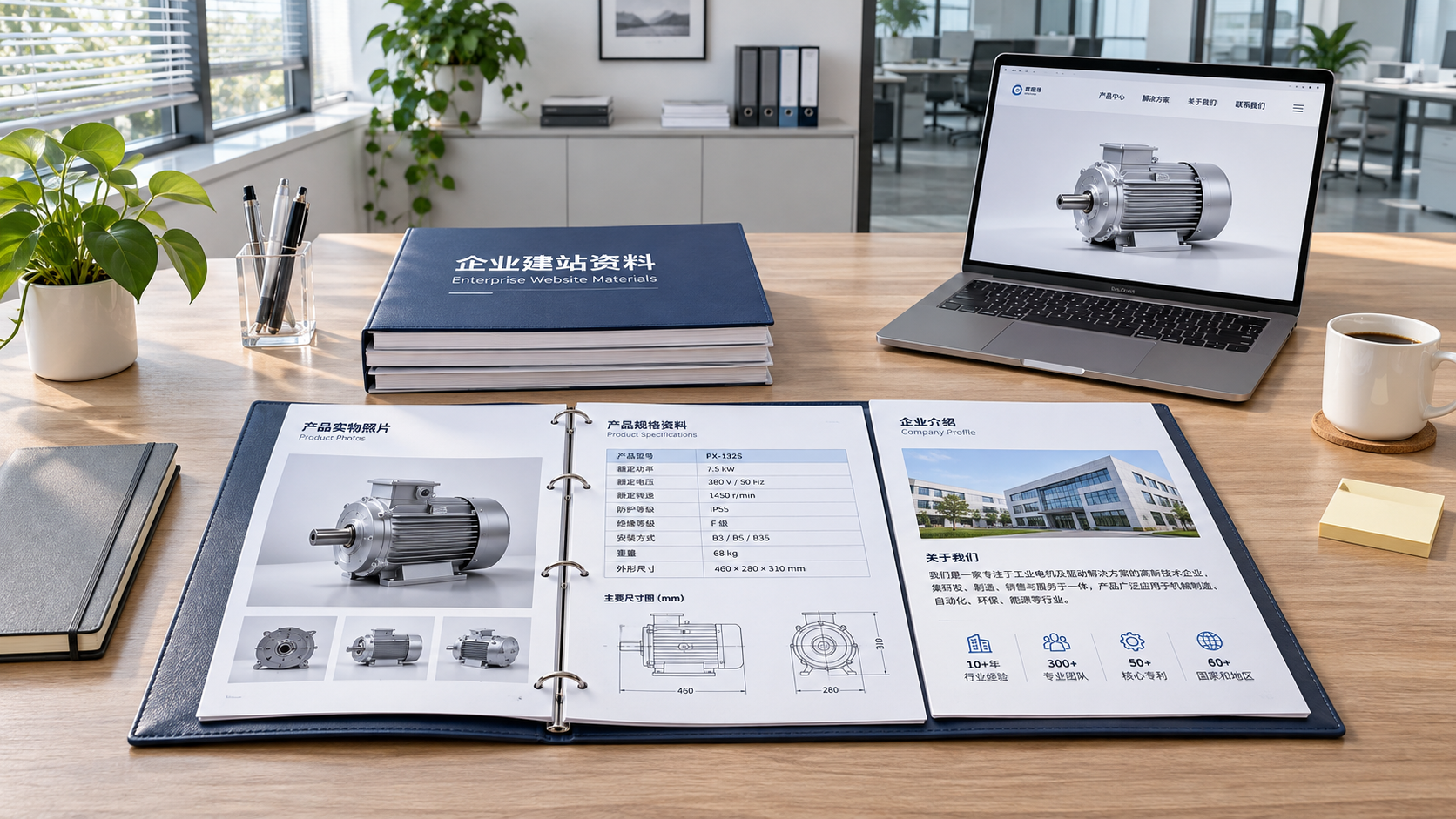
When preparing website materials, you can start by creating a shared folder and organizing files into categories such as brand, products, images, markets, and account information, with a designated reviewer for each category. When discussing the project with your service provider, confirm the page scope, number of languages, responsibility for content review, delivery schedule, permissions for future edits, and any potential fees item by item. This way, even if some materials are not yet ready, you can determine which ones affect the launch and which can be added gradually during ongoing operations.
Related Articles
 What do you need to prepare to build a corporate website with the Yiyingbao AI Website Builder?
 How can you tell whether website data can be exported from an AI website builder?
 Can an AI website builder demo show how pages look on mobile?

Related Products
 Yiyingbao SaaS Intelligent Website Building and Marketing SystemYiyingbao SaaS Intelligent Website Building and Marketing System, AI-powered no-code website building, rapid creation of multilingual B2B international websites in 10 minutes, global server acceleration, AI-powered SEO optimization, helping businesses connect efficiently with global markets. The perfect integration of technology and operation makes building an international trade website remarkably simple
 AI+SEM Intelligent Advertising Marketing SystemAI+SEM drives intelligent ad creation, empowering full-funnel precision advertising marketing. The system automatically generates weekly/monthly reports, AI recommends keywords and target countries, monitors core metrics in real-time with intelligent alerts, and enables one-click high-conversion ad solutions to help quickly acquire customers and improve ROI.
 AI+SEO Dual-Engine System Optimization ServicesYiyingbao’s AI+SEO dual-engine optimization system helps foreign trade enterprises acquire high-quality organic traffic through AI-powered keyword research, content generation, and comprehensive technical optimization, significantly improving search rankings and conversion rates.
 AI+SNS Social Media Marketing SystemYingbao AI+SNS Social Media Marketing System - Precision social capture for the social media era. Supports one-click content synchronization across major platforms like Facebook and LinkedIn. AI intelligently rewrites posts for enhanced relevance. 24/7 AI customer service and user profiling analysis empower businesses to efficiently expand into global markets.
 AI+SEO营销解决方案易营宝AI+SEO营销解决方案,通过AI批量写作、智能生成TDK、精准关键词扩词等功能,全面优化网站SEO效果,提升流量与转化率。助力企业构建高效智能网站新生态。
 AI+SEM Advertising Marketing SolutionsAI+SEM Advertising Marketing Solution leverages AI technology to deeply empower SEM ad campaigns. It automatically generates weekly/monthly reports using AI, presenting account data across multiple dimensions for comprehensive insights into campaign performance and trends. The system precisely recommends keywords and target countries, intelligently generates high-conversion ad copy, and enables one-click activation of efficient campaign plans to help businesses rapidly acquire customers. Simultaneously, it monitors core metrics in real time, intelligently identifies abnormal fluctuations, and issues timely alerts to ensure stable, high-return advertising results.
 Domain Name ServicesEasyWin provides professional domain name services, including intelligent queries, one-stop registration, brand protection, and full lifecycle management, helping businesses build a digital brand image.
 EasyOperate B2C Cross-Border E-Commerce Platform & Independent WebsiteEasyStore B2C Cross-border E-commerce Independent Store is an intelligent website building and cross-border e-commerce integrated solution independently developed by EasyStore Information Technology (Beijing) Co., Ltd. The system is specially designed for small and medium-sized as well as large export enterprises, integrating 'website building, operation, marketing, advertising, and conversion' into one, helping enterprises quickly establish cross-border e-commerce independent stores to achieve brand globalization and global sales growth.
The platform supports multiple languages, multiple currencies, and multi-channel marketing, with built-in AI intelligent translation and SEO optimization systems, suitable for mainstream markets such as Southeast Asia, Europe and America, Latin America, and the Middle East, assisting Chinese manufacturing enterprises in efficiently deploying international e-commerce strategies. SSL证书易营宝提供专业SSL安全证书服务,包括单域名和泛域名证书,确保网站数据传输加密、身份验证和完整性保护,助力企业建立安全可信的在线业务环境。









