









- Hengqin Cooperation Zone Shares Cross-Border E-Commerce Developments, Focusing on Macao-Hengqin Collaboration and International MarketsOct 24, 2026View details
- A Shenyang study highlights the development of the “cross-border e-commerce + industrial cluster” modelOct 24, 2026View details
- Three China Advertising Association GEO group standards take effect on October 23Oct 24, 2026View details
- Amazon Raises Fulfillment Fees Twice, Yet the Median Platform Fee Remains Around 40%Oct 22, 2026View details
- AliExpress and YouTube Partner to Expand Marketing Opportunities for Chinese Brands Going GlobalOct 22, 2026View details
- Publicis says AI marketing is developing at two speeds, with agentic AI helping win clientsOct 21, 2026View details
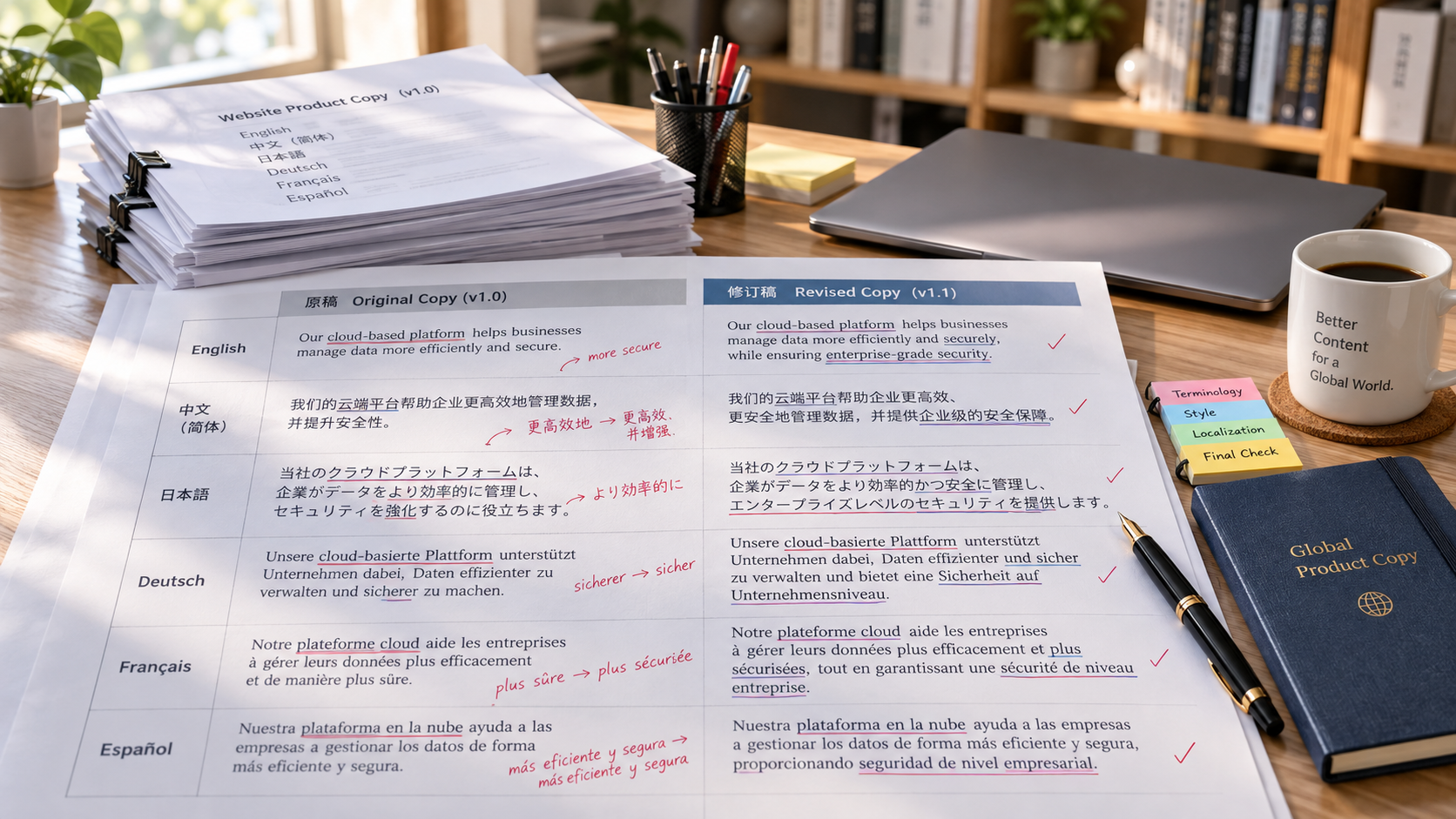
How can German foreign trade website translation avoid mistranslations?

How Can German Foreign Trade Website Translation Avoid Mistranslations?
German foreign trade website translation affects not only brand professionalism but also the quality of inquiries, procurement communication, and the accuracy of compliance information. Many companies understand a German-language website simply as “converting Chinese or English content into German.” Only after going live do they discover that product page terminology may appear correct but does not match the search habits of local procurement professionals; parameter tables may contain no translation errors but still trigger repeated clarification because units, ranges, or technical definitions are expressed ambiguously; and inquiry forms that are written too directly may also weaken German customers’ perception of a supplier’s rigor.
For those responsible for evaluating overseas website projects, what truly needs to be avoided is not isolated spelling errors, but systematic deviations across source content, terminology, page structure, and marketing paths. The German market places particular importance on verifiable information, clear logic, and defined commitment boundaries. If translation is poorly executed, even when traffic reaches the website, visitors may not proceed smoothly to the inquiry or procurement communication stage.
Mistranslation Is Often Not a Language Issue, but an Issue of Information Not Being Redefined
A common situation for foreign trade companies is that the original Chinese materials are sales-oriented, while the English version has gone through multiple rounds of revision. As a result, German translators ultimately face source files with incomplete information and inconsistent terminology. In such cases, even if the translator’s language skills are sound, broad statements such as “high quality,” “advanced process,” and “customization supported” can easily be converted directly into German. The wording may read smoothly, but it lacks the information German buyers actually need to evaluate: material specifications, application scope, manufacturing tolerances, testing conditions, delivery boundaries, and after-sales responsibilities.
For example, the Chinese term commonly translated as “customization” may encompass design, dimensional adjustments, surface treatment, packaging, or small-batch trial production. On a German page, if only one general equivalent is used, customers cannot determine exactly which configurations the company can provide. A more reliable approach is to separate the available options and specify which aspects need to be confirmed by drawings, samples, quantities, or operating conditions. This type of expression may not be elaborate, but it is more aligned with the way industrial procurement professionals read information.
Literal promises also require caution. Absolute statements such as “fully meets,” “permanent use,” and “highest grade,” if unsupported by test reports, applicable standards, or contractual terms, can easily create communication risks for the sales team. A website can demonstrate capabilities, but it should not replace technical confirmation or formal commitments.
Establish a Terminology System Before Starting Page Translation
The most frequently underestimated aspect of German foreign trade website translation is the terminology database. In industries such as machinery, components, chemical materials, electronic equipment, packaging, and building materials, the same Chinese term may correspond to different German expressions depending on the application. Take “mold” as an example: it may refer to an injection mold, stamping die, die-casting mold, or may be used more broadly to mean tooling. Relying solely on literal translation can lead both search users and technical procurement personnel to misunderstand the term.
An actionable terminology system should include, at a minimum, the original Chinese term, the approved German name, the English equivalent, applicable products, prohibited expressions, abbreviation rules, and information sources. Product models, material grades, interface dimensions, certification names, and trade terms should be confirmed by the company’s internal technical or business personnel rather than left for translators to infer. For websites operated over the long term, a maintenance mechanism should also be reserved for terminology versions. When new products are launched, old models are discontinued, or processes change, the related pages and downloadable materials need to be updated simultaneously.
During specific evaluations, three areas can be checked in particular: whether navigation categories use industry names that procurement personnel can understand; whether product titles describe both the product category and key attributes; and whether catalogs, specification sheets, and installation instructions in the download section use terminology consistent with the pages. As long as these three areas use different names for the same item, customers may question whether the information source is reliable.
Localization Does Not Mean Making Every Sentence Longer
German words tend to be long. Directly applying a Chinese page layout often causes buttons to wrap, parameter tables to become misaligned, and mobile reading to become difficult. This is not merely a visual issue. If key actions such as “Get a Quote,” “Technical Consultation,” and “Download Materials” are truncated on small screens, conversion opportunities will be lost even if the translation itself is accurate. Therefore, multilingual website development should handle copy length, component responsiveness, text within images, and form fields in the same validation round.
German customers generally do not reject marketing language, but they are more accustomed to seeing factual support first. Rather than stacking adjectives on the first screen, it is better to clearly explain product applications, key parameters, and available technical documents. For complex equipment, “product advantages” can be rewritten as operating environments, optional configurations, maintenance requirements, and project coordination processes; for consumer products or cross-border online stores, it is additionally necessary to verify whether information on sizes, ingredients, delivery, returns and exchanges, and pricing is complete. Translation priorities differ across business models.
The tone of address on a page also requires balance. For corporate procurement websites, an overly casual tone may affect trust; however, language that is excessively formal can make the inquiry path feel distant. Generally, product pages should remain professional and direct, case study or brand pages may have slightly more warmth, and form prompts should concisely explain what feedback customers will receive after submitting materials. Language style should follow the task of the page rather than applying the same tone across the entire website.
Proofread Search Terms, Advertising Landing Pages, and Inquiry Paths Together
Many German websites encounter problems because “the pages have been translated, but the marketing has not been connected.” A company may use one category of product terms in advertisements while the landing page uses internal model numbers or broad names; after organic search users enter the page, they do not see specification information matching their search needs and quickly leave. German foreign trade website translation should consider actual search contexts, but keywords should not be repeated unnaturally merely for coverage. A more appropriate approach is to align category names, headings, body text, image descriptions, and FAQs around the same product intent.
Inquiry pages especially deserve separate review. If a company requires drawings, annual purchase quantities, target specifications, or destination information, the form can include corresponding fields, but the initial contact should not become a lengthy questionnaire. Required fields should retain the information most critical for quotation, while the remaining details can be supplemented in subsequent emails. Privacy statements, contact details, company entity information, and communication methods after material downloads also need to be reviewed in relation to actual projects by personnel familiar with local business requirements.
How to Determine Whether Translation Deliverables Can Withstand Business Use
When evaluating delivery quality, it is not advisable to judge solely by whether one or two sample passages are fluent. It is more valuable to ask the service provider to explain: how source files are cleaned, who confirms terminology, how technical content is reviewed, how line breaks and links are checked after pages go live, whether multilingual versions can be continuously updated, and how new pages maintain consistency with existing wording. If the project also includes website development, search optimization, advertising, or social media lead generation, it should also be clarified who centrally manages the product naming and landing-page copy used across different channels.
Yiyingbao Information Technology (Beijing) Co., Ltd. has provided digital marketing services for overseas expansion companies since 2013, with services covering intelligent website development, multilingual websites, search optimization, advertising placement, and social media operations. For scenarios such as the German market, which require both linguistic accuracy and continuous customer acquisition, website translation should not be treated as a one-time text outsourcing task, but should instead be integrated into the overall process of site structure, content maintenance, and promotional landing pages. Its self-developed cloud-based intelligent website development and AI-assisted optimization capabilities can be used to improve the management efficiency of multilingual content; however, content involving product performance, regulatory statements, certification scope, and contractual responsibilities should still be supported by verifiable materials provided by the company and subject to final confirmation.
A truly reliable German website is not one that merely “looks like German,” but one that enables customers to quickly understand what you sell, which scenarios it applies to, and what information they should provide next. Organizing terminology, parameter materials, and target pages before project launch, then arranging parallel acceptance testing for language, localization, and technical aspects, is usually more time-efficient than repairing pages one by one after launch and is also more effective at preventing mistranslations from developing into business misunderstandings.
Related Articles
 How can you evaluate a provider’s translation editing capabilities for AI-powered multilingual website services?
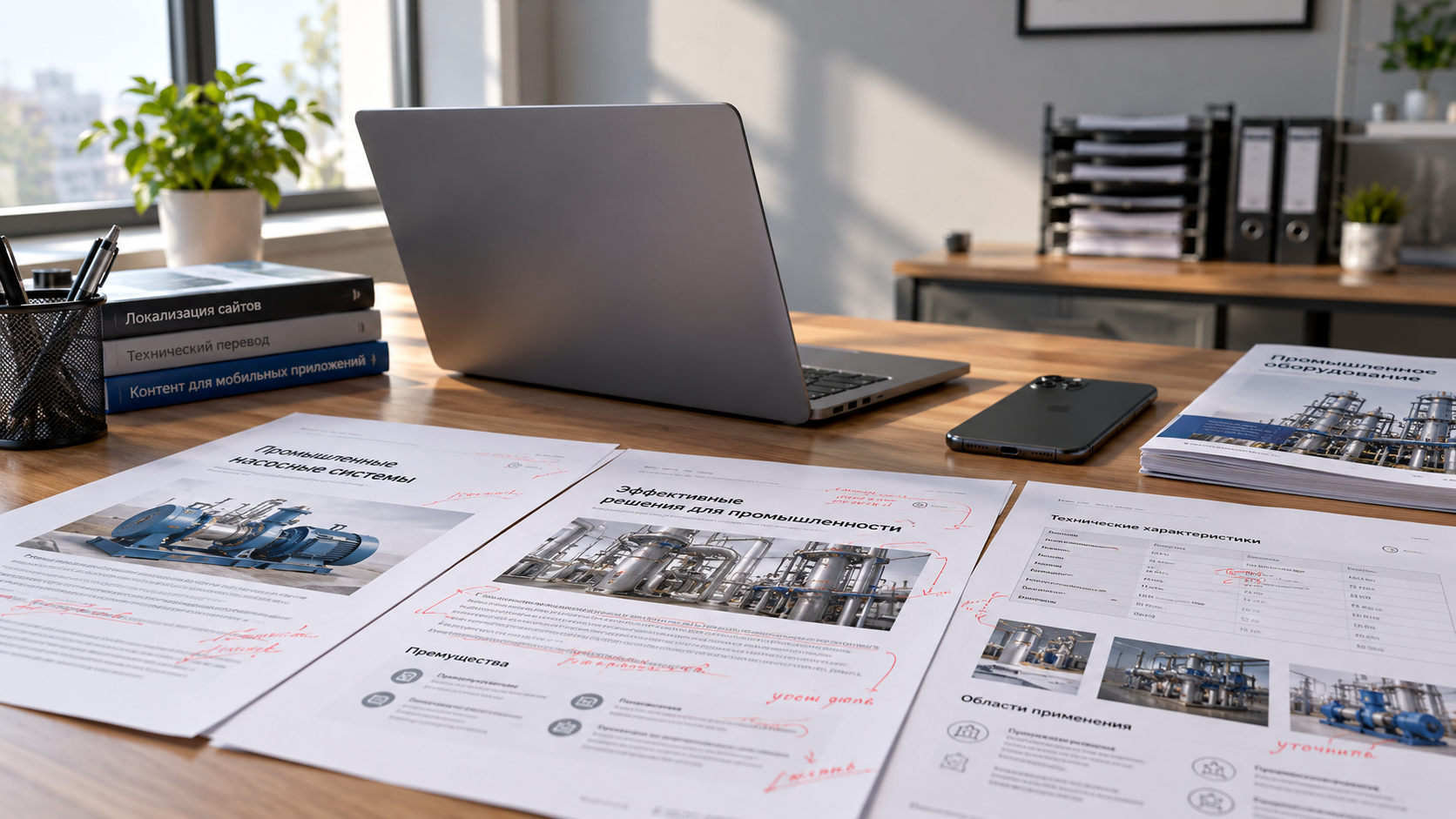
 Building a Website for the Russian-Speaking Market: Is Translating the Website Enough?
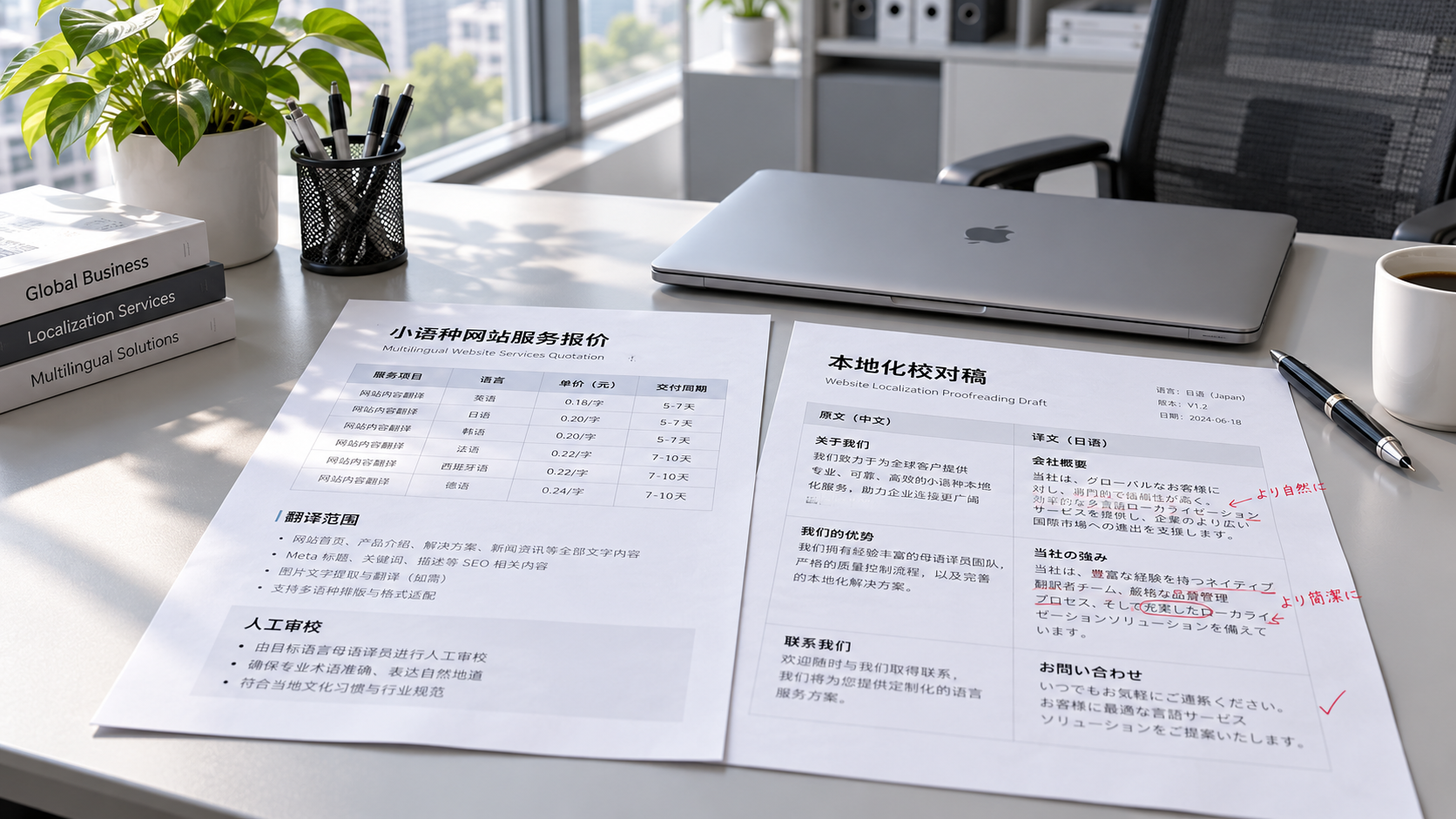
 Does the quote for building a website in a less commonly used language include localization and translation?
Related Products
 Yiyingbao SaaS Intelligent Website Building and Marketing SystemYiyingbao SaaS Intelligent Website Building and Marketing System, AI-powered no-code website building, rapid creation of multilingual B2B international websites in 10 minutes, global server acceleration, AI-powered SEO optimization, helping businesses connect efficiently with global markets. The perfect integration of technology and operation makes building an international trade website remarkably simple
 AI+SEM Intelligent Advertising Marketing SystemAI+SEM drives intelligent ad creation, empowering full-funnel precision advertising marketing. The system automatically generates weekly/monthly reports, AI recommends keywords and target countries, monitors core metrics in real-time with intelligent alerts, and enables one-click high-conversion ad solutions to help quickly acquire customers and improve ROI.
 AI+SEO Dual-Engine System Optimization ServicesYiyingbao’s AI+SEO dual-engine optimization system helps foreign trade enterprises acquire high-quality organic traffic through AI-powered keyword research, content generation, and comprehensive technical optimization, significantly improving search rankings and conversion rates.
 AI+SNS Social Media Marketing SystemYingbao AI+SNS Social Media Marketing System - Precision social capture for the social media era. Supports one-click content synchronization across major platforms like Facebook and LinkedIn. AI intelligently rewrites posts for enhanced relevance. 24/7 AI customer service and user profiling analysis empower businesses to efficiently expand into global markets.
 AI+SEO营销解决方案易营宝AI+SEO营销解决方案,通过AI批量写作、智能生成TDK、精准关键词扩词等功能,全面优化网站SEO效果,提升流量与转化率。助力企业构建高效智能网站新生态。
 AI+SEM Advertising Marketing SolutionsAI+SEM Advertising Marketing Solution leverages AI technology to deeply empower SEM ad campaigns. It automatically generates weekly/monthly reports using AI, presenting account data across multiple dimensions for comprehensive insights into campaign performance and trends. The system precisely recommends keywords and target countries, intelligently generates high-conversion ad copy, and enables one-click activation of efficient campaign plans to help businesses rapidly acquire customers. Simultaneously, it monitors core metrics in real time, intelligently identifies abnormal fluctuations, and issues timely alerts to ensure stable, high-return advertising results.
 Domain Name ServicesEasyWin provides professional domain name services, including intelligent queries, one-stop registration, brand protection, and full lifecycle management, helping businesses build a digital brand image.
 EasyOperate B2C Cross-Border E-Commerce Platform & Independent WebsiteEasyStore B2C Cross-border E-commerce Independent Store is an intelligent website building and cross-border e-commerce integrated solution independently developed by EasyStore Information Technology (Beijing) Co., Ltd. The system is specially designed for small and medium-sized as well as large export enterprises, integrating 'website building, operation, marketing, advertising, and conversion' into one, helping enterprises quickly establish cross-border e-commerce independent stores to achieve brand globalization and global sales growth.
The platform supports multiple languages, multiple currencies, and multi-channel marketing, with built-in AI intelligent translation and SEO optimization systems, suitable for mainstream markets such as Southeast Asia, Europe and America, Latin America, and the Middle East, assisting Chinese manufacturing enterprises in efficiently deploying international e-commerce strategies. SSL证书易营宝提供专业SSL安全证书服务,包括单域名和泛域名证书,确保网站数据传输加密、身份验证和完整性保护,助力企业建立安全可信的在线业务环境。









