









- Fujian Announces the First Batch of Provincial-Level Cross-Border E-Commerce Industrial Parks and Key Brands for CultivationNov 14, 2026View details
- Amazon Global Store Announces the Launch of the 2026 Black Friday Global Shopping SeasonNov 14, 2026View details
- CCTV.com Examines APEC’s Role in China’s Foreign TradeNov 12, 2026View details
- China’s Tariff Commission of the State Council Adjusts Additional Tariffs on U.S. Goods: 24% Tariff Suspended for Two MonthsNov 10, 2026View details
- APEC Shenzhen Spotlight: Cross-Border E-Commerce Orders Promote Asia-Pacific Trade and Economic CooperationNov 08, 2026View details
- China-Europe Railway Express and CIIE Hold Business Matchmaking Event, Focusing on Cross-Border E-commerce B2B ExportsNov 07, 2026View details
How Can Product Page Translation Be Priced Reasonably? Is Per-Language Pricing Reliable?
A reasonable quote for product page translation does not depend on “how much per language,” but on the content volume for that language, language direction, quality requirements, page handling method, and whether the translation needs to support SEO and conversion goals. Charging by language can serve as a budgeting framework, but it cannot be the sole basis for comparing prices. Even when “translating into German,” the cost basis differs between plain-text translation, marketing translation with terminology review, and multilingual page delivery that includes Meta tag and image copy replacement.
The most common misjudgment in procurement is treating a website product page as an ordinary document. A product page simultaneously serves search indexing, technical explanation, inquiry guidance, and brand communication functions. A very low quote does not necessarily mean that the supplier is more efficient; it may also mean that keyword handling, HTML tag protection, layout verification, native-speaker review, or post-launch revision support are not included. To determine whether a quote is reasonable, first separate the scope of services before comparing unit prices.
There is nothing wrong with “pricing by language”; the issue is whether the billing basis is transparent
Pricing by language is suitable when there are relatively few pages, the content structure of each page is similar, and the buyer wants to quickly estimate the budget for multilingual expansion. For example, a supplier may quote based on “translating each product page into one target language,” allowing the buyer to estimate the total investment for English, French, Spanish, and other versions.
However, this model is valid only when page length, field scope, and deliverables are clearly defined. A product page may contain only 300 English words, or it may include a product name, selling points, specification tables, application scenarios, FAQs, downloadable materials, text within images, SEO titles, descriptions, URL rules, and inquiry form prompts. If a quotation only states “XX yuan/language/page” without specifying the word limit per page, overage rules, and included fields, subsequent additional charges are almost unavoidable.
A more prudent approach is to require the quotation to specify at least three criteria:
- Measurement basis: whether billing is based on source-language word count, target-language word count, number of pages, or a fixed project package;
- Page scope: whether body text, specifications, tables, FAQs, downloadable attachments, image text, and SEO fields are included separately;
- Quality level: what delivery standard applies respectively to machine translation with human proofreading, professional translator translation, native-speaker editing, and bilingual review.
“Pricing by language” without a unified measurement basis may appear easy to compare, but it actually conceals service differences. In particular, when one supplier measures Chinese characters, another measures English words, or one counts only body text while the other includes meta titles, descriptions, and tables, unit prices are not directly comparable.
What usually affects product page translation costs is not the number of languages, but content complexity
Language combinations affect pricing, but they are not the only variable. Resources for English and Chinese are relatively abundant; Nordic languages, certain Central and Eastern European languages, less common languages, and versions requiring region-specific expressions may differ in translator availability, review difficulty, and delivery time. Right-to-left languages such as Arabic and Hebrew also add work for page interface adaptation and layout verification, which should not simply be categorized as “translation fees.”
The technical complexity of a product also directly affects the quote. Pages for machinery and equipment, chemical materials, electronic components, medical-related products, and similar products often contain model numbers, process terminology, performance indicators, applicable standards, and safety descriptions. Translators must not only understand the meaning of the words, but also maintain consistency in parameter units, model naming, abbreviations, and restrictive wording. Interpreting “proofreading” as merely checking spelling underestimates the quality control required for technical content.
Marketing attributes also change the workload. Literal translation of product titles, core selling points, application scenarios, and CTAs may be grammatically correct but fail to match search expressions or purchasing practices in the target market. If the service scope includes keyword localization, title rewriting, Meta Description writing, or page copy adaptation, it is already closer to multilingual SEO content editing and should be listed separately from basic translation.
What is most worth verifying item by item in a quote is the deliverables “beyond translation”
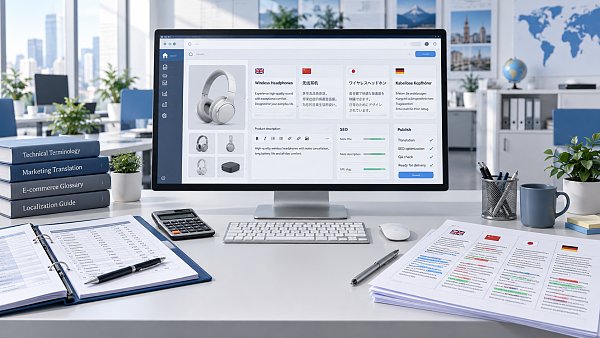
Many budget discrepancies do not arise from the translation unit price, but from hidden work that was not confirmed in advance. Multilingual publication of a product page involves at least content extraction, translation, terminology consistency, proofreading, content entry, format checking, and launch verification. If the page is built in a CMS, SaaS website-building system, or cross-border online store, it is also necessary to confirm who is responsible for entering the translation into the system, retaining the original HTML structure, handling table line breaks, replacing language text in images, and checking mobile display.
SEO fields in particular should be confirmed separately. Whether a page’s H1, Title, Meta Description, image Alt text, internal link anchor text, and URL slug are translated should neither be assumed to be included nor simply copied across in full. Whether URLs are adjusted also involves existing indexing, redirects, and site architecture. This is a website operations decision, not something a translator should handle independently. If a supplier promises “SEO translation,” it should specify whether the deliverable is keyword recommendations, field localization, or complete target-market keyword research; the costs and responsibility boundaries differ among the three.
Text embedded in images is another item that is easily overlooked. Translating image copy and recreating images are not the same task: the former provides text, while the latter also involves source files, fonts, layout, dimensions, and export. If procurement documents do not distinguish between them, the supplier may deliver only the translation while the project team expects new images ready for direct publication.
Evaluating by total cost rather than unit price can avoid “low price, high additional charges”
An actionable budget model can be written as: total cost = content translation fee + language service surcharge + review fee + SEO localization fee + page production or content-entry fee + project management and revision fee. Not every project requires all items, but it should be clear which are zero, which are included, and which are charged separately when triggered.
For example, if an English product page already exists and is to be expanded into multiple languages, with a fixed page structure, stable terminology, and no need to modify images, multiplying the source-text word count by the unit price for each language is generally easier to manage. If page lengths in a product catalog vary greatly, a fixed per-page price may impose excessive costs on short pages while long pages are likely to cause overage disputes; billing by word count or tiered word counts is more reasonable.
If a new website is being launched and pages have not yet been finalized, it is advisable to avoid starting full-scale translation while copy is being revised frequently. Every revision to the source-language version requires corresponding changes to all language versions. The contract may specify that “one consolidated revision round is included” and define the billing method, response time, and basis for revisions beyond that scope. This is more controllable than signing at an extremely low base unit price and charging separately for fragmented revisions later.
What boundaries do low-price quotes usually involve? Do not judge only by whether it is “human translation”
“Human translation” does not automatically mean high-quality delivery. It may involve translation performed by humans from scratch, or machine pre-translation followed by human post-editing. The latter can improve efficiency where repetition is high, technical terminology already has a translation memory, and page information is mainly parameter-based, but post-editing standards need to be defined. If it only involves quickly correcting machine-translated text, marketing expression, ambiguity resolution, and target-market wording may not be sufficiently addressed.
Very low quotes are often associated with the following: no terminology preparation; translation only of exportable body text; no processing of tables or images; no native-speaker review; no page content entry or launch check; strictly limited revision rounds; and simple delivery file formats that cannot be directly used in website-building systems. These arrangements may not be unsuitable for a project, but they must match actual requirements. For internal product selection materials or test landing pages only, basic-level services can control costs; for product pages used for long-term advertising, organic search competition, or professional purchasing decisions, content quality and page usability often cannot be selected solely based on the lowest price.
Multilingual projects should first establish terminology and content rules before expanding page volume
Inconsistent names for the same product across different pages and languages directly affect user understanding, on-site search, and subsequent maintenance costs. Before beginning batch translation, confirm the handling of product names, model retention rules, unit formats, brand terms, prohibited translations, technical terminology, certification names, and company names. Whether the supplier can maintain a terminology glossary and translation memory should also be included in the delivery requirements.
In principle, translators should not independently rewrite product models, patent names, trademarks, certification marks, or regulatory-related wording. If the source text contains exaggerated claims, missing parameters, or compliance risks, translation will only replicate those issues in other markets. For safety-, medical-, environmental-, or regulatory-sensitive content, the content owner should confirm the source text before it enters the multilingual workflow.
A reasonable product page translation quote is not about finding the lowest “price per language,” but about ensuring that the price corresponds to a verifiable scope of work and quality responsibility. First unify the criteria for word counts and page statistics, then separate translation, review, SEO fields, image processing, system content entry, and revision services; subsequently, assign different quality levels according to priority markets, page value, and content risk. Even if the resulting quote is not the lowest, it is closer to a controllable total project cost and can reduce rework after launch caused by missing content, inconsistent terminology, and page failures.
Related Articles
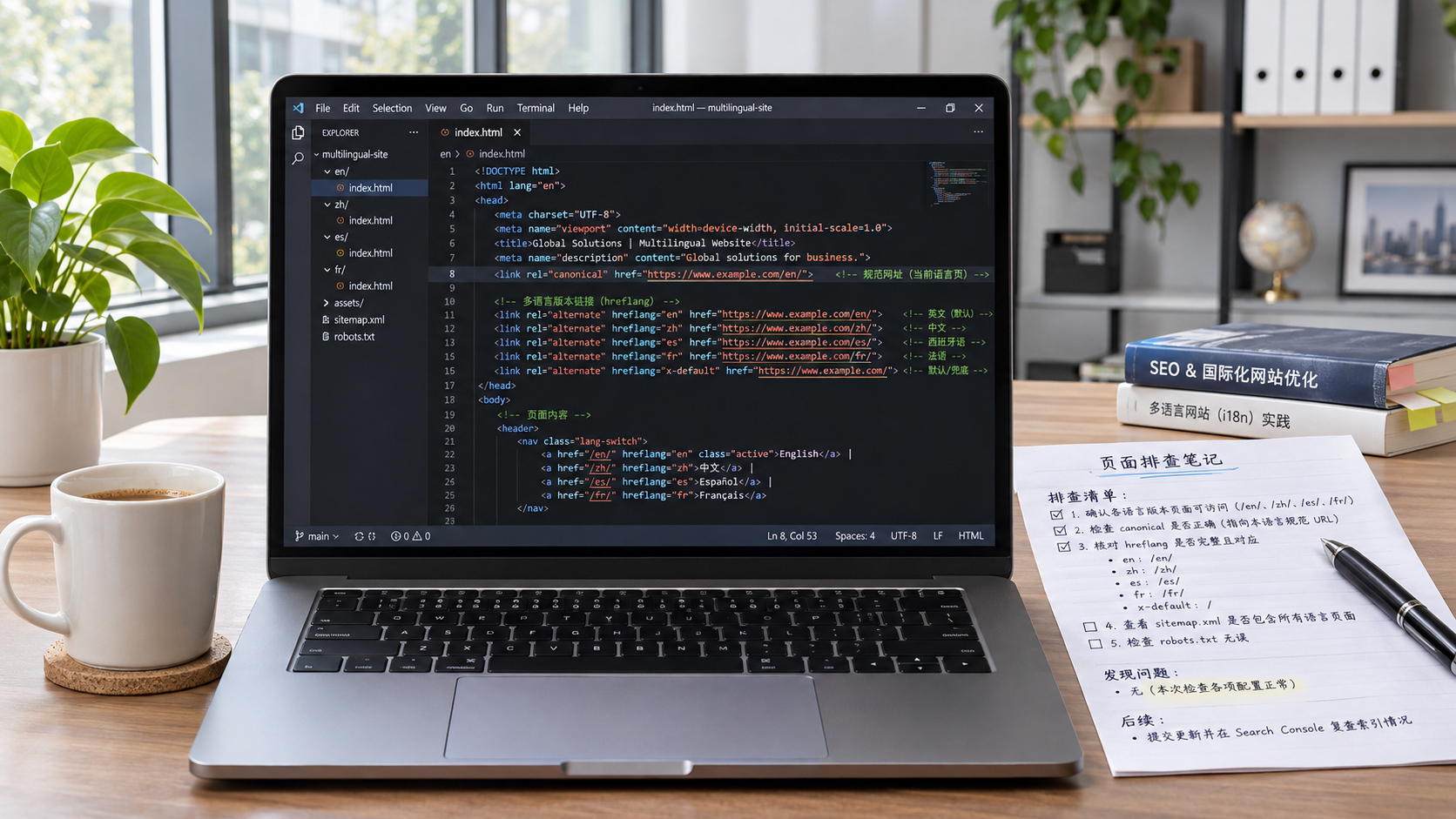
 Why Might a Page Not Be Indexed Even When hreflang Is Configured Correctly?
 How Should a B2C Multilingual Website Set Currencies for Different Regions?
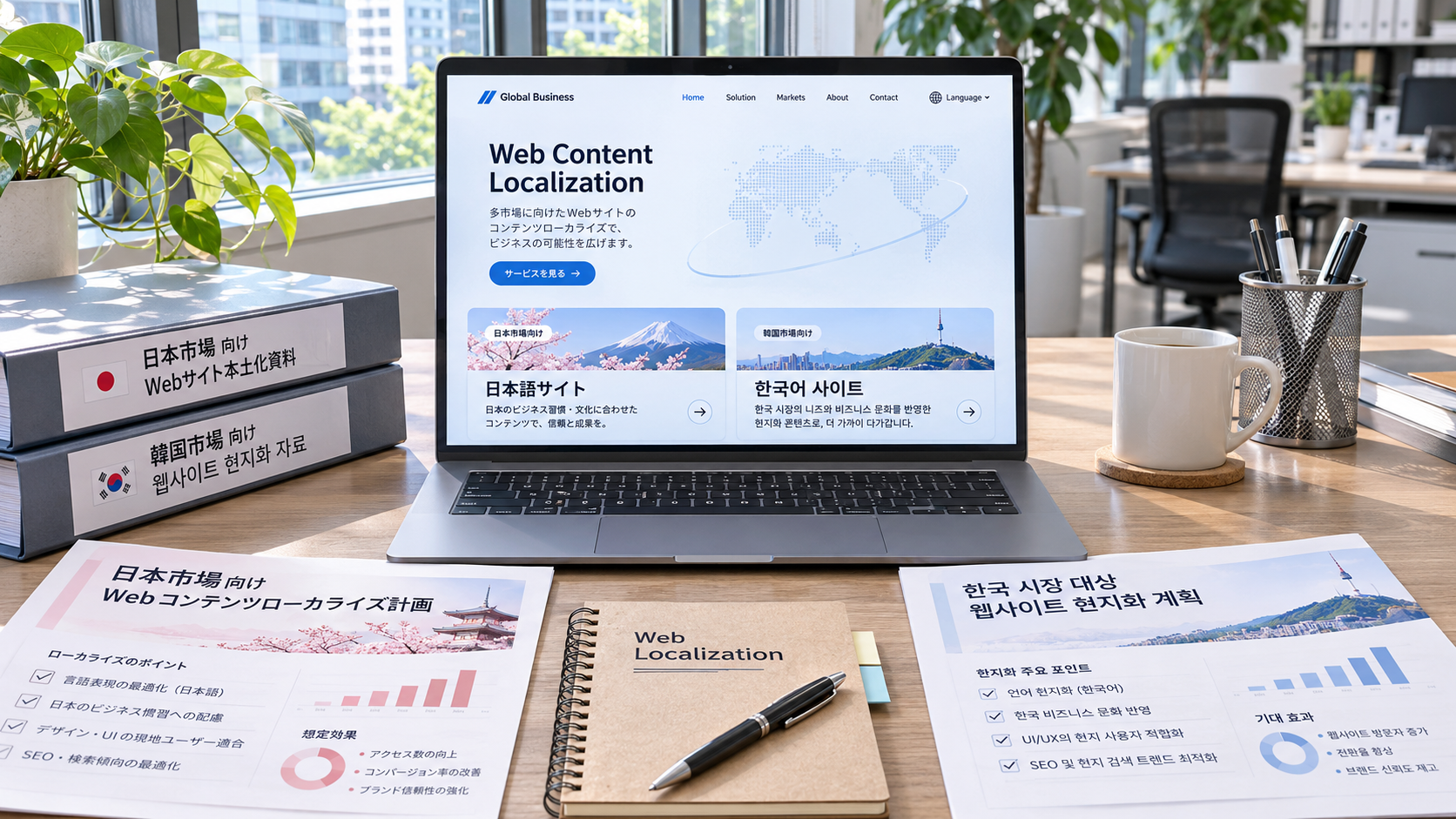
 Can a Korean-language website reach Japanese customers when expanding into the Japanese and South Korean markets?

Related Products
 Yiyingbao SaaS Intelligent Website Building and Marketing SystemYiyingbao SaaS Intelligent Website Building and Marketing System, AI-powered no-code website building, rapid creation of multilingual B2B international websites in 10 minutes, global server acceleration, AI-powered SEO optimization, helping businesses connect efficiently with global markets. The perfect integration of technology and operation makes building an international trade website remarkably simple
 AI+SEM Intelligent Advertising Marketing SystemAI+SEM drives intelligent ad creation, empowering full-funnel precision advertising marketing. The system automatically generates weekly/monthly reports, AI recommends keywords and target countries, monitors core metrics in real-time with intelligent alerts, and enables one-click high-conversion ad solutions to help quickly acquire customers and improve ROI.
 AI+SEO Dual-Engine System Optimization ServicesYiyingbao’s AI+SEO dual-engine optimization system helps foreign trade enterprises acquire high-quality organic traffic through AI-powered keyword research, content generation, and comprehensive technical optimization, significantly improving search rankings and conversion rates.
 AI+SNS Social Media Marketing SystemYingbao AI+SNS Social Media Marketing System - Precision social capture for the social media era. Supports one-click content synchronization across major platforms like Facebook and LinkedIn. AI intelligently rewrites posts for enhanced relevance. 24/7 AI customer service and user profiling analysis empower businesses to efficiently expand into global markets.
 AI+SEO营销解决方案易营宝AI+SEO营销解决方案,通过AI批量写作、智能生成TDK、精准关键词扩词等功能,全面优化网站SEO效果,提升流量与转化率。助力企业构建高效智能网站新生态。
 AI+SEM Advertising Marketing SolutionsAI+SEM Advertising Marketing Solution leverages AI technology to deeply empower SEM ad campaigns. It automatically generates weekly/monthly reports using AI, presenting account data across multiple dimensions for comprehensive insights into campaign performance and trends. The system precisely recommends keywords and target countries, intelligently generates high-conversion ad copy, and enables one-click activation of efficient campaign plans to help businesses rapidly acquire customers. Simultaneously, it monitors core metrics in real time, intelligently identifies abnormal fluctuations, and issues timely alerts to ensure stable, high-return advertising results.
 Domain Name ServicesEasyWin provides professional domain name services, including intelligent queries, one-stop registration, brand protection, and full lifecycle management, helping businesses build a digital brand image.
 EasyOperate B2C Cross-Border E-Commerce Platform & Independent WebsiteEasyStore B2C Cross-border E-commerce Independent Store is an intelligent website building and cross-border e-commerce integrated solution independently developed by EasyStore Information Technology (Beijing) Co., Ltd. The system is specially designed for small and medium-sized as well as large export enterprises, integrating 'website building, operation, marketing, advertising, and conversion' into one, helping enterprises quickly establish cross-border e-commerce independent stores to achieve brand globalization and global sales growth.
The platform supports multiple languages, multiple currencies, and multi-channel marketing, with built-in AI intelligent translation and SEO optimization systems, suitable for mainstream markets such as Southeast Asia, Europe and America, Latin America, and the Middle East, assisting Chinese manufacturing enterprises in efficiently deploying international e-commerce strategies. SSL证书易营宝提供专业SSL安全证书服务,包括单域名和泛域名证书,确保网站数据传输加密、身份验证和完整性保护,助力企业建立安全可信的在线业务环境。









