









- Which customer acquisition channels will be affected by cross-border marketing trends in 2026?Sep 06, 2026View details
- Which homogenization risks should be considered in an analysis of the AI-powered website building industry?Aug 30, 2026View details
- How Will AI Marketing Trends 2026 Change Advertising Budget AllocationAug 28, 2026View details
- Is the EV SSL certificate market shrinking or upgrading? How should companies assess certificate procurement?Aug 11, 2026View details
- Why the old AMP SEO 2020 practices no longer work and what has changed in current optimization prioritiesAug 02, 2026View details
- How to Choose Topics for an Industry News Section to Attract More Organic Search TrafficJul 29, 2026View details
What should foreign trade enterprises pay attention to in Arabic website development? From layout direction to localization details
Why Arabic Website Development Cannot Be Just Translation
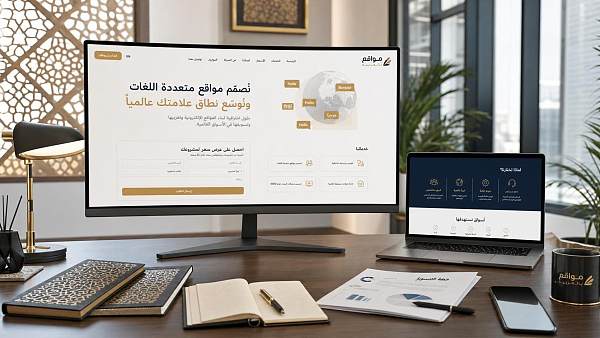
For foreign trade companies, Arabic website development may appear to be a simple language switch, but in reality it is a complete localization upgrade. Page reading direction, navigation logic, visual focus, and form habits all directly affect user engagement and inquiry conversion.
After many foreign trade companies launch Arabic websites, indexing is normal and traffic exists, but inquiries remain low. The problem is often not traffic, but user experience. After users enter the page, if the information structure feels awkward, they will leave very quickly.
Judging from recent market changes, Middle Eastern customers have increasingly higher expectations for corporate websites. Arabic website development must not only be readable, but also align with local browsing habits, business communication styles, and trust evaluation criteria. This has already become a fundamental capability for foreign trade companies expanding overseas.
Where Are the Core Challenges in Arabic Website Development
The most obvious technical feature of Arabic website development is right-to-left layout. Many foreign trade companies only translate the text into Arabic while retaining the original left-aligned structure. As a result, although the page can be opened, the overall viewing experience feels very unnatural.
A truly qualified Arabic website development project needs to adjust the following elements simultaneously:
- Reverse the navigation bar direction, with the main menu starting from the right side.
- Mirror buttons, icons, carousel arrows, and breadcrumb directions consistently.
- Adjust text alignment, heading hierarchy, and image-text order according to right-to-left rules.
- Make form inputs, mobile numbers, and country code displays match local usage habits.
- Maintain readability when mixing product parameters, tables, numbers, and units.
One point that is more easily overlooked is component compatibility. Some themes, plugins, and pop-up modules do not fully support right-to-left display. Foreign trade companies should confirm at the early stage of the project whether the underlying system supports Arabic website development, otherwise later rework costs can be very high.
From the Perspective of Layout Direction, Which Details Are Most Likely to Go Wrong
In actual business projects, layout direction is often the first stage where problems appear in Arabic website development. This is because it is not a partial modification, but an underlying logic that affects the structure of the entire page.
1. Misaligned Direction in the Homepage Hero Section
Many foreign trade companies reuse English website templates, placing the main visual on the left and the text on the right. For Arabic users, this layout weakens reading continuity. The entry point for hero section information should start from the right side, allowing users to enter the main content at first glance.
2. Icons and Interaction Directions Are Not Synchronized
Back arrows, pagination icons, step bars, and progress indicators can cause hesitation in user judgment if they remain in the original direction. Arabic website development cannot only change the text; all interaction cues must be adjusted together.
3. Confused Reading Order in Image-Text Modules
Product introductions, application scenarios, and solution pages commonly use left-right column layouts. If the text reading direction conflicts with the visual focus of the image, the page will feel disjointed. When developing an Arabic website, foreign trade companies must reorganize the order of modules.
4. Insufficient Readability of Mixed-Direction Content
Arabic pages often contain model numbers, email addresses, URLs, and numerical parameters. These may not follow the same direction rules. If technical handling is not properly implemented, the text may break, become misplaced, or even affect ordering and communication.
Localization Details Determine the Conversion Quality of Arabic Website Development
Whether Arabic website development is well executed depends not only on whether the page can be opened, but more importantly on whether localization is done properly. Middle Eastern users’ trust in a corporate website usually comes from details rather than slogans.
Language Expression Should Be Business-Oriented, Not Literal Translation
A common issue among foreign trade companies is directly translating Chinese materials into Arabic. This easily leads to stiff wording, inaccurate terminology, and a tone that does not fit business scenarios. Users may understand the content, but it is harder to establish professional trust.
Contact Methods Should Match Local Usage Habits
Email, phone, instant communication methods, and working hours should all be presented in a localized way. Some customers are more accustomed to making inquiries through instant messaging tools, so contact entry points cannot remain limited to traditional forms.
Trust Elements Should Be Placed Earlier
Certificates, cooperation cases, export regions, delivery processes, and after-sales explanations should be displayed as early as possible. For foreign trade companies, the goal of Arabic website development is not simple display, but helping customers make judgments faster.
This also means that the content structure should revolve around four questions: “who you are, what you can provide, why you are worth working with, and how to contact you,” rather than simply copying the sections of a domestic corporate website.
Technical Checklist for Foreign Trade Companies Developing Arabic Websites
If foreign trade companies want the project to run stably after launch, it is recommended to complete at least one round of technical checks when advancing Arabic website development. The checklist below is more suitable as a basis for project initiation and acceptance.
- Confirm that the website building system natively supports right-to-left layout, rather than relying on later patch-based adaptation.
- Check font compatibility to ensure Arabic characters are displayed completely without broken characters.
- Verify directional consistency across navigation, buttons, carousels, pop-ups, and form components.
- Test mobile display effects, with particular attention to line wrapping, alignment, and clickable areas.
- Check multilingual switching logic to avoid abnormal jumps between Chinese, English, and Arabic.
- Handle URL structure, title tags, and description tags to ensure search engines can recognize them.
- Verify whether the form submission process, inquiry notifications, and automatic replies work properly.
- Review server access speed and overseas loading performance to avoid a slow hero section.
A clearer signal is that Arabic website development is no longer merely a matter of design and translation, but a project involving the website building system, content operations, and marketing conversion together.
How Arabic Website Development Can Balance SEO and Marketing Conversion
Before entering the Middle Eastern market, many foreign trade companies first consider launching a website and then think about promotion. In fact, if Arabic website development does not consider SEO and conversion paths in advance, subsequent marketing costs will increase significantly.
A more reasonable approach is to plan keyword layout, page structure, and inquiry entry points simultaneously during the development stage. For example, product pages, industry solution pages, case pages, and FAQ pages can each serve different search needs.
For foreign trade companies, Arabic website development should at least take three things into account:
- Enable search engines to crawl and understand Arabic pages smoothly.
- Help potential customers quickly find the information they care about and contact entry points.
- Provide unified landing pages for subsequent advertising, social media traffic acquisition, and content operations.
In this regard, integrated services with capabilities in website building, SEO optimization, advertising, and multilingual localization are more suitable for foreign trade companies that need continuous customer acquisition. A website does not exist independently; it must serve real growth.
What Foreign Trade Companies Should Focus on When Choosing a Solution
When judging whether a service provider is suitable for Arabic website development, do not look only at page examples. You should also examine whether its underlying capabilities are complete. Especially when targeting the Middle Eastern market, technical adaptation and marketing implementation must both be in place.
Integrated digital marketing platforms represented by 易营宝 usually consider Arabic website development within a complete overseas growth chain. From intelligent website building to SEO optimization, advertising, and content localization, execution will be more coherent.
Ultimately, Arabic website development is not about translating a Chinese website for overseas use, but about enabling foreign trade companies to truly enter the reading environment, search environment, and decision-making environment of Middle Eastern users. Only by properly handling layout direction, localization details, and marketing continuity together can a website transform from a display tool into an asset for continuous customer acquisition.
Related Articles
Related Products
 Yiyingbao SaaS Intelligent Website Building and Marketing SystemYiyingbao SaaS Intelligent Website Building and Marketing System, AI-powered no-code website building, rapid creation of multilingual B2B international websites in 10 minutes, global server acceleration, AI-powered SEO optimization, helping businesses connect efficiently with global markets. The perfect integration of technology and operation makes building an international trade website remarkably simple
 AI+SEM Intelligent Advertising Marketing SystemAI+SEM drives intelligent ad creation, empowering full-funnel precision advertising marketing. The system automatically generates weekly/monthly reports, AI recommends keywords and target countries, monitors core metrics in real-time with intelligent alerts, and enables one-click high-conversion ad solutions to help quickly acquire customers and improve ROI.
 AI+SEO Dual-Engine System Optimization ServicesYiyingbao’s AI+SEO dual-engine optimization system helps foreign trade enterprises acquire high-quality organic traffic through AI-powered keyword research, content generation, and comprehensive technical optimization, significantly improving search rankings and conversion rates.
 AI+SNS Social Media Marketing SystemYingbao AI+SNS Social Media Marketing System - Precision social capture for the social media era. Supports one-click content synchronization across major platforms like Facebook and LinkedIn. AI intelligently rewrites posts for enhanced relevance. 24/7 AI customer service and user profiling analysis empower businesses to efficiently expand into global markets.
 AI+SEO营销解决方案易营宝AI+SEO营销解决方案,通过AI批量写作、智能生成TDK、精准关键词扩词等功能,全面优化网站SEO效果,提升流量与转化率。助力企业构建高效智能网站新生态。
 AI+SEM Advertising Marketing SolutionsAI+SEM Advertising Marketing Solution leverages AI technology to deeply empower SEM ad campaigns. It automatically generates weekly/monthly reports using AI, presenting account data across multiple dimensions for comprehensive insights into campaign performance and trends. The system precisely recommends keywords and target countries, intelligently generates high-conversion ad copy, and enables one-click activation of efficient campaign plans to help businesses rapidly acquire customers. Simultaneously, it monitors core metrics in real time, intelligently identifies abnormal fluctuations, and issues timely alerts to ensure stable, high-return advertising results.
 Domain Name ServicesEasyWin provides professional domain name services, including intelligent queries, one-stop registration, brand protection, and full lifecycle management, helping businesses build a digital brand image.
 EasyOperate B2C Cross-Border E-Commerce Platform & Independent WebsiteEasyStore B2C Cross-border E-commerce Independent Store is an intelligent website building and cross-border e-commerce integrated solution independently developed by EasyStore Information Technology (Beijing) Co., Ltd. The system is specially designed for small and medium-sized as well as large export enterprises, integrating 'website building, operation, marketing, advertising, and conversion' into one, helping enterprises quickly establish cross-border e-commerce independent stores to achieve brand globalization and global sales growth.
The platform supports multiple languages, multiple currencies, and multi-channel marketing, with built-in AI intelligent translation and SEO optimization systems, suitable for mainstream markets such as Southeast Asia, Europe and America, Latin America, and the Middle East, assisting Chinese manufacturing enterprises in efficiently deploying international e-commerce strategies. SSL证书易营宝提供专业SSL安全证书服务,包括单域名和泛域名证书,确保网站数据传输加密、身份验证和完整性保护,助力企业建立安全可信的在线业务环境。









