









- The U.S. has ended the $800 de minimis exemption for non-postal shipments; express courier packages must be formally declared.Nov 16, 2026View details
- ASEAN Signs Digital Economy Framework Agreement, Moving Toward Harmonized Cross-Border E-Commerce RulesNov 15, 2026View details
- Shenzhen Becomes the First City in Mainland China to Exceed RMB 5 Trillion in Foreign TradeNov 15, 2026View details
- Fujian Announces the First Batch of Provincial-Level Cross-Border E-Commerce Industrial Parks and Key Brands for CultivationNov 14, 2026View details
- Amazon Global Store Announces the Launch of the 2026 Black Friday Global Shopping SeasonNov 14, 2026View details
- CCTV.com Examines APEC’s Role in China’s Foreign TradeNov 12, 2026View details
How an AI Translation Terminology Database Ensures Consistent Brand Messaging and Prevents Multilingual Content Distortion
Multilingual content distortion is often caused not by a translation engine mistranslating a single word, but by the same product concept, performance claim, or safety notice being translated differently across different pages. Once the corporate website, product pages, advertising landing pages, manuals, and search snippets are generated separately, the brand tone, technical boundaries, and calls to action received by readers become fragmented. The role of an AI translation terminology database is to turn approved wording into callable, verifiable rules, so that every translation has a clear basis.
When building a terminology database around "AI translation glossary brand consistency," it is not enough to simply enter "Chinese term = foreign-language term." Truly controllable entries should include the source-language term, preferred target-language translation, prohibited translations, part of speech, applicable pages, contextual examples, review status, and responsible version. For example, the translation of "protection" may differ between a product feature page, installation guide, and risk notice; if only an isolated entry is saved, the system may apply it in an inappropriate context and create new discrepancies instead.
First, distinguish which content must be locked
Not every sentence needs to be fixed word for word. Brand names, model numbers, material names, interface names, units of measurement, certification-related statements, warranty boundaries, hazard warnings, and legal restriction statements are highly constrained content and should be locked or allowed only controlled variations. Marketing headlines, social media short copy, and introductory paragraphs may retain moderate room for adaptation, but they should still comply with brand tone, prohibited terms, and core selling-point wording.
Language surrounding parameters is easily overlooked. Even when numerical values themselves remain unchanged, the meaning will change if qualifiers such as "maximum," "suitable for," "resistant to," "waterproof," and "can be used for" are weakened, broadened, or omitted. The terminology database should maintain parameter names together with common collocations, and specify unit formats, decimal-point rules, range separators, and whether local unit conversion is permitted. Where conversion is involved, the original parameters must be retained and the basis for conversion clearly stated; the text generation process must not make assumptions on its own.
- Non-translatable items: Model numbers, trademarks, internal feature names, code, file paths, and similar items must remain unchanged to avoid transliteration, word splitting, or rewriting.
- Controlled terminology: Specify preferred translations for materials, processes, components, performance grades, and similar items, and link synonyms, previous translations, and discouraged translations.
- Controlled sentence patterns: Retain complete sentence segments for warnings, installation restrictions, maintenance requirements, and liability boundaries to reduce semantic loss caused by fragment assembly.
- Localizable wording: Headlines, buttons, and explanatory copy may be adjusted according to local reading habits, but must not go beyond the confirmed scope of facts.

Terminology databases often fail because of versions and context
Inconsistent use of the same term does not necessarily mean the term is missing from the database. More common causes are that the content team has called an old version, different websites use different project databases, or the source copy itself is ambiguous. Take "suitable for outdoor use" as an example: it may refer to a material's weather resistance, or merely to a particular display scenario; without specifying the installation location, temperature and humidity, contact media, and maintenance conditions, it is difficult for the target language to accurately reproduce the scope of the claim. In such cases, the source copy must first be supplemented with the necessary conditions, rather than asking the translation model to "translate more naturally."
The terminology database should also support hierarchical relationships. Group-wide general terminology is suitable for the master database; spelling, industry conventions, and prohibited expressions for a particular market belong in the language variant database; component naming, packaging specifications, and technical descriptions for specific product lines should be covered by the project database. If the hierarchy is not clearly defined, later-added local entries may override general rules or cause local wording to negatively affect global content.
Include AI output in pre-publication validation
AI is well suited for candidate translations, terminology matching, missing-item prompts, and batch comparisons, but a "matched term" cannot be regarded as meaning the content is qualified. Before publication, terminology consistency, numerical units, negative words, conditional clauses, link anchor text, and page metadata should all be checked. In particular, when titles, descriptions, image ALT text, and body content are generated by separate modules, the page may appear free of typos, while search results and landing pages may convey two different sets of claims.
A concise processing chain can be established: first extract terminology and fixed sentence segments from approved source text; require citation of the currently effective version when generating content; after generation, compare the target text against the terminology database and source-text fields; submit unmatched terms, prohibited words, or parameter discrepancies for manual review; and, once confirmed, write reliable new translations back into the terminology database. Manual review here should focus on high-risk segments rather than retranslating sentence by sentence, so effort is directed to areas where meaning may change.
When multilingual content also serves search customer-acquisition purposes, keywords should not be separated from terminology governance. High-search-volume terms in some markets may be broad colloquial names, and directly replacing formal terminology with them can reduce technical accuracy. A more prudent approach is to retain the formal name at its first occurrence and naturally add commonly searched terms in parentheses, explanatory sentences, or subheadings, then use the primary term consistently thereafter. Integrating multilingual content generation, keyword matrices, and technical page checks into the same workflow can draw on the relevant capabilities covered by AI+SEO dual-engine system optimization services, but terminology approval authority should remain independent.
Use discrepancy records to determine whether consistency is genuine
Consistency does not mean that sentences in all languages have the same length, nor does it mean word-for-word correspondence. Each discrepancy should be recorded by category: unmatched terminology, terminology conflict, incomplete source text, local-language grammatical requirements, keyword insertion, or manual rewriting. The first two categories require revisions to the terminology database and invocation rules; source-text issues should be fed back to the content source; and linguistic structural differences should retain an approval rationale. Modification records without classification will cause the same disputes to recur in the next round of content updates.
Ultimately, the terminology database should become a control point for content changes. When a product name, material description, or safety restriction is adjusted, first update the approved entries, then search for affected pages, advertising assets, and downloadable files. The value of this approach is not to make every sentence sound mechanical, but to ensure that every language version can be traced back to the same set of facts, the same boundaries, and the same brand expression.
Related Articles
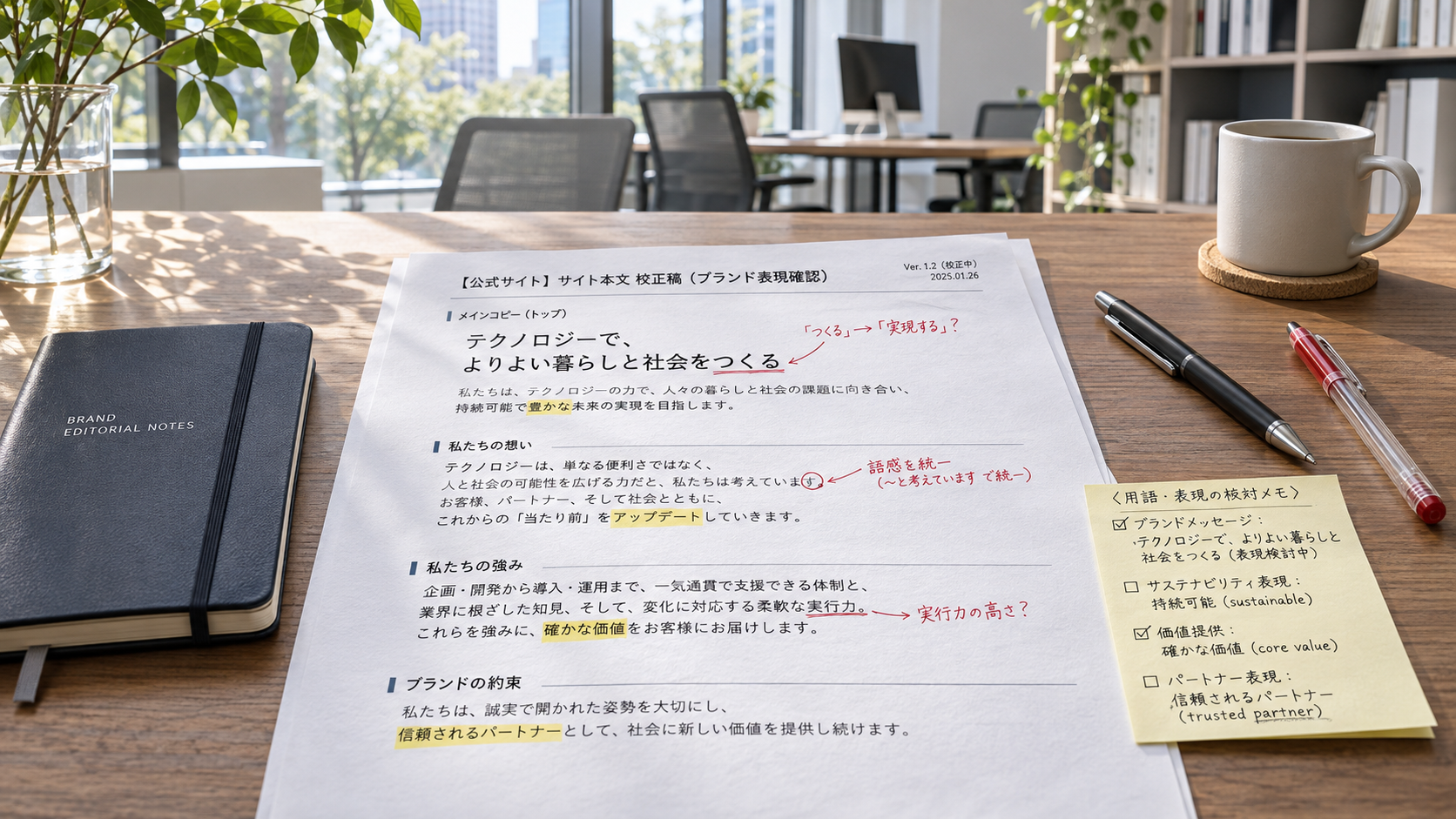
 How Can You Avoid Localization Mistakes When Building a Japanese-Language Brand Website?
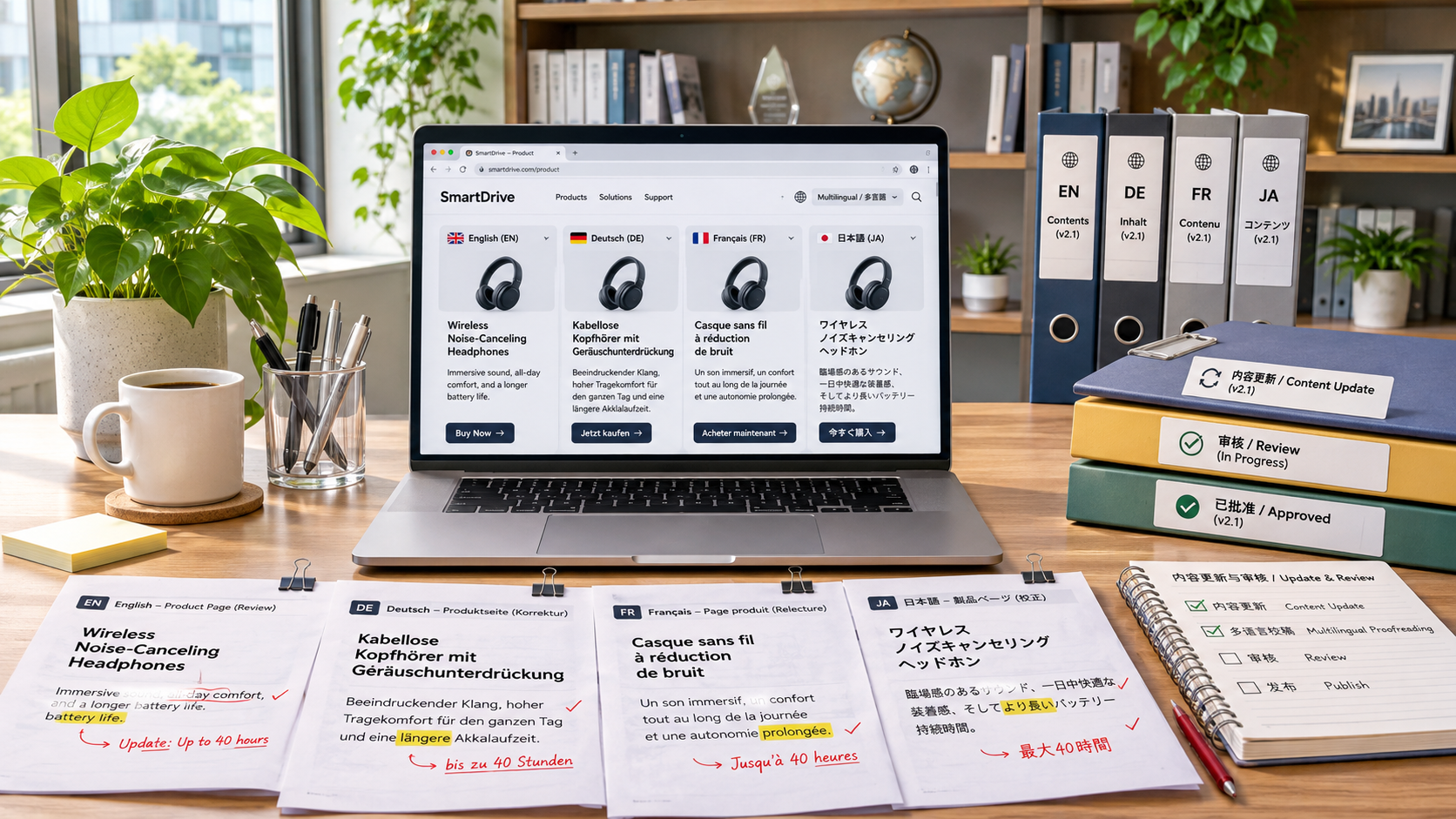
 How Does a Website Localization System Manage Multilingual Content Updates?
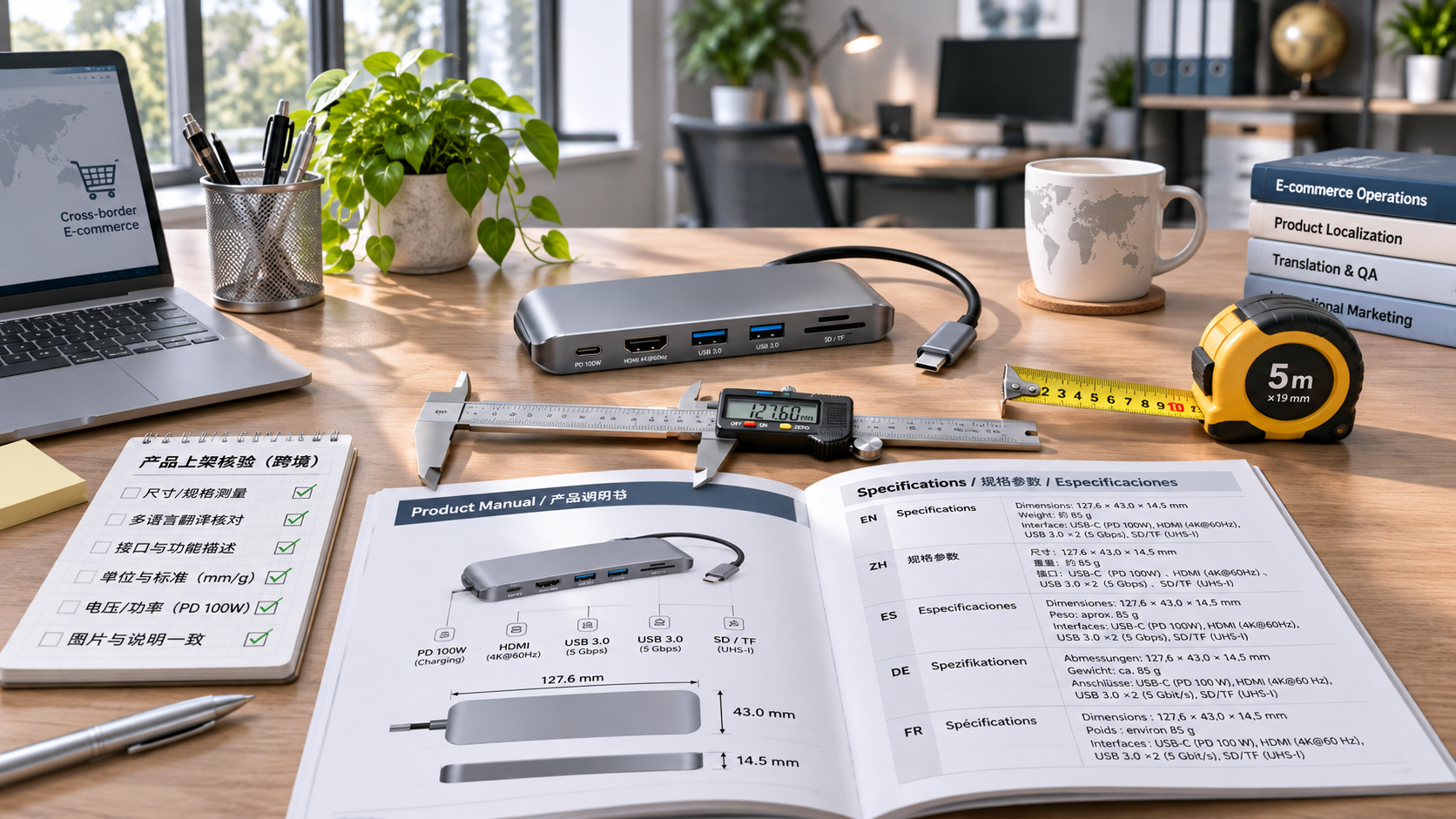
 How Can Cross-Border E-Commerce Multilingual Product Pages Avoid Errors in Translating Product Specifications?
Related Products
 Yiyingbao SaaS Intelligent Website Building and Marketing SystemYiyingbao SaaS Intelligent Website Building and Marketing System, AI-powered no-code website building, rapid creation of multilingual B2B international websites in 10 minutes, global server acceleration, AI-powered SEO optimization, helping businesses connect efficiently with global markets. The perfect integration of technology and operation makes building an international trade website remarkably simple
 AI+SEM Intelligent Advertising Marketing SystemAI+SEM drives intelligent ad creation, empowering full-funnel precision advertising marketing. The system automatically generates weekly/monthly reports, AI recommends keywords and target countries, monitors core metrics in real-time with intelligent alerts, and enables one-click high-conversion ad solutions to help quickly acquire customers and improve ROI.
 AI+SEO Dual-Engine System Optimization ServicesYiyingbao’s AI+SEO dual-engine optimization system helps foreign trade enterprises acquire high-quality organic traffic through AI-powered keyword research, content generation, and comprehensive technical optimization, significantly improving search rankings and conversion rates.
 AI+SNS Social Media Marketing SystemYingbao AI+SNS Social Media Marketing System - Precision social capture for the social media era. Supports one-click content synchronization across major platforms like Facebook and LinkedIn. AI intelligently rewrites posts for enhanced relevance. 24/7 AI customer service and user profiling analysis empower businesses to efficiently expand into global markets.
 AI+SEO营销解决方案易营宝AI+SEO营销解决方案,通过AI批量写作、智能生成TDK、精准关键词扩词等功能,全面优化网站SEO效果,提升流量与转化率。助力企业构建高效智能网站新生态。
 AI+SEM Advertising Marketing SolutionsAI+SEM Advertising Marketing Solution leverages AI technology to deeply empower SEM ad campaigns. It automatically generates weekly/monthly reports using AI, presenting account data across multiple dimensions for comprehensive insights into campaign performance and trends. The system precisely recommends keywords and target countries, intelligently generates high-conversion ad copy, and enables one-click activation of efficient campaign plans to help businesses rapidly acquire customers. Simultaneously, it monitors core metrics in real time, intelligently identifies abnormal fluctuations, and issues timely alerts to ensure stable, high-return advertising results.
 Domain Name ServicesEasyWin provides professional domain name services, including intelligent queries, one-stop registration, brand protection, and full lifecycle management, helping businesses build a digital brand image.
 EasyOperate B2C Cross-Border E-Commerce Platform & Independent WebsiteEasyStore B2C Cross-border E-commerce Independent Store is an intelligent website building and cross-border e-commerce integrated solution independently developed by EasyStore Information Technology (Beijing) Co., Ltd. The system is specially designed for small and medium-sized as well as large export enterprises, integrating 'website building, operation, marketing, advertising, and conversion' into one, helping enterprises quickly establish cross-border e-commerce independent stores to achieve brand globalization and global sales growth.
The platform supports multiple languages, multiple currencies, and multi-channel marketing, with built-in AI intelligent translation and SEO optimization systems, suitable for mainstream markets such as Southeast Asia, Europe and America, Latin America, and the Middle East, assisting Chinese manufacturing enterprises in efficiently deploying international e-commerce strategies. SSL证书易营宝提供专业SSL安全证书服务,包括单域名和泛域名证书,确保网站数据传输加密、身份验证和完整性保护,助力企业建立安全可信的在线业务环境。









