









- China’s Tariff Commission of the State Council Adjusts Additional Tariffs on U.S. Goods: 24% Tariff Suspended for Two MonthsNov 10, 2026View details
- APEC Shenzhen Spotlight: Cross-Border E-Commerce Orders Promote Asia-Pacific Trade and Economic CooperationNov 08, 2026View details
- China-Europe Railway Express and CIIE Hold Business Matchmaking Event, Focusing on Cross-Border E-commerce B2B ExportsNov 07, 2026View details
- China’s Ministry of Commerce Responds to Additional Charges on Low-Value Imports Imposed by the EUNov 06, 2026View details
- Two Internet Development Reports Released at the 2026 World Internet ConferenceNov 05, 2026View details
- Internet Business Revenue of Enterprises Above the Designated Size Reached RMB 1.716 Trillion in the First Three Quarters, with Profits Up 17.6%Nov 05, 2026View details
How Long Does It Take to See SEO Results from Multilingual Website Development?
“How long does it take to see SEO results after building a multilingual website?” This is one of the questions companies preparing to expand overseas care about most before launching a website. Some expect their website to appear in Google search as soon as it goes live, while others have already created English, German, and Japanese pages but have yet to receive inquiries. The reality is that multilingual SEO is not a process that produces immediate results at the push of a button: search engines need to discover pages, understand the relationship between languages and regions, assess content value, and then continuously evaluate rankings through user behavior and external signals.
If the website architecture is sound, content is properly localized, and keyword and content operations are carried out consistently, basic changes such as indexing and impressions can usually be seen within a few weeks to 3 months. In niche markets with moderate competition, some core keywords or long-tail keywords may begin to rank within 3 to 6 months. If the goal is to consistently acquire organic traffic and overseas inquiries, it often requires 6 to 12 months or even longer of accumulation. This timeline can vary significantly depending on the language market, industry competition, and the website's existing foundation.
SEO results are not about “time since launch,” but the cumulative outcome of several stages
During the first few weeks after a multilingual website goes live, the focus is usually not on rankings, but on “whether it can be correctly understood.” Search engines such as Google need to crawl pages in each language, identify the primary language and target country or region of each page, and confirm the relationships between different versions. If English, French, and Spanish pages are simply copied, URLs are disorganized, or tags are missing, search engines may be unable to accurately determine which version should be displayed first.
Generally, if the website's technical foundation is sound, the sitemap has been submitted, and there are no crawl restrictions, new pages will gradually enter the index. At this stage, search engine management tools can be used to monitor indexing status, crawl issues, and impressions. For newly established independent overseas websites, the earliest growth often comes from branded terms, product model terms, and region-specific long-tail keywords, rather than highly competitive broad industry keywords.
Rankings only begin to change gradually after content continues to grow, pages start receiving clicks, and external websites generate natural mentions or links. Many companies mistakenly believe that “being indexed means results,” but indexing is only the starting point. What truly deserves attention is impressions in target countries, the number of effective keywords, the quality of organic visits, and ultimately form submissions, inquiries, and sales leads.
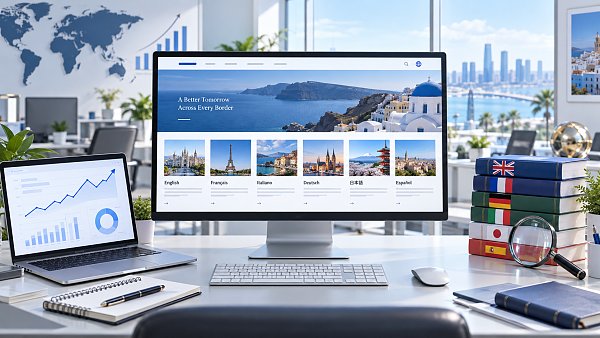
Why do some multilingual websites gain traffic in three months while others see no movement after six months?
The primary factor determining the timeline is whether the language versions have truly been localized. Directly machine-translating Chinese content into English does not equal building content for the English-speaking market. The search terms, wording, parameter preferences, and purchasing priorities used by overseas buyers often differ from what domestic teams expect. For example, while manufacturing companies may emphasize “direct supply from the factory” in Chinese, overseas buyers are more likely to search for product standards, application scenarios, material specifications, certification requirements, or customization capabilities.
Therefore, multilingual website development should involve more than page translation; it also requires keyword research and alignment with search intent. Vocabulary and spelling may differ when English content targets the United States, the United Kingdom, and Australia; markets such as Arabic, Japanese, and German also involve reading habits, content density, trust-related information, and local business expressions. The more closely content addresses local users' questions, the more likely it is to gain signals such as engagement, clicks, and conversions.
The second key factor is website structure. A clearer approach is to establish stable, recognizable URL structures for different languages or regions, such as subdirectories or subdomains, and use hreflang tags to declare the language and regional relationships between pages. At the same time, each version should have its own titles, descriptions, body content, and internal links, rather than all pointing to the same language page. Improper technical implementation can lead to common issues such as duplicate pages, indexing mismatches, and higher bounce rates, naturally extending the SEO timeline.
The third variable is industry competition. For niche industrial components, customized equipment, or regional services, content focused on applications, specifications, and problem-related keywords may gain long-tail impressions relatively quickly. However, in areas such as popular cross-border e-commerce consumer goods, SaaS, finance, or general home furnishings, businesses face established brands, platform websites, and many competitors making continuous investments, so reaching leading positions takes longer.
The multilingual SEO timeline can be understood this way
- Month 1: Complete crawling, indexing, and basic technical checks. Focus on confirming whether robots rules, the sitemap, page loading speed, mobile experience, canonical tags, and language annotations are functioning properly.
- Months 2 to 3: Monitor changes in impressions, indexed pages, and long-tail keywords in target markets. This stage is suitable for continuing to improve product pages, industry solution pages, FAQs, and knowledge content.
- Months 3 to 6: Some keywords with clear purchase intent may enter visible ranking positions. Search data should be used to optimize titles, above-the-fold information, internal links, and conversion entry points, rather than making frequent major changes to URLs.
- After 6 months: The website begins to build content assets. If localized content is continuously published, relevant industry links are acquired, and the visitor experience is improved, organic traffic and inquiries are generally more likely to become stable.
This timeline is not a promise, but rather a way to help companies establish realistic expectations. New domains, domains with poor historical quality, too few pages, and frequent redesigns can all slow progress. Websites that already have some authority, solid product materials, and clear positioning may have a smoother start.
Four things more important than “building more language versions”
First, identify priority markets. Do not launch with more than a dozen languages from the outset. For companies with limited budgets, it is more worthwhile to first select countries with clear order potential, logistics and delivery coverage, and competitive products, then deeply develop content around local languages and search demand. A complete English website is often more valuable than ten language versions with thin content.
Second, ensure product pages can answer questions. After overseas users enter a page, they usually assess quickly whether the product is suitable. In addition to basic introductions, specifications, materials, application areas, customization scope, lead time details, quality control, downloadable materials, and frequently asked questions can be included. For B2B foreign trade websites, information that can reduce communication costs is often also information with greater search value.
Third, incorporate technical SEO during the development stage. Retrofitting a multilingual structure later is often more troublesome than planning it from the beginning. Using a website-building system with multilingual management, editable pages, sitemaps, SEO tag configuration, and data tracking capabilities can help operations teams manage subsequent iterations more effectively. Intelligent website-building and marketing services for overseas promotion, such as Yiyingbao, typically consider multilingual website development, basic SEO configuration, and subsequent content optimization within the same workflow, avoiding the discovery after the website is built that it is “not conducive to promotion.”
Fourth, use data for evaluation rather than focusing only on rankings. The fact that a major keyword does not immediately rise in ranking does not mean the work has no value. Growth in impressions from target countries, more pages being indexed, expanded long-tail keyword coverage, and increased visits to inquiry pages are all positive signals worth tracking. For B2B businesses, the value generated by ten highly relevant visits may exceed that of a large volume of irrelevant traffic.
Several common misconceptions that can slow results
The most common misconception is publishing automated translations directly as official content. Machine translation can improve first-draft efficiency, but product terminology, industry context, unit expressions, and calls to action still require human review. Awkward content not only affects trust, but also struggles to match actual search terms.
Another misconception is using the same keyword strategy for all language pages. Search habits differ across markets, so Chinese keywords cannot simply be translated word for word. Some companies also purchase large volumes of low-quality backlinks in pursuit of quick results. While short-term metrics may appear to fluctuate, this can create risks in the long term. A more reliable approach is to gradually build trustworthy signals through valuable content, industry media, partner resources, and brand exposure.
Ultimately, the answer to how long it takes to see SEO results from multilingual website development does not lie in a fixed number of days, but in whether the website truly serves its target market. By treating multilingual pages as “sustainably operated overseas storefronts” and planning the architecture, content, search demand, and inquiry conversion process together, SEO becomes more than a process of waiting for rankings and can gradually become a long-term channel for acquiring global customers.
Related Articles
 How Should You Strategically Place Inquiry-Generating Keywords on Your Export Website to Attract Potential Customers?
 Does a Poor Mobile Experience Affect Google Rankings?
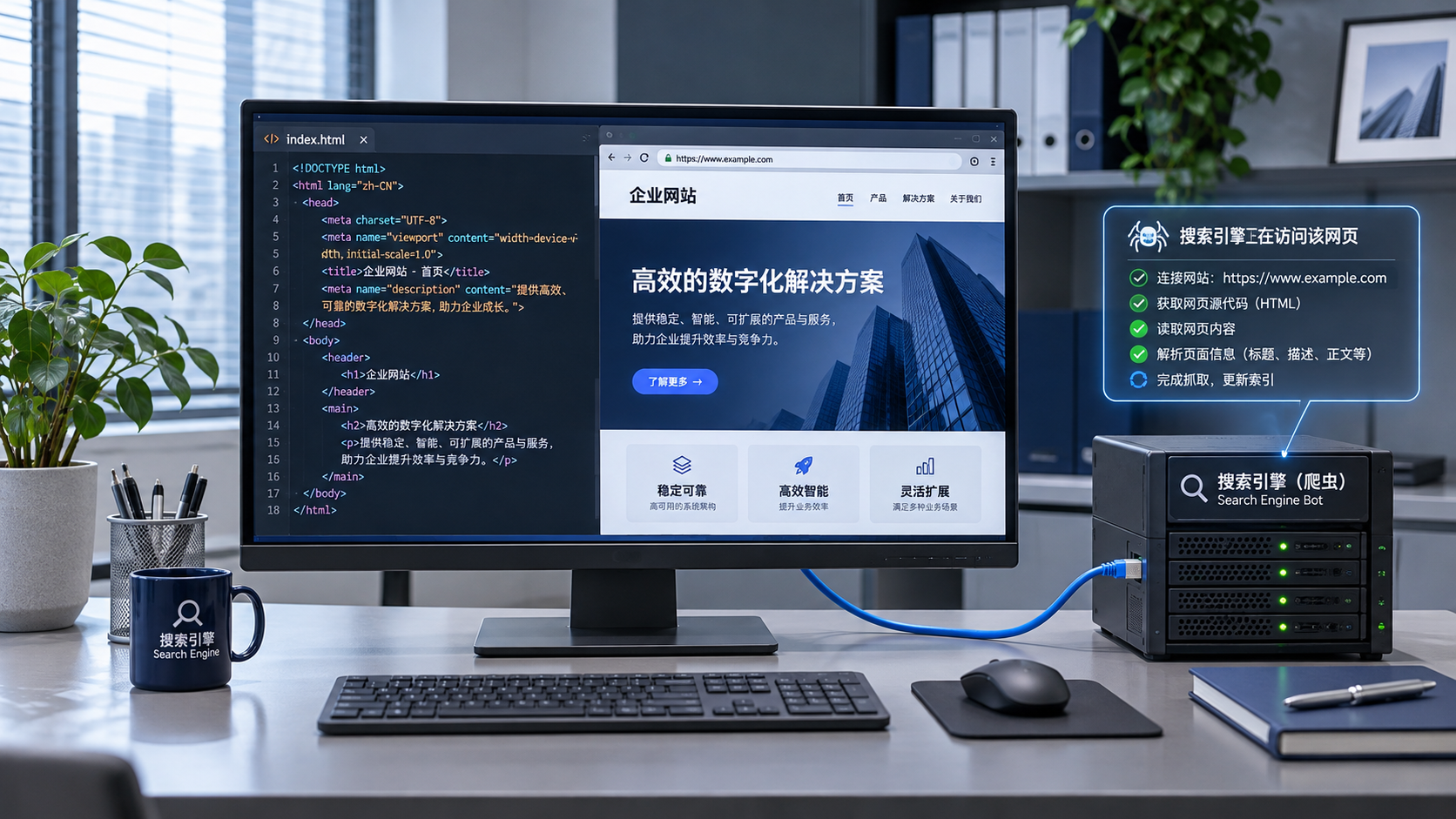
 How does search engine crawling affect website SEO rankings?
Related Products
 Yiyingbao SaaS Intelligent Website Building and Marketing SystemYiyingbao SaaS Intelligent Website Building and Marketing System, AI-powered no-code website building, rapid creation of multilingual B2B international websites in 10 minutes, global server acceleration, AI-powered SEO optimization, helping businesses connect efficiently with global markets. The perfect integration of technology and operation makes building an international trade website remarkably simple
 AI+SEM Intelligent Advertising Marketing SystemAI+SEM drives intelligent ad creation, empowering full-funnel precision advertising marketing. The system automatically generates weekly/monthly reports, AI recommends keywords and target countries, monitors core metrics in real-time with intelligent alerts, and enables one-click high-conversion ad solutions to help quickly acquire customers and improve ROI.
 AI+SEO Dual-Engine System Optimization ServicesYiyingbao’s AI+SEO dual-engine optimization system helps foreign trade enterprises acquire high-quality organic traffic through AI-powered keyword research, content generation, and comprehensive technical optimization, significantly improving search rankings and conversion rates.
 AI+SNS Social Media Marketing SystemYingbao AI+SNS Social Media Marketing System - Precision social capture for the social media era. Supports one-click content synchronization across major platforms like Facebook and LinkedIn. AI intelligently rewrites posts for enhanced relevance. 24/7 AI customer service and user profiling analysis empower businesses to efficiently expand into global markets.
 AI+SEO营销解决方案易营宝AI+SEO营销解决方案,通过AI批量写作、智能生成TDK、精准关键词扩词等功能,全面优化网站SEO效果,提升流量与转化率。助力企业构建高效智能网站新生态。
 AI+SEM Advertising Marketing SolutionsAI+SEM Advertising Marketing Solution leverages AI technology to deeply empower SEM ad campaigns. It automatically generates weekly/monthly reports using AI, presenting account data across multiple dimensions for comprehensive insights into campaign performance and trends. The system precisely recommends keywords and target countries, intelligently generates high-conversion ad copy, and enables one-click activation of efficient campaign plans to help businesses rapidly acquire customers. Simultaneously, it monitors core metrics in real time, intelligently identifies abnormal fluctuations, and issues timely alerts to ensure stable, high-return advertising results.
 Domain Name ServicesEasyWin provides professional domain name services, including intelligent queries, one-stop registration, brand protection, and full lifecycle management, helping businesses build a digital brand image.
 EasyOperate B2C Cross-Border E-Commerce Platform & Independent WebsiteEasyStore B2C Cross-border E-commerce Independent Store is an intelligent website building and cross-border e-commerce integrated solution independently developed by EasyStore Information Technology (Beijing) Co., Ltd. The system is specially designed for small and medium-sized as well as large export enterprises, integrating 'website building, operation, marketing, advertising, and conversion' into one, helping enterprises quickly establish cross-border e-commerce independent stores to achieve brand globalization and global sales growth.
The platform supports multiple languages, multiple currencies, and multi-channel marketing, with built-in AI intelligent translation and SEO optimization systems, suitable for mainstream markets such as Southeast Asia, Europe and America, Latin America, and the Middle East, assisting Chinese manufacturing enterprises in efficiently deploying international e-commerce strategies. SSL证书易营宝提供专业SSL安全证书服务,包括单域名和泛域名证书,确保网站数据传输加密、身份验证和完整性保护,助力企业建立安全可信的在线业务环境。









