









- APEC Shenzhen Spotlight: Cross-Border E-Commerce Orders Promote Asia-Pacific Trade and Economic CooperationNov 08, 2026View details
- China-Europe Railway Express and CIIE Hold Business Matchmaking Event, Focusing on Cross-Border E-commerce B2B ExportsNov 07, 2026View details
- China’s Ministry of Commerce Responds to Additional Charges on Low-Value Imports Imposed by the EUNov 06, 2026View details
- Two Internet Development Reports Released at the 2026 World Internet ConferenceNov 05, 2026View details
- Internet Business Revenue of Enterprises Above the Designated Size Reached RMB 1.716 Trillion in the First Three Quarters, with Profits Up 17.6%Nov 05, 2026View details
- Shopify's Third-Quarter Revenue and GMV Fall Short of Expectations, Sending Shares Tumbling Before the Market OpensNov 04, 2026View details
What is most easily overlooked when setting up a multilingual website for website SEO
What Is Most Easily Overlooked When Setting Up SEO for a Multilingual Website
When setting up SEO for a multilingual website, the most common misjudgment is not translation quality, but treating different language versions as copied text versions of the same site. The pages may appear to be live, the menus may switch correctly, and the backend may even show that multilingual content is complete. However, after some time, you may find that the English and Spanish pages compete for the same keywords, the Russian pages remain unindexed for a long time, users from certain countries are repeatedly directed to the wrong language version, and the organic traffic to inquiry pages never really increases. The problem is often not a single missing tag, but that the multilingual site has not been designed around how search engines identify “region + language + content intent,” from site architecture through indexing strategy.
These problems are particularly common on foreign trade company websites, manufacturing websites, and cross-border brand sites. Business teams usually first consider market coverage and hope to launch in North America, Europe, Southeast Asia, and the Middle East as quickly as possible. Meanwhile, technical and content teams focus more on launch speed, so they often first copy the main site into multiple language directories and then complete the content through translation. The project moves forward quickly, but subsequent SEO work becomes very passive. A multilingual site is not simply a language pack added to a website. Essentially, it consists of multiple search assets that can be identified independently while remaining interconnected.
Many Websites Get Stuck on URLs, Not on Copy
If the URL structure of a multilingual website is not planned clearly from the beginning, almost every subsequent SEO setting will become awkward. There are three common situations: first, different languages share the same URL and the content is switched through scripts; second, language versions are distinguished through parameters, such as adding a language parameter after the same page; third, directories exist but their naming is inconsistent—for example, the English site uses /en/, while the French site uses /fr-fr/, and some pages do not follow any consistent rule at all.
From the perspective of indexing and search engine discovery, what search engines can identify more reliably are clear, fixed, and independently crawlable paths for each language version. Search engines need to know which group of pages belongs to which language market, which pages are alternative versions of one another, and which pages should compete for keywords in their respective languages. If language switching depends on front-end scripts, or if the text is dynamically replaced only after visitors enter the page, crawlers may continue to see the same content. As a result, although the multilingual versions are live, they may still be treated as a single-language site at the indexing level.
Another situation that is easily overlooked in actual projects is when business teams, in an effort to “concentrate authority,” require all languages to be placed under the main site directory without planning the navigation, breadcrumbs, internal links, and sitemaps at the same time. The result is not concentrated authority. Instead, search engines may only crawl the homepage and a few section pages, while deeper product pages remain outside the index for a long time because the language-switching path is broken. Although this appears to be merely a structural issue, it directly affects the coverage of inquiry-related keywords and long-tail product keywords later on.
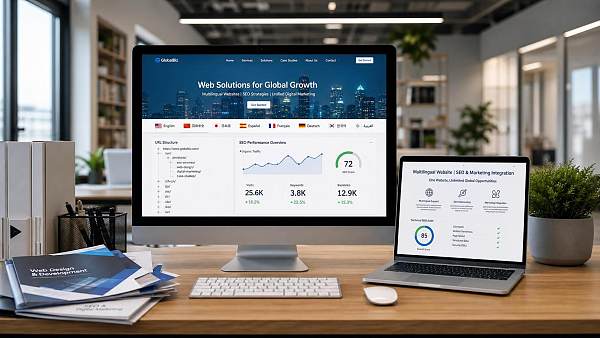
hreflang Is Often “Implemented” but Not Actually Done Correctly
In multilingual SEO, hreflang is one of the settings most likely to become a mere formality. Many websites know that it needs to be added, but simply insert the tags into the page headers in bulk and consider the task complete. The issue is that this tag does not simply declare, “I have versions in other languages.” Instead, it tells search engines that these pages cover corresponding topics but target different languages or regions. If the pairing relationship, return relationship, URL references, or language-region codes are inconsistent, search engines may ignore the entire set of annotations.
Manufacturing and B2B websites are especially prone to errors because they have large numbers of product pages, and many pages do not correspond one-to-one. Some English pages may include complete technical specifications, while the Arabic versions contain only brief introductions. Some German websites may retain local service information that is absent from the Chinese version. Differences in content are not necessarily a problem, but if the page topics are already clearly different, forcing them to reference each other with hreflang can make it difficult for search engines to determine the relationship consistently. In practice, a more reliable approach is to pair pages according to whether they truly correspond to the same search intent, rather than mechanically matching them by section name.
Another frequently overlooked detail is the default page. For websites serving multiple regions, users do not always enter through the homepage, and their browser language does not necessarily match their actual needs. If there is no appropriate default version to receive users, or if automatic redirects are enforced, both search engine crawling and real user access may be affected. This is particularly true for advertising landing pages, standalone product pages, and campaign pages, where automatic redirects often cause indexing problems and interfere with sharing and repeat visits.
Keywords Cannot Be Used Simply by Translating Them
What multilingual websites most often underestimate is the gap between “localized keywords” and “directly translated keywords.” Especially when setting up SEO for a multilingual website, many teams first translate an existing Chinese keyword list into English, then expand it from English into other languages, ultimately creating a keyword system that appears complete but has significant deviations in search intent. Page titles, section names, and product categories are all populated, but traffic quality is poor, or the site only attracts generic visitors who do not convert.
This is especially typical of foreign trade factory websites and B2B marketing websites. The reason is not complicated: when buyers search, they do not necessarily use the literal product name. They may also include the industry use, specifications, application scenario, purchasing role, or regional terminology. The same product may be called different things in different markets. A term that is standard in one country may sound more like internal industry jargon in another region, with different search volumes and conversion intent. If a website only switches languages without restructuring keyword hierarchies, the result may be that “the page is translated correctly, but its rankings never align with the search habits of target customers.”
This is also why a multilingual website cannot simply replicate the same information architecture. A North American website may be better organized around solutions, application industries, and purchasing efficiency, while some European markets may place greater emphasis on certifications, delivery scope, after-sales conditions, or the presentation of technical details. This is not about which aspect is more important. Rather, the search entry points are different, so the pages should not be exactly the same. In this context, SEO is not a matter of adding a few tags in the backend; it is a preliminary decision about how content should be organized.
If Indexing Rules Are Not Separated, Traffic Will Compete with Itself
When many companies build multilingual websites, their sitemaps, robots rules, and canonical tags still follow the logic of a single-language site. This creates a subtle problem: the pages may be live, but search engines are being restricted by your own rules. For example, if multiple language pages all point to the same canonical page, you are effectively telling search engines that “the primary language version takes precedence.” Alternatively, if the sitemap only submits the main site directory, pages in other languages may lack stable crawling signals for a long time. Pagination, filtered pages, and search results pages may also be mixed together across different language versions, causing a large number of low-quality URLs to enter the indexing queue.
Cross-border online stores and websites with large numbers of SKUs need to be particularly careful about this. Once language versions are combined with product variants, filter parameters, and sorting parameters, the number of URLs can quickly expand. If there is no clear distinction between pages that are allowed to be indexed and pages that only serve conversion purposes, the crawl budget will be dispersed. As a result, the product and category pages that should rank may not be crawled deeply enough. Many teams attribute the problem to insufficient content or weak backlinks, when in fact the basic indexing rules have already slowed the site down.
Which Scenarios Are Most Likely to Produce Mistakes
For a B2B corporate website, a common misconception is that multilingual development is complete once the company profile, product catalog, and case study pages have all been translated. However, search engines are more concerned with whether a page corresponds to a purchasing question. Many inquiry pages look complete in design, but because different language versions share the same template, have repetitive titles, and contain too little content variation, they may be considered of limited value.
For a cross-border online store, problems often arise in product variant and category management. Once colors, sizes, currencies, and shipping countries intersect with language versions, URLs and canonical tags can easily become difficult to control. In this scenario, multilingual SEO is closely tied to the capabilities of the e-commerce system, and it is difficult to make up for shortcomings later through content alone.
If an advertising landing page is also expected to attract organic traffic, the risks are more practical. Many pages use forced redirects, pop-up overlays, and minimal content to improve conversions. Although advertising performance may be acceptable in the short term, these practices are not conducive to helping search engines understand the topic over the long term. Landing pages can be optimized for SEO, but it is necessary to distinguish between pages that serve advertising only and pages designed to continuously capture search traffic. The rules should not be mixed.
The Truly Practical Way to Evaluate It Is Not to Ask How Many Languages to Translate First
At the start of a project, four questions are more important than “How many languages should we support?”: Does the target market really need an independent language asset? Do the pages correspond to one another? Do the keywords need to be reworked by region? And can the technical system support stable multilingual indexing rules? If any of these issues is not thought through, rework is likely to follow.
The value of a service model such as Yewinbao’s, which covers smart website building, SEO optimization, and overseas marketing, lies precisely here. If a multilingual site only delivers content, problems will emerge after launch. But if website architecture, AI-assisted content production, SEO/GEO optimization, and subsequent advertising conversion are considered as one connected process, many potential issues can be avoided at an early stage. Especially when targeting clearly different markets such as North America, Europe, Southeast Asia, Japan and South Korea, the Middle East, and Russian-speaking regions, site structure, content depth, and language distribution strategies should not be exactly the same.
To determine whether a multilingual website’s SEO setup is reliable, you can first look at several simple indicators: Do the language versions have independent and consistent URL rules? After switching languages, do the title, description, body content, and internal links change together? Is there a clear alternative relationship between corresponding pages? Are the keywords and section structures genuinely differentiated by market? Do the indexing rules allow the pages that should be visible to be crawled and indexed? Only after these fundamental issues have been handled properly will subsequent content growth, link building, and advertising coordination be meaningful. Otherwise, the more languages there are, the faster the problems will be amplified.
Related Articles
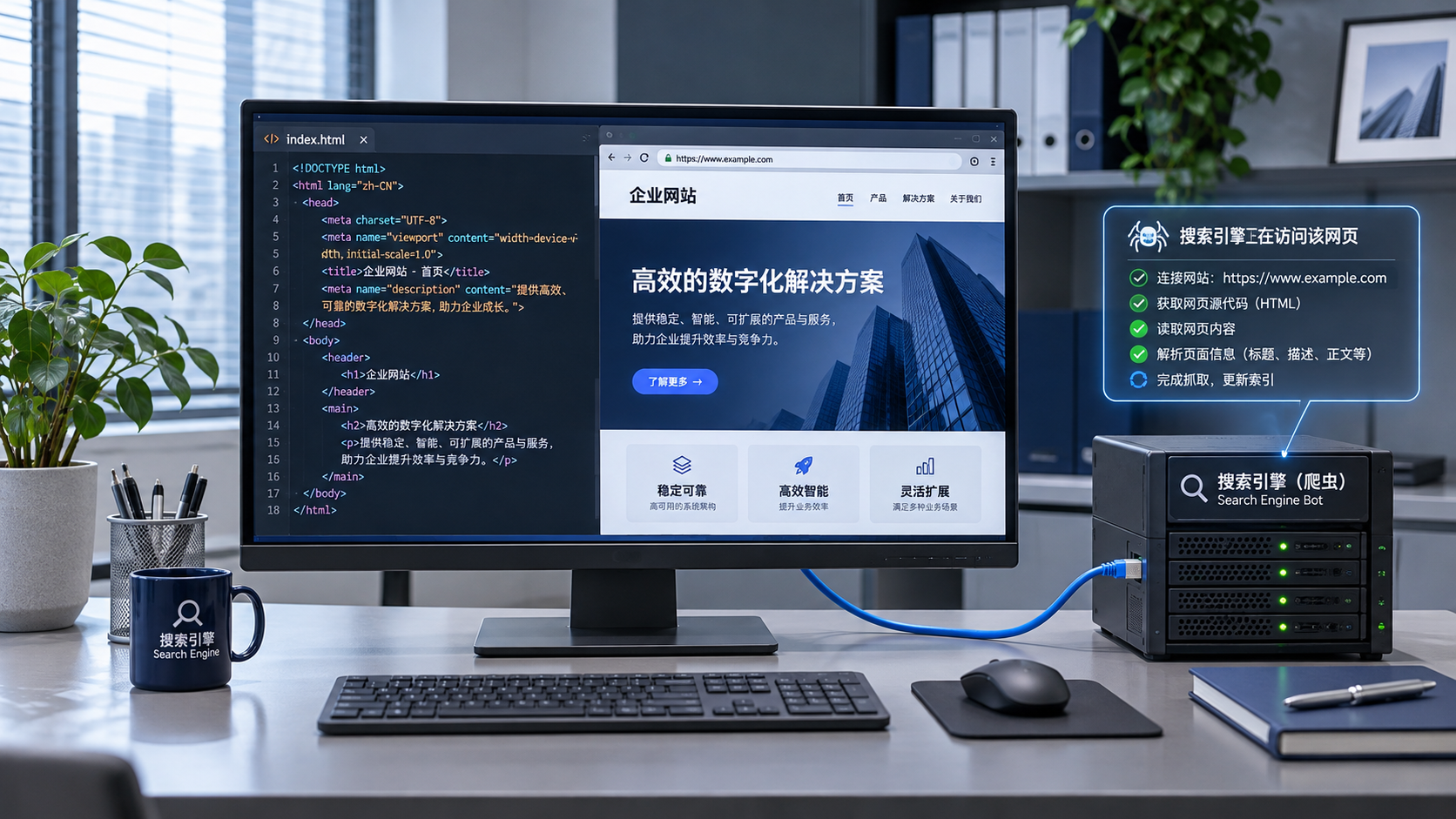
 How does search engine crawling affect website SEO rankings?
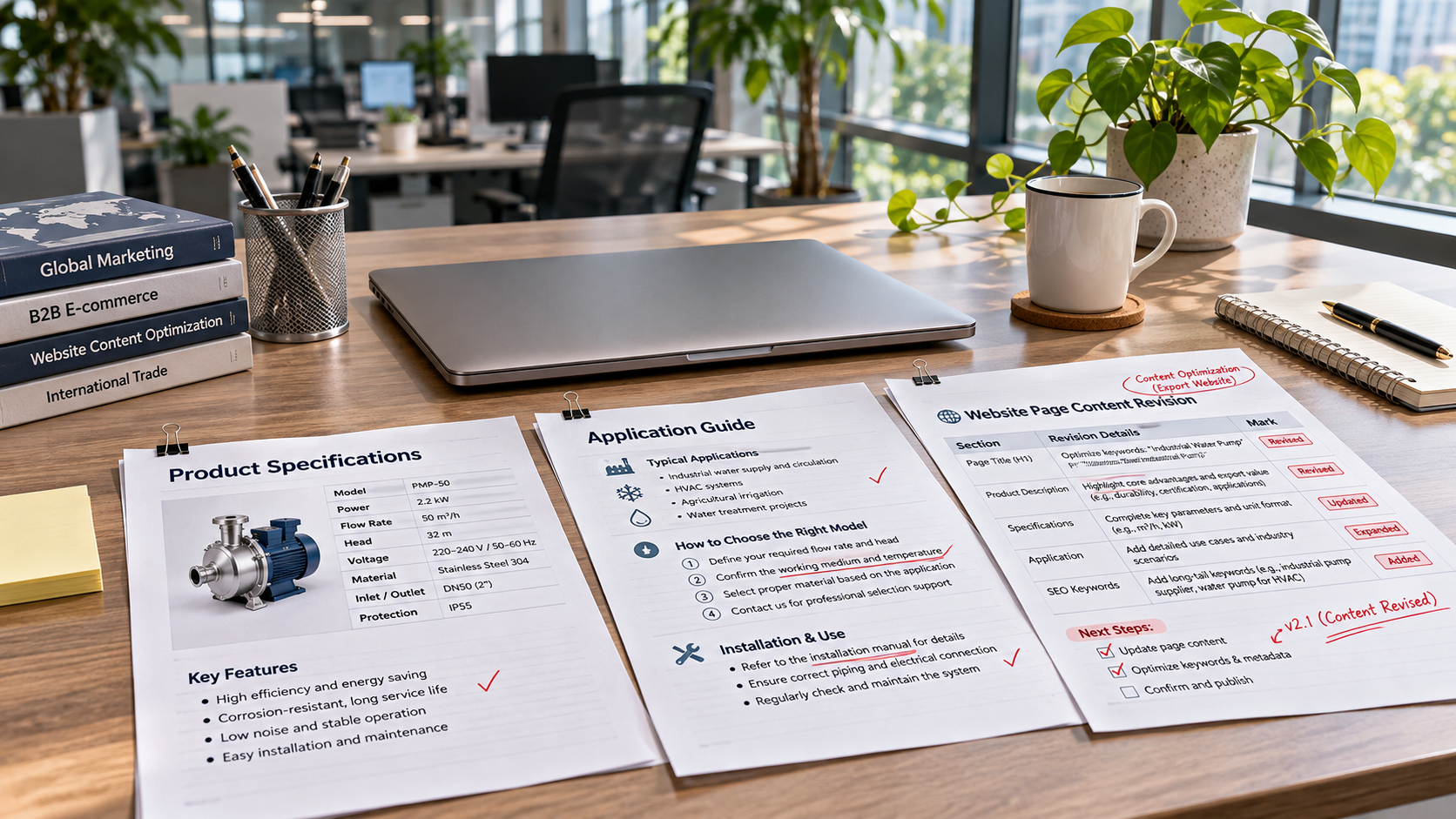
 How can you improve Google rankings by optimizing page content?
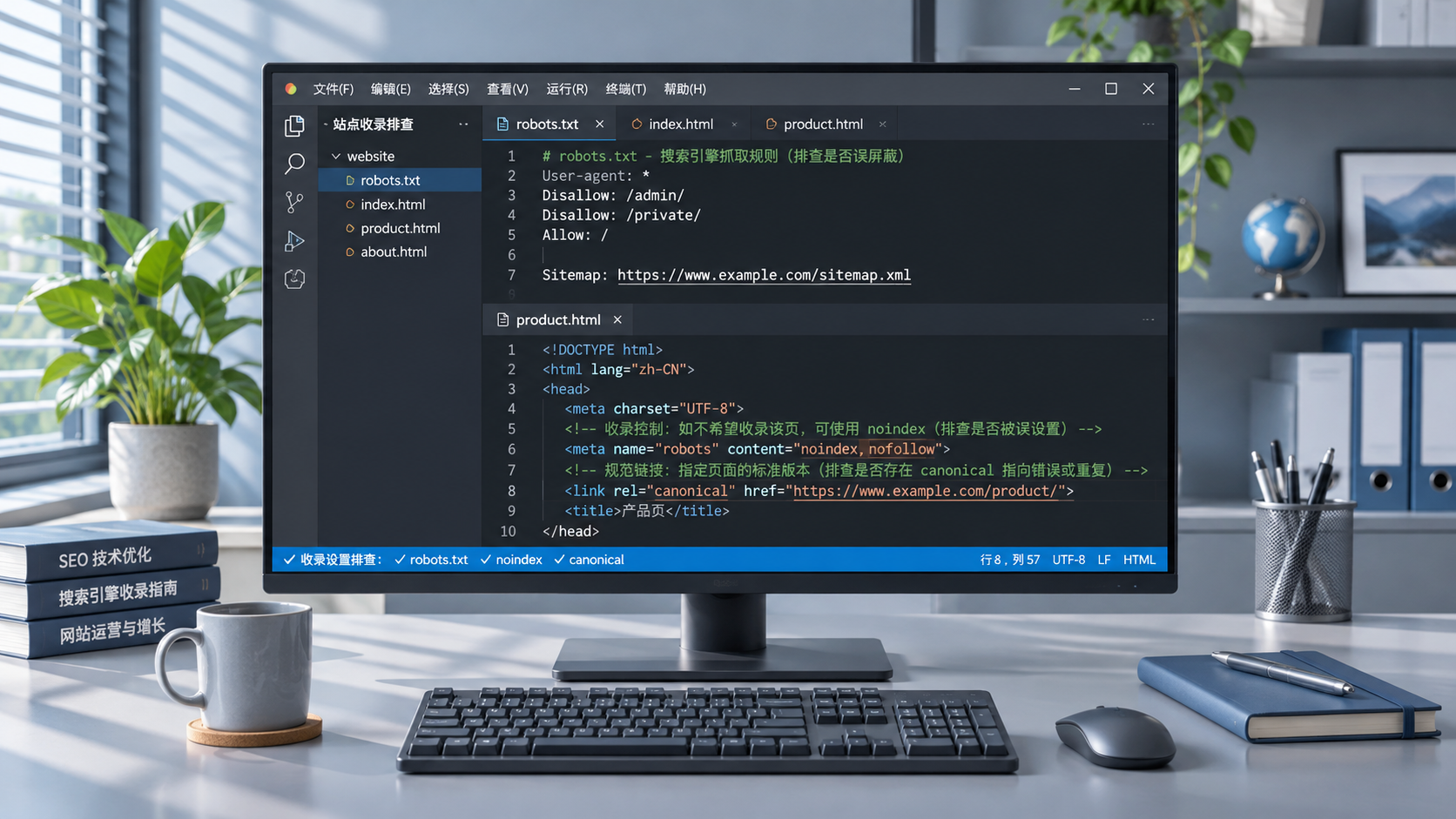
 Which Website SEO Configuration Errors Can Affect Page Indexing?
Related Products
 Yiyingbao SaaS Intelligent Website Building and Marketing SystemYiyingbao SaaS Intelligent Website Building and Marketing System, AI-powered no-code website building, rapid creation of multilingual B2B international websites in 10 minutes, global server acceleration, AI-powered SEO optimization, helping businesses connect efficiently with global markets. The perfect integration of technology and operation makes building an international trade website remarkably simple
 AI+SEM Intelligent Advertising Marketing SystemAI+SEM drives intelligent ad creation, empowering full-funnel precision advertising marketing. The system automatically generates weekly/monthly reports, AI recommends keywords and target countries, monitors core metrics in real-time with intelligent alerts, and enables one-click high-conversion ad solutions to help quickly acquire customers and improve ROI.
 AI+SEO Dual-Engine System Optimization ServicesYiyingbao’s AI+SEO dual-engine optimization system helps foreign trade enterprises acquire high-quality organic traffic through AI-powered keyword research, content generation, and comprehensive technical optimization, significantly improving search rankings and conversion rates.
 AI+SNS Social Media Marketing SystemYingbao AI+SNS Social Media Marketing System - Precision social capture for the social media era. Supports one-click content synchronization across major platforms like Facebook and LinkedIn. AI intelligently rewrites posts for enhanced relevance. 24/7 AI customer service and user profiling analysis empower businesses to efficiently expand into global markets.
 AI+SEO营销解决方案易营宝AI+SEO营销解决方案,通过AI批量写作、智能生成TDK、精准关键词扩词等功能,全面优化网站SEO效果,提升流量与转化率。助力企业构建高效智能网站新生态。
 AI+SEM Advertising Marketing SolutionsAI+SEM Advertising Marketing Solution leverages AI technology to deeply empower SEM ad campaigns. It automatically generates weekly/monthly reports using AI, presenting account data across multiple dimensions for comprehensive insights into campaign performance and trends. The system precisely recommends keywords and target countries, intelligently generates high-conversion ad copy, and enables one-click activation of efficient campaign plans to help businesses rapidly acquire customers. Simultaneously, it monitors core metrics in real time, intelligently identifies abnormal fluctuations, and issues timely alerts to ensure stable, high-return advertising results.
 Domain Name ServicesEasyWin provides professional domain name services, including intelligent queries, one-stop registration, brand protection, and full lifecycle management, helping businesses build a digital brand image.
 EasyOperate B2C Cross-Border E-Commerce Platform & Independent WebsiteEasyStore B2C Cross-border E-commerce Independent Store is an intelligent website building and cross-border e-commerce integrated solution independently developed by EasyStore Information Technology (Beijing) Co., Ltd. The system is specially designed for small and medium-sized as well as large export enterprises, integrating 'website building, operation, marketing, advertising, and conversion' into one, helping enterprises quickly establish cross-border e-commerce independent stores to achieve brand globalization and global sales growth.
The platform supports multiple languages, multiple currencies, and multi-channel marketing, with built-in AI intelligent translation and SEO optimization systems, suitable for mainstream markets such as Southeast Asia, Europe and America, Latin America, and the Middle East, assisting Chinese manufacturing enterprises in efficiently deploying international e-commerce strategies. SSL证书易营宝提供专业SSL安全证书服务,包括单域名和泛域名证书,确保网站数据传输加密、身份验证和完整性保护,助力企业建立安全可信的在线业务环境。









