









- CBP Finalizes Electronic Rail Export Manifest Rule, Effective October 26, 2026Oct 26, 2026View details
- Amazon’s 2026 peak season surcharge takes effect on October 25Oct 26, 2026View details
- AI Is Eating SaaS: Three Real-World Cases in One AfternoonOct 25, 2026View details
- Exiger CEO: The SaaS Apocalypse Is Real, but It Means Something DifferentOct 25, 2026View details
- Hengqin Cooperation Zone Shares Cross-Border E-Commerce Developments, Focusing on Macao-Hengqin Collaboration and International MarketsOct 24, 2026View details
- A Shenyang study highlights the development of the “cross-border e-commerce + industrial cluster” modelOct 24, 2026View details
Will redesigning a foreign trade website affect its existing SEO rankings?
Will a foreign trade website redesign affect existing SEO rankings? The key is not whether to redesign, but how to migrate
Will a foreign trade website redesign affect existing SEO rankings? Yes, and short-term fluctuations are not uncommon. However, this does not mean that a website cannot be redesigned, nor does it mean that a redesign will wipe out all the organic traffic accumulated over the years. What truly determines the outcome is often not whether the new pages look attractive, but whether the old pages' URLs, content topics, internal and external link authority, multilingual structure, and technical signals are fully and clearly carried over to the new website.
Many foreign trade companies reach the redesign stage not simply to “refresh the visual design.” Some have expanded their product lines and their old site categories have become disorganized; others have poor mobile experiences or malfunctioning inquiry forms; still others want to shift from a showcase website to a marketing-focused independent website capable of supporting Google SEO, advertising landing pages, and social media traffic. These adjustments are necessary, but if the design team simply launches the new site directly, SEO risks often do not become apparent until several weeks later: product pages that once ranked disappear, the number of indexed pages declines, and overseas customers can no longer find the website through search terms other than branded keywords.
Which changes are most likely to cause ranking declines?
Search engines do not reject website updates. What they truly worry about is a sudden break in “page identity.” For example, if an existing product detail page has gained rankings for certain keywords and external links, but is deleted after the new site goes live, changed to a completely different URL, or redirected only to the product category homepage, search engines will have difficulty determining which page should inherit the value of the old page.
Foreign trade websites are especially prone to several pitfalls. The first is rewriting all URLs, where previously stable product paths are automatically changed by the new website-building system; the second is drastically compressing original English product descriptions into a few marketing lines, weakening the page's relevance to the original search terms; the third is handling multilingual versions poorly, with English, German, and Spanish pages mixed together, or even all languages redirected back to the English homepage; the fourth is having the test environment indexed by search engines while the live site is configured with incorrect crawl-blocking rules.
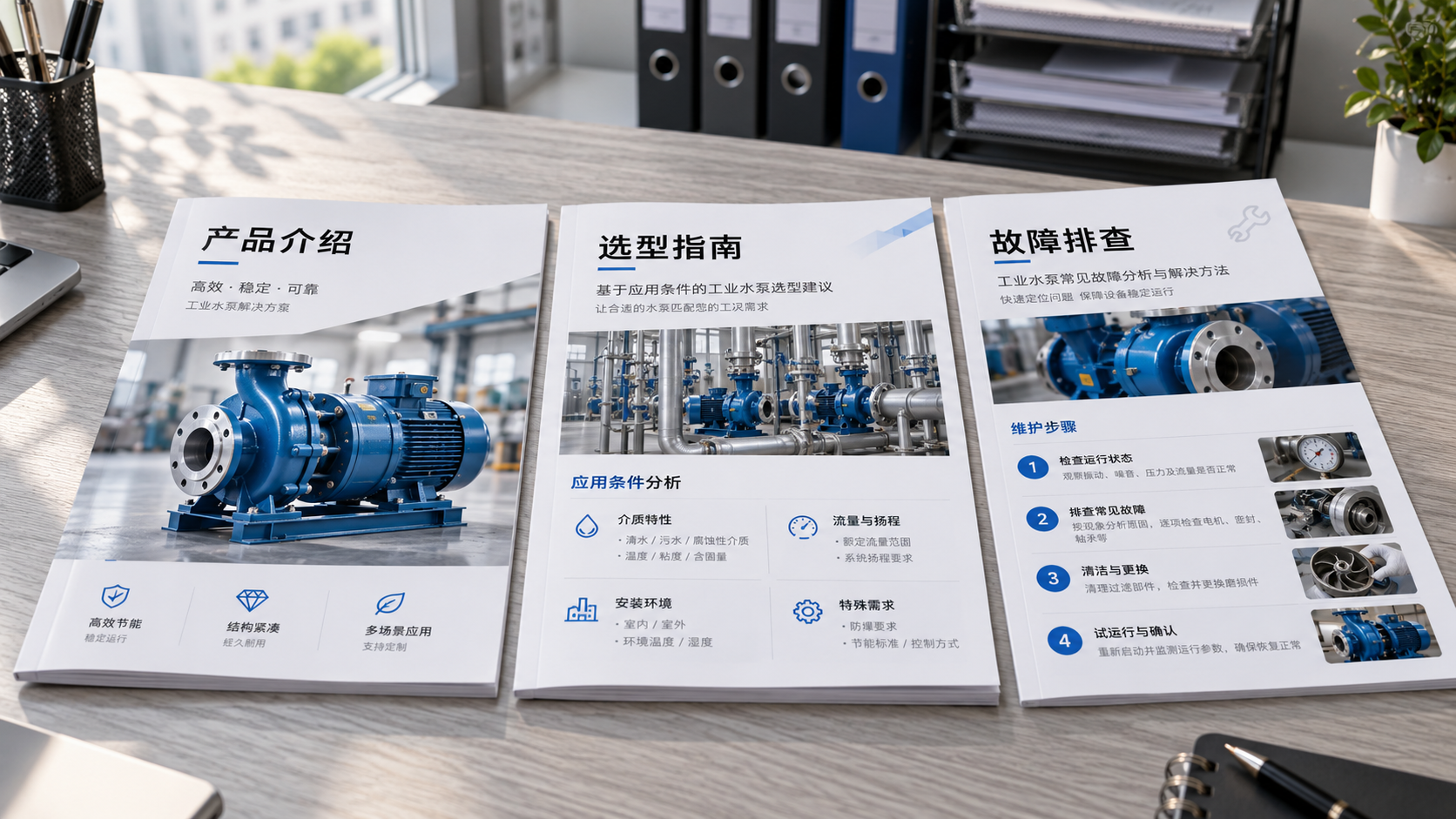
Another frequently overlooked issue is replacing images, scripts, and theme components during a redesign, causing pages to load noticeably more slowly or core mobile content to be obscured by pop-ups and carousels. For B2B manufacturing companies, buyers often need to quickly see specification ranges, application scenarios, materials, processing capabilities, and inquiry entry points on product pages. If such information becomes small text within images, it is neither convenient for visitors nor helpful for search engines to understand the page content.
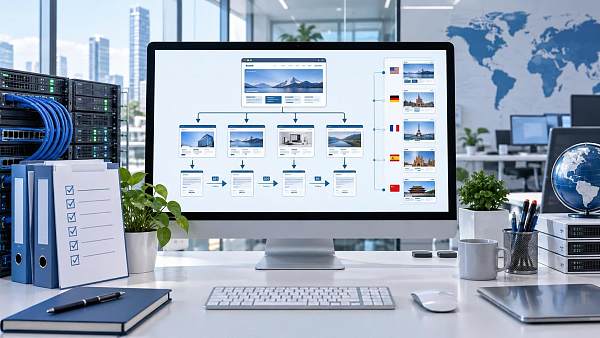
Before redesigning, conduct an “old site asset inventory”
In practice, the one task that should not be omitted from a redesign project is exporting data while the old website remains accessible. Do not look only at the homepage and a few featured products. Instead, identify the pages that actually generate exposure, clicks, and potential inquiries. This typically requires combining website analytics tools, search performance data, sitemaps, and server access logs to map important URLs, organic traffic entry points, indexed pages, pages receiving backlinks, and the corresponding relationships between versions for different countries or languages.
The value of this list lies in distinguishing between “low-value pages that can be consolidated” and “core pages that must be retained or migrated one-to-one.” For example, two old product pages with highly repetitive content can be consolidated into a more comprehensive page on the new site. However, a page that has long attracted traffic related to “industrial valve manufacturer” should not simply be merged into the general “Products” directory after the redesign. Although the page may appear to still exist, its actual topic has changed, and authority transfer will be weak.
A 301 redirect is not simply redirecting everything to the homepage
A 301 permanent redirect from an old URL to a new URL is a fundamental action in website migration, but it is also one of the areas most likely to be handled roughly. The reasonable principle is content correspondence: an old product detail page should redirect to a similar product detail page on the new site with sufficiently close information; an old blog article should preferably be migrated to a new article page or a resource page with a highly relevant topic.
Redirecting dozens or even hundreds of old URLs to the homepage may be simple, but it sends ambiguous signals to search engines. Users clicking external links will also struggle to find the original content, especially for technical procurement traffic, where the risk of bouncing is higher. It is also important not to make redirect chains too long. Redirecting an old URL to an intermediate URL and then to a new URL increases crawling and access costs. Once the redesign is complete, old URLs should reach the final destination page in one step whenever possible.
Content can be upgraded, but do not remove search intent that has already been validated
Many companies consider their old website copy “too outdated,” so during a redesign they remove product parameters, industry FAQs, and application descriptions, leaving only large images, slogans, and brief selling points. From a brand visual perspective, the new site may look cleaner; from an SEO and inquiry conversion perspective, however, it may lose a group of buyers in the research stage.
A safer approach is to retain the core topics of the original pages that have been validated by search, then restructure how they are presented. Product pages do not need to stuff keywords, but they should answer buyers' real questions: Which industries is the product suitable for? What specifications are available? What are the customization limits? Are relevant certification or test materials available upon request? Do details such as lead time, samples, and minimum order quantity need to be further confirmed through a form? Do not state uncertain parameters as fixed facts simply for the sake of “completeness.”
Multilingual websites should also avoid mechanical translation. Terms searched by North American customers may not be the same as those used by buyers in the Middle East or Latin America; the same product may have different industry names in different markets. Language versions should contain independent, readable content and use correct language and regional signals to tell search engines who each page is intended for, rather than having multiple pages merely replace a few country names.
On launch day, check more than whether pages can be opened
After the website goes live, it is advisable to first check several areas that directly affect crawling and conversion: whether the new site allows search engine crawling; whether important pages return normal status codes; whether the sitemap is updated; whether canonical URLs point to the correct pages; whether redirect rules are effective; whether existing analytics and search data remain continuous; and whether inquiry forms, email notifications, WhatsApp, or other contact channels are available.
For companies running Google Ads or social media ads, advertising landing pages should also be verified in advance. During a redesign, the greatest concern is that ads still point to invalid URLs, causing the budget to be spent as usual while visitors see 404 pages. If the website simultaneously supports SEO, advertising, social media, and email marketing, the redesign should not be regarded as a purely website-building project, but managed as a complete digital asset migration.
When rankings fluctuate, first determine where the fluctuation is coming from
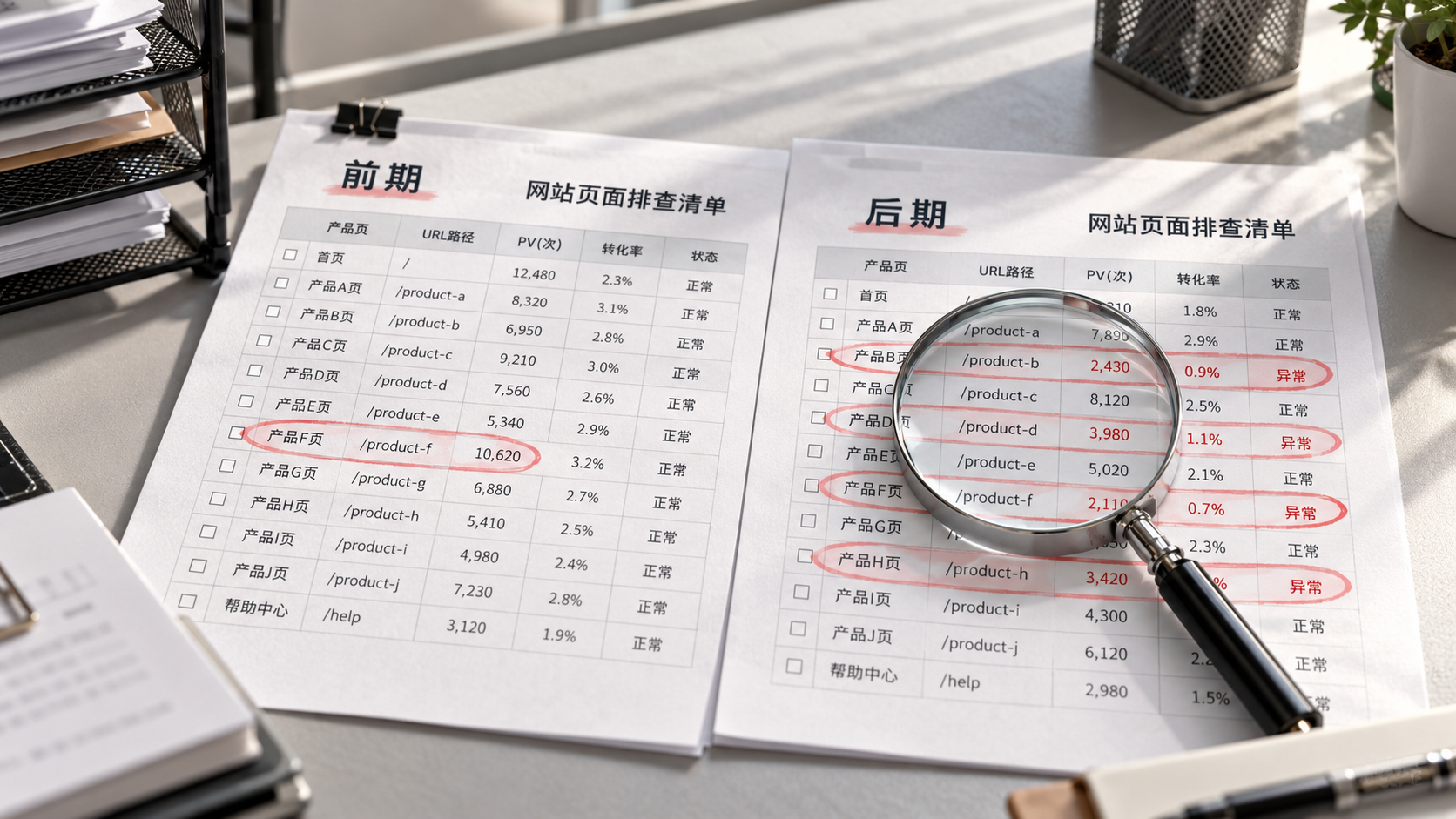
After a new site is launched, changes in the positions of some keywords may occur, especially when page structure, content hierarchy, and URLs have all been adjusted. At this point, it is not advisable to frequently change titles, delete pages, or repeatedly modify redirect rules due to short-term fluctuations. It is more worthwhile to first examine: Which directories are experiencing concentrated declines? Is it a particular language site, a certain type of product page, or the entire website? Are there still many old URLs without redirects? Have the new pages been crawled and indexed?
If branded keywords remain stable while non-branded product keywords continue to decline, content continuity and internal links usually need to be reviewed closely. If many pages are not indexed, crawling, index controls, and site structure should be checked. If traffic remains but inquiries decrease, the issue may not be SEO at all, but rather trust-related information, form paths, or the mobile experience on the new pages. Blaming all “ranking declines” on search engines often means missing the real points requiring correction.
For foreign trade website redesigns, website building and marketing should work together within the same plan
For companies planning to acquire overseas customers over the long term, the goal of a website redesign should not simply be to replace a template, but to give the site a foundation for continuous operation: scalable content, manageable multilingual versions, searchable product pages, trackable advertising pages, and accumulated inquiry data. Easy Marketing Treasure has long served foreign trade companies, manufacturing factories, cross-border sellers, and global brand expansion projects. Its intelligent website building, SEO optimization, advertising, and social media services follow an integrated collaborative approach, with the core purpose of preventing website development and subsequent customer acquisition from operating separately.
Whether to choose a new website-building system is not the only key consideration. What matters is whether the service provider is willing to first understand the existing site's indexed assets, target markets, language structure, and traffic sources before determining a migration plan. A new site that looks more modern but fails to preserve the search entry points accumulated by the old site usually comes at a higher cost than expected. Spending more time organizing before launch is often more cost-effective than remedying issues afterward.
Related Articles
 How Can an SEO Content Strategy Prevent Keyword Cannibalization?
 Website Rankings Stuck on Page Two? How to Find Opportunities for Improvement
 SEO traffic suddenly dropped. How can you identify the affected pages?

Related Products
 Yiyingbao SaaS Intelligent Website Building and Marketing SystemYiyingbao SaaS Intelligent Website Building and Marketing System, AI-powered no-code website building, rapid creation of multilingual B2B international websites in 10 minutes, global server acceleration, AI-powered SEO optimization, helping businesses connect efficiently with global markets. The perfect integration of technology and operation makes building an international trade website remarkably simple
 AI+SEM Intelligent Advertising Marketing SystemAI+SEM drives intelligent ad creation, empowering full-funnel precision advertising marketing. The system automatically generates weekly/monthly reports, AI recommends keywords and target countries, monitors core metrics in real-time with intelligent alerts, and enables one-click high-conversion ad solutions to help quickly acquire customers and improve ROI.
 AI+SEO Dual-Engine System Optimization ServicesYiyingbao’s AI+SEO dual-engine optimization system helps foreign trade enterprises acquire high-quality organic traffic through AI-powered keyword research, content generation, and comprehensive technical optimization, significantly improving search rankings and conversion rates.
 AI+SNS Social Media Marketing SystemYingbao AI+SNS Social Media Marketing System - Precision social capture for the social media era. Supports one-click content synchronization across major platforms like Facebook and LinkedIn. AI intelligently rewrites posts for enhanced relevance. 24/7 AI customer service and user profiling analysis empower businesses to efficiently expand into global markets.
 AI+SEO营销解决方案易营宝AI+SEO营销解决方案,通过AI批量写作、智能生成TDK、精准关键词扩词等功能,全面优化网站SEO效果,提升流量与转化率。助力企业构建高效智能网站新生态。
 AI+SEM Advertising Marketing SolutionsAI+SEM Advertising Marketing Solution leverages AI technology to deeply empower SEM ad campaigns. It automatically generates weekly/monthly reports using AI, presenting account data across multiple dimensions for comprehensive insights into campaign performance and trends. The system precisely recommends keywords and target countries, intelligently generates high-conversion ad copy, and enables one-click activation of efficient campaign plans to help businesses rapidly acquire customers. Simultaneously, it monitors core metrics in real time, intelligently identifies abnormal fluctuations, and issues timely alerts to ensure stable, high-return advertising results.
 Domain Name ServicesEasyWin provides professional domain name services, including intelligent queries, one-stop registration, brand protection, and full lifecycle management, helping businesses build a digital brand image.
 EasyOperate B2C Cross-Border E-Commerce Platform & Independent WebsiteEasyStore B2C Cross-border E-commerce Independent Store is an intelligent website building and cross-border e-commerce integrated solution independently developed by EasyStore Information Technology (Beijing) Co., Ltd. The system is specially designed for small and medium-sized as well as large export enterprises, integrating 'website building, operation, marketing, advertising, and conversion' into one, helping enterprises quickly establish cross-border e-commerce independent stores to achieve brand globalization and global sales growth.
The platform supports multiple languages, multiple currencies, and multi-channel marketing, with built-in AI intelligent translation and SEO optimization systems, suitable for mainstream markets such as Southeast Asia, Europe and America, Latin America, and the Middle East, assisting Chinese manufacturing enterprises in efficiently deploying international e-commerce strategies. SSL证书易营宝提供专业SSL安全证书服务,包括单域名和泛域名证书,确保网站数据传输加密、身份验证和完整性保护,助力企业建立安全可信的在线业务环境。









