









- CBP Finalizes Electronic Rail Export Manifest Rule, Effective October 26, 2026Oct 26, 2026View details
- Amazon’s 2026 peak season surcharge takes effect on October 25Oct 26, 2026View details
- AI Is Eating SaaS: Three Real-World Cases in One AfternoonOct 25, 2026View details
- Exiger CEO: The SaaS Apocalypse Is Real, but It Means Something DifferentOct 25, 2026View details
- Hengqin Cooperation Zone Shares Cross-Border E-Commerce Developments, Focusing on Macao-Hengqin Collaboration and International MarketsOct 24, 2026View details
- A Shenyang study highlights the development of the “cross-border e-commerce + industrial cluster” modelOct 24, 2026View details
How Can You Recover After a Decline in New Customer Inquiries in the Mexican Market?
When “how to recover from a decline in new customer inquiries in the Mexican market” becomes a frequent topic in weekly team meetings, many companies’ first reaction is to increase ad budgets, lower product prices, or urge sales staff to follow up faster. However, fewer inquiries are often not caused by a failure in a single link, but by a break somewhere along a previously smooth chain—from traffic acquisition and website trust-building to form submission.
Especially for companies engaged in B2B exports, industrial manufacturing, and cross-border brands, Mexican customers do not lack purchasing demand. The real questions are often: Can your website still be found by target customers? After entering the website, can they quickly understand your products and delivery capabilities? Do the pages, language, and contact methods make them willing to submit an inquiry? The priority in restoring growth is not blindly “adding traffic,” but first identifying exactly where traffic and conversions have declined.
First determine: Has traffic declined, or has the inquiry conversion rate declined?
These may seem similar, but they require completely different approaches. It is recommended to pull data from the most recent 3 to 6 months and compare it with the previous normal period. At a minimum, review organic search visits, paid advertising clicks, social media traffic, visits to core landing pages, form submission rates, and WhatsApp click volume.
- Significant decline in traffic: Prioritize checking Google organic rankings, ad impression share, website indexing, and competitor changes.
- Stable traffic but fewer inquiries: The issue usually lies in page persuasiveness, form experience, mobile loading speed, or customer trust.
- No significant reduction in inquiry volume but poorer quality: Check keyword intent, ad targeting scope, and whether landing pages are attracting mismatched audiences.
- Decline in specific product lines: In addition to marketing factors, pay attention to local purchasing seasons, category competition, price presentation, and whether product compliance information is sufficiently clear.
Many companies focus only on the total number of inquiries in the backend, while overlooking that customers in the Mexican market may first communicate through WhatsApp, phone calls, or social media direct messages. If these entry points are not tracked in a unified manner, it is easy to misjudge the website’s customer acquisition capability. Understanding the data clearly before recovery is more important than immediately adjusting the budget.
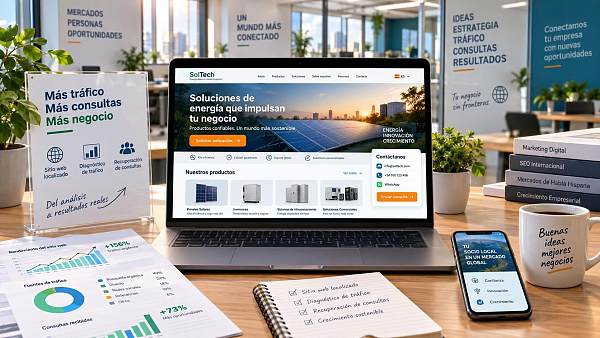
Customer acquisition in the Mexican market often gets stuck at “localization that does not feel authentic enough”
A Spanish-language page is not necessarily a localized page. Many companies directly translate their English websites into Spanish. While the grammar may be correct, they retain expression habits common among Chinese suppliers: plenty of product parameters but few application scenarios; emphasis on “factory direct supply” without explaining minimum order quantities, sample procedures, lead times, and after-sales support. For Mexican buyers making initial contact, such pages make it difficult to quickly establish a basis for evaluation.
Key areas to check include several details: whether Spanish content has been reviewed by someone who understands the trade context; whether product pages explain applicable industries, certifications, packaging, and shipping methods; whether quotation and contact buttons are clear; whether verifiable information about factories, production, quality control, or cooperation processes is displayed; and whether customer service can respond in Spanish or English within a reasonable time.
In addition, the mobile experience cannot be overlooked. A high proportion of Mexican users access corporate websites and social media links through mobile phones. If pages load slowly, forms have too many fields, or the WhatsApp entry point is hidden too deeply, customer interest may disappear within seconds. For industrial products with high order values and long decision cycles, lightweight conversion entry points such as catalog downloads, case study materials, and sample consultations should also be provided, rather than leaving only a single “Request a Quote” button.
When organic traffic declines, do not focus only on a few major keywords
If traffic from Google searches decreases, first check whether core pages are still indexed properly and whether technical issues have occurred, such as title changes, URL adjustments, increased duplicate content, or abnormal page loading. Failure to set up redirects after a website redesign, or confusing language tag settings on multilingual pages, can also gradually cause existing rankings to be lost.
A deeper issue is keyword planning. Mexican B2B buyers may not search only for broad category terms. They may also search for “product + application,” “product + material,” “product + industry,” “supplier + Mexico,” as well as Spanish procurement scenario terms. Optimizing only for highly competitive major keywords can make traffic volatile, and the users gained may not necessarily have clear purchasing intent.
When restoring SEO, select pages with inquiry value from the existing product catalog and supplement them with Spanish product descriptions, application solutions, technical Q&A, purchasing guides, and delivery information. Content does not need to be excessively long, but it must answer what customers truly care about: whether customization is available, which environments the product is suitable for, how to select a model, how long delivery takes, and how to begin cooperation. The long-tail search coverage formed in this way is usually more stable than simply pursuing rankings.
Ads are still spending money, but no new customers? Check the consistency of “search terms—pages—follow-up”
When Google Ads inquiries decline, a common mistake is to directly expand the audience or increase bids. This may generate more clicks, but further reduce the share of qualified leads. A more reasonable approach is to review the actual search terms that triggered the ads: which terms generated inquiries and which only consumed budget; whether performance differs significantly across different states, cities, and devices; and whether branded terms, competitor terms, and general category terms are mixed in the same ad group.
Ad landing pages should also remain consistent with the keywords being targeted. If users search for a specific model, application, or solution but land on a generic homepage after clicking, they are likely to leave. Building dedicated Spanish landing pages for key categories, highlighting relevant selling points, specifications, inquiry paths, and local communication methods, is usually more conducive to conversion than directing all traffic to the homepage.
Sales follow-up should also be included in the review. Mexican customers may not respond immediately due to time differences, language, or internal approval processes. However, slow initial responses, replies containing only a quotation sheet, or a failure to ask further questions about needs can also cause potentially valuable leads to be lost. The marketing side should connect forms, WhatsApp, email, and ad sources, so sales teams know where customers came from and which pages they viewed before conducting more targeted communication.
Use 90 days for a structured recovery rather than repeatedly starting over
The first month is suitable for “stopping the losses”: check website accessibility, mobile speed, forms, and messaging entry points; fix indexing and redirect issues; and organize existing channel data at the same time to identify whether the decline is in traffic or conversion. Large-scale redesigns are not recommended at this stage, as they may cause new search fluctuations.
The second month should focus on key products and key pages. Based on search language in the Mexican market and sales feedback, improve Spanish content and optimize high-traffic, low-conversion pages. On the advertising side, remove ineffective search terms and shift budget toward terms, regions, and audiences that actually generate meaningful conversations.
In the third month, expand growth touchpoints. In addition to Google SEO and search ads, Facebook, LinkedIn, YouTube, or short-form video content can be used for remarketing to bring users who visited product pages but have not yet submitted inquiries back to the website. For complex products, continuously publishing content on product selection, installation, and application scenarios can also lower the barrier for customers to gain an initial understanding.
Make the website a hub for sustainable customer acquisition
When facing the question of how to recover from a decline in new customer inquiries in the Mexican market, what companies ultimately need is not a short-term surge in volume, but an overseas customer acquisition mechanism that can continuously diagnose, adjust, and accumulate results. The website is responsible for carrying trust and conversions, SEO builds long-term search visibility, advertising is used to test and scale effective demand, and social media complements brand touchpoints and remarketing.
Yiyingbao provides foreign trade companies and global expansion brands with services including intelligent website building, multilingual website development, Google SEO, advertising, and overseas social media operations. It can help companies identify issues from multiple perspectives, including website data, search performance, advertising funnels, and localized content. The key is not how many tools are used, but ensuring that every visit has a clearer path and that every inquiry can be tracked, understood, and continuously optimized.
Related Articles
 How Can an IDC SaaS Platform Improve User Satisfaction by Reducing Ticket Response Times?
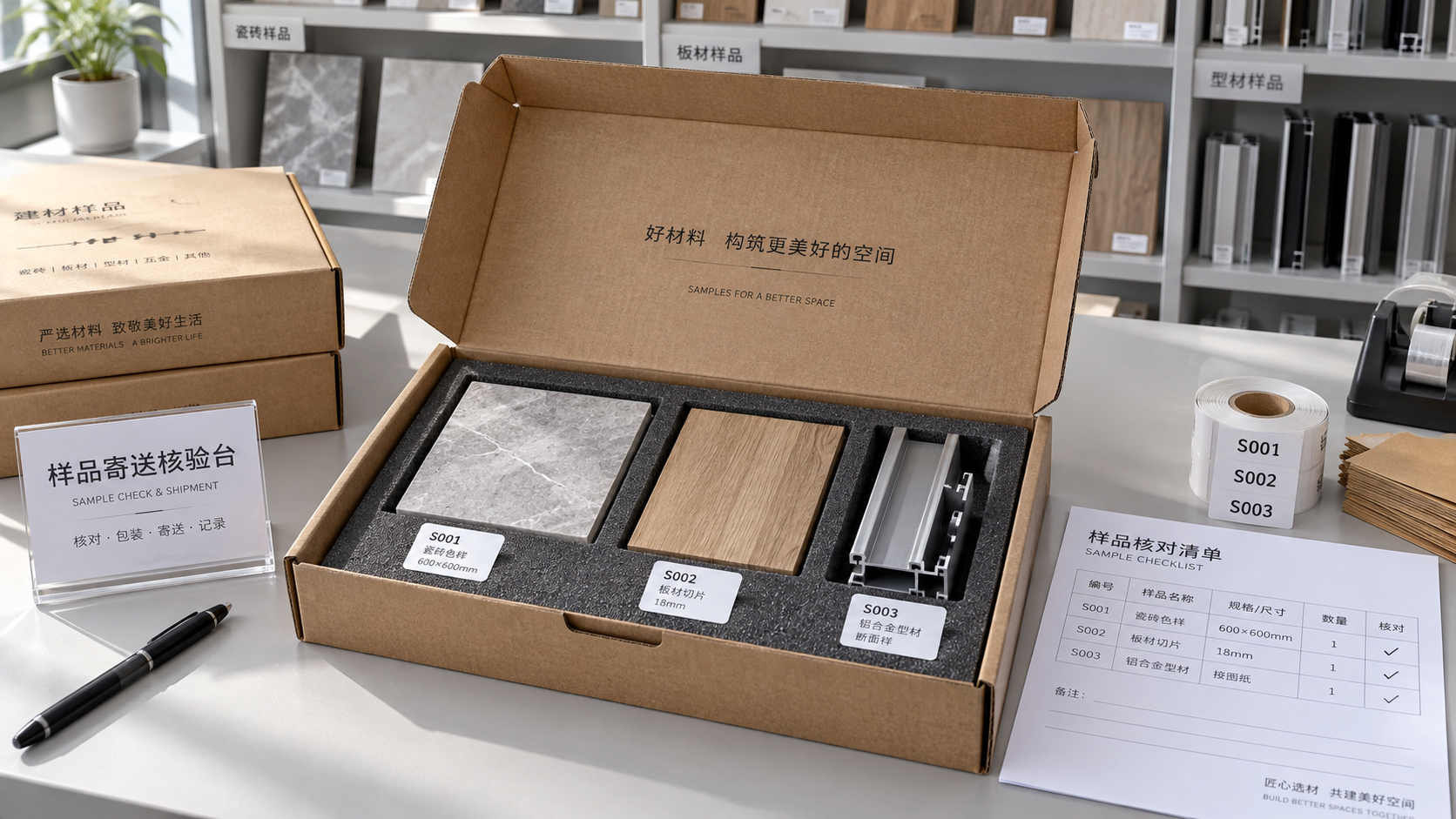
 How should a sample request process be designed for a building materials foreign trade website?
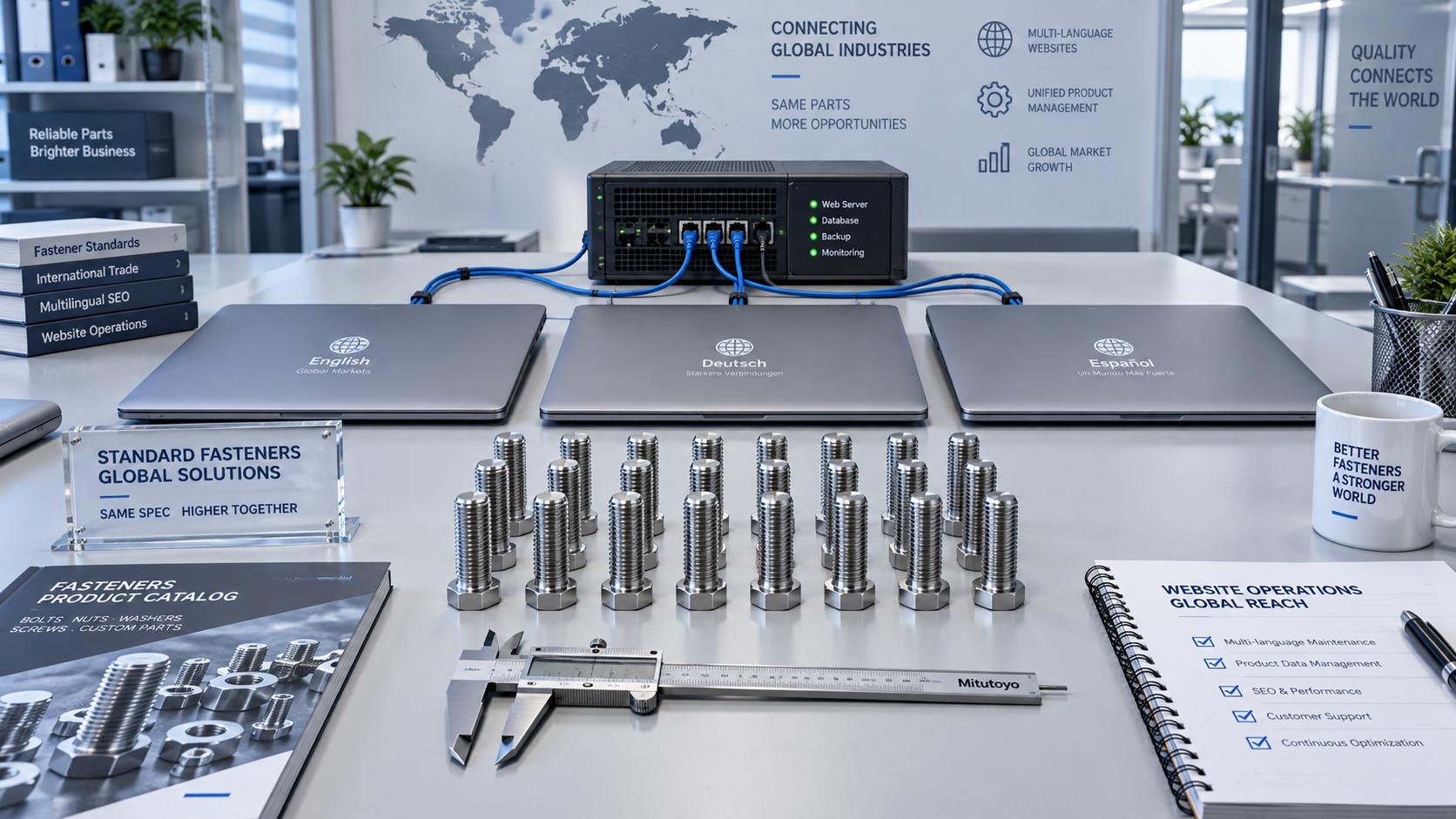
 How Can a Fastener Export Website Synchronize Specification Fields Across Languages?

Related Products
 Yiyingbao SaaS Intelligent Website Building and Marketing SystemYiyingbao SaaS Intelligent Website Building and Marketing System, AI-powered no-code website building, rapid creation of multilingual B2B international websites in 10 minutes, global server acceleration, AI-powered SEO optimization, helping businesses connect efficiently with global markets. The perfect integration of technology and operation makes building an international trade website remarkably simple
 AI+SEM Intelligent Advertising Marketing SystemAI+SEM drives intelligent ad creation, empowering full-funnel precision advertising marketing. The system automatically generates weekly/monthly reports, AI recommends keywords and target countries, monitors core metrics in real-time with intelligent alerts, and enables one-click high-conversion ad solutions to help quickly acquire customers and improve ROI.
 AI+SEO Dual-Engine System Optimization ServicesYiyingbao’s AI+SEO dual-engine optimization system helps foreign trade enterprises acquire high-quality organic traffic through AI-powered keyword research, content generation, and comprehensive technical optimization, significantly improving search rankings and conversion rates.
 AI+SNS Social Media Marketing SystemYingbao AI+SNS Social Media Marketing System - Precision social capture for the social media era. Supports one-click content synchronization across major platforms like Facebook and LinkedIn. AI intelligently rewrites posts for enhanced relevance. 24/7 AI customer service and user profiling analysis empower businesses to efficiently expand into global markets.
 AI+SEO营销解决方案易营宝AI+SEO营销解决方案,通过AI批量写作、智能生成TDK、精准关键词扩词等功能,全面优化网站SEO效果,提升流量与转化率。助力企业构建高效智能网站新生态。
 AI+SEM Advertising Marketing SolutionsAI+SEM Advertising Marketing Solution leverages AI technology to deeply empower SEM ad campaigns. It automatically generates weekly/monthly reports using AI, presenting account data across multiple dimensions for comprehensive insights into campaign performance and trends. The system precisely recommends keywords and target countries, intelligently generates high-conversion ad copy, and enables one-click activation of efficient campaign plans to help businesses rapidly acquire customers. Simultaneously, it monitors core metrics in real time, intelligently identifies abnormal fluctuations, and issues timely alerts to ensure stable, high-return advertising results.
 Domain Name ServicesEasyWin provides professional domain name services, including intelligent queries, one-stop registration, brand protection, and full lifecycle management, helping businesses build a digital brand image.
 EasyOperate B2C Cross-Border E-Commerce Platform & Independent WebsiteEasyStore B2C Cross-border E-commerce Independent Store is an intelligent website building and cross-border e-commerce integrated solution independently developed by EasyStore Information Technology (Beijing) Co., Ltd. The system is specially designed for small and medium-sized as well as large export enterprises, integrating 'website building, operation, marketing, advertising, and conversion' into one, helping enterprises quickly establish cross-border e-commerce independent stores to achieve brand globalization and global sales growth.
The platform supports multiple languages, multiple currencies, and multi-channel marketing, with built-in AI intelligent translation and SEO optimization systems, suitable for mainstream markets such as Southeast Asia, Europe and America, Latin America, and the Middle East, assisting Chinese manufacturing enterprises in efficiently deploying international e-commerce strategies. SSL证书易营宝提供专业SSL安全证书服务,包括单域名和泛域名证书,确保网站数据传输加密、身份验证和完整性保护,助力企业建立安全可信的在线业务环境。









