









- 21st Century Business Herald: AI and CTV Become Core Growth Engines for Digital Marketing in Overseas MarketsNov 18, 2026View details
- China Presents 25 Cooperation Outcomes in Areas Including Cross-Border E-Commerce During APECNov 18, 2026View details
- AI Products Drive Hong Kong Exports Up 64.9% in September, Fastest Growth in Over 40 YearsNov 17, 2026View details
- National Bureau of Statistics: Foreign trade grew rapidly in October, providing stable support for global tradeNov 17, 2026View details
- The U.S. has ended the $800 de minimis exemption for non-postal shipments; express courier packages must be formally declared.Nov 16, 2026View details
- ASEAN Signs Digital Economy Framework Agreement, Moving Toward Harmonized Cross-Border E-Commerce RulesNov 15, 2026View details
How do you define the scope of pages to optimize before requesting an SEO quote?
How should you define the scope of pages to optimize before requesting an SEO quote?
Before searching for “cotizar seo” to request a quote, don’t rush to ask how much it costs per month. Even when the request is to “optimize the entire website,” one quote may cover only title and description adjustments, while another may include category structure, product content, multilingual proofreading, and technical fixes. Without a clearly defined scope, price differences are hard to explain, and you may later find that “this item costs extra.”
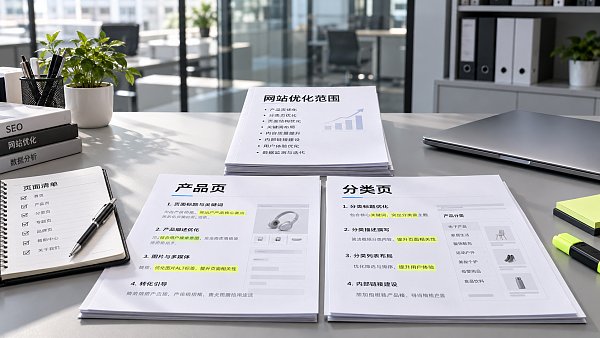
The first step toward comparable quotes is to distinguish product pages, category pages, and multilingual pages, then specify which will be handled in batches, optimized page by page, or left out of the initial investment. The total number of website pages is an inventory figure; it should not automatically equal the number of pages for which you pay for optimization.
Inventory the URLs first, then decide which pages merit investment
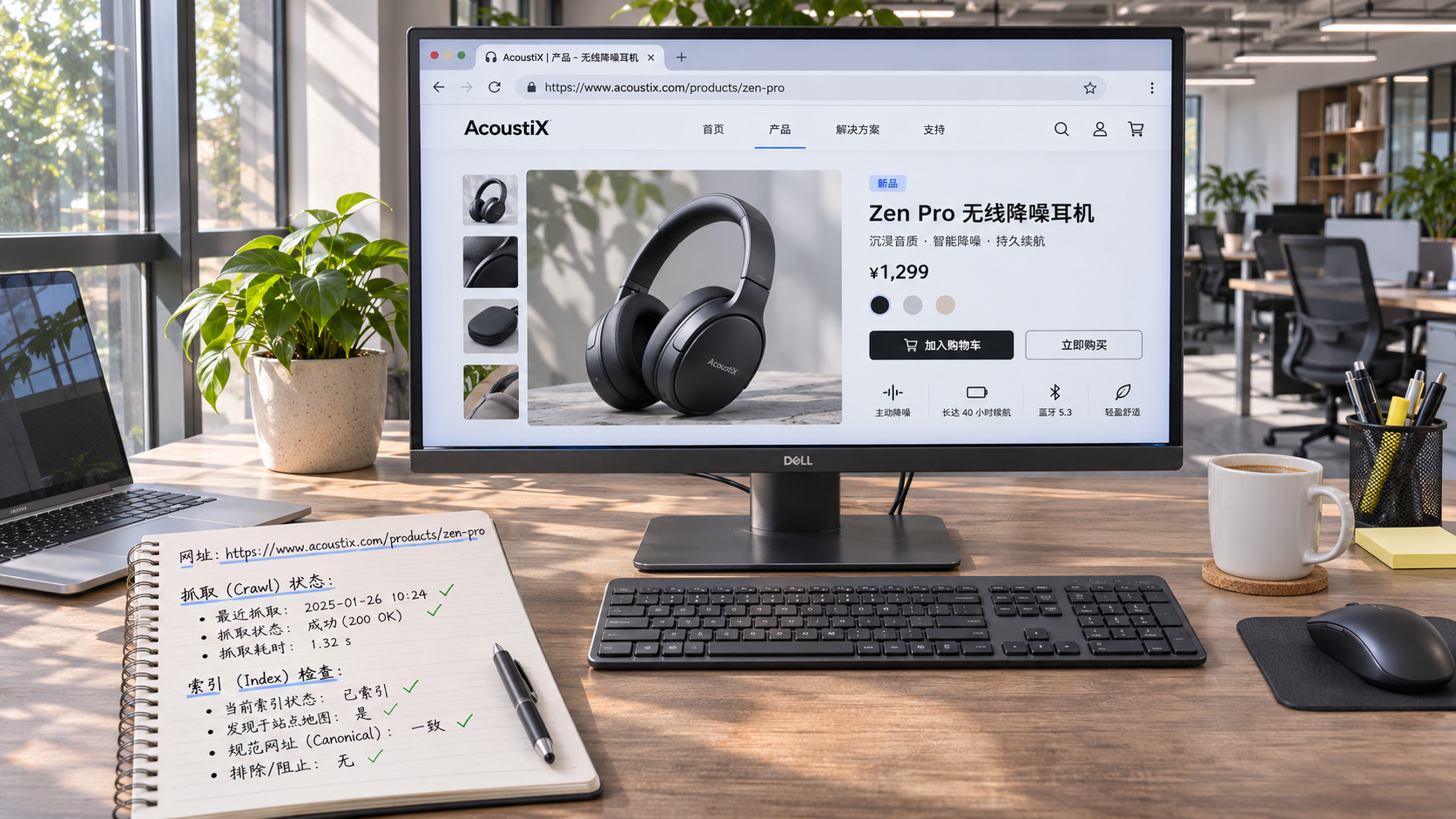
You can create a list using the sitemap, exported records from the website backend, and website crawl results, then review indexing, impressions, and clicks in Google Search Console. If the site is new and has no historical data, assess pages based on product lines, target markets, and customer search needs. Do not exclude pages simply because they have “no traffic.”
At a minimum, the list should include the URL, page type, language, business priority, current issues, planned actions, and person responsible. Similar models, filter parameters, and internal search results may generate a large number of URLs, but they do not necessarily all have independent search value. First decide whether to retain, consolidate, or restrict indexing of these pages, to avoid counting duplicate pages as a large volume of content optimization work.
It is also important to distinguish the “audit scope” from the “modification scope”: the entire site can be included in a technical audit, but that does not mean every page needs to be rewritten. The quote should list the audit coverage and the actual number of deliverables separately.
Category pages and product pages should not be priced on the same basis
Category pages typically serve broader product-selection needs. Key considerations include category logic, product coverage, filtering options, and paths to specific models. Product pages, by contrast, need to answer questions about specifications, materials, operating conditions, customization limits, and inquiry requirements. Changing only the page title will not solve the problem of customers being unable to determine whether a product is suitable for them.
We therefore recommend breaking the work into three tiers: common template changes, in-depth optimization of priority pages, and rule-based processing of standard pages. For example, standardizing how specifications are displayed in a product template is template work; adding application details, model comparisons, and FAQs for priority models is individual page content work. Both can be carried out at the same time, but their costs should be listed separately.
When the budget is limited, prioritize core categories, key products that you can supply, and pages that already receive relevant impressions but lack sufficient content. News updates and archived event pages may not require the same level of investment, but check external links and redirect relationships before making changes to important older pages.
Define multilingual scope by market and language version
“Multilingual SEO included” is not a sufficiently clear commitment. Confirm the specific languages, target regions, number of pages, and whether existing translations need to be redone. For each language version of a product, review local search terms, units of measurement, application wording, and inquiry paths separately. Keywords should not simply be copied across languages.
Also clarify who is responsible for maintaining the multilingual URL structure, language-version annotations, canonical URLs, and sitemap. Machine translation, human proofreading, and localized rewriting are different tasks and should not be bundled as one line item in a quote. If you plan to target only some markets, start with the core categories and products in the relevant languages; there is no need to expand all historical content at the same time.
Ask suppliers to quote against the same scope sheet
Rather than asking “how many keywords can you handle,” it is more useful to ask each supplier to break down costs against the same page list. The scope sheet should also specify the following boundaries; otherwise, a quote may look complete but still leave gaps during implementation:
- Count optimization of existing pages and creation of new pages separately, and specify the actions included for each page.
- Distinguish between recommending technical fixes and carrying out the development work, and specify responsibility for testing, launch, and follow-up checks.
- Specify who provides source materials, who reviews technical accuracy, and whether images and translation are charged separately.
- For ongoing services, specify the inspection and adjustment frequency, as well as what triggers additional charges when new products are added.
Integrated website and marketing services also involve system permissions. Yiyingbao Information Technology (Beijing) Co., Ltd., founded in 2013 and headquartered in Beijing, provides AI-powered website building, multilingual websites, and overseas search marketing. When evaluating this type of solution, verify whether the website-building system supports the required changes, whether the SEO team can implement them directly, and whether subscription fees and optimization service fees are itemized separately, rather than judging only by whether the service names seem comprehensive.
If you also need to organize budget allocation from the perspective of internal digitalization, you can read Exploring Development Pathways for Integrating Enterprise Artificial Intelligence and Accounting Informatization for further information. SEO procurement should still be based on the page list, implementation responsibilities, and acceptance records.
Acceptance should also be divided into two levels: whether titles, content, internal links, and technical issues have been addressed as agreed is part of deliverable acceptance; changes in indexing, qualified clicks, and inquiries are part of ongoing performance monitoring. Rankings are affected by competition, the site’s existing condition, and changes to search engines, so a fixed position should not be the sole payment criterion.
Before sending a request for quotation, prepare a page list, target markets, and priorities for each phase, and ask suppliers to mark each item as “included,” “excluded,” or “charged separately.” This gives you more than a total price: it provides a purchasing basis for verifying workload, controlling additional costs, and planning the launch schedule.
Related Articles
 How to troubleshoot when your website isn’t indexed by Google?
 How to Add Structured Data to Product Pages with JSON-LD
 How Long Does It Take to See an Increase in Inquiries from SEO for Your Website?
Related Products
 Yiyingbao SaaS Intelligent Website Building and Marketing SystemYiyingbao SaaS Intelligent Website Building and Marketing System, AI-powered no-code website building, rapid creation of multilingual B2B international websites in 10 minutes, global server acceleration, AI-powered SEO optimization, helping businesses connect efficiently with global markets. The perfect integration of technology and operation makes building an international trade website remarkably simple
 AI+SEM Intelligent Advertising Marketing SystemAI+SEM drives intelligent ad creation, empowering full-funnel precision advertising marketing. The system automatically generates weekly/monthly reports, AI recommends keywords and target countries, monitors core metrics in real-time with intelligent alerts, and enables one-click high-conversion ad solutions to help quickly acquire customers and improve ROI.
 AI+SEO Dual-Engine System Optimization ServicesYiyingbao’s AI+SEO dual-engine optimization system helps foreign trade enterprises acquire high-quality organic traffic through AI-powered keyword research, content generation, and comprehensive technical optimization, significantly improving search rankings and conversion rates.
 AI+SNS Social Media Marketing SystemYingbao AI+SNS Social Media Marketing System - Precision social capture for the social media era. Supports one-click content synchronization across major platforms like Facebook and LinkedIn. AI intelligently rewrites posts for enhanced relevance. 24/7 AI customer service and user profiling analysis empower businesses to efficiently expand into global markets.
 AI+SEO营销解决方案易营宝AI+SEO营销解决方案,通过AI批量写作、智能生成TDK、精准关键词扩词等功能,全面优化网站SEO效果,提升流量与转化率。助力企业构建高效智能网站新生态。
 AI+SEM Advertising Marketing SolutionsAI+SEM Advertising Marketing Solution leverages AI technology to deeply empower SEM ad campaigns. It automatically generates weekly/monthly reports using AI, presenting account data across multiple dimensions for comprehensive insights into campaign performance and trends. The system precisely recommends keywords and target countries, intelligently generates high-conversion ad copy, and enables one-click activation of efficient campaign plans to help businesses rapidly acquire customers. Simultaneously, it monitors core metrics in real time, intelligently identifies abnormal fluctuations, and issues timely alerts to ensure stable, high-return advertising results.
 Domain Name ServicesEasyWin provides professional domain name services, including intelligent queries, one-stop registration, brand protection, and full lifecycle management, helping businesses build a digital brand image.
 EasyOperate B2C Cross-Border E-Commerce Platform & Independent WebsiteEasyStore B2C Cross-border E-commerce Independent Store is an intelligent website building and cross-border e-commerce integrated solution independently developed by EasyStore Information Technology (Beijing) Co., Ltd. The system is specially designed for small and medium-sized as well as large export enterprises, integrating 'website building, operation, marketing, advertising, and conversion' into one, helping enterprises quickly establish cross-border e-commerce independent stores to achieve brand globalization and global sales growth.
The platform supports multiple languages, multiple currencies, and multi-channel marketing, with built-in AI intelligent translation and SEO optimization systems, suitable for mainstream markets such as Southeast Asia, Europe and America, Latin America, and the Middle East, assisting Chinese manufacturing enterprises in efficiently deploying international e-commerce strategies. SSL证书易营宝提供专业SSL安全证书服务,包括单域名和泛域名证书,确保网站数据传输加密、身份验证和完整性保护,助力企业建立安全可信的在线业务环境。









