









- Ministry of Commerce: Online retail sales grew 4.4% in the first three quarters, while cross-border e-commerce maintained relatively rapid growthOct 29, 2026View details
- CCTV reports: AI-powered smart hardware is expanding overseas at a faster pace, with orders for some best-selling products booked through next yearOct 29, 2026View details
- Alphabet Q3 Earnings: Google Search Advertising Revenue Rises 10.5% to $82 BillionOct 29, 2026View details
- AliExpress Announces New Service Rules for Russia, Linked to Wildberries Product IntegrationOct 28, 2026View details
- Black Friday Preparations Enter the Final Sprint Week as Cross-Border E-Commerce Platforms Roll Out Their PlansOct 28, 2026View details
- CBP Finalizes Electronic Rail Export Manifest Rule, Effective October 26, 2026Oct 26, 2026View details
A company is just getting started with online marketing. What should it do first: build a website or optimize for search?
The website design has already gone through three rounds of revisions, but the marketing team says the product categories are not suitable for attracting leads through search. When the site was about to launch, the team also discovered that multilingual pages and inquiry tracking had not been planned. When a company is just starting out with online marketing, the project manager often worries less about a slow schedule than about spending money only to have to rethink the direction.
The question behind the search “comment commencer le online marketing seo d´une societe” is exactly this: what should come first, website development or search optimization? The answer is not one or the other. First define your lead-generation goals, plan SEO alongside website development, and then launch and promote in phases. It is more important to clarify why each page exists, how customers will find it, and how they can contact the company than to choose the homepage colors first.
Before getting started, define what an “qualified customer” means
If the only goal stated at the kickoff meeting is “build an international website,” the design, development, and marketing teams can easily interpret it differently. The project manager should first confirm three things with the sales team: who the company wants to sell to, what it wants to focus on selling, and what action it wants customers to take.
For example, a manufacturer targeting overseas procurement managers will usually need a website that supports parameter comparisons, verification of manufacturing capabilities, and quote requests. A cross-border store targeting end consumers, by contrast, depends more on information about prices, shipping costs, payment, and returns. Even if the two businesses sell similar products, their page structures cannot simply be copied from one another.
- Target markets: First define the priority countries, languages, and service coverage to avoid launching in too many languages at once.
- Priority offerings: Select products with a supply advantage, delivery capability, and sufficient profit potential rather than distributing website exposure evenly.
- Conversion actions: For B2B, these might include submitting an inquiry, scheduling a discussion, or requesting materials. For B2C, design the customer journey around adding to cart and purchasing.
Summarize these answers in a brief project document to guide website development, SEO, and advertising alike.
Bring SEO in early—but that does not mean writing a lot of articles in advance
Before building a website, search optimization should focus on researching demand and planning the site structure. Customers may search for a product name, or they may search for material compatibility, process-related questions, or selection guidance. Mapping these search intents to pages helps determine which categories, product detail pages, and application content the website needs.
Before design begins, create a mapping table for “search demand—landing page—conversion action.” For example, a selection guide can address searches about “equipment selection” and direct visitors to parameter comparisons and an inquiry option. A product page can address searches for a specific model and provide specifications, sample results, and a quote request link. Do not force every keyword onto the homepage, or create multiple pages with similar content for closely related terms.
Technical requirements should also be included in the development brief: stable page URLs, editable titles and descriptions, crawlable page content, mobile usability, images that do not unduly slow loading, and a sitemap and sensible internal links. For multilingual websites, define how language versions relate to one another and configure hreflang where appropriate. Automatic translation alone cannot replace a review of localized content.
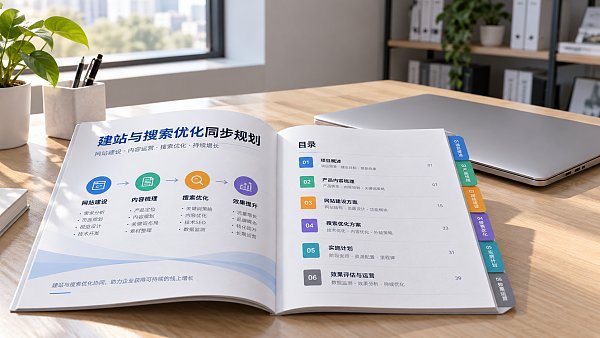
See how website development and marketing work together in an industry example
Suppose a laser equipment company is preparing to expand into overseas markets. If its website contains only a company profile and product images, procurement professionals will struggle to determine whether the equipment can process their materials, and search engines will have little basis for understanding the topic of the pages.
A more effective approach is to organize the navigation by equipment type, processing material, and application. Product detail pages should present information such as working area, compatible materials, processing results, and maintenance requirements, with a clear inquiry option. Procurement professionals can then confirm their requirements step by step, from “material application” to “suitable equipment,” “technical specifications,” and “quote request.”
Ebizdir’s laser engraving machine industry solution combines professional website development with marketing planning. It offers features such as an integrated AI editor and intelligent category navigation, which can be used to organize product content and improve the browsing and search experience. However, technical staff still need to verify specifications and process descriptions generated by AI. Content generation should never outpace fact-checking.
How should you schedule the project to minimize rework?
For project managers, breaking deliverables down into verifiable milestones is more useful than asking, “How long will it take to get rankings?”
- Project initiation: Confirm the market, business priorities, search demand, and page list. Have sales and marketing review them together to avoid overturning the category structure after development.
- Development: Complete the core categories, representative product pages, and inquiry path first, then expand the content. At the same time, check SEO editing permissions, mobile usability, and multilingual site structure.
- Launch: Check that indexing has not been inadvertently blocked, submit the sitemap, configure Google Search Console and suitable web analytics tools, and test form notifications and spam inquiry protection.
- Ongoing operations: Use search impressions, visitor behavior, and sales feedback to add pages and fix points where visitors drop off, then gradually increase promotional investment.
When the budget is limited, you can reduce the number of pages in the initial phase, but do not skip structural planning, key content, or data tracking. A small website with a complete user journey is usually easier to use for initial lead-generation testing than a site with many sections and thin content.
You can run ads first, but SEO cannot wait until the website has spare capacity
If a company needs to test the market quickly, it can run a small-scale Google Ads campaign once its core landing pages and inquiry tracking are ready, while building its SEO content and technical foundations in parallel. The two channels are not substitutes: advertising can help reveal search demand and how visitors respond to pages relatively quickly, while organic search growth usually requires ongoing investment and comes with no guaranteed rankings.
Acceptance criteria should not focus only on the number of pages or keyword rankings. In the early stages after launch, check crawling, indexing, form delivery, and data accuracy. Later, assess relevant search impressions, qualified visits, inquiry quality, and sales follow-up results. If traffic rises but inquiries are poorly matched, review the keyword and page positioning instead of simply adding more articles.
When choosing a service provider, ask how website development, SEO, and advertising will share page planning and conversion data. Ebizdir provides intelligent website development, multilingual websites, search optimization, and overseas marketing services. Companies can combine these services in phases without launching every channel at once. For a project manager, the real priority is not simply “launching the website,” but building a lead-generation journey that customers can find, understand, and use to get in touch—and that the company can continuously review.
Related Articles
 Why Doesn't Google Show Rich Results After Structured Data Is Deployed?
 How Can an SEO Content Strategy Prevent Keyword Cannibalization?
 Website Rankings Stuck on Page Two? How to Find Opportunities for Improvement

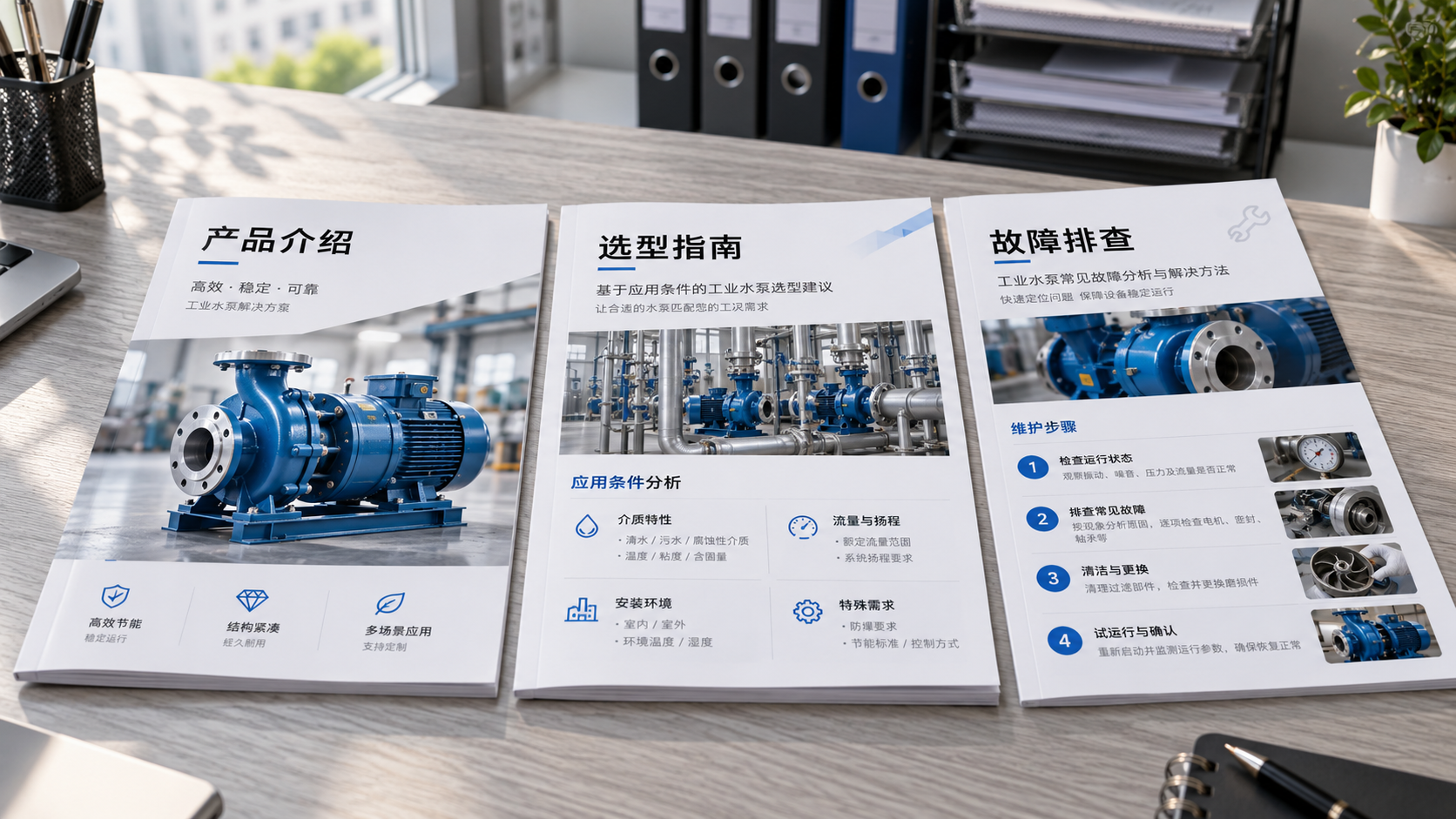

Related Products
 Yiyingbao SaaS Intelligent Website Building and Marketing SystemYiyingbao SaaS Intelligent Website Building and Marketing System, AI-powered no-code website building, rapid creation of multilingual B2B international websites in 10 minutes, global server acceleration, AI-powered SEO optimization, helping businesses connect efficiently with global markets. The perfect integration of technology and operation makes building an international trade website remarkably simple
 AI+SEM Intelligent Advertising Marketing SystemAI+SEM drives intelligent ad creation, empowering full-funnel precision advertising marketing. The system automatically generates weekly/monthly reports, AI recommends keywords and target countries, monitors core metrics in real-time with intelligent alerts, and enables one-click high-conversion ad solutions to help quickly acquire customers and improve ROI.
 AI+SEO Dual-Engine System Optimization ServicesYiyingbao’s AI+SEO dual-engine optimization system helps foreign trade enterprises acquire high-quality organic traffic through AI-powered keyword research, content generation, and comprehensive technical optimization, significantly improving search rankings and conversion rates.
 AI+SNS Social Media Marketing SystemYingbao AI+SNS Social Media Marketing System - Precision social capture for the social media era. Supports one-click content synchronization across major platforms like Facebook and LinkedIn. AI intelligently rewrites posts for enhanced relevance. 24/7 AI customer service and user profiling analysis empower businesses to efficiently expand into global markets.
 AI+SEO营销解决方案易营宝AI+SEO营销解决方案,通过AI批量写作、智能生成TDK、精准关键词扩词等功能,全面优化网站SEO效果,提升流量与转化率。助力企业构建高效智能网站新生态。
 AI+SEM Advertising Marketing SolutionsAI+SEM Advertising Marketing Solution leverages AI technology to deeply empower SEM ad campaigns. It automatically generates weekly/monthly reports using AI, presenting account data across multiple dimensions for comprehensive insights into campaign performance and trends. The system precisely recommends keywords and target countries, intelligently generates high-conversion ad copy, and enables one-click activation of efficient campaign plans to help businesses rapidly acquire customers. Simultaneously, it monitors core metrics in real time, intelligently identifies abnormal fluctuations, and issues timely alerts to ensure stable, high-return advertising results.
 Domain Name ServicesEasyWin provides professional domain name services, including intelligent queries, one-stop registration, brand protection, and full lifecycle management, helping businesses build a digital brand image.
 EasyOperate B2C Cross-Border E-Commerce Platform & Independent WebsiteEasyStore B2C Cross-border E-commerce Independent Store is an intelligent website building and cross-border e-commerce integrated solution independently developed by EasyStore Information Technology (Beijing) Co., Ltd. The system is specially designed for small and medium-sized as well as large export enterprises, integrating 'website building, operation, marketing, advertising, and conversion' into one, helping enterprises quickly establish cross-border e-commerce independent stores to achieve brand globalization and global sales growth.
The platform supports multiple languages, multiple currencies, and multi-channel marketing, with built-in AI intelligent translation and SEO optimization systems, suitable for mainstream markets such as Southeast Asia, Europe and America, Latin America, and the Middle East, assisting Chinese manufacturing enterprises in efficiently deploying international e-commerce strategies. SSL证书易营宝提供专业SSL安全证书服务,包括单域名和泛域名证书,确保网站数据传输加密、身份验证和完整性保护,助力企业建立安全可信的在线业务环境。









