









- CBP Finalizes Electronic Rail Export Manifest Rule, Effective October 26, 2026Oct 26, 2026View details
- Amazon’s 2026 peak season surcharge takes effect on October 25Oct 26, 2026View details
- AI Is Eating SaaS: Three Real-World Cases in One AfternoonOct 25, 2026View details
- Exiger CEO: The SaaS Apocalypse Is Real, but It Means Something DifferentOct 25, 2026View details
- Hengqin Cooperation Zone Shares Cross-Border E-Commerce Developments, Focusing on Macao-Hengqin Collaboration and International MarketsOct 24, 2026View details
- A Shenyang study highlights the development of the “cross-border e-commerce + industrial cluster” modelOct 24, 2026View details
SEO Optimisation for B2B: Which lead-generation pages should be prioritised?
Which Lead Generation Pages Should Be Prioritized for B2B SEO Optimization
When carrying out B2B SEO optimization, many companies first think of expanding blogs, adding keywords, or purchasing backlinks. However, what truly affects lead quality is often whether the lead generation pages themselves address search demand. For manufacturers, foreign trade suppliers, and providers of complex solutions, search users usually arrive with clear tasks: confirming product capabilities, assessing suitability for application scenarios, verifying factory and delivery qualifications, or finding suppliers they can contact directly for an inquiry. Page optimization priorities should be determined by these tasks, not by the number of website sections.
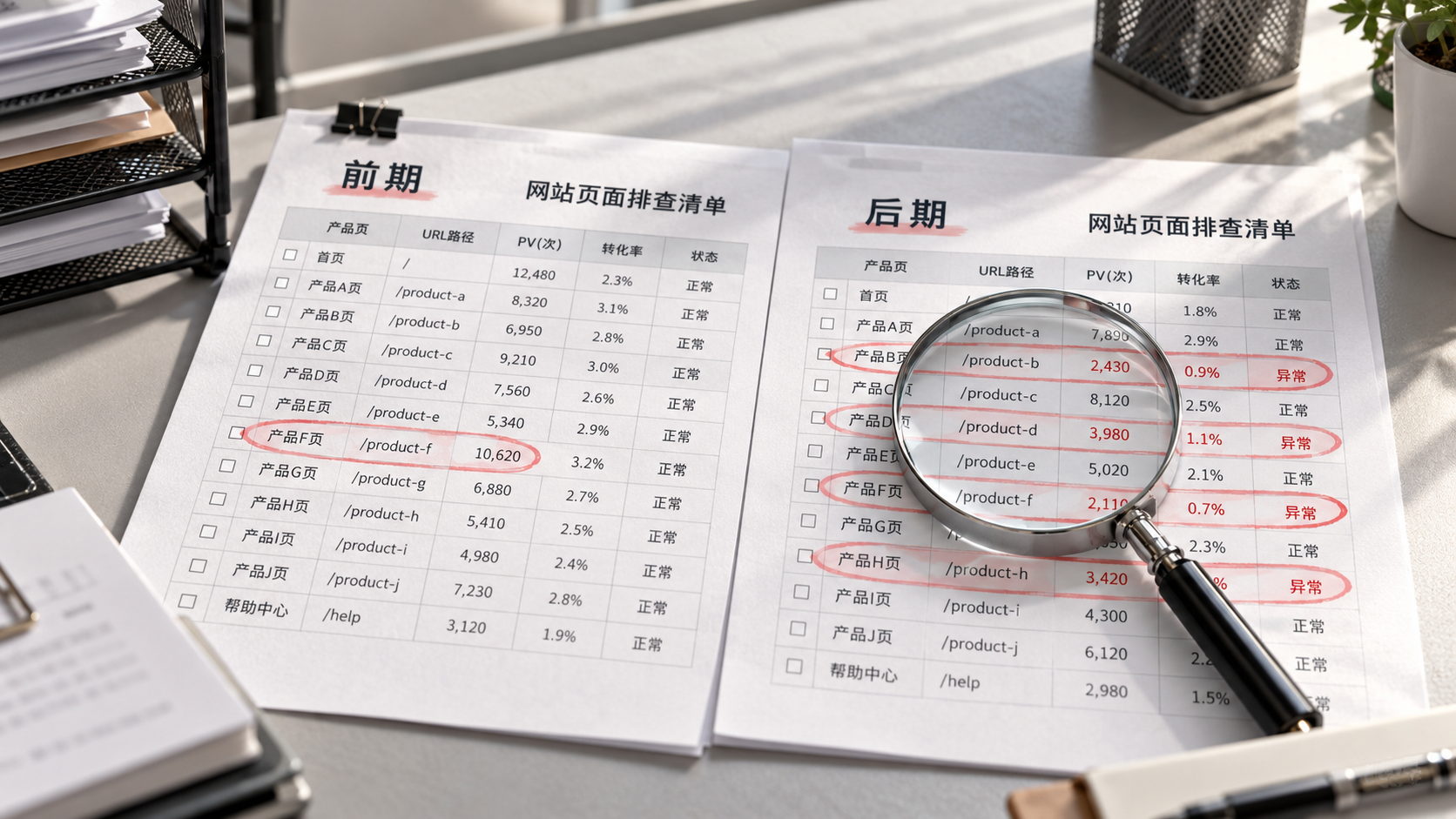
The technical evaluation stage is particularly likely to expose website issues. Buyers may enter a page through a specific model, material, process, or industry application term, yet be unable to find specification ranges, compatibility information, testing capabilities, or contact paths. They may also leave immediately due to disorganized multilingual versions, unstable loading, or unusable forms. In such cases, even if a page gains visibility, it is difficult to convert it into actionable leads. Therefore, SEO for B2B websites should not focus only on rankings, but also examine whether the four stages of crawling, understanding, validation, and conversion are connected.
Product Pages: Closest to the Purchasing Decision and Should First Be Supplemented with “Verifiable Information”
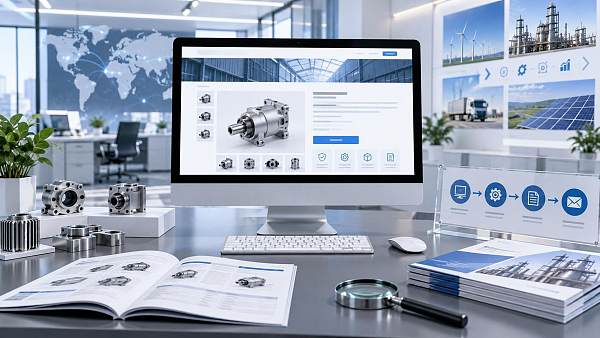
Product pages are usually the page type that should be prioritized, especially for companies with clearly defined categories, series, models, or customization capabilities. They should not consist merely of product images and a few promotional statements, but should answer the actual questions searchers have after entering the page: what the product is, what problems it solves, how key specifications are defined, which environments it is suitable for, what configurations are available, and what supporting services the company can provide.
Page content does not need to mechanically pile up parameters, but it should retain the factual boundaries required for purchasing decisions. For example, materials, size ranges, processing methods, applicable media, operating conditions, certifications, or test data should all be based on information the company can confirm. For customized parameters that cannot be disclosed, the page can state that further evaluation is available based on drawings, samples, or application requirements. Beyond the main product image, structural details, application conditions, packaging methods, or illustrations of key components are often more helpful in reducing misunderstandings.
From a technical implementation perspective, each core product or series needs a stable, indexable standalone URL, avoiding reliance solely on filters that generate a large number of duplicate pages. The title, main page heading, image alt text, and internal links should all point to the same product topic. Discontinued or merged products should also have their redirect relationships properly handled to prevent search users from landing on invalid pages. If multilingual versions of the same product exist on the site, language entry points, page content, and regional targeting must remain consistent, rather than simply copying pages and replacing only some text.
Industry Solution Pages: Addressing “How Can the Product Be Used in My Project?”
Optimizing only product terms often fails to cover earlier-stage demand. Many overseas buyers do not begin by searching for an exact model; instead, they enter through application scenarios, such as supporting equipment for a certain type of machinery, a particular production environment, or component requirements in a specific industry. In such cases, industry solution pages are responsible for translating product capabilities into business scenarios, rather than repeatedly listing the product catalog.
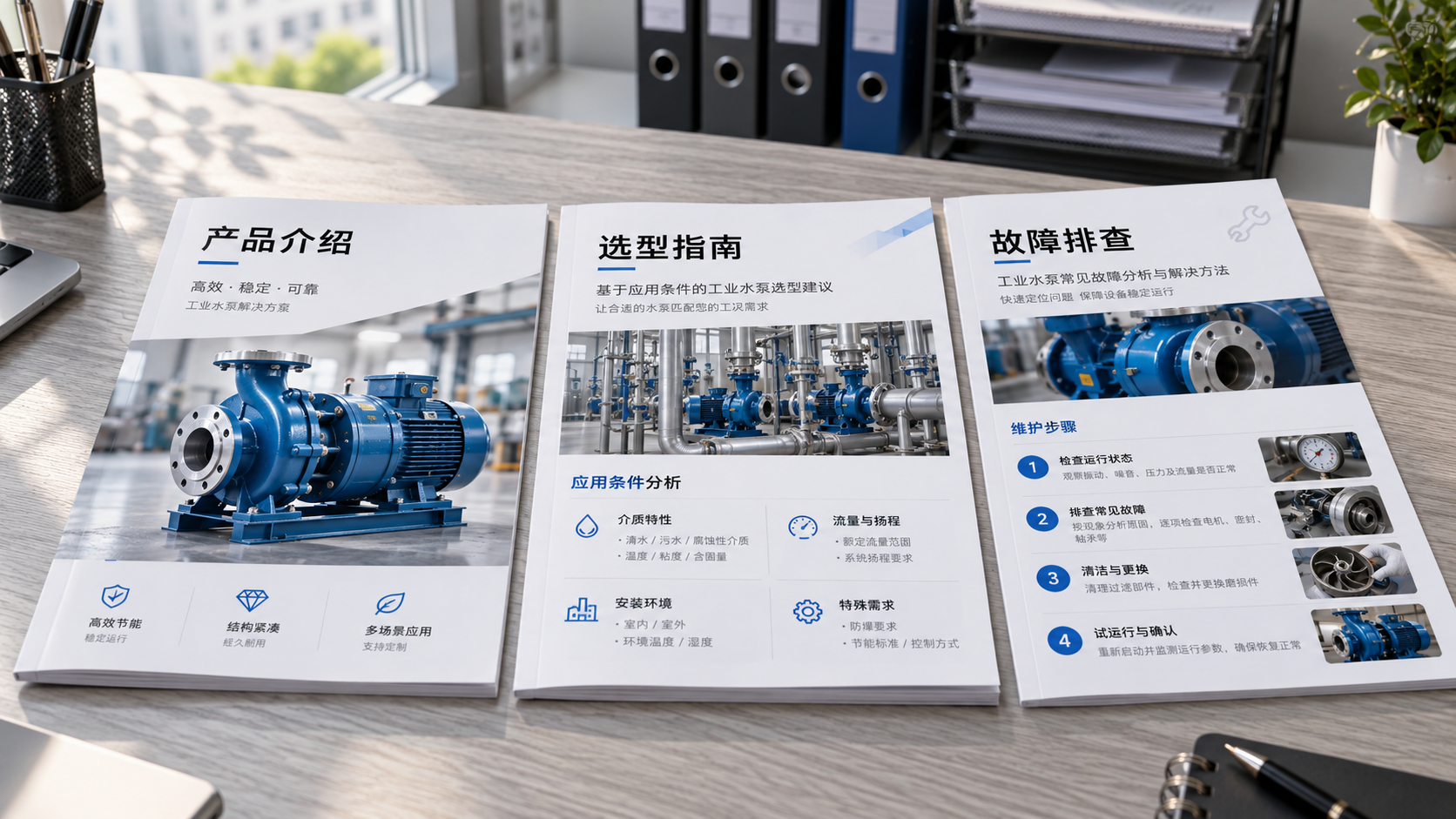
An effective solution page usually needs to explain typical challenges in the scenario, the decision logic for available solutions, the product categories involved, and the conditions that need to be confirmed as the project progresses. For example, when facing requirements such as high temperatures, corrosion, cleanliness, continuous operation, or complex installation spaces, a company can explain which performance dimensions should be considered rather than making unverified promises of being “fully suitable.” The page can then guide users through clear links to relevant products, technical documentation, or inquiry pages, making it easier for both search engines and visitors to understand the website's topical relationships.
A common mistake with this type of page is making it too general. The title may say “Solutions for a Certain Industry,” while the body contains only a few paragraphs of company information. This neither matches specific issues nor supports sales communication. Solution pages should have their own search entry points and content focus; they cannot simply be product pages with a different cover.
Inquiry Landing Pages: Do Not Let Traffic Drop Off at the Final Step
For visits generated through Google Ads, social media content, or email campaigns, inquiry landing pages are no less important than product pages. Their purpose is not to carry all company information, but to enable visitors from specific sources to complete the next step through a shorter path. If an advertisement promotes customized services, sample requests, or industry solutions, the landing page should organize its content around that action and avoid sending users back to a broad homepage.
Form fields need to be balanced. Too few fields prevent sales teams from assessing the requirement; too many may increase submission friction. B2B inquiries usually require at least basic fields such as contact information, a product or project description, and quantity or estimated demand. An upload option can be provided for drawings, specification sheets, and similar files, but it should not be the only submission requirement. Form delivery, email notifications, verification codes, mobile input, and privacy notices should also be tested in practice, especially when campaigns target different regions.
Fix Fundamental Usability Before Discussing Content Scale
Once page priorities are established, technical checks cannot be omitted. Whether core pages are mistakenly blocked by robots rules, whether the sitemap includes canonical URLs, whether duplicate pages have reasonable canonicalization relationships, and whether key information can be fully displayed on mobile devices will all directly affect subsequent optimization. For websites with many images, script components, or overseas visitors, the impact of above-the-fold resources, server response, image formats, and third-party code on loading should also be monitored. Speed is not an isolated metric: when pages are slow, crawl efficiency, ad landing experiences, and willingness to submit forms may all be affected.
Multilingual websites require additional caution. Different markets involve not only translation differences, but may also have different measurement units, product terminology, delivery practices, and compliance considerations. Directly machine-translating Chinese pages and publishing them in bulk can easily lead to distorted terminology, duplicate content, or incomplete meaning. A more prudent approach is to prioritize languages and pages that already have a business foundation, establish terminology rules, and then expand gradually.
Evaluate Investment Through a Page Portfolio Rather Than Individual Rankings
A reasonable path for B2B SEO optimization is usually not to rebuild the entire site at once, but to first select a small number of high-value pages: product pages with clear product demand, solution pages with search potential for specific scenarios, and inquiry pages that support advertising and direct conversion. Then review their indexation status, organic traffic entry points, dwell time, and conversion paths before deciding whether to add content, adjust the information architecture, or fix technical issues.
Since its establishment in 2013, Yiyingbao Information Technology (Beijing) Co., Ltd. has developed coordinated website and marketing service capabilities around intelligent website building, SEO optimization, advertising, and overseas social media operations. For companies that need to balance multilingual website development, Google SEO, advertising landing pages, and AI search visibility, what matters more is not purchasing channels separately, but ensuring that the website-building system, content production, data tracking, and lead handling follow the same business logic. Yiyingbao's cloud intelligent website building, AI advertising marketing, and AI+SEO/GEO optimization capabilities are suitable for organizing this process, but the specific page architecture and optimization sequence should still be determined based on product complexity, target markets, and existing data.
The pages most worth prioritizing are not necessarily those with the highest traffic, but those that can move a “search query” toward an “assessable requirement.” First check whether product information is credible, whether scenario descriptions are specific, and whether inquiry actions can be completed. Then expand content and keyword coverage. This is often more prudent than blindly increasing the number of pages.
Related Articles
 How Can an SEO Content Strategy Prevent Keyword Cannibalization?
 Website Rankings Stuck on Page Two? How to Find Opportunities for Improvement
 SEO traffic suddenly dropped. How can you identify the affected pages?

Related Products
 Yiyingbao SaaS Intelligent Website Building and Marketing SystemYiyingbao SaaS Intelligent Website Building and Marketing System, AI-powered no-code website building, rapid creation of multilingual B2B international websites in 10 minutes, global server acceleration, AI-powered SEO optimization, helping businesses connect efficiently with global markets. The perfect integration of technology and operation makes building an international trade website remarkably simple
 AI+SEM Intelligent Advertising Marketing SystemAI+SEM drives intelligent ad creation, empowering full-funnel precision advertising marketing. The system automatically generates weekly/monthly reports, AI recommends keywords and target countries, monitors core metrics in real-time with intelligent alerts, and enables one-click high-conversion ad solutions to help quickly acquire customers and improve ROI.
 AI+SEO Dual-Engine System Optimization ServicesYiyingbao’s AI+SEO dual-engine optimization system helps foreign trade enterprises acquire high-quality organic traffic through AI-powered keyword research, content generation, and comprehensive technical optimization, significantly improving search rankings and conversion rates.
 AI+SNS Social Media Marketing SystemYingbao AI+SNS Social Media Marketing System - Precision social capture for the social media era. Supports one-click content synchronization across major platforms like Facebook and LinkedIn. AI intelligently rewrites posts for enhanced relevance. 24/7 AI customer service and user profiling analysis empower businesses to efficiently expand into global markets.
 AI+SEO营销解决方案易营宝AI+SEO营销解决方案,通过AI批量写作、智能生成TDK、精准关键词扩词等功能,全面优化网站SEO效果,提升流量与转化率。助力企业构建高效智能网站新生态。
 AI+SEM Advertising Marketing SolutionsAI+SEM Advertising Marketing Solution leverages AI technology to deeply empower SEM ad campaigns. It automatically generates weekly/monthly reports using AI, presenting account data across multiple dimensions for comprehensive insights into campaign performance and trends. The system precisely recommends keywords and target countries, intelligently generates high-conversion ad copy, and enables one-click activation of efficient campaign plans to help businesses rapidly acquire customers. Simultaneously, it monitors core metrics in real time, intelligently identifies abnormal fluctuations, and issues timely alerts to ensure stable, high-return advertising results.
 Domain Name ServicesEasyWin provides professional domain name services, including intelligent queries, one-stop registration, brand protection, and full lifecycle management, helping businesses build a digital brand image.
 EasyOperate B2C Cross-Border E-Commerce Platform & Independent WebsiteEasyStore B2C Cross-border E-commerce Independent Store is an intelligent website building and cross-border e-commerce integrated solution independently developed by EasyStore Information Technology (Beijing) Co., Ltd. The system is specially designed for small and medium-sized as well as large export enterprises, integrating 'website building, operation, marketing, advertising, and conversion' into one, helping enterprises quickly establish cross-border e-commerce independent stores to achieve brand globalization and global sales growth.
The platform supports multiple languages, multiple currencies, and multi-channel marketing, with built-in AI intelligent translation and SEO optimization systems, suitable for mainstream markets such as Southeast Asia, Europe and America, Latin America, and the Middle East, assisting Chinese manufacturing enterprises in efficiently deploying international e-commerce strategies. SSL证书易营宝提供专业SSL安全证书服务,包括单域名和泛域名证书,确保网站数据传输加密、身份验证和完整性保护,助力企业建立安全可信的在线业务环境。









