









- China’s Tariff Commission of the State Council Adjusts Additional Tariffs on U.S. Goods: 24% Tariff Suspended for Two MonthsNov 10, 2026View details
- APEC Shenzhen Spotlight: Cross-Border E-Commerce Orders Promote Asia-Pacific Trade and Economic CooperationNov 08, 2026View details
- China-Europe Railway Express and CIIE Hold Business Matchmaking Event, Focusing on Cross-Border E-commerce B2B ExportsNov 07, 2026View details
- China’s Ministry of Commerce Responds to Additional Charges on Low-Value Imports Imposed by the EUNov 06, 2026View details
- Two Internet Development Reports Released at the 2026 World Internet ConferenceNov 05, 2026View details
- Internet Business Revenue of Enterprises Above the Designated Size Reached RMB 1.716 Trillion in the First Three Quarters, with Profits Up 17.6%Nov 05, 2026View details
How Much Does Google Organic Ranking Optimization Cost? Understand Pricing and Scope of Deliverables
There is no standard price for Google organic ranking optimization. A supplier’s monthly fee may cover only keyword tracking and recommendations, or it may also include technical changes, content production, and ongoing management. To judge whether a quote is reasonable, the key is not to compare prices first, but to confirm which websites, languages, pages, and implementation tasks the service covers.
Prices found when searching for the Spanish phrase “coste posicionamiento google” cannot be directly applied to procurement for domestic or international trade websites: target countries, the service provider’s location, content languages, and website foundations all differ, so pricing methods may differ as well. When there is no verifiable, standard market rate, a more reliable approach is to request quotes for the same scope of work and then calculate the total project cost.
Why do quotes vary so much?
SEO costs are primarily determined by workload, specialist input, and the boundaries of the service. Even when both projects are described as “optimizing a website,” one company may need work on only a small number of core product pages, while another may need to coordinate multiple language versions, fix legacy technical issues, and produce content on an ongoing basis. These projects cannot be compared simply using the same package.
The website’s current condition determines the initial investment.If pages cannot be crawled properly, there are too many duplicate pages, or important pages lack clear internal links, developers may need to be involved in fixing issues at the start of the project. If the website system does not provide access to its code or key settings, the service provider may be unable to implement its recommendations. When procuring services, distinguish between “providing a list of issues” and “being responsible for making the changes and publishing them.”
Languages and target markets add content and management costs.Adding a Spanish version to an English-language website is not simply a matter of copying pages: it also requires attention to translation quality, local search terminology, the correspondence between language versions, and ongoing maintenance. Confirm whether the quote is calculated by website, language, number of pages, or keyword group, and how additional languages are charged.
The depth and volume of content affect ongoing fees.Optimizing product detail pages, writing industry articles, and organizing technical materials require different levels of effort. Highly technical content may also require the company to provide materials and review the content. If a contract only says “update content monthly” without specifying the number of pieces, word count range, language, originality requirements, and number of revisions, it is difficult to assess the workload covered by the quote.
Competition affects the scope of work, but does not guarantee results.Highly competitive target keywords may require more comprehensive content, technical work, and off-site promotion. However, a larger budget cannot guarantee a particular organic ranking within a specified timeframe. Search results vary by factors such as location, device, and search method, so any promise of an exact ranking should be treated with caution.

Break “optimization services” down into deliverables
When requesting quotes, ask suppliers to list the quantity, person responsible, deliverable, and acceptance method for each task. The key is not the name of the package, but whether the quote includes the work that actually needs to be done.
- Audit and planning:Does the service include a technical website audit, keyword and search intent analysis, competitor page research, and an implementation plan prioritized by importance?
- Technical optimization:Does it include checks of index status, sitemap, canonical URLs, redirects, mobile experience, and multilingual settings? Who will implement development changes, and how will server or website platform limitations be handled?
- Pages and content:Specify which existing pages will be optimized, how many new pages will be created, who will write and translate them, what materials the company needs to provide, and whether revisions and publishing are included in the fee.
- Off-site promotion:Clarify whether off-site content and link building are included, how resources are selected, and what additional fees apply. Buying large quantities of links should not be equated with effective optimization; practices that violate Google’s spam policies may also create risks.
- Monitoring and communication:Agree on reporting frequency, data sources, meeting schedules, and response procedures to avoid receiving ranking screenshots without seeing the work completed or the next steps.
Also confirm who creates and owns accounts such as Google Search Console and Google Analytics. In principle, the company should retain administrative access to its website, domain, and data accounts, while the service provider performs work through authorized access. Revoking that access when the engagement ends should not affect the company’s continued use of historical data.
Calculate the total cost, not just the monthly fee
Common pricing models include a one-time audit fee, a monthly service fee, and separate charges for pages, content, or specific projects. When comparing quotes, standardize the contract period and scope of deliverables. For example, one plan may have a lower monthly fee but charge extra for website platform changes, translation, and article publishing; another may have a higher monthly fee but include implementation for an agreed number of pages. Only by considering all these costs together can you determine which quote better fits your budget.
You can break the project budget down as follows: initial audit and remediation costs + service fees during the contract term + out-of-scope content or development costs + internal coordination costs. Internal costs include the work involved in organizing product materials, specialist review, translation review, and website publishing. If a supplier proposes numerous changes but the company has no development resources, the recommendations themselves do not constitute completed deliverables.
The request for quote should also clarify whether taxes are included, payment milestones, the minimum engagement period, early termination terms, and renewal pricing. For third-party tools, image assets, or off-site promotion resources, confirm who bears the costs, whether prior approval is required, and which content and data can be retained after payments stop.
How can you evaluate the work and avoid paying only for a ranking report?
Organic rankings are affected by search engine assessments and external competition. They are suitable for ongoing monitoring, but should not be the service provider’s only controllable acceptance criterion. The contract can divide acceptance into two parts: one checks completed work, such as an audit report, the launch of specified pages, and records of technical fixes; the other tracks results, such as organic search impressions and clicks for target pages, relevant traffic, and changes in qualified inquiries.
Performance data must be compared on a consistent basis. Agree on target countries and languages, the reporting period, key pages, and how inquiries will be identified and attributed. An increase in traffic from branded keywords does not necessarily indicate improved performance for non-branded product keywords; an increase in the number of inquiries does not necessarily mean their quality has improved. For a new website or one with numerous foundational issues, allow time for crawling, indexing, and data accumulation, rather than using short-term ranking fluctuations to judge all the work.
If a supplier promises to get “keywords onto the first page,” ask which search terms, target regions, device types, and measurement methods are meant. Even a high ranking for a keyword with little search demand may not generate qualified business opportunities. Using ad placements or branded keyword rankings as a substitute for organic search results likewise does not prove that the agreed objectives have been met.
Keep room for adjustments before signing
A quote that can be compared should make clear to both parties what will and will not be done during the contract term, what cooperation is required from the company, and how additional development or translation needs will be approved. If the condition of the website is not yet clear, you can first purchase an audit and implementation plan, then define the scope of follow-up work based on the list of issues. Alternatively, include periodic reviews and a change management process in the contract to avoid an unclear scope for long-term services.
The final choice does not need to be the lowest unit price. Instead, confirm whether the supplier can access and modify the existing website, has the capability to create content in the target languages, and can provide verifiable delivery records. A quote that clearly specifies access, responsibilities, costs, and acceptance criteria is easier to manage for procurement risk than a package with vague ranking promises.
Related Articles
 How Should You Strategically Place Inquiry-Generating Keywords on Your Export Website to Attract Potential Customers?
 Does a Poor Mobile Experience Affect Google Rankings?
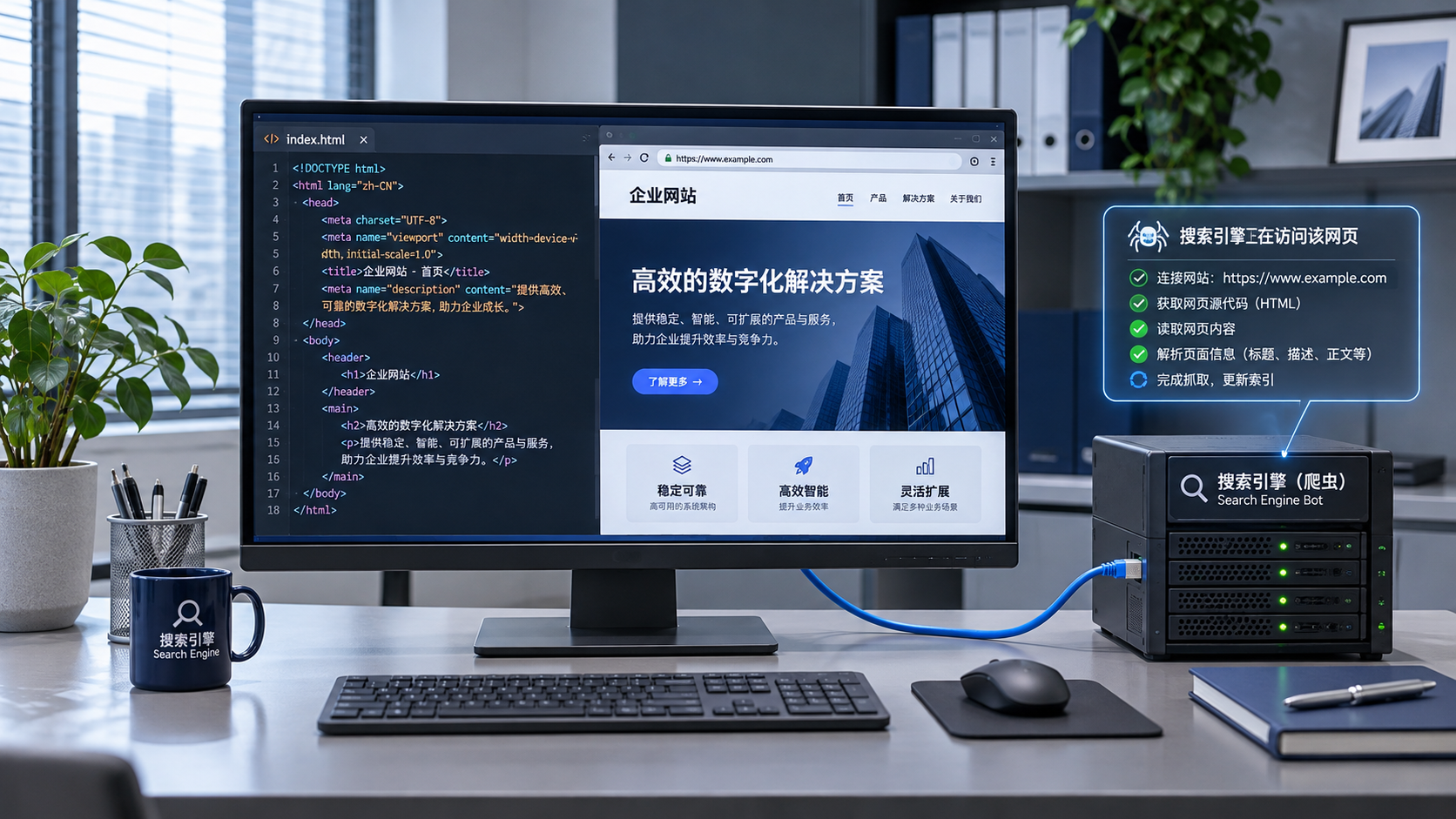
 How does search engine crawling affect website SEO rankings?

Related Products
 Yiyingbao SaaS Intelligent Website Building and Marketing SystemYiyingbao SaaS Intelligent Website Building and Marketing System, AI-powered no-code website building, rapid creation of multilingual B2B international websites in 10 minutes, global server acceleration, AI-powered SEO optimization, helping businesses connect efficiently with global markets. The perfect integration of technology and operation makes building an international trade website remarkably simple
 AI+SEM Intelligent Advertising Marketing SystemAI+SEM drives intelligent ad creation, empowering full-funnel precision advertising marketing. The system automatically generates weekly/monthly reports, AI recommends keywords and target countries, monitors core metrics in real-time with intelligent alerts, and enables one-click high-conversion ad solutions to help quickly acquire customers and improve ROI.
 AI+SEO Dual-Engine System Optimization ServicesYiyingbao’s AI+SEO dual-engine optimization system helps foreign trade enterprises acquire high-quality organic traffic through AI-powered keyword research, content generation, and comprehensive technical optimization, significantly improving search rankings and conversion rates.
 AI+SNS Social Media Marketing SystemYingbao AI+SNS Social Media Marketing System - Precision social capture for the social media era. Supports one-click content synchronization across major platforms like Facebook and LinkedIn. AI intelligently rewrites posts for enhanced relevance. 24/7 AI customer service and user profiling analysis empower businesses to efficiently expand into global markets.
 AI+SEO营销解决方案易营宝AI+SEO营销解决方案,通过AI批量写作、智能生成TDK、精准关键词扩词等功能,全面优化网站SEO效果,提升流量与转化率。助力企业构建高效智能网站新生态。
 AI+SEM Advertising Marketing SolutionsAI+SEM Advertising Marketing Solution leverages AI technology to deeply empower SEM ad campaigns. It automatically generates weekly/monthly reports using AI, presenting account data across multiple dimensions for comprehensive insights into campaign performance and trends. The system precisely recommends keywords and target countries, intelligently generates high-conversion ad copy, and enables one-click activation of efficient campaign plans to help businesses rapidly acquire customers. Simultaneously, it monitors core metrics in real time, intelligently identifies abnormal fluctuations, and issues timely alerts to ensure stable, high-return advertising results.
 Domain Name ServicesEasyWin provides professional domain name services, including intelligent queries, one-stop registration, brand protection, and full lifecycle management, helping businesses build a digital brand image.
 EasyOperate B2C Cross-Border E-Commerce Platform & Independent WebsiteEasyStore B2C Cross-border E-commerce Independent Store is an intelligent website building and cross-border e-commerce integrated solution independently developed by EasyStore Information Technology (Beijing) Co., Ltd. The system is specially designed for small and medium-sized as well as large export enterprises, integrating 'website building, operation, marketing, advertising, and conversion' into one, helping enterprises quickly establish cross-border e-commerce independent stores to achieve brand globalization and global sales growth.
The platform supports multiple languages, multiple currencies, and multi-channel marketing, with built-in AI intelligent translation and SEO optimization systems, suitable for mainstream markets such as Southeast Asia, Europe and America, Latin America, and the Middle East, assisting Chinese manufacturing enterprises in efficiently deploying international e-commerce strategies. SSL证书易营宝提供专业SSL安全证书服务,包括单域名和泛域名证书,确保网站数据传输加密、身份验证和完整性保护,助力企业建立安全可信的在线业务环境。









