









- Which customer acquisition channels will be affected by cross-border marketing trends in 2026?Sep 06, 2026View details
- Which homogenization risks should be considered in an analysis of the AI-powered website building industry?Aug 30, 2026View details
- How Will AI Marketing Trends 2026 Change Advertising Budget AllocationAug 28, 2026View details
- Is the EV SSL certificate market shrinking or upgrading? How should companies assess certificate procurement?Aug 11, 2026View details
- Why the old AMP SEO 2020 practices no longer work and what has changed in current optimization prioritiesAug 02, 2026View details
- How to Choose Topics for an Industry News Section to Attract More Organic Search TrafficJul 29, 2026View details
Common SEO Issues in Multilingual B2B Website Development: Duplicate Content and Indexing Failures
Common SEO Issues in Multilingual B2B Website Development: Duplicate Content and Indexing Failures
Launching a multilingual B2B website does not automatically generate leads. Many foreign trade companies find that, although their English website has been published and German, French, and Spanish versions have also been added, search traffic has not increased, some pages remain unindexed for a long time, and pages in different languages may even compete with one another for rankings in search results. The issue is usually not an insufficient number of languages, but rather that the website has failed to accurately communicate information for different markets to search engines.
For manufacturing companies, equipment suppliers, and component exporters, website content often includes a large number of models, specifications, process capabilities, and application scenarios. This information is inherently similar. If it is then copied into multiple language directories through batch translation, it can easily result in identical page structures, highly similar body content, and titles that differ only by language. Visitors can see the language switcher, but search engines may not be able to clearly determine which region and search intent each version is intended to serve.
Duplicate Content Is Not Just “Identical Translation”
Duplicate content on multilingual websites is often more subtle than expected. One type is fully duplicated content: URLs in different languages actually load the same English content. Another is low-difference content: after machine translation, only a few words are changed, while product descriptions, image captions, downloadable materials, and internal link anchor text remain almost identical. There is also a common issue during website migration: parameterized URLs, www and non-www domains, http and https versions, and URLs with different trailing slashes are all discovered by search engines at the same time.
B2B websites are particularly prone to duplicate product listing pages. For example, if the three category pages for “industrial valves,” “stainless steel valves,” and “chemical valves” all display the same group of products and only the page titles are changed, search engines tend to select one as the primary version, while the other pages may be ignored. In a multilingual environment, this issue is amplified: a core product page can generate more than a dozen similar versions, while genuinely market-relevant localized content remains insufficient.
The solution is not to delete language pages simply for the purpose of “deduplication,” but to clarify why each page exists. A page for German buyers can include applicable standards, delivery documentation, common procurement questions, and locally used terminology; a page for the Middle East market may need to explain high-temperature resistance, delivery lead times, and project support methods. Language translation is only the starting point. Procurement context, units of measurement, certification wording, and inquiry practices are the keys to making pages distinct.
When Indexing Fails, First Check Whether Technical Signals Contradict Each Other
When encountering “page not indexed,” many operators repeatedly submit URLs or build more backlinks first. However, it is more important to check whether the page can be crawled, understood, and allowed to remain indexed. robots.txt blocking crawling, pages containing noindex tags, an outdated sitemap, and canonical links pointing to the wrong pages can all undermine indexing efforts. Especially after template duplication and bulk publishing, blocking rules left over from testing environments are not uncommon.
Canonical links are often misused. Some websites point the canonical tags of all language versions directly to the English homepage or English product page in order to avoid duplication. This effectively tells search engines that other language pages are merely copies of the English page and do not need to be displayed separately. The correct approach is usually to set a self-referencing canonical link for every indexable language page; signals should be consolidated only when the content of two URLs is truly equivalent and only one version is to be retained.
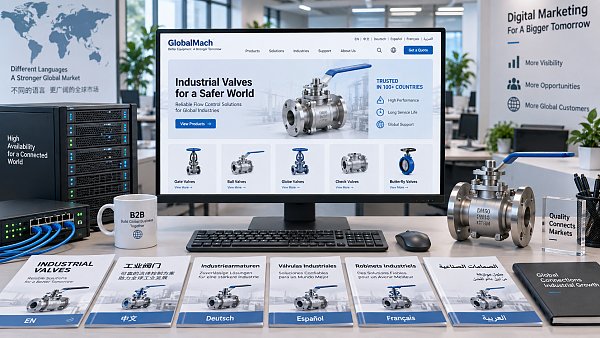
Language and regional annotations should not be handled superficially either. hreflang relationships should allow corresponding pages to validate each other: an English product page should point to the corresponding German, French, and other language product pages, while pages in other languages should also point back to the English page and themselves. If an English page links to the German page for Product A, but the German page points back to Product B, or the target URL has redirected or returns a 404, the annotations lose credibility. For content differentiated only by language rather than by country, language codes should generally be selected carefully to avoid forcibly splitting one language into multiple country versions with no actual operational differences.
Dynamic Loading and Language Redirects Often Make Good Content “Invisible”
Modern website-building systems often use scripts to load products, news, and filtering results for visual effects. The problem is that if core body content must wait for complex scripts to execute, or if the page is left as an empty shell when an interface fails, crawl stability will decline. Key information such as product names, core specifications, body summaries, internal links, and inquiry entry points should be readable on the initial page whenever possible, rather than appearing only after users click or scroll.
Another risk is forced redirection based on visitor IP addresses or browser language. Chinese users who visit an English page are automatically sent to the Chinese website, while French users are sent to the French homepage. Although this may seem considerate, it can make it difficult for search engines to crawl specified URLs consistently. A more reliable approach is to retain fixed language URLs that users can access and provide clear language-switching options; if language recommendations are needed, users should be able to return to the original page rather than being subjected to irreversible redirect rules.
From Website Development to Promotion, Indexing Should Be Part of Daily Processes
In practice, multilingual pages can be managed in three tiers: core product and industry solution pages prioritized for indexing; application and knowledge content pages used to support conversions; and filtering pages and internal functional pages that do not yet need to compete in organic search. The first two types should have clear titles, unique descriptions, accessible internal links, and corresponding language versions. The third type should avoid generating large numbers of low-value URLs through parameter rules, canonical links, or index controls.
Before publishing, it is advisable to check each item: whether the page returns a normal status code; whether it has been accidentally set to noindex; whether the canonical points to itself or the correct primary version; whether the sitemap includes canonical URLs; whether menus, product associations, and article recommendations naturally connect the page; and whether translated titles, image alt text, and form fields still match expressions used in the target market. Indexing is not a one-time acceptance item and should be reviewed after product updates, directory adjustments, and system upgrades.
Since its establishment in Beijing in 2013, Yiyingbao has continuously served foreign trade companies, manufacturing factories, cross-border sellers, and globalizing brands. With artificial intelligence and big data as its technical foundation, it has developed coordinated processes around intelligent website development, SEO optimization, advertising, and social media operations. For multilingual B2B projects, page structure, content management permissions, language-version relationships, and subsequent promotion data should all be considered during the website development stage, rather than addressed only after the website is completed. The value of a platform lies not only in publishing pages faster, but also in enabling content, advertising, and search visibility to be continuously adjusted within the same operational logic.
If a company also operates a website for the domestic market, it must distinguish between search deployment for overseas independent websites and domestic website compliance procedures. For matters involving ICP filing, access changes, or annual reviews, materials pre-review, information submission, and verification coordination can be handled through the Domestic ICP Filing Service Number, helping avoid disruptions to existing access arrangements caused by website migration or changes to entity information. Whether filing is required and which access method should be used should still be confirmed based on server location, business nature, and actual project requirements.
The real challenge of multilingual websites is not copying one URL into many versions, but ensuring that every version serves a clear market purpose. By first resolving foundational issues such as crawling, canonical links, and language annotations, and then gradually strengthening localized content and inquiry paths, search traffic is more likely to shift from scattered exposure into a sustainable overseas customer acquisition channel.
Related Articles



Related Products
 Yiyingbao SaaS Intelligent Website Building and Marketing SystemYiyingbao SaaS Intelligent Website Building and Marketing System, AI-powered no-code website building, rapid creation of multilingual B2B international websites in 10 minutes, global server acceleration, AI-powered SEO optimization, helping businesses connect efficiently with global markets. The perfect integration of technology and operation makes building an international trade website remarkably simple
 AI+SEM Intelligent Advertising Marketing SystemAI+SEM drives intelligent ad creation, empowering full-funnel precision advertising marketing. The system automatically generates weekly/monthly reports, AI recommends keywords and target countries, monitors core metrics in real-time with intelligent alerts, and enables one-click high-conversion ad solutions to help quickly acquire customers and improve ROI.
 AI+SEO Dual-Engine System Optimization ServicesYiyingbao’s AI+SEO dual-engine optimization system helps foreign trade enterprises acquire high-quality organic traffic through AI-powered keyword research, content generation, and comprehensive technical optimization, significantly improving search rankings and conversion rates.
 AI+SNS Social Media Marketing SystemYingbao AI+SNS Social Media Marketing System - Precision social capture for the social media era. Supports one-click content synchronization across major platforms like Facebook and LinkedIn. AI intelligently rewrites posts for enhanced relevance. 24/7 AI customer service and user profiling analysis empower businesses to efficiently expand into global markets.
 AI+SEO营销解决方案易营宝AI+SEO营销解决方案,通过AI批量写作、智能生成TDK、精准关键词扩词等功能,全面优化网站SEO效果,提升流量与转化率。助力企业构建高效智能网站新生态。
 AI+SEM Advertising Marketing SolutionsAI+SEM Advertising Marketing Solution leverages AI technology to deeply empower SEM ad campaigns. It automatically generates weekly/monthly reports using AI, presenting account data across multiple dimensions for comprehensive insights into campaign performance and trends. The system precisely recommends keywords and target countries, intelligently generates high-conversion ad copy, and enables one-click activation of efficient campaign plans to help businesses rapidly acquire customers. Simultaneously, it monitors core metrics in real time, intelligently identifies abnormal fluctuations, and issues timely alerts to ensure stable, high-return advertising results.
 Domain Name ServicesEasyWin provides professional domain name services, including intelligent queries, one-stop registration, brand protection, and full lifecycle management, helping businesses build a digital brand image.
 EasyOperate B2C Cross-Border E-Commerce Platform & Independent WebsiteEasyStore B2C Cross-border E-commerce Independent Store is an intelligent website building and cross-border e-commerce integrated solution independently developed by EasyStore Information Technology (Beijing) Co., Ltd. The system is specially designed for small and medium-sized as well as large export enterprises, integrating 'website building, operation, marketing, advertising, and conversion' into one, helping enterprises quickly establish cross-border e-commerce independent stores to achieve brand globalization and global sales growth.
The platform supports multiple languages, multiple currencies, and multi-channel marketing, with built-in AI intelligent translation and SEO optimization systems, suitable for mainstream markets such as Southeast Asia, Europe and America, Latin America, and the Middle East, assisting Chinese manufacturing enterprises in efficiently deploying international e-commerce strategies. SSL证书易营宝提供专业SSL安全证书服务,包括单域名和泛域名证书,确保网站数据传输加密、身份验证和完整性保护,助力企业建立安全可信的在线业务环境。









