









- Hengqin Cooperation Zone Shares Cross-Border E-Commerce Developments, Focusing on Macao-Hengqin Collaboration and International MarketsOct 24, 2026View details
- A Shenyang study highlights the development of the “cross-border e-commerce + industrial cluster” modelOct 24, 2026View details
- Three China Advertising Association GEO group standards take effect on October 23Oct 24, 2026View details
- Amazon Raises Fulfillment Fees Twice, Yet the Median Platform Fee Remains Around 40%Oct 22, 2026View details
- AliExpress and YouTube Partner to Expand Marketing Opportunities for Chinese Brands Going GlobalOct 22, 2026View details
- Publicis says AI marketing is developing at two speeds, with agentic AI helping win clientsOct 21, 2026View details
How to Write Product Page SEO TDK Without Affecting Conversions?
The challenge of SEO-optimizing TDK for product pages is not simply placing keywords in the title, description, and keyword tags. It lies in enabling search engines to identify the page topic without altering users’ purchase decisions after they enter the page. For B2B export websites, a “rankable” Title that indiscriminately piles together product specifications, applicable industries, core selling points, and brand information often makes search results difficult to read and mixes click intent. Meanwhile, a Description designed only to attract clicks, if inconsistent with the landing page content, can increase bounce rates and the risk of unqualified inquiries.
Product page SEO TDK that genuinely does not impair conversion should follow one fundamental principle: whatever the search result promises, the above-the-fold section of the page should be able to substantiate it. TDK establishes search expectations, while the product page fulfills those expectations and drives inquiries, quotations, or orders. They are not two separate stages, but one continuous information chain.
First, distinguish what each element of TDK affects
TDK usually refers to Title, Meta Description, and Meta Keywords. Their actual roles in modern search optimization differ, so they should not be configured with the same weighting during technical evaluation.
Therefore, product page TDK management should focus on Title and Description rather than Meta Keywords. If the latter is still retained in the system template, it may be kept concise or left unconfigured in compliance with site technical standards; it should not be relied on to solve indexing and ranking issues.
A Title is not a keyword container; it is a statement of page positioning
A product page Title should answer at least two questions: whether the item searched for by the user is available here, and whether the page can provide the required commercial or technical information. For highly standardized industrial products, the Title can follow the logic of “core product term + key specification or type + application/supply information.” For custom equipment and solution-based products, it is more suitable to organize it as “product category + problem-solving capability + customization scope.”
For example, if a user searches for a type of stainless steel pipe fitting, the clear product name should take priority in the Title, followed by standards, material, connection method, or manufacturer identity. If the page actually provides only custom processing but uses terms such as “in-stock supply,” “price,” or “inventory” to attract clicks, inquiry quality will decline even if the click-through rate improves in the short term.
The Title and the page H1 do not need to be identical word for word, but they must refer to the same product entity. The Title can reflect search language, while the H1 can use a product name that better fits the page-reading logic. If they describe different models, uses, or markets, topic signals will be diluted. When product pages are generated in bulk, this deviation is particularly likely to result from incorrect template field mapping.
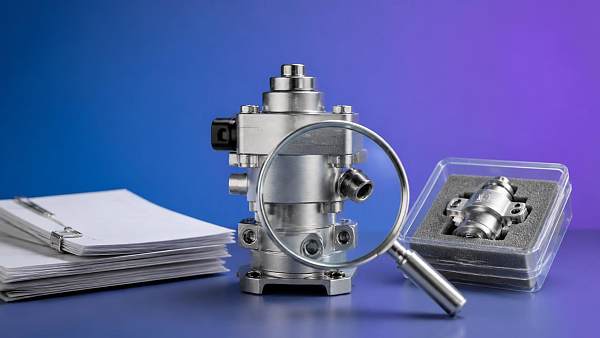
It is also important to avoid mechanically placing the brand name at the beginning of every Title. Brand terms are valuable when there is clear branded search demand; in non-branded searches, the leading characters should be prioritized for the product entity and differentiating attributes. Search-result display length varies by device, font, and query environment, so a fixed character count should not be treated as a rigid standard. However, core identifying information should be placed as early as possible, rather than relying on the end of the title to explain the page content.
Description should serve “pre-screening,” rather than repeating the Title
Meta Description is not guaranteed to be displayed verbatim, but it remains a site-controlled summary signal. The appropriate approach is not to expand the Title into a long sentence, but to add information users have not yet obtained from search results, such as available material ranges, certification or test documentation, minimum order requirements, applicable operating conditions, delivery models, customization capabilities, or the types of technical documentation available on the page.
For B2B product pages, the most valuable function of a Description is filtering out incorrect intent. Buyers need mass-production capability, engineers need parameters and drawings, and distributors focus on packaging and lead times. A page cannot cover everything in its summary, but it should at least clarify whether the product is a standard item, customizable component, part, or complete equipment. This can reduce cases in which users mistake a parts page for a complete-machine page or a manufacturer page for a retail page.
Claims in the description must be verifiable on the page. If it states “OEM/ODM supported,” the page should explain the customizable dimensions and minimum order or communication requirements. If it states “compliant with a certain standard,” corresponding documents, scope of application, or technical explanations should be available. Descriptions unsupported by evidence turn TDK from a tool for improving click efficiency into a source of expectation gaps.
What affects conversion is not TDK itself, but information gaps
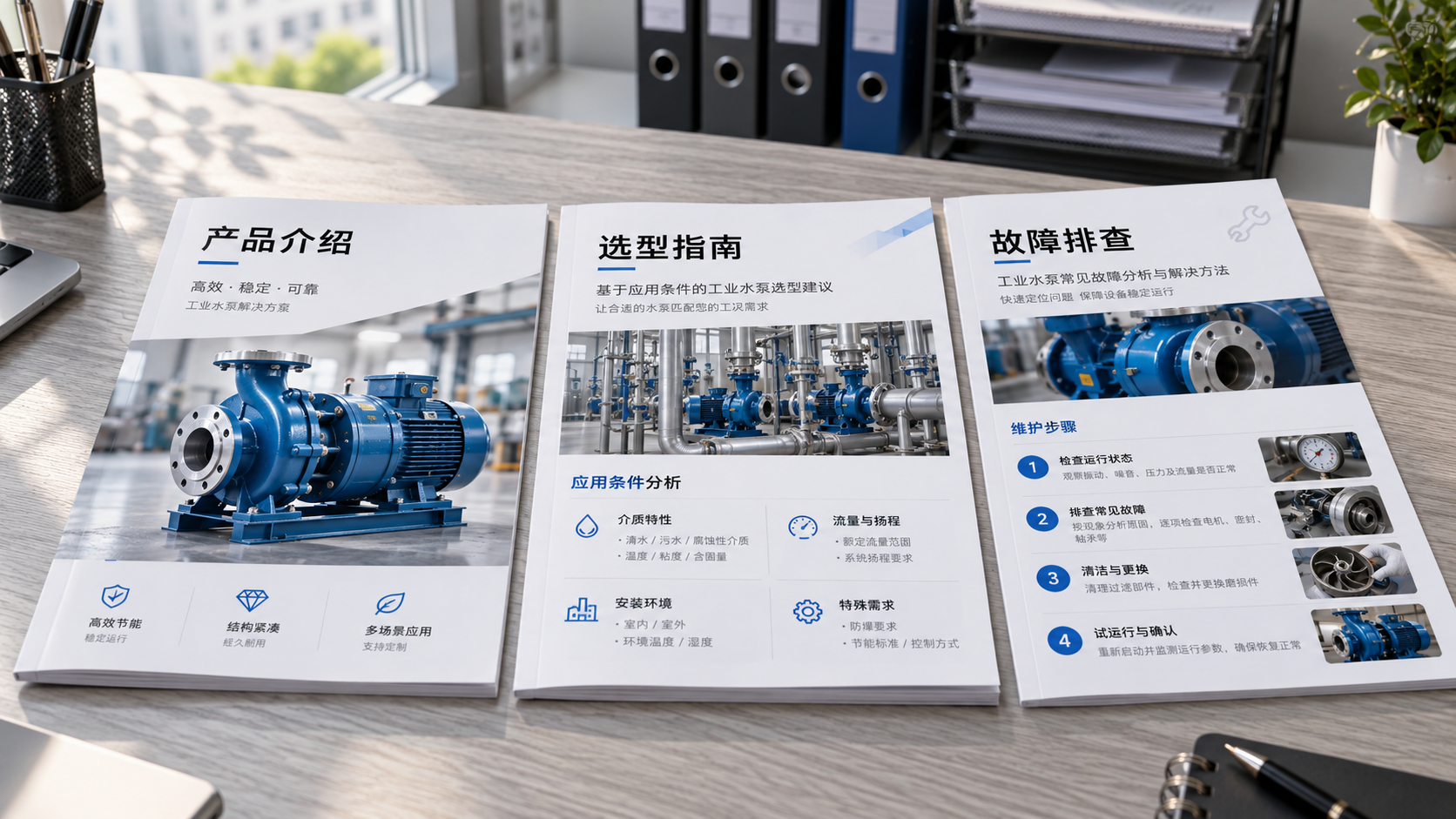
Impaired product page conversion is often mistakenly attributed to “using too many SEO terms.” More accurately, the issue usually arises because keyword intent, page information, and conversion actions are not aligned. A user searching for “industrial water pump manufacturer” expects to see manufacturing capabilities, pump type range, performance parameters, and an inquiry entry point. If the above-the-fold section displays only brand slogans, company news, or generic images, the page still cannot fulfill expectations even if the TDK is accurate.
A verifiable alignment is as follows:
- The core product term in the Title should naturally appear in the H1, above-the-fold description, and main content;
- Models, materials, dimensions, or applications stated in the Title should be consistent with product parameters, drawings, or body content;
- Differentiators emphasized in the Description should be supported by visible evidence rather than remaining marketing slogans;
- The page’s primary conversion action should match search intent: document downloads or technical consultation are suitable during the specification-confirmation stage, while quotation, sample, or order entry points are suitable only at the purchasing stage;
- Multilingual pages should not be published simply by directly translating TDK. The actual local-market expressions for product names, units, certifications, and procurement terminology should be verified.
This logic also applies to site field management. When product names, models, specifications, market-language versions, Canonical tags, structured data, and TDK are maintained by different systems, content synchronization issues are most likely to occur. When evaluating content management and operational processes, companies may draw on the centralized data management approach discussed in Practical Exploration of Corporate Financial Shared Services Models Under New Circumstances: field sources, modification permissions, and synchronization rules need to be clearly defined to prevent sales, technical, and operations teams from separately rewriting the same product facts.
Four issues requiring the most attention on bulk product pages
Duplicate Titles and Descriptions. When products in the same series differ only by an unreadable model number, or multiple pages share templates such as “High Quality Product Manufacturer,” search engines struggle to identify page differences, and users cannot conduct initial screening on the results page. Unique content should be generated using fields that determine purchasing differences, such as product category, key specifications, material, application, or regional language.
Parameter terms overriding page facts. When a system automatically concatenates parameters, it may place every optional specification in the Title, making the page appear broadly covered while lacking a clearly promoted primary model. One URL should express one clear topic. Where the specification range is broad, category pages can address broad demand, while specific product pages can address model or parameter demand.
Competition between multilingual URLs. If different language versions have highly similar content, lack hreflang configuration, or have incorrectly directed Canonical tags, search engines may select the wrong page for display. Language versions should have independent Titles, Descriptions, and body content rather than merely replacing page navigation. Regional versions also need confirmation that units, contact information, delivery scope, and content statements are consistent.
Treating Meta Description as fixed display copy. Search engines may extract more relevant passages from page content based on user queries. Technically, Description should be treated as a preferred candidate, while ensuring that the product introduction, parameter table, FAQ, and image alt text contain clear and consistent topical information. In this way, page semantics remain stable even if the summary is rewritten.
Use verifiable criteria to determine whether TDK is qualified
Product page SEO TDK should not be accepted solely based on whether it “contains keywords.” A more reliable approach is to check page consistency, indexability, and commercial semantics.
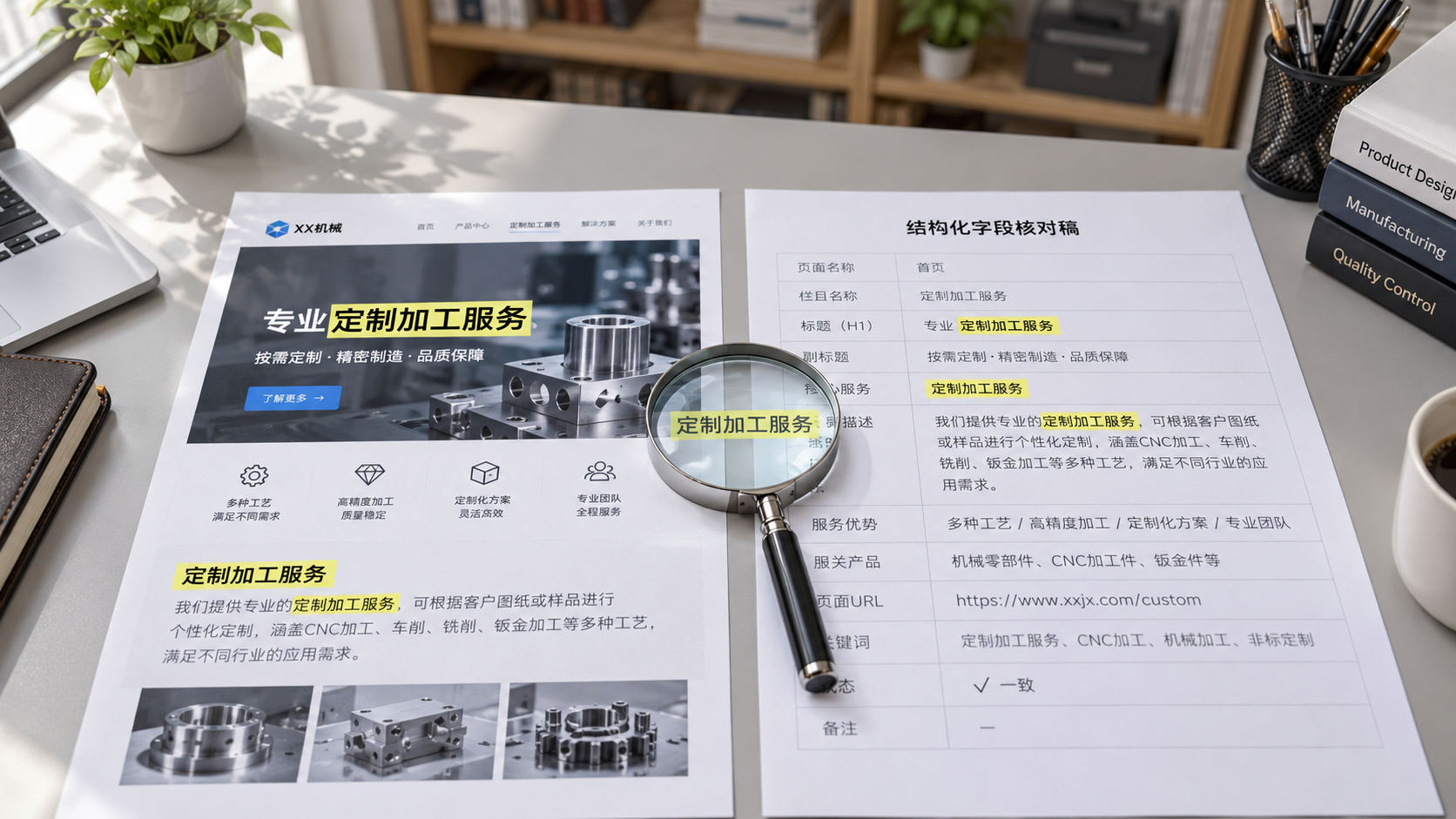
For page consistency, verify whether names and models conflict among the Title, H1, above-the-fold product name, parameter table, breadcrumbs, and structured data. For indexability, check the page response status, robots settings, Canonical tags, pagination or filter parameters, and whether it has been incorrectly set to noindex. For commercial semantics, verify whether every claim in the Description can be supported on the page, and confirm that the CTA does not require users to submit complex forms too early, before they have obtained key technical information.
For sites using intelligent website-building or bulk publishing systems, the focus is not only on editing copy for individual pages, but also on reviewing template rules: when product fields are empty, have the same name, contain special characters, or remain untranslated in multiple languages, what Title will the system generate? After specifications are updated, will structured data, body content, and metadata update simultaneously? When a product is discontinued, does the page return a 404, redirect with a 301, or retain an indexable empty page? These conditions determine whether the TDK strategy can be implemented consistently.
Search visibility and conversion efficiency for product pages are not inherently in conflict. Conflict often occurs when inaccurate keywords are used to expand traffic or when descriptions that cannot be substantiated by the page are used to generate clicks. Only by treating TDK as the interface between product facts, search intent, and the page conversion path can each optimization both increase the opportunity to be found by the right users and reduce the interference of invalid visits with inquiry quality.
Related Articles
 How Can an SEO Content Strategy Prevent Keyword Cannibalization?
 How can you check whether Schema markup matches the visible page content?
 Why Are Core Web Vitals Still Failing After Website Speed Optimization?
Related Products
 Yiyingbao SaaS Intelligent Website Building and Marketing SystemYiyingbao SaaS Intelligent Website Building and Marketing System, AI-powered no-code website building, rapid creation of multilingual B2B international websites in 10 minutes, global server acceleration, AI-powered SEO optimization, helping businesses connect efficiently with global markets. The perfect integration of technology and operation makes building an international trade website remarkably simple
 AI+SEM Intelligent Advertising Marketing SystemAI+SEM drives intelligent ad creation, empowering full-funnel precision advertising marketing. The system automatically generates weekly/monthly reports, AI recommends keywords and target countries, monitors core metrics in real-time with intelligent alerts, and enables one-click high-conversion ad solutions to help quickly acquire customers and improve ROI.
 AI+SEO Dual-Engine System Optimization ServicesYiyingbao’s AI+SEO dual-engine optimization system helps foreign trade enterprises acquire high-quality organic traffic through AI-powered keyword research, content generation, and comprehensive technical optimization, significantly improving search rankings and conversion rates.
 AI+SNS Social Media Marketing SystemYingbao AI+SNS Social Media Marketing System - Precision social capture for the social media era. Supports one-click content synchronization across major platforms like Facebook and LinkedIn. AI intelligently rewrites posts for enhanced relevance. 24/7 AI customer service and user profiling analysis empower businesses to efficiently expand into global markets.
 AI+SEO营销解决方案易营宝AI+SEO营销解决方案,通过AI批量写作、智能生成TDK、精准关键词扩词等功能,全面优化网站SEO效果,提升流量与转化率。助力企业构建高效智能网站新生态。
 AI+SEM Advertising Marketing SolutionsAI+SEM Advertising Marketing Solution leverages AI technology to deeply empower SEM ad campaigns. It automatically generates weekly/monthly reports using AI, presenting account data across multiple dimensions for comprehensive insights into campaign performance and trends. The system precisely recommends keywords and target countries, intelligently generates high-conversion ad copy, and enables one-click activation of efficient campaign plans to help businesses rapidly acquire customers. Simultaneously, it monitors core metrics in real time, intelligently identifies abnormal fluctuations, and issues timely alerts to ensure stable, high-return advertising results.
 Domain Name ServicesEasyWin provides professional domain name services, including intelligent queries, one-stop registration, brand protection, and full lifecycle management, helping businesses build a digital brand image.
 EasyOperate B2C Cross-Border E-Commerce Platform & Independent WebsiteEasyStore B2C Cross-border E-commerce Independent Store is an intelligent website building and cross-border e-commerce integrated solution independently developed by EasyStore Information Technology (Beijing) Co., Ltd. The system is specially designed for small and medium-sized as well as large export enterprises, integrating 'website building, operation, marketing, advertising, and conversion' into one, helping enterprises quickly establish cross-border e-commerce independent stores to achieve brand globalization and global sales growth.
The platform supports multiple languages, multiple currencies, and multi-channel marketing, with built-in AI intelligent translation and SEO optimization systems, suitable for mainstream markets such as Southeast Asia, Europe and America, Latin America, and the Middle East, assisting Chinese manufacturing enterprises in efficiently deploying international e-commerce strategies. SSL证书易营宝提供专业SSL安全证书服务,包括单域名和泛域名证书,确保网站数据传输加密、身份验证和完整性保护,助力企业建立安全可信的在线业务环境。









