









- Is the EV SSL certificate market shrinking or upgrading? How should companies assess certificate procurement?Aug 11, 2026View details
- Why the old AMP SEO 2020 practices no longer work and what has changed in current optimization prioritiesAug 02, 2026View details
- How to Choose Topics for an Industry News Section to Attract More Organic Search TrafficJul 29, 2026View details
- Digital Marketing Shenzhen Market Insights: Why Are Companies Expanding Overseas Looking for Growth Teams in Shenzhen?Jul 31, 2026View details
- Can Zhejiang foreign trade independent websites still be developed today? Look at changes in traffic and lead generationJul 28, 2026View details
- What New Signals Are Emerging in Enterprise Services SaaS Marketing ReportsJul 27, 2026View details
Is AMP SEO Still Necessary? First, Let’s Examine Its Real Impact on Indexing, Speed, and Conversions
Is AMP SEO Still Necessary? Start by Asking the Right Question
What makes AMP SEO easy to misjudge is not the technology itself, but the fact that many people are still using the search environment of several years ago to evaluate website development today. AMP was initially widely discussed because it did solve very practical problems, including slow mobile web page loading, heavy advertising scripts, and lagging above-the-fold content. At that time, improving the mobile search experience could almost directly translate into a visible traffic advantage, so many companies regarded AMP as a “search acceleration channel.” But today, the conclusion can no longer be so simple.
If you are still asking “Should we implement amp seo?” today, a more valuable approach is usually to consider three things together: whether indexing has actually improved, whether the speed issue truly requires AMP, and whether the conversion path will be restricted as a result. Focusing on only one of these aspects often leads to a significantly biased conclusion. This is especially true for overseas independent websites, brand websites, multilingual sites, and inquiry-driven websites. Search performance has never been determined by a single technology; it is closely tied to page structure, content quality, internal links, rendering methods, regional access speed, and conversion design.
AMP Was Never Really Designed to Improve “Rankings Themselves”
Many people equate AMP directly with rankings, which is one of the most common misunderstandings. AMP is not an independent shortcut to higher rankings. Essentially, it is a restricted web specification designed to make mobile pages lighter, faster, and easier to load consistently. Its impact on SEO is mainly reflected indirectly through user experience signals and crawling efficiency, rather than through search engines automatically assigning a higher position simply because a page carries an AMP mark.
Over the years, search engines have adopted a more comprehensive approach to evaluating page experience. Whether a page can render quickly, whether its layout remains stable, and whether interactions are smooth are far more important than whether AMP is used. In other words, if your site already uses lightweight code, image compression, cache optimization, lazy loading, and reasonable script splitting, the speed benefits once associated with AMP may no longer be obtainable only through AMP.
This is why many companies later discovered that after investing in an AMP redevelopment project, their search traffic did not increase as expected. The problem is not that AMP is completely useless, but that it can solve only part of the problem—and that part already has other alternatives within modern website development frameworks and performance optimization systems.
For Indexing, AMP Is Not a Universal Solution
Let us start with indexing. Many companies implement AMP not because of speed, but because they hope their pages will be “easier to index.” This depends on the situation. For content-driven websites, news pages, and article pages, AMP pages have simpler structures and fewer resource dependencies, which can indeed make crawling and rendering smoother, especially when the original site relies heavily on front-end scripts or has unstable server responses. In such cases, the advantage may be more obvious.
However, if a website already has fundamental problems such as duplicate content, thin content, confusing URL structures, incorrect canonical tags, interference between language versions, or weak internal linking, AMP will not make the site indexed for you. When search engines do not index a page, the reason is often not that the “page is not fast enough,” but that the “page is not worth indexing” or that its technical signals are unclear. This is particularly common on multilingual overseas trade websites: the factors that truly affect indexing are often hreflang, canonical tags, sitemaps, template duplication rates, and content uniqueness—not whether AMP is used.
For corporate websites, B2B product websites, and independent manufacturing websites, the number of core pages is usually not particularly large, and search engines are fully capable of crawling them normally. As long as the site architecture is clear, the server is stable, and the content quality is adequate, the indexing benefits brought by AMP are generally not as significant as they were for early news and content websites.
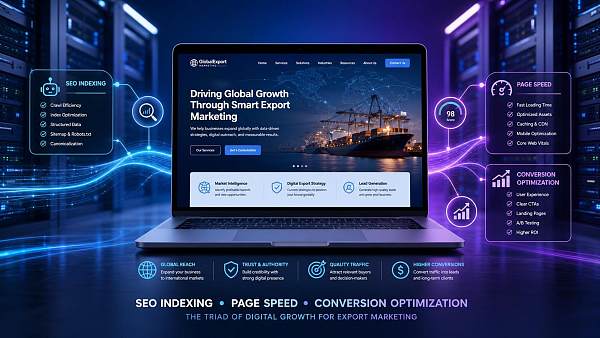
For Speed, Look at the “Real User Experience,” Not the Technology Label
AMP’s most convincing advantage in the past was indeed its speed. But when discussing speed today, you cannot focus only on a particular technology name; you need to examine performance in real access environments. If a page uses AMP but, because of analytics scripts, third-party components, style restrictions, and content adaptation issues, users open it quickly but cannot find the information they need or have a poor form-submission experience, this kind of “speed” has little business value.
A more practical approach is to first determine where the existing site is slow. Is the server too far from the target market, or are the image resources too large? Is the above-the-fold script blocking rendering, or is the template hierarchy too deep? Is the front-end framework too heavy, or are there too many accumulated plugins? For websites focused on overseas marketing, differences in access speed between North America, Europe, and Southeast Asia are common. AMP alone cannot solve cross-regional network latency. In such cases, CDN deployment, static resource distribution, image format optimization, and code splitting are often more effective than implementing AMP alone.
Based on experience with intelligent website development and overseas marketing projects, many websites attribute performance problems to “not having implemented AMP,” when the real direction is actually wrong. Page speed optimization should be a systematic project, not something that ends with adding an AMP version to a page. For companies that use AI-driven website development, multilingual deployment, and parallel operation of advertising landing pages, optimizing the site’s underlying performance consistently is generally more cost-effective than maintaining two page systems.
Conversion Often Determines Whether AMP Is Worth Implementing
If a site’s only goal is content consumption, AMP’s limitations are relatively easy to accept. But once the website is responsible for inquiries, registrations, appointments, e-commerce orders, or lead collection, the situation becomes more complicated. AMP imposes restrictions on front-end components, script calls, and interaction methods. This means that certain tracking implementations, pop-up logic, complex forms, and multi-step conversion paths may be more difficult to build, while maintenance costs may also be higher.
This is also why many marketing websites later abandoned full AMP adoption. After users arrive from search, whether they are willing to submit a form, initiate an inquiry, or add a product to their cart depends on content relevance, trust design, page persuasiveness, and interaction smoothness. A page that opens quickly but restricts the conversion process is not necessarily better than a slightly heavier page with a complete conversion path.
This is particularly important in B2B international trade scenarios, where product specifications, application descriptions, case studies, downloadable materials, and tiered contact information are all important. If a page is made overly sparse to comply with AMP specifications, it may instead damage inquiry quality. SEO does not produce the final result; it only brings people to the site. The subsequent conversion efficiency is often more valuable than the click-through rate that comes before it.
Which Scenarios Still Merit Considering AMP, and Which Are Better Suited to Standard Performance Optimization?
If a website focuses primarily on news content, industry articles, or knowledge pages, has a high proportion of mobile traffic, uses a simple page structure, and does not involve complex commercial conversion actions, AMP can still be considered as a supplementary solution. It is relatively suitable for page types that prioritize content reach and reducing mobile loading obstacles.
However, in the following situations, it is generally more advisable to invest resources in standard SEO and site performance optimization: corporate websites, brand-owned independent sites, cross-border e-commerce stores, advertising landing pages requiring complex tracking, multilingual product catalogs, and marketing websites that rely heavily on form conversions. For these types of websites, clearly structured indexable pages, a stable technical framework, good Core Web Vitals, and a reasonable content layout are usually closer to actual business results than AMP.
When developing content topics or resource libraries, some companies handle different pages with different strategies. This is actually a more mature approach. For example, knowledge content pages can prioritize access efficiency, while product pages and inquiry pages can prioritize the conversion path; there is no need to apply a one-size-fits-all approach. This idea of “assigning technical solutions according to the objective of each page” is more practical in many digital projects. For example, specialized materials such as An Exploration of Development Strategies for Building Internal Control Systems in Public Institutions place greater emphasis on content reading and information delivery rather than complex transactional interactions.
If You Are Doing amp seo Today, Ask These Four Questions First
First, what is the actual root cause of the current page speed problem? If it is mainly related to the server, resource size, or front-end architecture, AMP only works around the issue rather than fixing it.
Second, is the page’s primary objective reading or conversion? Pages that prioritize reading are more likely to benefit from AMP, while pages focused on conversion require careful evaluation of functional restrictions.
Third, does the team have the capacity to maintain two versions of the pages over the long term? AMP is not a one-time launch task. It involves template synchronization, data consistency, tracking adaptation, and subsequent troubleshooting.
Fourth, is the search traffic structure in the target market truly worth the investment? If organic search is not a primary source of customer acquisition, or if mobile content pages account for only a small proportion of traffic, AMP will not be a high priority.
For teams providing website development, SEO, advertising, and multi-channel growth services, a more reasonable conclusion about amp seo today is often not that it is “mandatory” or “completely useless,” but that it has evolved from a traffic amplifier into a technical option that is valuable only in specific scenarios. Whether it is worthwhile depends not on the popularity of the concept, but on whether your website happens to fall within the boundary of problems that AMP can solve. If the website is already crawlable, renderable, fast to access, and smooth to convert, continuing to focus on content quality, page-intent alignment, multilingual search coverage, and conversion-path optimization is generally closer to actual results than chasing the AMP label.
Related Articles
 For product page SEO optimization, should you revise the title or the page structure first?
 Japan's METI Requires Consumer Electronics Standalone Websites to Embed a Privacy Certification Panel
 How Can Brands Expanding Overseas Increase Keyword Visibility in German-Speaking Markets? Check These 4 Types of Page Issues First


Related Products
 Yiyingbao SaaS Intelligent Website Building and Marketing SystemYiyingbao SaaS Intelligent Website Building and Marketing System, AI-powered no-code website building, rapid creation of multilingual B2B international websites in 10 minutes, global server acceleration, AI-powered SEO optimization, helping businesses connect efficiently with global markets. The perfect integration of technology and operation makes building an international trade website remarkably simple
 AI+SEM Intelligent Advertising Marketing SystemAI+SEM drives intelligent ad creation, empowering full-funnel precision advertising marketing. The system automatically generates weekly/monthly reports, AI recommends keywords and target countries, monitors core metrics in real-time with intelligent alerts, and enables one-click high-conversion ad solutions to help quickly acquire customers and improve ROI.
 AI+SEO Dual-Engine System Optimization ServicesYiyingbao’s AI+SEO dual-engine optimization system helps foreign trade enterprises acquire high-quality organic traffic through AI-powered keyword research, content generation, and comprehensive technical optimization, significantly improving search rankings and conversion rates.
 AI+SNS Social Media Marketing SystemYingbao AI+SNS Social Media Marketing System - Precision social capture for the social media era. Supports one-click content synchronization across major platforms like Facebook and LinkedIn. AI intelligently rewrites posts for enhanced relevance. 24/7 AI customer service and user profiling analysis empower businesses to efficiently expand into global markets.
 AI+SEO营销解决方案易营宝AI+SEO营销解决方案,通过AI批量写作、智能生成TDK、精准关键词扩词等功能,全面优化网站SEO效果,提升流量与转化率。助力企业构建高效智能网站新生态。
 AI+SEM Advertising Marketing SolutionsAI+SEM Advertising Marketing Solution leverages AI technology to deeply empower SEM ad campaigns. It automatically generates weekly/monthly reports using AI, presenting account data across multiple dimensions for comprehensive insights into campaign performance and trends. The system precisely recommends keywords and target countries, intelligently generates high-conversion ad copy, and enables one-click activation of efficient campaign plans to help businesses rapidly acquire customers. Simultaneously, it monitors core metrics in real time, intelligently identifies abnormal fluctuations, and issues timely alerts to ensure stable, high-return advertising results.
 Domain Name ServicesEasyWin provides professional domain name services, including intelligent queries, one-stop registration, brand protection, and full lifecycle management, helping businesses build a digital brand image.
 EasyOperate B2C Cross-Border E-Commerce Platform & Independent WebsiteEasyStore B2C Cross-border E-commerce Independent Store is an intelligent website building and cross-border e-commerce integrated solution independently developed by EasyStore Information Technology (Beijing) Co., Ltd. The system is specially designed for small and medium-sized as well as large export enterprises, integrating 'website building, operation, marketing, advertising, and conversion' into one, helping enterprises quickly establish cross-border e-commerce independent stores to achieve brand globalization and global sales growth.
The platform supports multiple languages, multiple currencies, and multi-channel marketing, with built-in AI intelligent translation and SEO optimization systems, suitable for mainstream markets such as Southeast Asia, Europe and America, Latin America, and the Middle East, assisting Chinese manufacturing enterprises in efficiently deploying international e-commerce strategies. SSL证书易营宝提供专业SSL安全证书服务,包括单域名和泛域名证书,确保网站数据传输加密、身份验证和完整性保护,助力企业建立安全可信的在线业务环境。









