









- Can the average annual growth rate reflect real opportunities in overseas markets?Oct 07, 2026View details
- Which customer acquisition channels will be affected by cross-border marketing trends in 2026?Sep 06, 2026View details
- Which homogenization risks should be considered in an analysis of the AI-powered website building industry?Aug 30, 2026View details
- How Will AI Marketing Trends 2026 Change Advertising Budget AllocationAug 28, 2026View details
- Is the EV SSL certificate market shrinking or upgrading? How should companies assess certificate procurement?Aug 11, 2026View details
- Why the old AMP SEO 2020 practices no longer work and what has changed in current optimization prioritiesAug 02, 2026View details
Will Google index content generated by the AI Marketing Engine?
Will Google Index Content Generated by an AI Marketing Engine? The Key Is Not the Word “AI”
Will Google index content generated by an AI marketing engine? The answer is not simply “yes” or “no.” Google does not inherently refuse to crawl or exclude content from its index simply because it was generated using artificial intelligence. What truly affects whether a page can be discovered, crawled, understood, and indexed is still the website's technical condition, content value, page duplication, link relationships, and alignment with user needs.
Many companies worry that “articles written by AI will be penalized by Google,” while others take the opposite extreme, believing that once AI is adopted, they can generate thousands of pages in bulk and wait for traffic. Neither understanding is accurate. AI is a content production tool, not a guarantee of indexing, let alone a shortcut to rankings. For export-oriented factories, cross-border brands, and B2B service providers seeking overseas inquiries, the more important questions are: whether this content addresses buyers' actual concerns, whether it can demonstrate the company's genuine product and delivery capabilities, and whether visitors can proceed to make an inquiry, select a product, or get in touch after reading it.
First, Be Clear: Being Indexed Does Not Mean Ranking, Much Less Generating Leads
A page entering Google's index only means that the search engine has the opportunity to display it in search results. Whether the page achieves a high ranking also depends on topic relevance, content completeness, the overall credibility of the website, external links, page experience, and the competitive environment. Even if an AI-generated article is indexed, it may receive no visibility for a long time; even if it gains visibility, it may generate no inquiries because the content is generic or the landing page lacks supporting evidence.
Therefore, discussions about AI content should not focus only on the “indexing rate.” For example, a company manufacturing equipment components may need to serve English-, Spanish-, and Russian-speaking markets. AI can help organize common questions in different markets about specifications, shipping, and application scenarios, but product dimensions, tolerances, material grades, certification scope, lead times, and after-sales boundaries must be reviewed against company materials or by professionals. What search users truly seek is information they can use to make decisions, rather than text that appears fluent but cannot be verified.
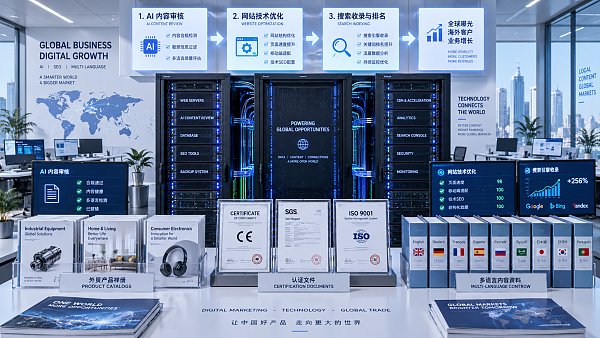
Google Cares More About Whether Content Provides “Added Value”
For content generated by an AI marketing engine to achieve stable indexing, the first step is not to increase output, but to avoid “changing the wording without changing the information.” Common industry issues include replacing only country names or keywords in the same product introduction; reusing large blocks of copy across multiple product pages; recombining supplier materials, competitor pages, or public articles; and directly translating multilingual pages without addressing local language usage and search habits. Even if such pages are temporarily accessible, they can easily perform poorly because they are duplicate, thin, or lack independent value.
Valuable AI-assisted content usually adds at least one piece of genuine information: selection criteria for a product under specific operating conditions, quality control checkpoints in the manufacturing process, parameters that need to be confirmed before purchase, applicable limits of different materials or models, common installation and maintenance errors, or delivery and communication considerations for a particular market. It does not necessarily need to be lengthy, but it should be more specific than “we provide high-quality products” and able to withstand follow-up questions from sales, engineering, customer service, or procurement personnel.
What Affects Indexing Is Often a Website Foundation Issue
Many companies attribute pages not being indexed to AI, only to discover after investigation that the problem lies in the website-building process: pages are restricted from crawling by robots rules; incorrect noindex settings have been applied; canonical tags point to other pages; the sitemap has not been updated; new content has no internal link entry point; multilingual versions duplicate one another; pages load abnormally; or content relies on script rendering that search engines cannot read reliably. These issues are not directly related to who wrote the content, yet they are sufficient to affect crawling and indexing.
In particular, multilingual independent websites cannot simply copy Chinese pages into multiple languages. Different language versions should have clear URL structures, corresponding language tags, independent titles and descriptions, and should, wherever possible, allow navigation, breadcrumbs, product categories, and related articles to form a natural internal linking network. For websites targeting different regions such as Europe, North America, Southeast Asia, and the Middle East, the terminology actually used by local users should also be considered rather than merely translating the company's internal product names.
Which AI Content Carries Higher Risks?
The higher risk is not the “AI trace” itself, but the loss of control behind automated content. For example, continuously generating large numbers of city pages, industry pages, or FAQ pages using the same prompt without local service capabilities or independent information; providing unverified advice on medical, financial, legal, safety, or compliance topics; fabricating customer reviews, test data, certifications, and delivery experience; or directly expanding advertising copy into encyclopedia-style articles. These practices not only make it difficult to build search visibility, but may also damage the company's credibility in the eyes of buyers.
A more prudent approach is to let AI handle tasks such as organizing materials, planning topics, creating first drafts, optimizing multilingual expression, and reminding content updates, and then have people familiar with the product, market, or compliance requirements complete the verification. For B2B websites, the review should focus on factual accuracy: whether the model exists, whether parameter units are consistent, whether the scope of application has been exaggerated, whether images correspond to the products, and whether contact details and inquiry paths are effective.
An AI Marketing Engine Should Not Only Be Responsible for “Writing Articles”
A truly useful AI marketing engine should be understood within the complete website and marketing chain. Content topics come from real questions in customer searches and sales communications; pages are discovered by search engines through a clear website structure; advertising and social media content help validate market concerns; and inquiry data in turn supplements website content. Content developed this way is not an isolated article library, but part of a company's overseas customer acquisition system.
Yiyingbao Information Technology (Beijing) Co., Ltd. has provided global digital marketing services centered on artificial intelligence and big data since 2013, with services covering intelligent website building, search optimization, social media operations, and advertising. It provides foreign trade enterprises, manufacturing factories, and cross-border brands with multilingual websites, B2B marketing websites, cross-border online stores, and AI-assisted SEO and GEO optimization capabilities. For companies, the value of this type of integrated service lies not only in generating pages faster, but also in placing website-building technology, content review, promotion channels, and subsequent data monitoring within the same process, reducing the gaps where “the website is completed but cannot be promoted” or “content is published but cannot be tracked.”
To Judge Whether an AI Content Piece Is Worth Publishing, Consider These Four Points
Before publishing, it is worth conducting a simple check: Does it answer a real search question? Can the facts, parameters, and commitments in the content be supported by company materials? Can readers gain more grounds for judgment from it than from similar pages? Does the page provide suitable product pages, category pages, or inquiry entry points for readers to learn more? If two or three of these four questions cannot be answered, it is not advisable to rush into publishing at scale.
Whether Google indexes content generated by an AI marketing engine ultimately still depends on whether the content and website are worth presenting to users by search engines. Rather than asking “Can AI be used?”, it is better to establish a verifiable content mechanism: AI improves efficiency, professionals safeguard factual boundaries, website structure ensures crawlability, and marketing data helps continuously refine direction. For companies planning to expand into overseas markets, this is closer to sustainable long-term search growth than simply pursuing the volume of published content.
Related Articles


Related Products
 Yiyingbao SaaS Intelligent Website Building and Marketing SystemYiyingbao SaaS Intelligent Website Building and Marketing System, AI-powered no-code website building, rapid creation of multilingual B2B international websites in 10 minutes, global server acceleration, AI-powered SEO optimization, helping businesses connect efficiently with global markets. The perfect integration of technology and operation makes building an international trade website remarkably simple
 AI+SEM Intelligent Advertising Marketing SystemAI+SEM drives intelligent ad creation, empowering full-funnel precision advertising marketing. The system automatically generates weekly/monthly reports, AI recommends keywords and target countries, monitors core metrics in real-time with intelligent alerts, and enables one-click high-conversion ad solutions to help quickly acquire customers and improve ROI.
 AI+SEO Dual-Engine System Optimization ServicesYiyingbao’s AI+SEO dual-engine optimization system helps foreign trade enterprises acquire high-quality organic traffic through AI-powered keyword research, content generation, and comprehensive technical optimization, significantly improving search rankings and conversion rates.
 AI+SNS Social Media Marketing SystemYingbao AI+SNS Social Media Marketing System - Precision social capture for the social media era. Supports one-click content synchronization across major platforms like Facebook and LinkedIn. AI intelligently rewrites posts for enhanced relevance. 24/7 AI customer service and user profiling analysis empower businesses to efficiently expand into global markets.
 AI+SEO营销解决方案易营宝AI+SEO营销解决方案,通过AI批量写作、智能生成TDK、精准关键词扩词等功能,全面优化网站SEO效果,提升流量与转化率。助力企业构建高效智能网站新生态。
 AI+SEM Advertising Marketing SolutionsAI+SEM Advertising Marketing Solution leverages AI technology to deeply empower SEM ad campaigns. It automatically generates weekly/monthly reports using AI, presenting account data across multiple dimensions for comprehensive insights into campaign performance and trends. The system precisely recommends keywords and target countries, intelligently generates high-conversion ad copy, and enables one-click activation of efficient campaign plans to help businesses rapidly acquire customers. Simultaneously, it monitors core metrics in real time, intelligently identifies abnormal fluctuations, and issues timely alerts to ensure stable, high-return advertising results.
 Domain Name ServicesEasyWin provides professional domain name services, including intelligent queries, one-stop registration, brand protection, and full lifecycle management, helping businesses build a digital brand image.
 EasyOperate B2C Cross-Border E-Commerce Platform & Independent WebsiteEasyStore B2C Cross-border E-commerce Independent Store is an intelligent website building and cross-border e-commerce integrated solution independently developed by EasyStore Information Technology (Beijing) Co., Ltd. The system is specially designed for small and medium-sized as well as large export enterprises, integrating 'website building, operation, marketing, advertising, and conversion' into one, helping enterprises quickly establish cross-border e-commerce independent stores to achieve brand globalization and global sales growth.
The platform supports multiple languages, multiple currencies, and multi-channel marketing, with built-in AI intelligent translation and SEO optimization systems, suitable for mainstream markets such as Southeast Asia, Europe and America, Latin America, and the Middle East, assisting Chinese manufacturing enterprises in efficiently deploying international e-commerce strategies. SSL证书易营宝提供专业SSL安全证书服务,包括单域名和泛域名证书,确保网站数据传输加密、身份验证和完整性保护,助力企业建立安全可信的在线业务环境。









