









- Which customer acquisition channels will be affected by cross-border marketing trends in 2026?Sep 06, 2026View details
- Which homogenization risks should be considered in an analysis of the AI-powered website building industry?Aug 30, 2026View details
- How Will AI Marketing Trends 2026 Change Advertising Budget AllocationAug 28, 2026View details
- Is the EV SSL certificate market shrinking or upgrading? How should companies assess certificate procurement?Aug 11, 2026View details
- Why the old AMP SEO 2020 practices no longer work and what has changed in current optimization prioritiesAug 02, 2026View details
- How to Choose Topics for an Industry News Section to Attract More Organic Search TrafficJul 29, 2026View details
How is Yandex ad spending calculated? An analysis of account opening, CPC, and managed service differences
What are the components of Yandex advertising costs?
How are Yandex advertising costs calculated? First, look at the structure, then the entry requirements. For most businesses, the costs typically consist of four parts: account opening fee, advertising deposit, cost per click, and agency service fee.
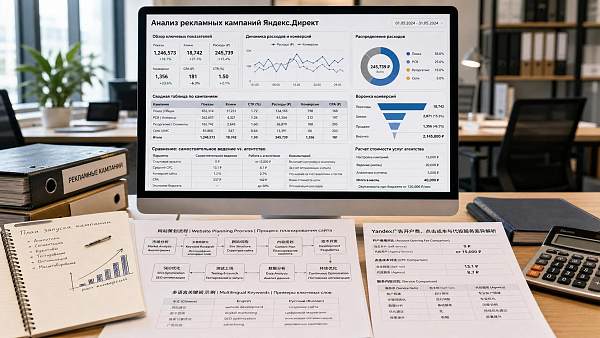
Focusing solely on the cost per click can easily lead to an underestimation of overall investment. What truly impacts approval decisions are often the initial investment, the monthly spending rate, and the ability to generate stable inquiries or orders.
From a practical purchasing perspective, Yandex advertising costs are not a fixed number, but rather a cost model closely related to industry, region, language, and campaign objectives.
Especially when targeting the Russian-speaking market, the quality of search traffic, the level of keyword competition, and the quality of landing pages will directly affect the cost and return on investment of Yandex advertising.
How should account opening fees be understood, and why are there such large differences?
Many companies initially ask how much they need to pay upfront for Yandex advertising. It's important to distinguish between platform top-ups and service provider fees; these are not the same thing.
The first category is account activation and initial deposit. Some service providers require a certain amount of pre-deposit for actual expenses after the ads go live. This part essentially falls under the media budget.
The second category is account opening service fees. These typically include qualification verification, account setup, pixel deployment, conversion settings, keyword planning, and basic campaign framework setup.
The significant differences stem from varying levels of service depth. Some services only handle account opening, while others include creative content, landing page suggestions, data tracking, and weekly reports.
If a company doesn't have a Russian website, conversion tracking, or localized content, the initial setup costs are usually higher, and Yandex advertising costs will naturally go beyond just account opening.
How to calculate cost per click, and which variables are most critical?
Many approval processes are stalled due to cost-per-click (CPC). This is because CPC directly impacts the monthly budget and is most easily compared to channels like Google and Facebook.
The cost per click in Yandex advertising is typically influenced by four factors: keyword competition, geographic targeting, industry conversion value, and account quality performance.
For example, the price-per-click (CPC) can vary significantly between industries such as industrial equipment, machinery parts, cross-border e-commerce, and software services. Industries with high average order values are often willing to pay higher CPCs.
For example, advertising in core Russian cities is usually more expensive than advertising in broader regions. However, the traffic is more concentrated, and the conversion rate may be higher, so you can't just look at the surface price per unit.
More importantly, cost per click is not the same as customer acquisition cost. An account with cheap clicks but a high bounce rate may actually be wasting more money on Yandex advertising.
Therefore, when reviewing budgets, it is recommended to look at three metrics simultaneously: average cost per click, cost of conversion, and effective inquiry rate. Combining these three metrics will provide a more accurate assessment of actual business results.
Common methods for determining costs
- First estimate the monthly click volume, then work backward to deduce the monthly budget range.
- Based on historical conversion rates, calculate the affordable cost per inquiry.
- Deploy products in market segments to avoid expanding to the entire region at the outset.
- Do a small-budget test first, then decide whether to increase the investment.
Why do differences in investment agency services lead to significant differences in total cost?
Even when it comes to Yandex advertising, different third-party placement plans can have vastly different prices. The core difference lies not in the term "third-party placement," but in the scope of the services offered.
Basic ad placement services typically handle account setup, daily bid adjustments, negative keyword filtering, and report generation. They are suitable for businesses that already have a website, creative materials, and conversion systems; they are quick to start and have relatively low management costs.
In-depth campaign management covers market analysis, Russian keyword expansion, ad copy localization, landing page optimization, lead quality control, and campaign performance review, resulting in a higher overall investment.
Recent changes indicate that more and more companies are beginning to focus on the "traffic backend." This is because whether Yandex advertising costs are worthwhile depends not only on acquiring traffic, but also on the smoothness of the conversion process.
If a website loads slowly, uses inauthentic Russian, or has poorly designed forms, even if the cost-per-click on the front end is low, backend sales may remain weak.
When choosing a third-party payment service, carefully verify the details.
- Does the quote include account setup and data tracking?
- Does it provide Russian market and keyword research?
- Do you have any suggestions for landing page optimization and conversion?
- Should you look at clicks in the reports, or focus on actual inquiries and sales leads?
- Is the service fee a fixed monthly fee or charged based on a percentage of usage?
When approving a budget, it is recommended to break down Yandex advertising costs in this way.
Asking only how much it costs in a year usually yields an inaccurate conclusion. A more practical approach is to break down Yandex advertising costs into three phases: the launch phase, the testing phase, and the scaling phase.
The initial launch phase mainly involves account setup, website preparation, and the initial investment of creative materials. This part determines whether the project can be successfully launched and is also the area where the initial budget is most easily underestimated.
During the testing phase, the focus should be on cost-per-click, keyword performance, and form conversion. It's generally necessary to allow time for data accumulation; conclusions shouldn't be drawn based on just a few days' results.
During the scaling-up phase, the focus shifts to stable customer acquisition capabilities. Whether Yandex advertising spending is worthwhile at this stage depends primarily on whether marginal conversion costs are out of control and whether effective traffic can continue to expand.
Indicators recommended to be included in the approval form
Integrating website marketing with sales strategies is often more cost-effective than buying traffic separately.
This is also a point that many companies are starting to focus on when reassessing their Yandex advertising budgets. While running ads separately may seem lighter on the front end, backend issues can easily eat up the budget.
If a business lacks multilingual websites, landing pages adapted for Russian-speaking regions, or clear data attribution, then even the most meticulous advertising spending will struggle to amplify results.
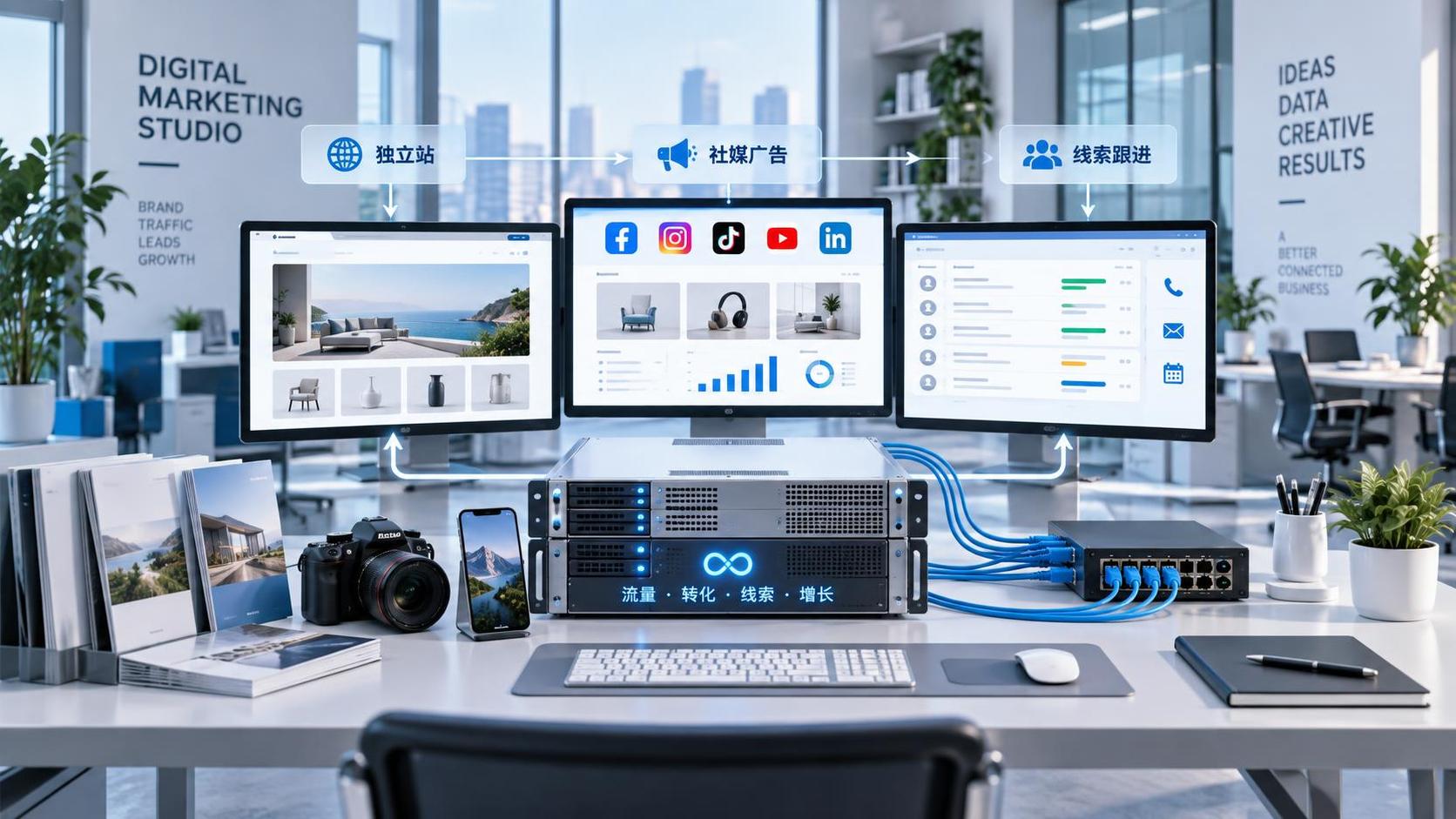
Yiyingbao Information Technology (Beijing) Co., Ltd. has long served foreign trade enterprises, manufacturing plants, cross-border e-commerce sellers and brands going global. Its core idea is not single-point placement, but to integrate website building, SEO, advertising and data systems.
Leveraging AI-powered website building, multilingual website development, AI-driven advertising and marketing systems, and AI+SEO/GEO optimization systems, businesses can quickly build suitable overseas websites for advertising and then continuously acquire customers through search, advertising, and social media channels.
The value of this integrated solution lies in the fact that Yandex advertising costs are no longer just media consumption, but are incorporated into the entire conversion path for unified optimization, making cost assessment clearer.
Conclusion: First, clarify the structure, then decide how much to invest.
Returning to the initial question, how are Yandex advertising costs calculated? Simply put, you need to break down the costs of account opening, clicks, service fees, and conversions, and then combine them to see the true customer acquisition cost.
If a company is preparing to enter the Russian-speaking market, it is recommended to first conduct a small-scale test budget to confirm keyword performance, website capacity, and lead quality before deciding whether to increase investment.
The truly worthwhile investment in Yandex advertising isn't about spending the least amount, but about having a clear structure, manageable risks, and reusable results. Understanding these factors leads to more stable purchasing decisions and makes it easier to achieve long-term growth.
Related Articles

Related Products
 Yiyingbao SaaS Intelligent Website Building and Marketing SystemYiyingbao SaaS Intelligent Website Building and Marketing System, AI-powered no-code website building, rapid creation of multilingual B2B international websites in 10 minutes, global server acceleration, AI-powered SEO optimization, helping businesses connect efficiently with global markets. The perfect integration of technology and operation makes building an international trade website remarkably simple
 AI+SEM Intelligent Advertising Marketing SystemAI+SEM drives intelligent ad creation, empowering full-funnel precision advertising marketing. The system automatically generates weekly/monthly reports, AI recommends keywords and target countries, monitors core metrics in real-time with intelligent alerts, and enables one-click high-conversion ad solutions to help quickly acquire customers and improve ROI.
 AI+SEO Dual-Engine System Optimization ServicesYiyingbao’s AI+SEO dual-engine optimization system helps foreign trade enterprises acquire high-quality organic traffic through AI-powered keyword research, content generation, and comprehensive technical optimization, significantly improving search rankings and conversion rates.
 AI+SNS Social Media Marketing SystemYingbao AI+SNS Social Media Marketing System - Precision social capture for the social media era. Supports one-click content synchronization across major platforms like Facebook and LinkedIn. AI intelligently rewrites posts for enhanced relevance. 24/7 AI customer service and user profiling analysis empower businesses to efficiently expand into global markets.
 AI+SEO营销解决方案易营宝AI+SEO营销解决方案,通过AI批量写作、智能生成TDK、精准关键词扩词等功能,全面优化网站SEO效果,提升流量与转化率。助力企业构建高效智能网站新生态。
 AI+SEM Advertising Marketing SolutionsAI+SEM Advertising Marketing Solution leverages AI technology to deeply empower SEM ad campaigns. It automatically generates weekly/monthly reports using AI, presenting account data across multiple dimensions for comprehensive insights into campaign performance and trends. The system precisely recommends keywords and target countries, intelligently generates high-conversion ad copy, and enables one-click activation of efficient campaign plans to help businesses rapidly acquire customers. Simultaneously, it monitors core metrics in real time, intelligently identifies abnormal fluctuations, and issues timely alerts to ensure stable, high-return advertising results.
 Domain Name ServicesEasyWin provides professional domain name services, including intelligent queries, one-stop registration, brand protection, and full lifecycle management, helping businesses build a digital brand image.
 EasyOperate B2C Cross-Border E-Commerce Platform & Independent WebsiteEasyStore B2C Cross-border E-commerce Independent Store is an intelligent website building and cross-border e-commerce integrated solution independently developed by EasyStore Information Technology (Beijing) Co., Ltd. The system is specially designed for small and medium-sized as well as large export enterprises, integrating 'website building, operation, marketing, advertising, and conversion' into one, helping enterprises quickly establish cross-border e-commerce independent stores to achieve brand globalization and global sales growth.
The platform supports multiple languages, multiple currencies, and multi-channel marketing, with built-in AI intelligent translation and SEO optimization systems, suitable for mainstream markets such as Southeast Asia, Europe and America, Latin America, and the Middle East, assisting Chinese manufacturing enterprises in efficiently deploying international e-commerce strategies. SSL证书易营宝提供专业SSL安全证书服务,包括单域名和泛域名证书,确保网站数据传输加密、身份验证和完整性保护,助力企业建立安全可信的在线业务环境。









