









- Qingdao Port's Imports and Exports Exceed RMB 23.699 Trillion in the First 10 Months, Drawing Attention to Port IntelligenceNov 22, 2026View details
- Ningbo Cross-Border E-Commerce Export Value Surges 94.87% Year on Year, Opening Up a New Billion-Yuan Growth TrackNov 22, 2026View details
- AliExpress Global Double 11: Brand Sales Grow Nearly 50% in the First Week, U.S. GMV Rises 70%Nov 21, 2026View details
- Ministry of Commerce Reports E-commerce Development from January to October 2026, with Cross-Border Imports Performing StronglyNov 21, 2026View details
- Amazon Black Friday Orders Sluggish on Day One; NRF Forecasts 4.2 Million Fewer ParticipantsNov 21, 2026View details
- 21st Century Business Herald: AI and CTV Become Core Growth Engines for Digital Marketing in Overseas MarketsNov 18, 2026View details
What factors determine Google Ads costs?
Google Ads costs are primarily determined by competition, bidding strategy, ad quality, targeting scope, and budget settings. The German search term adwords kosten refers to Google advertising costs. Actual spend is not based on a fixed rate card; it is affected by ad auctions and billing methods.
When evaluating a budget, distinguish platform ad spend from related costs such as service fees, website development, and creative production. Keeping ad spend under control does not necessarily mean your customer acquisition costs are reasonable; you also need to consider whether the traffic converts into qualified inquiries or orders.
How are adwords kosten determined through ad auctions?
Google Ads runs auctions among ads that meet the eligibility requirements for serving. For search ads, for example, the system considers factors such as bids, ad and landing page quality, the competitive environment, and ad assets to determine whether an ad is shown and where it appears. Your bid is not the actual amount paid, nor is it the only factor that matters.
A campaign’s billing method depends on the ad type and bidding strategy. Search ads are commonly charged per click, while some display and video ads may be charged per impression or view. Therefore, confirm the campaign objective and billing unit before approving costs; do not directly compare rates across different ad types.
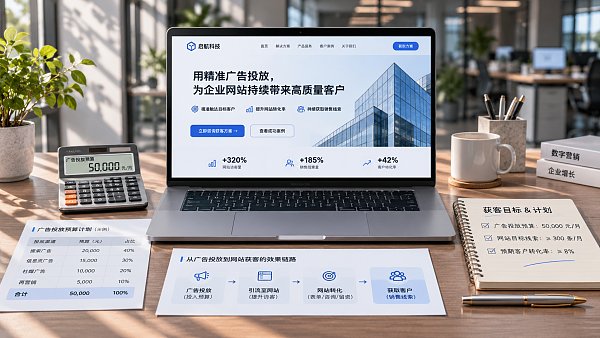
For cost-per-click billing, ad spend can be understood as the sum of the charges for all billable clicks. The budget sets the spending limit, while the cost per click and number of clicks together affect how quickly it is spent. However, the platform may spend more than the average daily budget on some days, and eligible campaigns are also subject to rules such as monthly spending limits. The daily budget should not be treated as an absolute cap that can never be exceeded on any given day.
What factors affect ad costs?
Keywords and the competitive environment
Keywords reflect users’ search intent and determine which auctions an ad can enter. Keywords with clear purchase intent may attract more competitors; broader terms can reach more people but may also generate clicks that are not relevant to your business. Keyword match types and negative keyword settings affect which searches trigger your ads and, in turn, the cost structure.
Competition is not static. Auction conditions for the same keyword may vary by location, time, and device. Historical cost-per-click data can be used as a budgeting reference, but should not be treated as a guarantee of future prices.
Target markets, audiences, and campaign reach
The countries or regions, languages, devices, time periods, and audience segments targeted all affect the available auction opportunities and level of competition. Broader reach can help you connect with more potential customers, but may also increase traffic that does not meet your sales criteria.
When targeting multiple overseas markets, check that your location settings, local-language landing pages, and service coverage are aligned. An ad being visible does not mean a sale can be made. If shipping, delivery, or sales support is unavailable in a region, clicks from that region may be unlikely to generate a return.
Ad and landing page quality
The better your ad matches search intent and the clearer the information on your landing page, the more likely you are to improve the user experience and ad performance. Poor relevance, slow page loading, or an unclear inquiry path may cause visitors to leave after clicking and increase customer acquisition costs.
Quality Score in Google Ads is a diagnostic reference. It is not equivalent to all the signals used in each auction, and achieving a particular score does not guarantee a fixed discount. Improving quality requires attention to ad copy, keywords, and landing pages—not just pursuing a single score in your account.
Bidding strategies and conversion data
With manual bidding, campaign managers set bids themselves; automated bidding adjusts bids based on the selected objective and available signals. Strategies focused on conversions require reliable conversion tracking. If invalid forms or duplicate inquiries are all recorded as conversions, the system’s optimization may diverge from actual business value.
Target cost per conversion is an optimization goal, not a guarantee of the price for each conversion. Setting the target too low may limit traffic, while setting it too high may increase customer acquisition costs. Evaluate it in context of historical data, business margins, and campaign volume.
Which costs should be included in budget approval?
Google billing amounts, service provider quotes, and total internal project costs may use different accounting bases. Contracts should specify whether service fees include ad spend, taxes, and creative production costs to avoid double-counting or overlooking future expenses.
How can you determine whether a budget is worth approving?
You can use a set of assumptions to estimate costs. For example, if a campaign is expected to receive 1,000 clicks at an average cost per click of 10 yuan, the ad spend would be 10,000 yuan. If those clicks generate 20 qualified inquiries, the cost per qualified inquiry based on ad spend alone would be 500 yuan. This is not a market rate; it is provided only to illustrate the calculation method.
If there is also a service fee of 3,000 yuan and a landing page production fee of 2,000 yuan, and both are included in the project costs for that period, the all-in cost per qualified inquiry would be 750 yuan. When calculating actual costs, allocate one-time development expenses in a way that aligns with the budget period and your internal accounting practices.
Inquiry costs should also be linked to sales. If 20 qualified inquiries ultimately result in 2 orders, the customer acquisition cost per order for that period’s campaign-related costs would be 7,500 yuan. Whether this is acceptable depends on order margins, repeat purchase value, fulfillment costs, and whether the orders can actually be attributed to the ads.
Considerations when controlling costs
- Define qualified conversions first: Specify which forms, calls, or orders meet your business requirements, exclude duplicates and clearly invalid records, and regularly verify tracking data.
- Review markets and campaigns separately: Cost differences across regions, products, and keywords can be obscured by account averages. Adjust budgets based on performance at the individual level.
- Check billing and campaign settings: Confirm the account currency, payment method, budget adjustment permissions, and automatic renewal arrangements. Regularly reconcile platform spend with service provider charges.
- Allow time for evaluation: Businesses with longer sales cycles should not judge returns solely by the number of forms submitted during the current period. Continue to track inquiry quality, opportunities, and sales, and document attribution limitations.
The key to determining whether Google Ads costs are reasonable is not to make each click as cheap as possible, but to assess whether total investment, qualified conversions, and actual profit are aligned. Clear budgets, billing methods, service scope, and performance measurement criteria provide a sound basis for comparing and controlling ad costs.
Related Articles
 How to Request a Review After Violating Google Ads Policies
 What factors determine Google Ads costs?
 Microsoft Confirms Ads with “Made With AI” Labels in Bing AI Overviews

Related Products
 Yiyingbao SaaS Intelligent Website Building and Marketing SystemYiyingbao SaaS Intelligent Website Building and Marketing System, AI-powered no-code website building, rapid creation of multilingual B2B international websites in 10 minutes, global server acceleration, AI-powered SEO optimization, helping businesses connect efficiently with global markets. The perfect integration of technology and operation makes building an international trade website remarkably simple
 AI+SEM Intelligent Advertising Marketing SystemAI+SEM drives intelligent ad creation, empowering full-funnel precision advertising marketing. The system automatically generates weekly/monthly reports, AI recommends keywords and target countries, monitors core metrics in real-time with intelligent alerts, and enables one-click high-conversion ad solutions to help quickly acquire customers and improve ROI.
 AI+SEO Dual-Engine System Optimization ServicesYiyingbao’s AI+SEO dual-engine optimization system helps foreign trade enterprises acquire high-quality organic traffic through AI-powered keyword research, content generation, and comprehensive technical optimization, significantly improving search rankings and conversion rates.
 AI+SNS Social Media Marketing SystemYingbao AI+SNS Social Media Marketing System - Precision social capture for the social media era. Supports one-click content synchronization across major platforms like Facebook and LinkedIn. AI intelligently rewrites posts for enhanced relevance. 24/7 AI customer service and user profiling analysis empower businesses to efficiently expand into global markets.
 AI+SEO营销解决方案易营宝AI+SEO营销解决方案,通过AI批量写作、智能生成TDK、精准关键词扩词等功能,全面优化网站SEO效果,提升流量与转化率。助力企业构建高效智能网站新生态。
 AI+SEM Advertising Marketing SolutionsAI+SEM Advertising Marketing Solution leverages AI technology to deeply empower SEM ad campaigns. It automatically generates weekly/monthly reports using AI, presenting account data across multiple dimensions for comprehensive insights into campaign performance and trends. The system precisely recommends keywords and target countries, intelligently generates high-conversion ad copy, and enables one-click activation of efficient campaign plans to help businesses rapidly acquire customers. Simultaneously, it monitors core metrics in real time, intelligently identifies abnormal fluctuations, and issues timely alerts to ensure stable, high-return advertising results.
 Domain Name ServicesEasyWin provides professional domain name services, including intelligent queries, one-stop registration, brand protection, and full lifecycle management, helping businesses build a digital brand image.
 EasyOperate B2C Cross-Border E-Commerce Platform & Independent WebsiteEasyStore B2C Cross-border E-commerce Independent Store is an intelligent website building and cross-border e-commerce integrated solution independently developed by EasyStore Information Technology (Beijing) Co., Ltd. The system is specially designed for small and medium-sized as well as large export enterprises, integrating 'website building, operation, marketing, advertising, and conversion' into one, helping enterprises quickly establish cross-border e-commerce independent stores to achieve brand globalization and global sales growth.
The platform supports multiple languages, multiple currencies, and multi-channel marketing, with built-in AI intelligent translation and SEO optimization systems, suitable for mainstream markets such as Southeast Asia, Europe and America, Latin America, and the Middle East, assisting Chinese manufacturing enterprises in efficiently deploying international e-commerce strategies. SSL证书易营宝提供专业SSL安全证书服务,包括单域名和泛域名证书,确保网站数据传输加密、身份验证和完整性保护,助力企业建立安全可信的在线业务环境。









