









- Qingdao Port's Imports and Exports Exceed RMB 23.699 Trillion in the First 10 Months, Drawing Attention to Port IntelligenceNov 22, 2026View details
- Ningbo Cross-Border E-Commerce Export Value Surges 94.87% Year on Year, Opening Up a New Billion-Yuan Growth TrackNov 22, 2026View details
- AliExpress Global Double 11: Brand Sales Grow Nearly 50% in the First Week, U.S. GMV Rises 70%Nov 21, 2026View details
- Ministry of Commerce Reports E-commerce Development from January to October 2026, with Cross-Border Imports Performing StronglyNov 21, 2026View details
- Amazon Black Friday Orders Sluggish on Day One; NRF Forecasts 4.2 Million Fewer ParticipantsNov 21, 2026View details
- 21st Century Business Herald: AI and CTV Become Core Growth Engines for Digital Marketing in Overseas MarketsNov 18, 2026View details
What should you look for when choosing a B2B export website development company?
When choosing a B2B website development company for export businesses, don’t focus only on the website development price. You should also consider the site’s marketing capabilities, SEO foundations, and ongoing support. A beautifully designed website can still leave your investment amounting to little more than “having a website” if buyers can’t find key specifications, search engines can’t access the site properly, or inquiries aren’t received promptly. When comparing providers, the more important question is whether your business can continue using the website to generate and handle sales opportunities after launch.
First, check whether the provider understands the B2B purchasing process
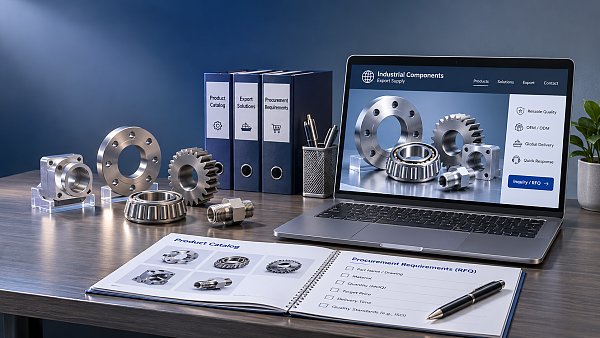
International buyers visiting a website are often looking for more than a few product photos. They want to determine whether a supplier can meet their project requirements. This is especially true for industrial equipment, components, and custom manufacturing, where buyers may first review applications, specification ranges, and delivery capabilities before deciding whether to submit drawings or contact sales.
When evaluating a proposal, consider using a real product as a test case. How will the provider organize product categories? Can product detail pages display verifiable technical specifications, application information, and FAQs? How will customers be guided to get in touch when information needs to remain confidential or has not yet been standardized? If a proposal focuses only on homepage design and the number of website sections but cannot explain how buyers will find the information they need, proceed with caution.
Credibility-building content should also be evidence-based. Factory photos, production processes, testing capabilities, and company credentials should match the information you actually have. When certifications are involved, check the applicable products, validity period, and certificate details, and avoid displaying irrelevant credentials on every product page.
Marketing capabilities should be reflected in pages and inquiry paths
A marketing-oriented export website doesn’t mean cramming every page with inquiry buttons. It means helping visitors at different stages know what to do next. Visitors who are just learning about a product may need to review selection information; those with clearly defined requirements may want to quickly submit specifications, quantities, and destination details.
Inquiry forms should be tailored to your business. If there are too few fields, sales staff may need to repeatedly ask for more information; if there are too many, visitors may abandon the form. You can make product requirements and contact details mandatory while allowing visitors to provide drawings and purchasing timelines as needed. Also check that the form is easy to use on mobile devices, provides clear confirmation after submission, and sends notification emails reliably.
Ask where inquiry data is stored, who is authorized to view it, how it can be exported, and how spam is handled. Before launch, have your own staff complete a submission, receipt, and response test rather than relying solely on screenshots of the backend.
SEO foundations are not a ranking guarantee
Search optimization should start with the website structure, not with adding a few keywords to pages after launch. Ask the website development company how it plans product and application pages, whether page titles, descriptions, and URLs can be edited, how the sitemap is generated, and whether search engines can access the main content. For a website redesign, the provider should also map old URLs to their new destinations to prevent existing pages from simply becoming unavailable.
A multilingual website is not finished just because its Chinese content has been automatically translated. Purchasing terminology and communication styles can vary between markets, so business staff or translators familiar with the industry should review important product pages. Also confirm that each language version has its own URL, the language switcher is clear, and there is a process for maintaining translations when new products are added.
The basic setup included in website development and ongoing search optimization are two different things. The former primarily ensures that a website can be found and understood; the latter also involves content updates, technical checks, and performance analysis. If a provider promises to “guarantee rankings” or “guarantee indexing,” ask them to clarify the conditions and limits of their responsibility. Search results are not determined by a website development company alone.
Compare website development and promotion as part of one plan
The value of integrated website and marketing services lies in reducing disconnects between pages, traffic, and sales activities. For example, if a business plans to run search ads, it should first confirm which landing pages visitors will reach, whether those pages address their search intent, and whether inquiry submissions can be tracked. Even if an ad generates visits, directing people to a generic homepage without relevant product information may not lead to meaningful conversations.
Different channels also call for different expectations. SEO usually requires ongoing content development; advertising can be used to test demand within a set budget, but traffic quality and follow-up need to be monitored; social media is suited to showcasing product applications and company updates, though its specific value depends on the industry and audience. A provider should explain how the channels complement one another rather than bundling them all together and reporting only on traffic volume.
For example, EasyYingbao provides smart website development, multilingual websites, search optimization, advertising, and overseas social media services. For businesses considering an integrated partnership, a more practical approach is to confirm which work the provider will carry out, what materials the business needs to supply internally, and how website development fees, management service fees, and advertising costs are itemized, based on the target markets and budget. AI-assisted content creation or optimization can improve efficiency for some tasks, but product specifications and industry-related wording should still be reviewed by people familiar with the business.
Beyond the quoted price, check ownership of assets and delivery scope
A low-cost proposal is not necessarily unsuitable, but it’s important to understand what it includes. Whether the design is template-based or custom, how many pages and language versions are included, who writes the content, how many revisions are allowed, and how long maintenance lasts after launch can all affect the actual investment. For businesses that have not yet finalized their product materials, starting with an expandable basic website may be more practical than purchasing a large number of pages they will not use immediately.
The company should control the domain registration account. Ownership and administrator access for the website backend, analytics tools, and advertising accounts should also be clearly defined. If you use a SaaS website builder, find out about renewal prices, feature limitations, data export options, and whether content can be migrated if the partnership ends. Visual editing makes routine updates easier, but it does not mean that source code, design files, or the system itself can all be exported. This should be specified in the contract.
Acceptance testing should go beyond confirming that “the website opens.” Check page content, mobile display, form notifications, language switching, basic accessibility, and backend permissions item by item. If the site collects visitor data or uses tracking tools, or if privacy requirements apply in target markets, verify the relevant requirements based on the specific business and local regulations. Responsibilities for post-launch backups, security maintenance, incident response, and training should also be clearly assigned.
Before choosing a B2B website development company for export businesses, consider bringing a brief requirements checklist to discussions with prospective providers: What are your main products? Which markets are you targeting? Are your existing materials complete? Which channels do you plan to use to generate leads? Ask each provider to submit a page plan, delivery scope, and itemized costs based on the same requirements, then compare the proposals. This usually makes it easier to spot differences than comparing total prices alone.
Related Articles
 一站式营销平台服务如何核算整体采购成本
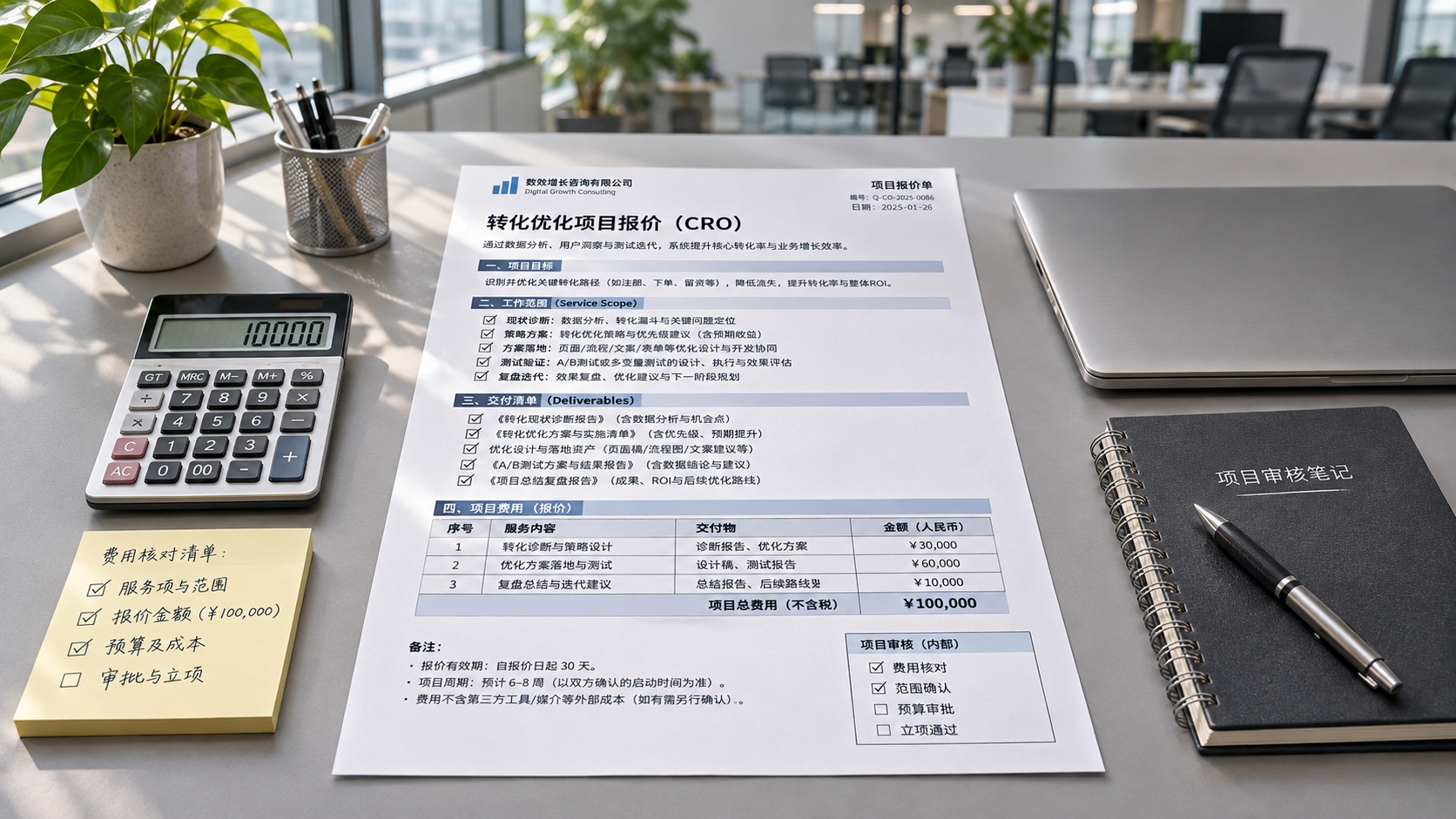
 B2B转化率优化费用通常包含哪些项目
 What Factors Affect the Cost of Export Website Development Services in Jiangsu?


Related Products
 Yiyingbao SaaS Intelligent Website Building and Marketing SystemYiyingbao SaaS Intelligent Website Building and Marketing System, AI-powered no-code website building, rapid creation of multilingual B2B international websites in 10 minutes, global server acceleration, AI-powered SEO optimization, helping businesses connect efficiently with global markets. The perfect integration of technology and operation makes building an international trade website remarkably simple
 AI+SEM Intelligent Advertising Marketing SystemAI+SEM drives intelligent ad creation, empowering full-funnel precision advertising marketing. The system automatically generates weekly/monthly reports, AI recommends keywords and target countries, monitors core metrics in real-time with intelligent alerts, and enables one-click high-conversion ad solutions to help quickly acquire customers and improve ROI.
 AI+SEO Dual-Engine System Optimization ServicesYiyingbao’s AI+SEO dual-engine optimization system helps foreign trade enterprises acquire high-quality organic traffic through AI-powered keyword research, content generation, and comprehensive technical optimization, significantly improving search rankings and conversion rates.
 AI+SNS Social Media Marketing SystemYingbao AI+SNS Social Media Marketing System - Precision social capture for the social media era. Supports one-click content synchronization across major platforms like Facebook and LinkedIn. AI intelligently rewrites posts for enhanced relevance. 24/7 AI customer service and user profiling analysis empower businesses to efficiently expand into global markets.
 AI+SEO营销解决方案易营宝AI+SEO营销解决方案,通过AI批量写作、智能生成TDK、精准关键词扩词等功能,全面优化网站SEO效果,提升流量与转化率。助力企业构建高效智能网站新生态。
 AI+SEM Advertising Marketing SolutionsAI+SEM Advertising Marketing Solution leverages AI technology to deeply empower SEM ad campaigns. It automatically generates weekly/monthly reports using AI, presenting account data across multiple dimensions for comprehensive insights into campaign performance and trends. The system precisely recommends keywords and target countries, intelligently generates high-conversion ad copy, and enables one-click activation of efficient campaign plans to help businesses rapidly acquire customers. Simultaneously, it monitors core metrics in real time, intelligently identifies abnormal fluctuations, and issues timely alerts to ensure stable, high-return advertising results.
 Domain Name ServicesEasyWin provides professional domain name services, including intelligent queries, one-stop registration, brand protection, and full lifecycle management, helping businesses build a digital brand image.
 EasyOperate B2C Cross-Border E-Commerce Platform & Independent WebsiteEasyStore B2C Cross-border E-commerce Independent Store is an intelligent website building and cross-border e-commerce integrated solution independently developed by EasyStore Information Technology (Beijing) Co., Ltd. The system is specially designed for small and medium-sized as well as large export enterprises, integrating 'website building, operation, marketing, advertising, and conversion' into one, helping enterprises quickly establish cross-border e-commerce independent stores to achieve brand globalization and global sales growth.
The platform supports multiple languages, multiple currencies, and multi-channel marketing, with built-in AI intelligent translation and SEO optimization systems, suitable for mainstream markets such as Southeast Asia, Europe and America, Latin America, and the Middle East, assisting Chinese manufacturing enterprises in efficiently deploying international e-commerce strategies. SSL证书易营宝提供专业SSL安全证书服务,包括单域名和泛域名证书,确保网站数据传输加密、身份验证和完整性保护,助力企业建立安全可信的在线业务环境。









