









- Can the average annual growth rate reflect real opportunities in overseas markets?Oct 07, 2026View details
- Which customer acquisition channels will be affected by cross-border marketing trends in 2026?Sep 06, 2026View details
- Which homogenization risks should be considered in an analysis of the AI-powered website building industry?Aug 30, 2026View details
- How Will AI Marketing Trends 2026 Change Advertising Budget AllocationAug 28, 2026View details
- Is the EV SSL certificate market shrinking or upgrading? How should companies assess certificate procurement?Aug 11, 2026View details
- Why the old AMP SEO 2020 practices no longer work and what has changed in current optimization prioritiesAug 02, 2026View details
Which teams are AI-driven foreign trade website building solutions suitable for?
When determining whether an AI-driven foreign trade website-building solution is suitable for a team, it is not enough to look only at whether it can build websites quickly or automatically generate content. For technical evaluators, the more practical questions are whether it can integrate with existing lead-generation workflows, support multiple languages, markets, and continuous content updates, and whether its automation capabilities remain governed by controllable business rules.
It is generally suitable for three types of teams: manufacturing exporters with extensive products and materials that want to shorten their launch cycle; global brands that need to manage multiple languages, landing pages, or country-specific sites simultaneously; and growth teams that already regard search, advertising, and social media as ongoing customer acquisition channels and need their websites to evolve continuously rather than be delivered as one-off projects. If a company only needs an English-language website to showcase its qualifications, does not update its pages over the long term, and has no clear traffic acquisition plan, the value delivered by AI capabilities is often limited.
Suitable for Teams Where Content Updates Are Part of Daily Work
The bottleneck of traditional foreign trade websites often lies not in page creation, but in subsequent maintenance. New product launches, product parameter adjustments, additions to industry solutions, and campaign landing page production all involve scheduling for copywriting, translation, design, and development. For teams with numerous SKUs and product information scattered across catalogs, Excel files, PIM systems, or among business personnel, content production speed directly affects how many valid search demands the website can cover.
AI-driven foreign trade website building is suitable for standardizing these repetitive processes: generating initial page drafts based on product fields, organizing selling points and parameters according to predefined modules, assisting in the generation of multilingual versions, and configuring corresponding content structures for different markets. The prerequisite is that the company already has a relatively stable product information system. If the source data itself contains confusing model numbers, missing parameters, unclear certification status, or inconsistent sales messaging, automated generation will only amplify errors more quickly.
During technical evaluation, priority should be given to confirming whether the system can retain human review checkpoints. Particularly for content involving performance parameters, delivery lead times, certifications, application scenarios, medical matters, or industrial safety, AI-generated content should serve as drafts pending review rather than directly becoming external commitments. Editable field rules, version records, publishing permissions, and rollback mechanisms are often more practically valuable than how many seconds it takes to generate an article.
Suitable for Teams That Need to Integrate Their Website into a Growth System
Whether a foreign trade website can generate inquiries after launch depends on whether the website-building system can support subsequent promotion, rather than on the visual effect of the homepage. For teams that have already deployed Google organic search, advertising, overseas social media traffic acquisition, or email marketing, the website needs to support the rapid creation of topic pages, conversion path configuration by channel, identification of visit behavior from different sources, and continuous refinement of content and pages.
For such teams, the value of adopting an AI-driven solution is usually reflected in the connection between website building, content, and optimization. For example, it can expand long-tail topics around a specific type of procurement demand, generate reviewable drafts for different product lines, complete titles, descriptions, and page structures in batches, and then adjust priorities based on indexing, ranking, and conversion signals. Simply generating pages in batches does not mean SEO will be effective; search engines care more about whether pages have a clear purpose, independent informational value, and reliable professional support.
Therefore, when evaluating a platform, do not only ask whether it provides keyword recommendations or article generation. Also examine whether content can be categorized according to site architecture, whether page-level metadata management is supported, whether keyword-to-page relationships can be tracked, and whether optimization recommendations can be implemented on specific pages through specific actions. For B2B corporate websites and independent cross-border e-commerce sites, SEO optimization capabilities that connect search intent, product attributes, and conversion actions are more worthy of evaluation than simply increasing the volume of content.
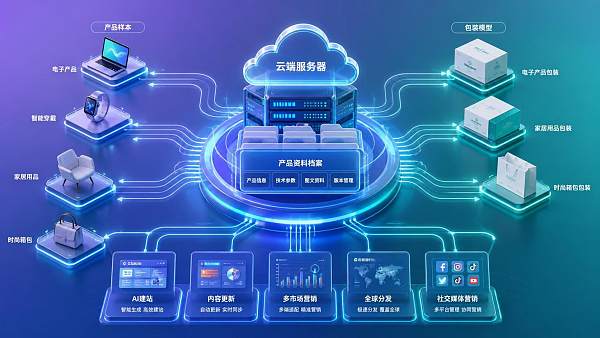
Multilingual, Multi-Market Operations Teams Are More Likely to Gain Compounding Benefits
Multilingual support is not simply a matter of translating Chinese or English pages into more versions. Buyers in different markets may have different priorities, units of measurement, certification terminology, delivery practices, and search terms. Pages for the European market may need to highlight compliance documentation and distributor support, while pages for the North American market may place greater emphasis on specifications, lead times, and application cases. AI can improve the efficiency of multilingual content processing, but it cannot automatically make market judgments for a company.
Teams suited to adopting this type of system can usually already answer several basic questions: which countries each language version targets; which products are worth creating standalone pages for; who reviews local pages; which sales organization receives inquiries; and whether different markets require different privacy, Cookie, or form rules. If these questions have no answers, deploying complex multilingual sites first will often result in a group of pages that appear complete but are actually left unmanaged.
At the technical level, the capabilities linking language versions should also be examined, including URL rules, sitemaps, language switching, regional targeting, duplicate content control, and translation update mechanisms. For key markets, it is advisable to retain room for localization revisions and not treat machine translation output as the final version. Literal translation can easily cause misunderstandings, especially for product names, industry terminology, after-sales commitments, and calls to action.
Situations That Are Not Well Suited to an Immediate Full-Scale Switch
Some teams are interested in AI website building but are not currently suited to immediate large-scale migration. The first situation is when an old website has already accumulated substantial organic traffic and backlinks, but URL structures, page assets, and redirects have not been fully reviewed. In this case, the top priority is a migration plan rather than redesigning the interface; improper handling can cause the loss of existing indexing and rankings.
The second situation is a highly customized technical architecture. If a website handles distributor pricing, complex quotations, ERP inventory, CRM lead allocation, membership permissions, or regional product restrictions, it is necessary first to confirm the SaaS website-building platform's interfaces, permission model, data export capabilities, and exception handling mechanisms. The stronger its templating capabilities, the more important it is to confirm whether it can accommodate critical business differences.
The third situation is when the team has no clearly defined content owner. AI can reduce drafting costs, but page review, product updates, inquiry attribution, and optimization implementation still require someone to take responsibility across business, marketing, and technology. Without an operating mechanism, a website may launch quickly at first but is likely to remain in its original state after several months.
Technical Evaluation Should Be Based on a Verifiable Checklist
During vendor selection meetings, discuss the degree of AI less and require suppliers to demonstrate more within real business workflows. A practical inspection sequence is as follows:
- Use a set of real product materials to generate a page, and check whether parameters are structured, easy to modify manually, and free from unconfirmed statements.
- Create a multilingual page for a target market, and examine whether translation, URLs, navigation, language associations, and subsequent updates can be managed.
- Enter a landing page through an advertising or search channel, and verify whether forms, tracking, source identification, CRM, or email notifications form a closed loop.
- Simulate migration of an old page, and check URL mapping, redirects, meta tags, sitemaps, and exportable historical content.
- Confirm account permissions, data ownership, backup exports, log records, and how the website will be handled after service termination.
Ultimately, the suitability of AI-driven foreign trade website building depends on whether the team treats its website as a continuously operated customer acquisition asset. For teams with content-intensive operations, multi-market management, and a need to rapidly test growth directions, it can reduce a large amount of repetitive work. For teams whose business rules have not yet been organized, whose information foundation is weak, or that lack maintenance capabilities after launch, improving content and process governance first is usually more meaningful than pursuing automation.
Related Articles


Related Products
 Yiyingbao SaaS Intelligent Website Building and Marketing SystemYiyingbao SaaS Intelligent Website Building and Marketing System, AI-powered no-code website building, rapid creation of multilingual B2B international websites in 10 minutes, global server acceleration, AI-powered SEO optimization, helping businesses connect efficiently with global markets. The perfect integration of technology and operation makes building an international trade website remarkably simple
 AI+SEM Intelligent Advertising Marketing SystemAI+SEM drives intelligent ad creation, empowering full-funnel precision advertising marketing. The system automatically generates weekly/monthly reports, AI recommends keywords and target countries, monitors core metrics in real-time with intelligent alerts, and enables one-click high-conversion ad solutions to help quickly acquire customers and improve ROI.
 AI+SEO Dual-Engine System Optimization ServicesYiyingbao’s AI+SEO dual-engine optimization system helps foreign trade enterprises acquire high-quality organic traffic through AI-powered keyword research, content generation, and comprehensive technical optimization, significantly improving search rankings and conversion rates.
 AI+SNS Social Media Marketing SystemYingbao AI+SNS Social Media Marketing System - Precision social capture for the social media era. Supports one-click content synchronization across major platforms like Facebook and LinkedIn. AI intelligently rewrites posts for enhanced relevance. 24/7 AI customer service and user profiling analysis empower businesses to efficiently expand into global markets.
 AI+SEO营销解决方案易营宝AI+SEO营销解决方案,通过AI批量写作、智能生成TDK、精准关键词扩词等功能,全面优化网站SEO效果,提升流量与转化率。助力企业构建高效智能网站新生态。
 AI+SEM Advertising Marketing SolutionsAI+SEM Advertising Marketing Solution leverages AI technology to deeply empower SEM ad campaigns. It automatically generates weekly/monthly reports using AI, presenting account data across multiple dimensions for comprehensive insights into campaign performance and trends. The system precisely recommends keywords and target countries, intelligently generates high-conversion ad copy, and enables one-click activation of efficient campaign plans to help businesses rapidly acquire customers. Simultaneously, it monitors core metrics in real time, intelligently identifies abnormal fluctuations, and issues timely alerts to ensure stable, high-return advertising results.
 Domain Name ServicesEasyWin provides professional domain name services, including intelligent queries, one-stop registration, brand protection, and full lifecycle management, helping businesses build a digital brand image.
 EasyOperate B2C Cross-Border E-Commerce Platform & Independent WebsiteEasyStore B2C Cross-border E-commerce Independent Store is an intelligent website building and cross-border e-commerce integrated solution independently developed by EasyStore Information Technology (Beijing) Co., Ltd. The system is specially designed for small and medium-sized as well as large export enterprises, integrating 'website building, operation, marketing, advertising, and conversion' into one, helping enterprises quickly establish cross-border e-commerce independent stores to achieve brand globalization and global sales growth.
The platform supports multiple languages, multiple currencies, and multi-channel marketing, with built-in AI intelligent translation and SEO optimization systems, suitable for mainstream markets such as Southeast Asia, Europe and America, Latin America, and the Middle East, assisting Chinese manufacturing enterprises in efficiently deploying international e-commerce strategies. SSL证书易营宝提供专业SSL安全证书服务,包括单域名和泛域名证书,确保网站数据传输加密、身份验证和完整性保护,助力企业建立安全可信的在线业务环境。









