









- Can the average annual growth rate reflect real opportunities in overseas markets?Oct 07, 2026View details
- Which customer acquisition channels will be affected by cross-border marketing trends in 2026?Sep 06, 2026View details
- Which homogenization risks should be considered in an analysis of the AI-powered website building industry?Aug 30, 2026View details
- How Will AI Marketing Trends 2026 Change Advertising Budget AllocationAug 28, 2026View details
- Is the EV SSL certificate market shrinking or upgrading? How should companies assess certificate procurement?Aug 11, 2026View details
- Why the old AMP SEO 2020 practices no longer work and what has changed in current optimization prioritiesAug 02, 2026View details
Is an AI website builder suitable for creating a Japanese-language corporate website?
Is an AI Website Generator Suitable for Building a Japanese Corporate Website?
If you are searching for “ai webサイトジェネレーター” and want to launch a Japanese corporate website in less time, the answer is yes—but speed of page generation should not be the only consideration. AI can create layouts, draft copy, and build multilingual pages; however, human review and operational setup are still needed to ensure the Japanese sounds natural, technical information is accurate, and the website can generate inquiries.
For manufacturers and trading companies preparing to enter the Japanese market, the real question is whether the savings in website development will be offset by translation rework, wasted promotional spend, and maintenance costs later on.
Use AI to speed up development, not to make business decisions
A Japanese corporate website is generally well suited to AI-assisted development when the business structure is clear, product information is complete, and the main functions are company information, product displays, and inquiries. Companies can start with the core pages and add application information, technical FAQs, and downloadable resources based on market feedback, rather than publishing a large volume of content all at once.
If a project involves complex product selection calculations, distributor permissions, customer-specific pricing, or integration with internal systems, a template demo alone is not enough to make a decision. Confirm which interfaces the platform supports, which functions require customization, and who will handle future upgrades. A complete-looking page does not mean the business processes are fully functional.
Another situation in which bulk generation should be postponed is when the company has not yet clarified product models, delivery scope, or after-sales responsibilities. AI may turn vague information into firm commitments, increasing the risk of commercial misunderstandings after launch.
For Japanese localization, review purchasing information—not just grammar
A Japanese website is not simply a Chinese website translated sentence by sentence. B2B pages for Japanese customers should help procurement staff quickly confirm the legal entity, product specifications, applicable conditions, transaction methods, and contact channels. Whether to display inspection records, quality management documents, or after-sales arrangements depends on the product category and actual business; AI should not fill these in automatically.
During review, assess business Japanese and technical accuracy separately: Japanese-language specialists should check honorifics, word choice, and usage conventions, while business or engineering staff verify materials, units, tolerances, model numbers, and usage limitations. Fluent language with incorrect specifications is more dangerous than awkward wording.
The pages should also be tested in practice. Check whether Japanese fonts are legible, long headings overflow on mobile devices, and forms can correctly accept Japanese names, company names, and attachments. If a Japanese address, phone number, or service location is displayed, it must reflect actual operations.
Before launch, validate search entry points and inquiry paths together
“SEO support” should not be judged by a feature list alone. Ask the service provider to demonstrate whether page titles, descriptions, URLs, and redirect rules can be managed independently; whether multilingual versions are clearly mapped to one another; and whether important body content and product links can be crawled by search engines. Automatically translating a large number of similar pages does not guarantee meaningful search traffic.
Japanese keywords should not simply be copied from a Chinese keyword list. Organize content around the product names, applications, and selection questions used by Japanese customers. A product page that answers questions about material compatibility, processing capabilities, and lead-time conditions often supports purchasing decisions better than a generic company introduction.
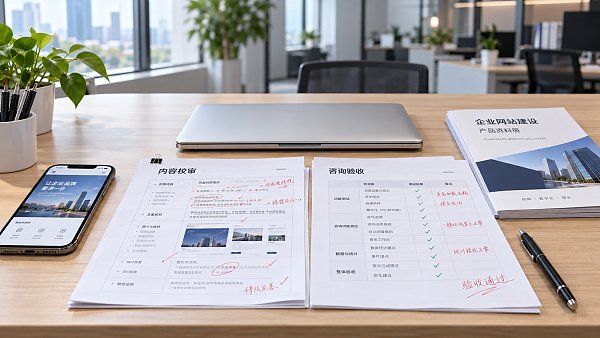
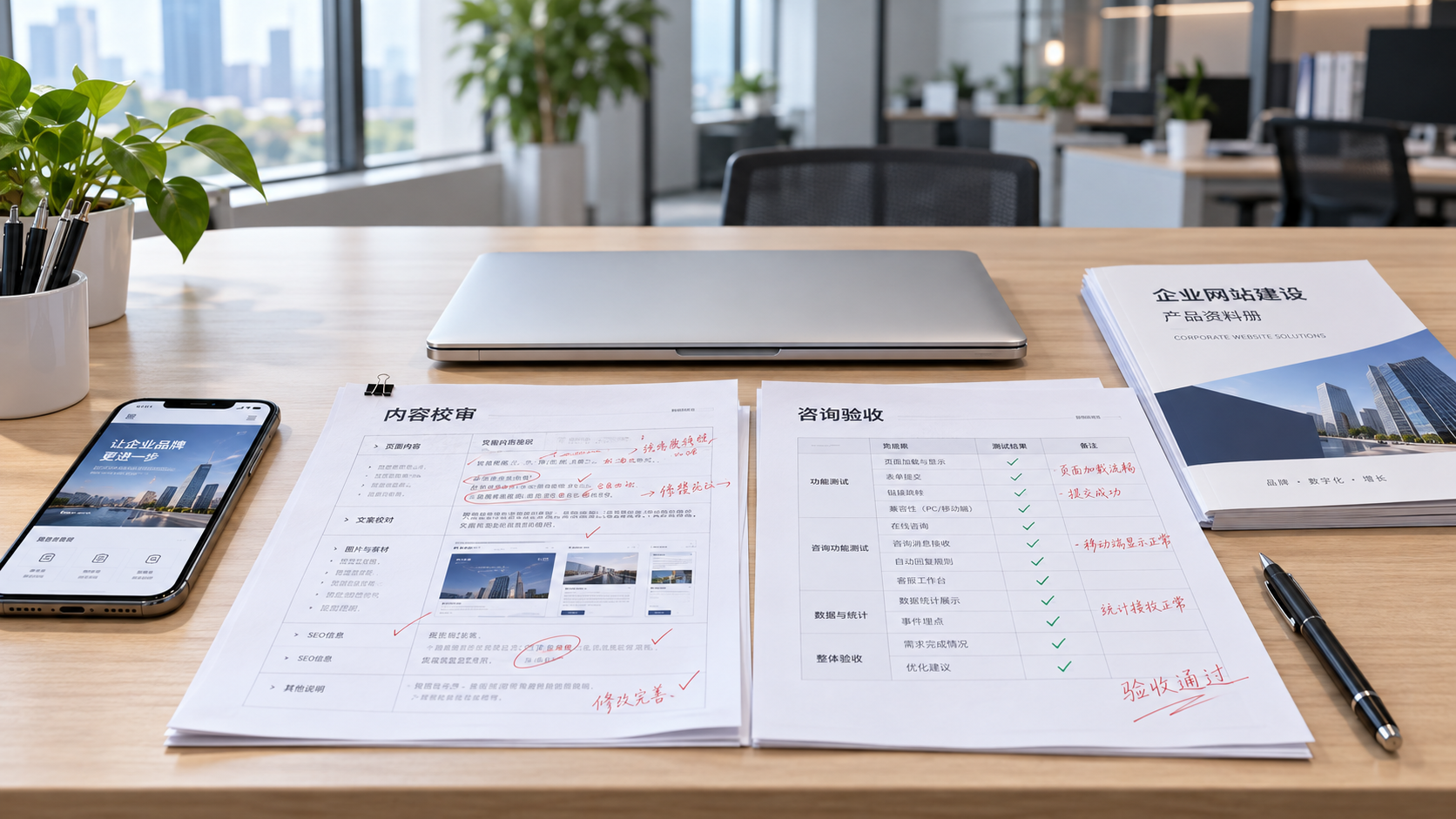
The acceptance test can follow the path “arrive from search—visit a product page—review resources—submit an inquiry—sales receives and follows up.” Check mobile loading, attachment downloads, submission confirmations, email delivery, and inquiry source tracking instead of evaluating only the homepage’s appearance.
When using analytics, ad tracking, or collecting personal information, clarify the purposes of collection, access permissions, and data retention arrangements. Confirm the specific requirements in light of the business and applicable rules. Agree in advance on whether promotional data can be connected to the sales follow-up process.
When comparing options, calculate the annual cost—not just the website development quote
A standalone tool is suitable for teams with Japanese-language editors, technical maintenance staff, and marketing personnel. An integrated website development and marketing service may be a better fit for companies with limited resources for cross-functional coordination. However, an integrated service does not mean every item is included in the base fee.
When comparing quotes, list the costs for platform subscriptions, Japanese-language review, content updates, custom development, ad management, and data maintenance, and distinguish first-year costs from renewal costs. Domain ownership, content export, and migration arrangements after contract termination are also important. A low-cost launch that cannot be migrated smoothly may limit future redesign options.
Yiyingbao Information Technology (Beijing) Co., Ltd., founded in 2013 and headquartered in Beijing, provides AI-powered website development, multilingual websites, SEO, and overseas advertising services. For an integrated website and marketing solution of this kind, the key consideration is whether website development, search optimization, and advertising can work together using the same product information and conversion goals—not the number of services offered. The delivery agreement should specify who reviews the Japanese content, how revisions are billed, and how inquiries are tracked.
Before signing, consider using a set of real product information to create a sample product page and inquiry page. Have Japanese-language specialists, technical staff, and sales personnel review them, then complete a mobile inquiry test. If key issues can be resolved during the trial, an AI website generator can be a useful tool for speeding up development. If it can only produce attractive pages but cannot clarify content responsibilities and operational boundaries, it is unwise to expand the scope of the project too soon.
Related Articles


Related Products
 Yiyingbao SaaS Intelligent Website Building and Marketing SystemYiyingbao SaaS Intelligent Website Building and Marketing System, AI-powered no-code website building, rapid creation of multilingual B2B international websites in 10 minutes, global server acceleration, AI-powered SEO optimization, helping businesses connect efficiently with global markets. The perfect integration of technology and operation makes building an international trade website remarkably simple
 AI+SEM Intelligent Advertising Marketing SystemAI+SEM drives intelligent ad creation, empowering full-funnel precision advertising marketing. The system automatically generates weekly/monthly reports, AI recommends keywords and target countries, monitors core metrics in real-time with intelligent alerts, and enables one-click high-conversion ad solutions to help quickly acquire customers and improve ROI.
 AI+SEO Dual-Engine System Optimization ServicesYiyingbao’s AI+SEO dual-engine optimization system helps foreign trade enterprises acquire high-quality organic traffic through AI-powered keyword research, content generation, and comprehensive technical optimization, significantly improving search rankings and conversion rates.
 AI+SNS Social Media Marketing SystemYingbao AI+SNS Social Media Marketing System - Precision social capture for the social media era. Supports one-click content synchronization across major platforms like Facebook and LinkedIn. AI intelligently rewrites posts for enhanced relevance. 24/7 AI customer service and user profiling analysis empower businesses to efficiently expand into global markets.
 AI+SEO营销解决方案易营宝AI+SEO营销解决方案,通过AI批量写作、智能生成TDK、精准关键词扩词等功能,全面优化网站SEO效果,提升流量与转化率。助力企业构建高效智能网站新生态。
 AI+SEM Advertising Marketing SolutionsAI+SEM Advertising Marketing Solution leverages AI technology to deeply empower SEM ad campaigns. It automatically generates weekly/monthly reports using AI, presenting account data across multiple dimensions for comprehensive insights into campaign performance and trends. The system precisely recommends keywords and target countries, intelligently generates high-conversion ad copy, and enables one-click activation of efficient campaign plans to help businesses rapidly acquire customers. Simultaneously, it monitors core metrics in real time, intelligently identifies abnormal fluctuations, and issues timely alerts to ensure stable, high-return advertising results.
 Domain Name ServicesEasyWin provides professional domain name services, including intelligent queries, one-stop registration, brand protection, and full lifecycle management, helping businesses build a digital brand image.
 EasyOperate B2C Cross-Border E-Commerce Platform & Independent WebsiteEasyStore B2C Cross-border E-commerce Independent Store is an intelligent website building and cross-border e-commerce integrated solution independently developed by EasyStore Information Technology (Beijing) Co., Ltd. The system is specially designed for small and medium-sized as well as large export enterprises, integrating 'website building, operation, marketing, advertising, and conversion' into one, helping enterprises quickly establish cross-border e-commerce independent stores to achieve brand globalization and global sales growth.
The platform supports multiple languages, multiple currencies, and multi-channel marketing, with built-in AI intelligent translation and SEO optimization systems, suitable for mainstream markets such as Southeast Asia, Europe and America, Latin America, and the Middle East, assisting Chinese manufacturing enterprises in efficiently deploying international e-commerce strategies. SSL证书易营宝提供专业SSL安全证书服务,包括单域名和泛域名证书,确保网站数据传输加密、身份验证和完整性保护,助力企业建立安全可信的在线业务环境。









