









- CBP Finalizes Electronic Rail Export Manifest Rule, Effective October 26, 2026Oct 26, 2026View details
- Amazon’s 2026 peak season surcharge takes effect on October 25Oct 26, 2026View details
- AI Is Eating SaaS: Three Real-World Cases in One AfternoonOct 25, 2026View details
- Exiger CEO: The SaaS Apocalypse Is Real, but It Means Something DifferentOct 25, 2026View details
- Hengqin Cooperation Zone Shares Cross-Border E-Commerce Developments, Focusing on Macao-Hengqin Collaboration and International MarketsOct 24, 2026View details
- A Shenyang study highlights the development of the “cross-border e-commerce + industrial cluster” modelOct 24, 2026View details
How Much Does It Cost to Build a Multilingual SEO Website for Heavy Machinery Export Trade?
The budget for multilingual SEO development of a heavy machinery export website varies significantly: a basic English website with multilingual capabilities reserved is typically a project costing tens of thousands of RMB; if it includes multiple target languages, product database organization, technical SEO, professional content localization, and ongoing optimization, the overall investment will reach the hundreds of thousands of RMB range, while complex brand websites or dealer network projects may cost even more.
What determines the cost is not simply “translating a few pages,” but whether the website can accurately present equipment specifications, application scenarios, after-sales capabilities, and compliance information, while enabling buyers in different countries to find relevant content through search channels such as Google. Heavy machinery has high order values and long decision-making cycles. A common issue with low-cost multilingual websites is that they can go live but cannot support organic search, inquiry qualification, or subsequent market expansion.
Basic development, SEO architecture, and ongoing operations are not the same cost
The most common confusion when requesting quotations is between one-time website development fees and long-term SEO service fees. The former addresses whether a website has the foundation for multilingual presentation, indexing, and conversion; the latter involves keyword research, content production, page iteration, technical monitoring, and external visibility development. Combining these two types of work into one general quotation makes it difficult to determine what the supplier actually delivers.
The basic development of a heavy machinery website generally includes domain name and server configuration, page design, product categorization, product detail templates, inquiry forms, mobile compatibility, deployment of basic analytics tools, and multilingual management functions. If a mature SaaS website-building system is used, initial development costs may be lower; if integration with ERP, PIM, CRM, dealer systems, or spare parts lookup systems is required, development and testing costs will increase significantly.
SEO architecture is another independent cost item. At a minimum, it should cover crawlable URL structures, language version declarations, sitemaps, canonical tags, redirect rules, page loading performance, and image and PDF document handling. For categories such as excavators, loaders, lifting equipment, crushing and screening equipment, and mining machinery, the content relationship among model pages, series pages, and application pages must also be managed to prevent duplicate content caused by copying the same specifications across a large number of pages.
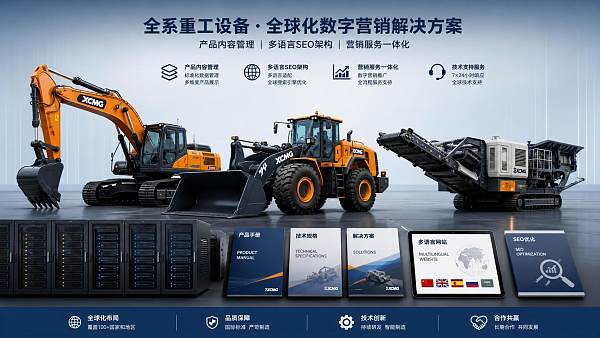
The number of languages is not simply calculated by multiplying the number of pages
“Creating five languages” does not mean translating English content five times. Search terms, purchasing habits, and information requirements vary across markets. English pages may be structured around models, tonnage, engines, attachments, and applications; pages for Spanish- or Portuguese-speaking markets may require clearer distinctions in terminology, units of measurement, after-sales networks, spare parts supply, and shipping conditions.
Therefore, multilingual SEO development costs generally consist of three parts: technical configuration for language versions, translation and proofreading of existing content, and rewriting or adding search-oriented content for target markets. Machine translation can be used for initial product specification drafts or internal support, but it should not directly replace human review of key landing pages. If descriptions of hydraulic systems, rated loads, operating weights, boom lengths, emission standards, or optional attachments are mistranslated, it will affect not only search rankings but also buyers' assessment of the supplier's professionalism.
Language selection should also follow sales coverage rather than pursuing quantity. Even if a local language version is launched for a market where sales channels, logistics capabilities, or after-sales support capacity have not yet been established, it may not generate effective business opportunities. Establishing a complete content system first in English and the languages of actual priority markets, then expanding to other languages, is usually more manageable than launching more than ten languages at the same time.
Why is the heavy machinery industry more expensive than ordinary product websites?
Complex equipment information is one of the main reasons for rising costs. A qualified product page cannot consist only of images, a name, and a promotional statement; it must also clearly specify core specifications, standard configurations, optional equipment, operating conditions, delivery methods, maintenance information, and access to downloadable materials. When there are many product lines, model naming, specification fields, image copyrights, manual versions, and certification materials need to be organized in advance. If the data sources themselves are disorganized, the rework costs for subsequent website development and SEO are often far higher than the cost of page production.
The second factor is content hierarchy. Buyers do not search only for product names; they may also search for queries such as “mobile crusher for quarries,” “20-ton-class crawler excavator specifications,” “wheel loader attachments,” or “crane maintenance manuals.” Websites capable of addressing these search intents typically require application pages, technical documentation pages, FAQs, parts pages, and service pages in addition to product pages. More pages do not necessarily create more value, but without these information layers, the website will rely excessively on a small number of product keywords, limiting both coverage and inquiry quality.
The third factor is documentation and trust information. Heavy machinery procurement involves transportation, installation, after-sales service, and compliance communication. If the website provides PDF brochures, operating manuals, maintenance guides, or certification descriptions, it should ensure that files are accessible, clearly named, and accompanied by necessary summaries on HTML pages. Locking all important content in scanned PDF files is not conducive to search engine understanding and also raises the reading barrier for overseas visitors.
How can the budget be assessed by breakdown?
In RMB, the following ranges are more suitable as references for evaluating the scope of work rather than fixed market prices:
- Basic package: An English marketing website, a small number of core product pages, basic technical SEO, and an expandable multilingual framework. Suitable for companies with relatively focused product lines that first want to validate their online presence overseas, with investment commonly in the tens of thousands of RMB range.
- Growth package: English plus one to several priority languages, including product data organization, target-market keyword planning, localization of core pages, structured content, and basic conversion tracking. Depending on page scale, language count, and content depth, the budget typically needs to move into a higher range.
- System package: Designed for multiple regional markets, including a large number of model and spare parts pages, dealer networks, resource centers, system integration, ongoing SEO content development, and data analysis. Such projects should not be compared solely by “website-building packages”; they should be assessed based on implementation timelines, content workload, and subsequent maintenance responsibilities.
When a quotation is particularly low, confirm whether the low price is based on directly copying templates, automatic translation, limiting the number of pages, or not providing SEO configuration. A high quotation does not necessarily mean it is suitable either. The key is whether every cost can correspond to clearly defined assets: how many language versions, how many editable pages, which technical configurations, who provides and reviews the content, and how new models and discontinued old models will be handled after launch.
Items that are easily overlooked but can affect total costs
Post-launch website costs should not be overlooked, including hosting or SaaS subscriptions, plugin licenses, content updates, translation proofreading, data backups, security maintenance, and ongoing SEO services. If product models are updated frequently, it is also necessary to confirm whether the backend can maintain specifications in batches, replace materials, and manage language versions. For systems that rely on developers to modify pages one by one, subsequent maintenance may become unmanageable even if the initial price is low.
Another easily overlooked aspect is lead handling. Overseas inquiry forms should at least support source tracking, anti-spam submission, automatic notifications, and basic field filtering. For high-value equipment, inquiries should obtain information such as the purchasing region, intended equipment use, and estimated quantity or timing requirements whenever possible, but there should not be so many fields that submission rates are affected. SEO-generated traffic does not necessarily become sales opportunities that can be followed up; form design and CRM integration directly affect subsequent customer acquisition efficiency.
Clarify “multilingual SEO” before signing a contract
The most valuable approach is not to require the other party to promise rankings, but to require clear delivery boundaries: whether each language has independent, indexable pages; whether hreflang language and regional tags are configured; who completes translations and whether terminology proofreading is included; how product specifications are imported; whether keyword-to-page mapping is provided; whether indexing, redirects, mobile compatibility, and speed checks are conducted before launch; and how additional languages and new models will be charged afterward.
The ownership of the website, domain name, content assets, account permissions, and data should also be confirmed. If a company cannot obtain administrator access or access to Google Search Console and analytics tools, it will face additional migration risks when changing service providers or performing maintenance independently later.
Ultimately, the reasonableness of the cost of multilingual SEO development for a heavy machinery export website does not depend on the initial quotation, but on whether the investment creates reusable international content assets: whether product data can be continuously updated, language versions can be independently found in searches, the technical structure does not hinder indexing, and inquiry paths can support actual sales. Only by first determining priority markets and product lines that can be supported, then calculating the complexity of pages, languages, content, and systems, can companies avoid paying for “multilingual” services but receiving only a set of translated pages that are difficult to generate business value.
Related Articles
 How do you disable legacy TLS protocols in an HTTPS-compliant configuration?
 How can a company website introduction page help visitors quickly understand the core business?
 How Can You Prevent a Video News Module from Slowing Down Page Loading?


Related Products
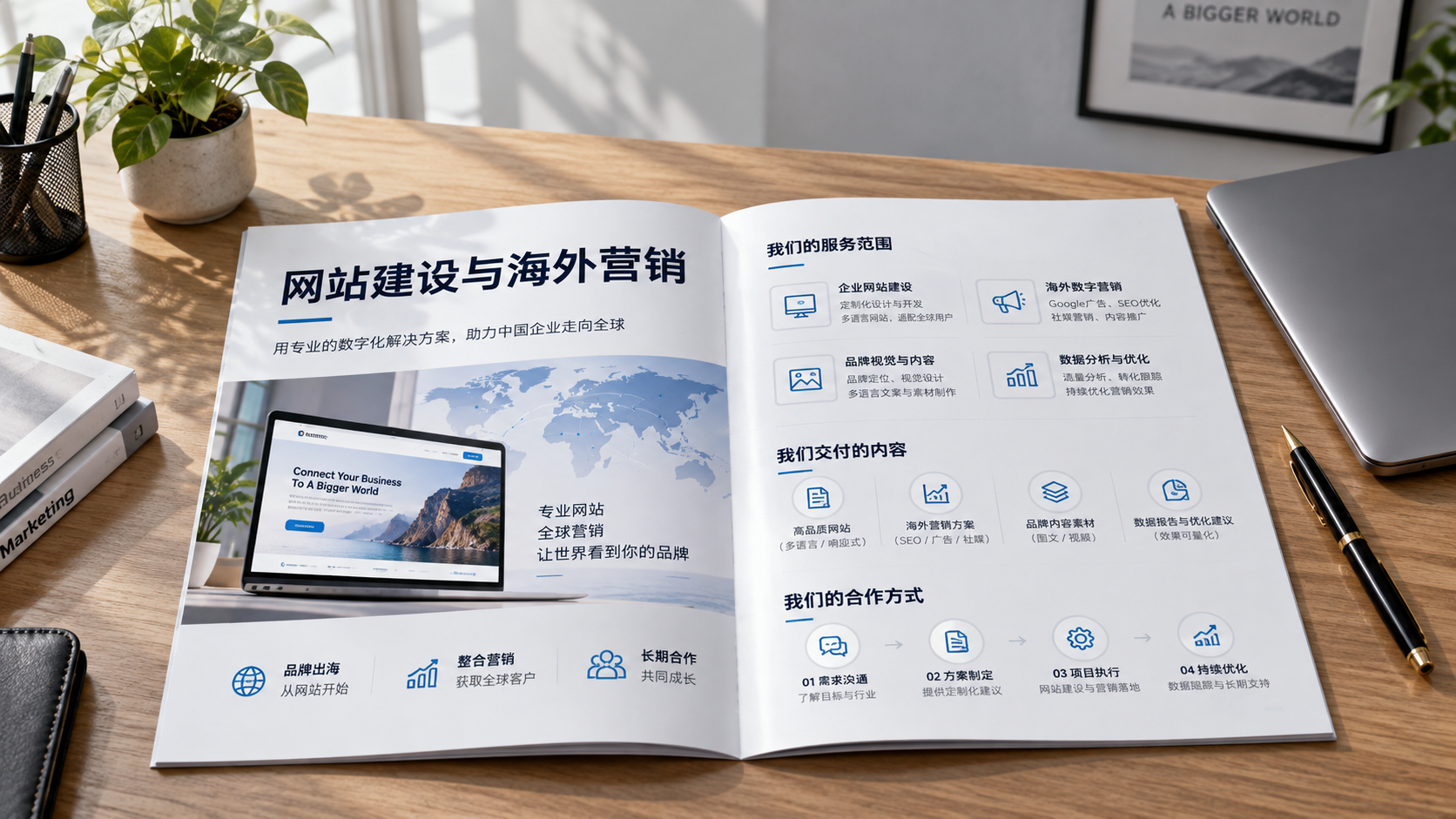
 Yiyingbao SaaS Intelligent Website Building and Marketing SystemYiyingbao SaaS Intelligent Website Building and Marketing System, AI-powered no-code website building, rapid creation of multilingual B2B international websites in 10 minutes, global server acceleration, AI-powered SEO optimization, helping businesses connect efficiently with global markets. The perfect integration of technology and operation makes building an international trade website remarkably simple
 AI+SEM Intelligent Advertising Marketing SystemAI+SEM drives intelligent ad creation, empowering full-funnel precision advertising marketing. The system automatically generates weekly/monthly reports, AI recommends keywords and target countries, monitors core metrics in real-time with intelligent alerts, and enables one-click high-conversion ad solutions to help quickly acquire customers and improve ROI.
 AI+SEO Dual-Engine System Optimization ServicesYiyingbao’s AI+SEO dual-engine optimization system helps foreign trade enterprises acquire high-quality organic traffic through AI-powered keyword research, content generation, and comprehensive technical optimization, significantly improving search rankings and conversion rates.
 AI+SNS Social Media Marketing SystemYingbao AI+SNS Social Media Marketing System - Precision social capture for the social media era. Supports one-click content synchronization across major platforms like Facebook and LinkedIn. AI intelligently rewrites posts for enhanced relevance. 24/7 AI customer service and user profiling analysis empower businesses to efficiently expand into global markets.
 AI+SEO营销解决方案易营宝AI+SEO营销解决方案,通过AI批量写作、智能生成TDK、精准关键词扩词等功能,全面优化网站SEO效果,提升流量与转化率。助力企业构建高效智能网站新生态。
 AI+SEM Advertising Marketing SolutionsAI+SEM Advertising Marketing Solution leverages AI technology to deeply empower SEM ad campaigns. It automatically generates weekly/monthly reports using AI, presenting account data across multiple dimensions for comprehensive insights into campaign performance and trends. The system precisely recommends keywords and target countries, intelligently generates high-conversion ad copy, and enables one-click activation of efficient campaign plans to help businesses rapidly acquire customers. Simultaneously, it monitors core metrics in real time, intelligently identifies abnormal fluctuations, and issues timely alerts to ensure stable, high-return advertising results.
 Domain Name ServicesEasyWin provides professional domain name services, including intelligent queries, one-stop registration, brand protection, and full lifecycle management, helping businesses build a digital brand image.
 EasyOperate B2C Cross-Border E-Commerce Platform & Independent WebsiteEasyStore B2C Cross-border E-commerce Independent Store is an intelligent website building and cross-border e-commerce integrated solution independently developed by EasyStore Information Technology (Beijing) Co., Ltd. The system is specially designed for small and medium-sized as well as large export enterprises, integrating 'website building, operation, marketing, advertising, and conversion' into one, helping enterprises quickly establish cross-border e-commerce independent stores to achieve brand globalization and global sales growth.
The platform supports multiple languages, multiple currencies, and multi-channel marketing, with built-in AI intelligent translation and SEO optimization systems, suitable for mainstream markets such as Southeast Asia, Europe and America, Latin America, and the Middle East, assisting Chinese manufacturing enterprises in efficiently deploying international e-commerce strategies. SSL证书易营宝提供专业SSL安全证书服务,包括单域名和泛域名证书,确保网站数据传输加密、身份验证和完整性保护,助力企业建立安全可信的在线业务环境。









