









- Hapag-Lloyd’s $4.2 billion acquisition of ZIM faces a closing delay; ZIM reports third-quarter net profit of $830 millionNov 24, 2026View details
- SCFI falls for a third straight week to 3,503.78 points, with blank sailings on trans-Pacific routes rising to 10Nov 24, 2026View details
- Lazada 11.11 Mega Sale: LazMall Contributes Nearly Two-Thirds of GMVNov 23, 2026View details
- Shein’s European Revenue Falls 16% as Tighter Rules on Low-Value Direct Shipments Take EffectNov 23, 2026View details
- EU Low-Value Parcel Rules Impact Cargo Flows: Air Freight Volume from China to Europe Down 17% in OctoberNov 23, 2026View details
- Indonesia and the EU Sign Comprehensive Economic Partnership Agreement, 90.4% of Tariff Lines to Become Duty-Free ImmediatelyNov 23, 2026View details
What’s the difference between a foreign trade marketing website and a regular corporate website? Which businesses are more suitable?
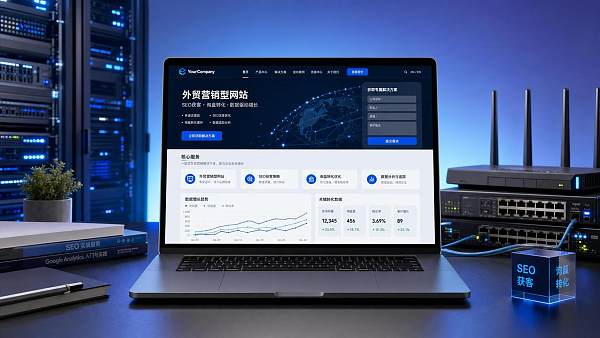
Many companies have built websites, yet still struggle to get inquiries. The core difference between a foreign trade marketing website and a standard corporate website is not whether the page looks good, but whether overseas customers can find it, understand it, and convert on their own. Which companies are better suited to build one? This article will explain it clearly for you.
For business decision-makers, website development is no longer as simple as “launching a homepage.” Especially against the backdrop of rising overseas customer acquisition costs and increasingly expensive platform traffic, whether a website has search visibility, persuasive content, and lead-handling capabilities directly affects the ROI over 3 months, 6 months, or even 1 year.
I. A foreign trade marketing website and a standard corporate website differ in more than just design
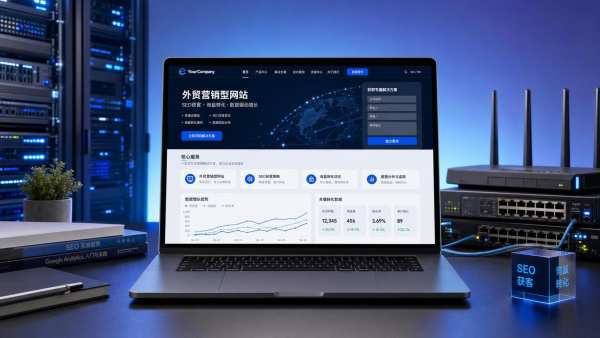
Many companies still understand a corporate website as only three basic modules: company introduction, product display, and contact information. This kind of standard website is suitable as a brand business card, but not necessarily for overseas lead generation. A foreign trade marketing website, by contrast, emphasizes the complete chain of “being found—being understood—being trusted—being inquired,” with a clearer target and a more conversion-oriented structure.
1. From the website-building objective: the essential difference between a display website and a lead-generating website
The goal of a standard corporate website is usually to launch quickly, complete pages, and look presentable, with the project often finished within 7-15 days. A foreign trade marketing website, however, focuses more on keyword layout, page paths, inquiry forms, landing page content, and data tracking. The initial planning usually takes 2-4 weeks, and optimization continues after launch.
2. From traffic sources: the difference between passive visits and active lead generation
Most standard corporate websites rely on introductions from existing customers, business cards, or exhibition QR code visits, with a single traffic source. A foreign trade marketing website builds content around Google SEO, ad placement, social media traffic, and AI search visibility, enabling the site to be found not only through brand terms, but also through industry terms, product terms, scenario terms, and long-tail question terms.
The table below can help management quickly judge the core capability differences between the two types of websites.
The key is not how many pages there are, but whether each page takes on a clear task. For foreign trade companies, a website should at least serve four roles: an overseas business card, a search entry point, a sales tool, and a data hub. If any one of these is missing, traffic and inquiries can easily become disconnected.
3. From user experience: overseas access speed and language adaptation are critical
Access speed is not a technical detail, but an inquiry threshold
If a website takes more than 3 seconds to load, the bounce rate among overseas visitors will increase significantly; if mobile loading is slow, ad spend is also directly wasted. Websites truly oriented toward overseas markets usually require global node deployment, CDN acceleration, and synchronized mobile adaptation, ideally keeping first-screen load time within 2 seconds.
Multilingual content is not direct translation, but localized expression
Foreign trade marketing websites do not face a single market. North American, European, Middle Eastern, Japanese and Korean, and Latin American customers differ greatly in search habits, content comprehension, and action preferences. Supporting 5, 10, or even 100+ languages is not unusual; what really matters is accurate terminology, clear structure, and pages that can be maintained continuously, rather than something that is done once and then cannot be updated.
II. Which companies are better suited to build a foreign trade marketing website
Not every company needs to invest in a website of the same scale, but the following types of businesses usually see a more direct return from a foreign trade marketing website. It is especially worth prioritizing for companies that are entering the second stage of export expansion, planning to develop 2 or more new markets, or already have a stable monthly advertising budget.
1. Manufacturing plants and B2B suppliers
Such businesses usually have complex products, many parameters, and long decision cycles. Overseas buyers will repeatedly compare supply capability, delivery times, certifications, customization scope, and case studies before making an inquiry. Simply displaying factory photos is far from enough; they also need product category pages, application scenario pages, FAQ pages, and inquiry form collaboration to support a 30-day to 90-day procurement decision chain.
2. Cross-border e-commerce and brand globalization companies
Platform-based sellers are paying more and more attention to independent website layout because traffic control, brand accumulation, and repeat-purchase operations all require their own base. For sellers with more than 50 SKUs, planned Google or Facebook ad placement, and a desire to absorb social media content traffic, a marketing website is more suitable for conversion than a traditional corporate website.
3. Export-oriented service and project-based companies
For companies in consulting, software, technical services, engineering supporting services, and similar fields, the common problem is not a lack of products, but difficulty expressing value. A foreign trade marketing website can turn abstract services into understandable, assessable, and contactable business information through case workflows, delivery milestones, industry solutions, and appointment consultation modules.
If a company is still undecided about whether it needs a website upgrade, it can first make a judgment from the following dimensions.
For companies hoping to continuously acquire overseas leads over the next 12 months, a website should not just be a cost item; it should become a digital marketing infrastructure. The earlier it is equipped with content expansion capabilities, data tracking capabilities, and multi-channel lead-handling capabilities, the higher the subsequent promotion efficiency usually is.
III. When choosing a foreign trade marketing website, companies should focus on these 5 capabilities
When companies purchase website-building services, they are most easily misled by “page mockups.” What truly affects results is often not whether the homepage looks impressive, but whether the underlying system, content structure, operating efficiency, and compatibility with subsequent promotion are in place. The following 5 dimensions are recommended as a step-by-step checklist for decision-making.
1. Does the technical performance support global access
- First-screen loading is recommended to be controlled within the 1.5-3 second range
- Server nodes should cover the main target markets
- Mobile and PC versions need synchronized management to avoid duplicate maintenance
Taking the YiYingBao Foreign Trade Marketing (Super) Website as an example, its configuration covers more than 2500 server nodes, 120T bandwidth capacity, and supports synchronized use of PC and mobile sites. For companies needing promotion across regions such as North America, Europe, and Southeast Asia, such underlying capabilities have longer-term value than single-page visual design.
2. Does it support multilingual content and low-cost maintenance
Once a foreign trade website expands to 3 or more national markets, the pressure of content maintenance grows rapidly. The ideal state is to support automatic translation into 98 or more languages, paired with a multilingual management mechanism to reduce manual duplicate entry. This way, when companies add products, campaign pages, or industry articles, the update cycle can be shortened from days to hours.
3. Does it have long-term search growth capability
A foreign trade marketing website is not finished once it goes live; it should continue to accumulate indexing, rankings, and content assets after launch. A website truly suitable for Google SEO must at least have basic capabilities such as URL standards, tag settings, internal site structure optimization, content expansion, and data analysis; otherwise, every subsequent promotion will be more dependent on paid traffic.
4. Can it form a marketing closed loop
The core of a marketing closed loop is not just “having visitors,” but knowing where the visitors came from, what they saw, where they left the site, and which pages generated forms. At minimum, it should have 4 types of data: source channels, page behavior, conversion actions, and lead quality. Without this data, it is difficult for a company to optimize its budget or judge whether the website investment is effective.
5. Do the delivery cycle and follow-up services match the business rhythm
Generally speaking, a basic website can be completed within 7-15 days. For highly customized projects involving multilingual content and SEO architecture planning, the delivery cycle is usually 15-30 days. When making a decision, it is recommended to confirm content entry, keyword planning, launch testing, training handover, and after-sales response mechanisms at the same time, rather than looking only at the initial quote.
IV. From launch to lead generation: how a foreign trade marketing website truly takes effect
A good website is not a one-time deliverable, but a continuously iterative marketing asset. For most companies, if they want a foreign trade marketing website to truly bring in inquiries, they usually need to complete four stages: “build, content, promotion, optimization.” Missing any one step will reduce the effectiveness.
Suggested implementation in 5 steps
- Define the target market and core products, and sort out 3-5 categories of priority keywords
- Plan the website structure, including at least the homepage, product pages, about page, case studies page, and contact page
- Build a multilingual content system that balances industry terminology and localized expression
- Integrate SEO, ads, social media, and data analytics tools
- After launch, review and optimize on a 30-day, 60-day, and 90-day rhythm
For companies that need to go live quickly while also supporting long-term growth, a systematic platform is more suitable for long-term investment. For example, a website solution built around AI intelligent website building, multilingual management, SEO optimization, and integrated marketing closed-loop analysis can significantly reduce communication costs and secondary reconstruction costs, and is especially suitable for manufacturing, B2B wholesale, cross-border e-commerce, and brand globalization scenarios.
Common misconceptions are also worth avoiding in advance
- Focusing only on design and ignoring keyword and content planning
- Building only an English website and overlooking opportunities in smaller language markets
- Failing to update for a long time after launch, causing indexing stagnation
- No form tracking, making inquiry sources impossible to judge
If a company is currently preparing to upgrade its overseas official website, it can focus on integrated solutions that support AI intelligent website building, automatic translation into 100+ languages, global acceleration, and enterprise-grade security protection. This not only keeps loading time within 1.5 seconds, but also makes it easier to continue supporting Google SEO, ad landing pages, and social media traffic, while reducing the management overhead caused by switching platforms.
For most business decision-makers, the value of a foreign trade marketing website does not lie in “having built a website,” but in whether it establishes a digital base that can continuously bring overseas exposure, leads, and conversions. With years of experience in global digital marketing and intelligent website building, YiYingBao can integrate website development, SEO, advertising, social media, and AI search visibility enhancement to help companies upgrade their websites from display tools to growth engines.
If you are currently evaluating website upgrades, overseas lead-generation layouts, or multilingual independent site development, you can now learn more about the solution details and get customized recommendations that better fit your business stage. Feel free to inquire about product configuration, implementation cycles, and applicable scenarios to learn more solutions.
Related Articles
 Does a poor mobile experience on a B2B lead generation website affect conversions?
 What does website optimization typically involve?
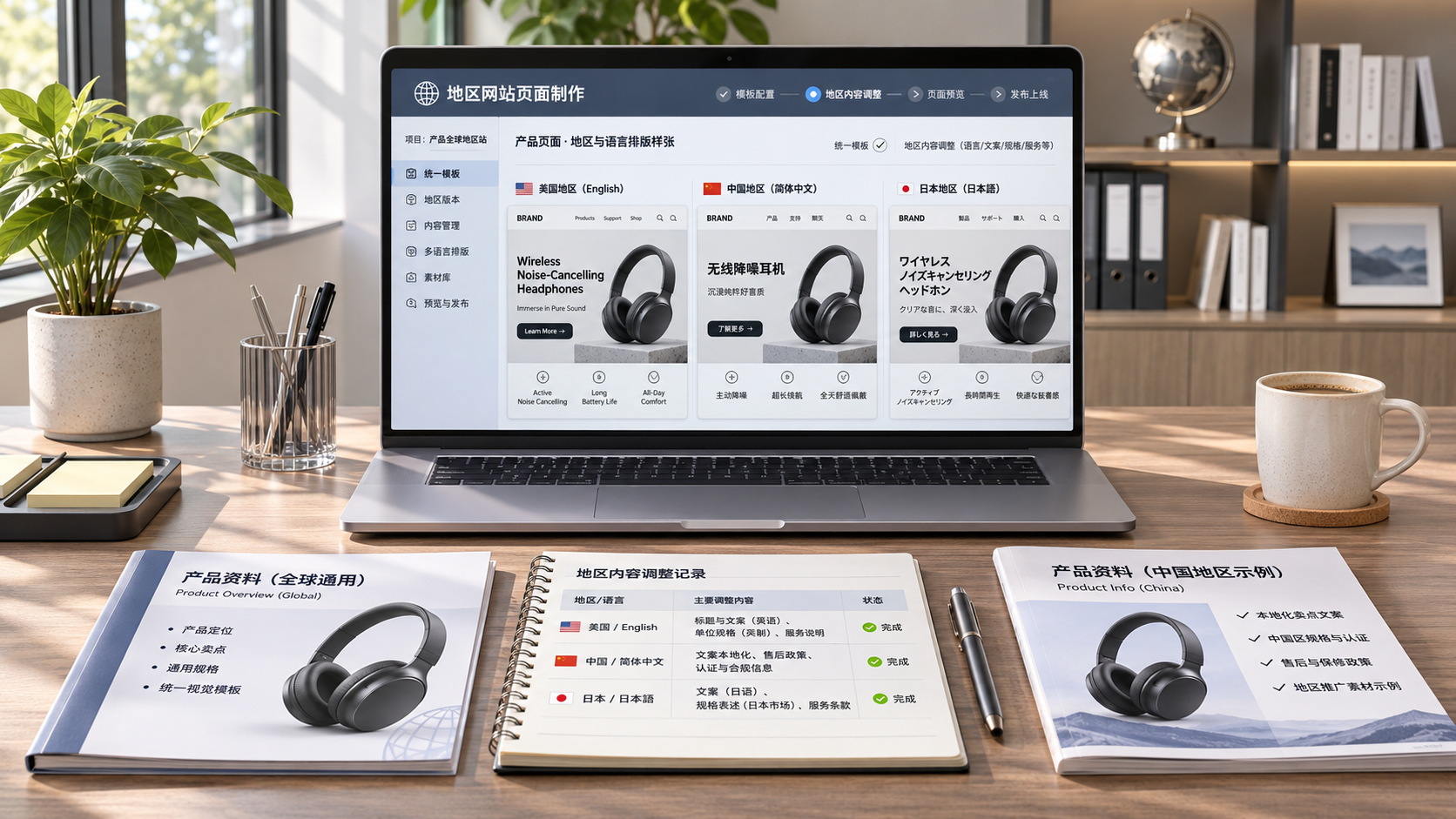
 How Should an Export Website Set Up Dedicated Pages for Different Target Regions?
Related Products
 Yiyingbao SaaS Intelligent Website Building and Marketing SystemYiyingbao SaaS Intelligent Website Building and Marketing System, AI-powered no-code website building, rapid creation of multilingual B2B international websites in 10 minutes, global server acceleration, AI-powered SEO optimization, helping businesses connect efficiently with global markets. The perfect integration of technology and operation makes building an international trade website remarkably simple
 AI+SEM Intelligent Advertising Marketing SystemAI+SEM drives intelligent ad creation, empowering full-funnel precision advertising marketing. The system automatically generates weekly/monthly reports, AI recommends keywords and target countries, monitors core metrics in real-time with intelligent alerts, and enables one-click high-conversion ad solutions to help quickly acquire customers and improve ROI.
 AI+SEO Dual-Engine System Optimization ServicesYiyingbao’s AI+SEO dual-engine optimization system helps foreign trade enterprises acquire high-quality organic traffic through AI-powered keyword research, content generation, and comprehensive technical optimization, significantly improving search rankings and conversion rates.
 AI+SNS Social Media Marketing SystemYingbao AI+SNS Social Media Marketing System - Precision social capture for the social media era. Supports one-click content synchronization across major platforms like Facebook and LinkedIn. AI intelligently rewrites posts for enhanced relevance. 24/7 AI customer service and user profiling analysis empower businesses to efficiently expand into global markets.
 AI+SEO营销解决方案易营宝AI+SEO营销解决方案,通过AI批量写作、智能生成TDK、精准关键词扩词等功能,全面优化网站SEO效果,提升流量与转化率。助力企业构建高效智能网站新生态。
 AI+SEM Advertising Marketing SolutionsAI+SEM Advertising Marketing Solution leverages AI technology to deeply empower SEM ad campaigns. It automatically generates weekly/monthly reports using AI, presenting account data across multiple dimensions for comprehensive insights into campaign performance and trends. The system precisely recommends keywords and target countries, intelligently generates high-conversion ad copy, and enables one-click activation of efficient campaign plans to help businesses rapidly acquire customers. Simultaneously, it monitors core metrics in real time, intelligently identifies abnormal fluctuations, and issues timely alerts to ensure stable, high-return advertising results.
 Domain Name ServicesEasyWin provides professional domain name services, including intelligent queries, one-stop registration, brand protection, and full lifecycle management, helping businesses build a digital brand image.
 EasyOperate B2C Cross-Border E-Commerce Platform & Independent WebsiteEasyStore B2C Cross-border E-commerce Independent Store is an intelligent website building and cross-border e-commerce integrated solution independently developed by EasyStore Information Technology (Beijing) Co., Ltd. The system is specially designed for small and medium-sized as well as large export enterprises, integrating 'website building, operation, marketing, advertising, and conversion' into one, helping enterprises quickly establish cross-border e-commerce independent stores to achieve brand globalization and global sales growth.
The platform supports multiple languages, multiple currencies, and multi-channel marketing, with built-in AI intelligent translation and SEO optimization systems, suitable for mainstream markets such as Southeast Asia, Europe and America, Latin America, and the Middle East, assisting Chinese manufacturing enterprises in efficiently deploying international e-commerce strategies. SSL证书易营宝提供专业SSL安全证书服务,包括单域名和泛域名证书,确保网站数据传输加密、身份验证和完整性保护,助力企业建立安全可信的在线业务环境。









