









- Fujian Announces the First Batch of Provincial-Level Cross-Border E-Commerce Industrial Parks and Key Brands for CultivationNov 14, 2026View details
- Amazon Global Store Announces the Launch of the 2026 Black Friday Global Shopping SeasonNov 14, 2026View details
- CCTV.com Examines APEC’s Role in China’s Foreign TradeNov 12, 2026View details
- China’s Tariff Commission of the State Council Adjusts Additional Tariffs on U.S. Goods: 24% Tariff Suspended for Two MonthsNov 10, 2026View details
- APEC Shenzhen Spotlight: Cross-Border E-Commerce Orders Promote Asia-Pacific Trade and Economic CooperationNov 08, 2026View details
- China-Europe Railway Express and CIIE Hold Business Matchmaking Event, Focusing on Cross-Border E-commerce B2B ExportsNov 07, 2026View details
Why Do Foreign Trade Website Development Costs in Jiangsu Vary So Widely?
Why Do Foreign Trade Website Development Costs Vary So Greatly in Jiangsu?
Jiangsu has a high concentration of manufacturing and foreign trade enterprises, and demand for English-language websites, multilingual websites, and independent websites has remained strong. During actual quotation inquiries, companies often encounter an apparently contradictory situation: for the same request to “build a foreign trade website,” some quotes are only a few thousand yuan, while others reach tens of thousands of yuan, with ongoing costs for content, promotion, maintenance, and more potentially following.
This is usually not simply a matter of a service provider “quoting too high” or “quoting too low,” but rather that the delivery scope included in each quotation is entirely different. For financial approval purposes, the real question is not whether the homepage looks attractive, but whether the investment buys an online display page or a customer acquisition infrastructure capable of receiving overseas traffic, collecting inquiries, and supporting ongoing operations. The substantial differences in foreign trade website development costs in Jiangsu often stem from this.
Both May Be Called “Foreign Trade Websites,” but Their Actual Deliverables May Be Entirely Different
Low-cost solutions are generally suitable for companies with few products that need only a basic company introduction and contact details. These projects are often primarily template-based, with a limited number of pages, while copy, images, and product materials are mainly prepared by the company itself. As long as they do not involve complex multilingual management, product filtering, form routing, or marketing tracking, the delivery timeline and labor input are relatively controllable.
When quotations move into a higher range, the costs generally do not only represent “more refined design.” For example, B2B exporters of machinery and equipment, components, and chemical materials often have complex product parameters and need to establish categories by application scenario, material, model, or industry. When serving multiple markets, they must also address pages in different languages, inquiry fields, privacy notices, and content maintenance. If the website must also support Google SEO, advertising landing pages, or social media traffic acquisition, page structure, loading speed, data tracking, and conversion paths all need to be planned during the development stage.
Therefore, directly comparing the total prices of two quotations can easily be misleading. A more effective approach is to break down the quotation into “number of pages, language versions, functional modules, content responsibilities, servers and maintenance, and promotion configuration” to determine whether any items are missing.
What Truly Drives Cost Differences Is Often Four Types of Hidden Investment
The first category is content assets. A foreign trade website is not complete simply by translating a Chinese corporate website sentence by sentence into English. Overseas buyers care more about product applications, technical capabilities, scope of delivery, quality control, and contact efficiency. If a company has only scattered brochures and lacks specification sheets, application descriptions, factory materials, or clear product categories, the service provider needs to invest more effort in organizing the content. If a low quotation does not clearly specify who is responsible for content, the project can easily stall later while “waiting for materials.”
The second category is technical architecture. Multilingual functionality is not merely about adding a language switch button; it also involves whether pages in different languages can be optimized independently, whether content confusion can be prevented, and whether new products can be added conveniently later. B2C cross-border online stores also add requirements for products, orders, payments, logistics integrations, and more. For companies planning to develop overseas markets over the long term, backend manageability is often more worth investing in than one-time visual effects.

The third category is marketing integration. A website that relies only on organic visits follows a different development logic from one that needs to receive traffic from Google Ads, Facebook Ads, short videos, or social media. The latter needs to distinguish between different product lines and target regions, with more targeted landing pages, forms, and inquiry source records. Otherwise, advertising budgets may be spent without the company being able to determine where customers come from or which pages are wasting the budget.
The fourth category is long-term operations and maintenance. Domain names, servers, system updates, backups, security handling, page modifications, and plugin or feature renewals may not all appear prominently in the initial quotation. During approval, companies should clearly distinguish between the “first-year development fee” and “annual ongoing costs” to avoid discovering in the second year that migration, update, or maintenance costs are difficult to control after an initially low first-year price.
Low Prices Are Not Necessarily Unsuitable, but Watch Out for Three Procurement Misconceptions
First, treating website development as a one-time purchase. A website going live is not the end of the project, but the starting point for content, promotion, and sales follow-up. If a company has no overseas promotion plans in the short term, choosing a basic website can control costs. However, if its sales team is already attending overseas trade shows, running Google Ads, or developing distributors, an overly simplified website may soon need to be rebuilt from scratch.
Second, looking only at the homepage mockup. A mockup cannot demonstrate the mobile experience, the difficulty of backend editing, or the scalability of product pages, much less prove whether the website can be properly crawled by search engines. Before procurement, companies should request to see backend operation methods for similar projects, mobile pages, and a specific delivery list, rather than only reviewing a visual mockup.
Third, assuming that “SEO included” automatically means inquiries will be generated. Basic search optimization is usually only technical preparation within website development, such as page titles, link structure, and sitemaps. Ongoing keyword content development, external promotion, data analysis, and page iteration are another category of long-term work. The two should be clearly specified in the contract and cannot be summarized under a vague term such as “optimization.”
When Reviewing a Quotation, It Is Advisable to Ask More Specific Questions
A foreign trade website development quotation that facilitates decision-making should at least answer several questions: How many pages and product entries are included? Who will provide and proofread the Chinese, English, and other language versions? What billing cycles apply to the domain name, hosting, SSL certificate, backups, and maintenance? How will ownership of the website source files, content data, and domain name be agreed upon? Can it support the subsequent addition of languages, product lines, or advertising landing pages? Which post-launch modifications are included as free support, and which require separate quotations?
For Jiangsu export companies with limited budgets, a phased approach can be adopted: first complete the core market language versions, key product pages, and inquiry mechanism to validate products and traffic channels; after product materials, advertising strategies, and overseas market direction become clearer, expand multilingual content, e-commerce functions, or dedicated landing pages. This makes it easier to control cash expenditure than stacking a large number of uncertain functions from the outset.
Understanding Subsequent Customer Acquisition Costs Through Website Development Pricing
The value of integrated website development and marketing services does not lie in purchasing all services at once, but in considering during website development whether subsequent channels can be connected effectively. Take E-Yingbao Information Technology as an example. Since 2013, it has provided services including intelligent website development, SEO optimization, social media marketing, and advertising, integrating cloud-based intelligent website development, cross-border e-commerce stores, and AI marketing tools into the same business chain. For companies that need to cover different markets such as North America, Europe, and Southeast Asia, the practical value of such platform-based solutions is reducing the inconvenience of repeated system migration and fragmented data across systems.
However, whether to choose integrated services should still be based on a company’s own business needs. Factories with highly standardized products that need to continuously acquire B2B inquiries generally have a greater need for coordinated content management and promotion; companies whose orders mainly come from existing customers and whose websites are used only for credibility endorsement do not need to pay excessive costs for complex functions that are not currently needed.
There is no universally reasonable price for foreign trade website development in Jiangsu independent of actual requirements. A quotation that can clearly explain the delivery scope, subsequent annual fees, content responsibilities, and growth path is often more worthy of entering the approval process than simply the lowest price. First determine the role the website plays in the company’s overseas sales chain, then discuss the budget, and the cost differences will no longer be difficult to understand.
Related Articles
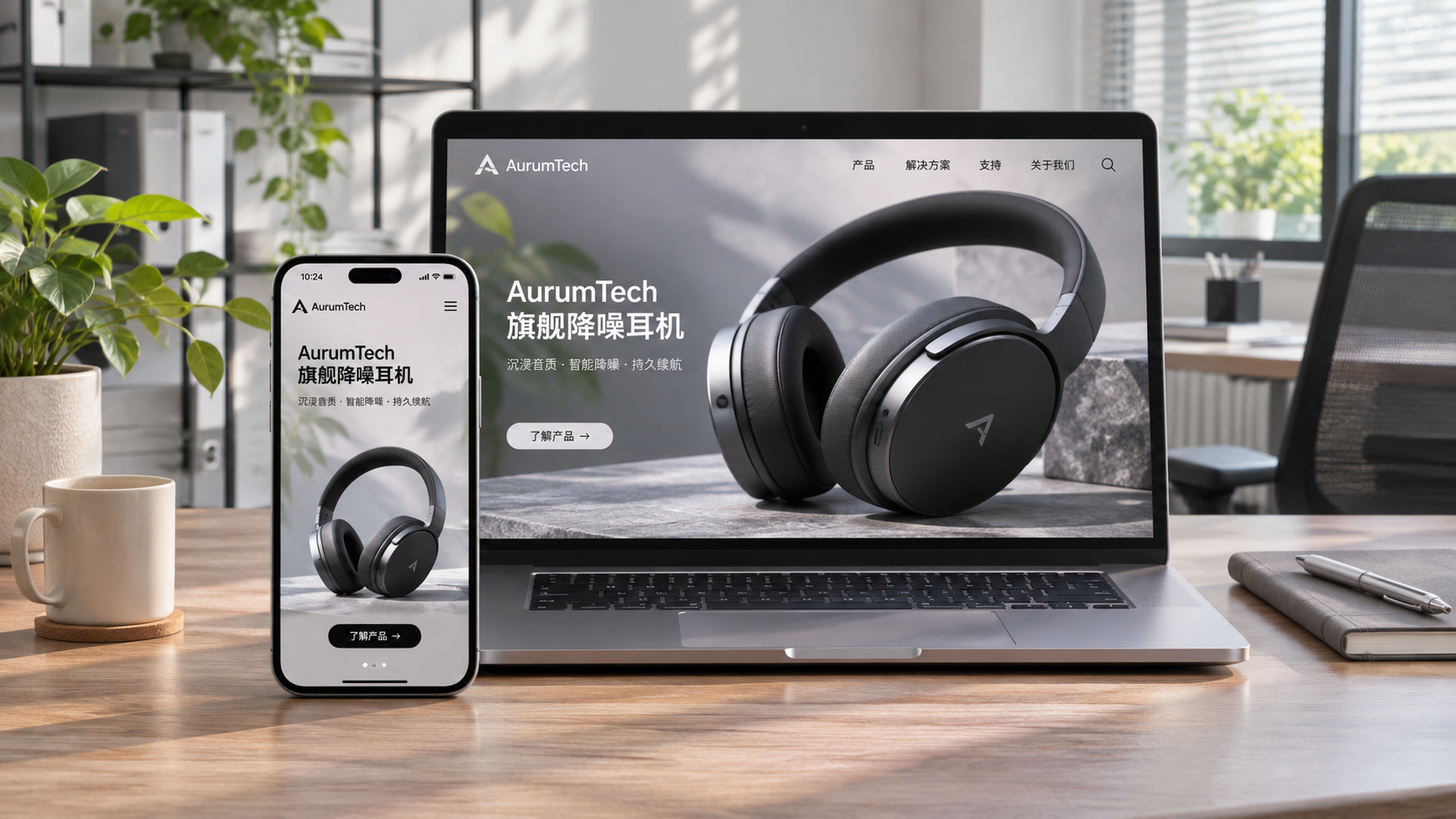
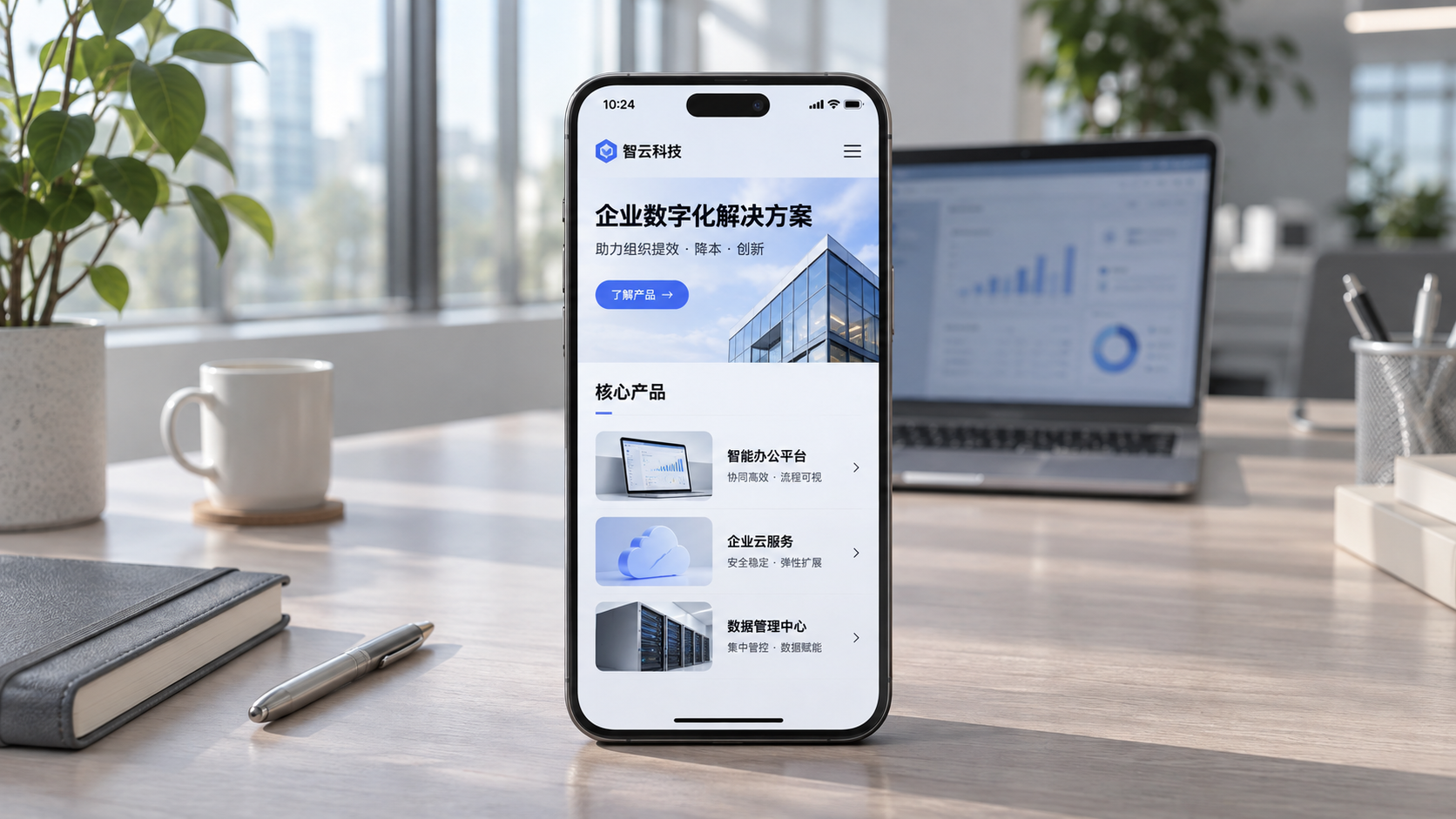
 How Can Responsive Website Development Prevent Mobile Layout Issues?
 How can a responsive corporate website adapt to mobile screens?
 How Does Website Loading Speed Affect Conversion Rates?
Related Products
 Yiyingbao SaaS Intelligent Website Building and Marketing SystemYiyingbao SaaS Intelligent Website Building and Marketing System, AI-powered no-code website building, rapid creation of multilingual B2B international websites in 10 minutes, global server acceleration, AI-powered SEO optimization, helping businesses connect efficiently with global markets. The perfect integration of technology and operation makes building an international trade website remarkably simple
 AI+SEM Intelligent Advertising Marketing SystemAI+SEM drives intelligent ad creation, empowering full-funnel precision advertising marketing. The system automatically generates weekly/monthly reports, AI recommends keywords and target countries, monitors core metrics in real-time with intelligent alerts, and enables one-click high-conversion ad solutions to help quickly acquire customers and improve ROI.
 AI+SEO Dual-Engine System Optimization ServicesYiyingbao’s AI+SEO dual-engine optimization system helps foreign trade enterprises acquire high-quality organic traffic through AI-powered keyword research, content generation, and comprehensive technical optimization, significantly improving search rankings and conversion rates.
 AI+SNS Social Media Marketing SystemYingbao AI+SNS Social Media Marketing System - Precision social capture for the social media era. Supports one-click content synchronization across major platforms like Facebook and LinkedIn. AI intelligently rewrites posts for enhanced relevance. 24/7 AI customer service and user profiling analysis empower businesses to efficiently expand into global markets.
 AI+SEO营销解决方案易营宝AI+SEO营销解决方案,通过AI批量写作、智能生成TDK、精准关键词扩词等功能,全面优化网站SEO效果,提升流量与转化率。助力企业构建高效智能网站新生态。
 AI+SEM Advertising Marketing SolutionsAI+SEM Advertising Marketing Solution leverages AI technology to deeply empower SEM ad campaigns. It automatically generates weekly/monthly reports using AI, presenting account data across multiple dimensions for comprehensive insights into campaign performance and trends. The system precisely recommends keywords and target countries, intelligently generates high-conversion ad copy, and enables one-click activation of efficient campaign plans to help businesses rapidly acquire customers. Simultaneously, it monitors core metrics in real time, intelligently identifies abnormal fluctuations, and issues timely alerts to ensure stable, high-return advertising results.
 Domain Name ServicesEasyWin provides professional domain name services, including intelligent queries, one-stop registration, brand protection, and full lifecycle management, helping businesses build a digital brand image.
 EasyOperate B2C Cross-Border E-Commerce Platform & Independent WebsiteEasyStore B2C Cross-border E-commerce Independent Store is an intelligent website building and cross-border e-commerce integrated solution independently developed by EasyStore Information Technology (Beijing) Co., Ltd. The system is specially designed for small and medium-sized as well as large export enterprises, integrating 'website building, operation, marketing, advertising, and conversion' into one, helping enterprises quickly establish cross-border e-commerce independent stores to achieve brand globalization and global sales growth.
The platform supports multiple languages, multiple currencies, and multi-channel marketing, with built-in AI intelligent translation and SEO optimization systems, suitable for mainstream markets such as Southeast Asia, Europe and America, Latin America, and the Middle East, assisting Chinese manufacturing enterprises in efficiently deploying international e-commerce strategies. SSL证书易营宝提供专业SSL安全证书服务,包括单域名和泛域名证书,确保网站数据传输加密、身份验证和完整性保护,助力企业建立安全可信的在线业务环境。









