









- Which customer acquisition channels will be affected by cross-border marketing trends in 2026?Sep 06, 2026View details
- Which homogenization risks should be considered in an analysis of the AI-powered website building industry?Aug 30, 2026View details
- How Will AI Marketing Trends 2026 Change Advertising Budget AllocationAug 28, 2026View details
- Is the EV SSL certificate market shrinking or upgrading? How should companies assess certificate procurement?Aug 11, 2026View details
- Why the old AMP SEO 2020 practices no longer work and what has changed in current optimization prioritiesAug 02, 2026View details
- How to Choose Topics for an Industry News Section to Attract More Organic Search TrafficJul 29, 2026View details
What incremental customer acquisition channels can Yingyingbao’s global traffic ecosystem partnership provide?
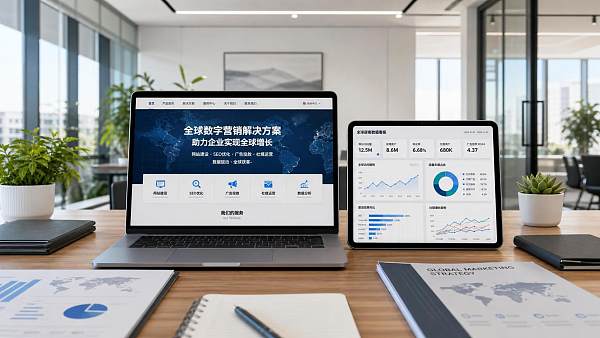
What Customer Acquisition Channels Can YiYingBao's Global Traffic Ecosystem Partnerships Add?
YiYingBao's global traffic ecosystem partnerships are opening new avenues for coordinated growth across search, advertising, social media, and AI traffic. For business decision-makers, this is not merely an expansion of channels, but a key path toward improving customer acquisition efficiency and global conversion capabilities.
Over the past two years, the most significant change in overseas customer acquisition has not been the sudden failure of any single channel, but the increasing difficulty for one channel to independently drive growth. Search traffic remains important, yet search results pages are continually being divided among advertisements, maps, local results, video content, and AI-generated summaries. Social platforms have not lost their reach, but their effectiveness increasingly depends on content pacing, audience modeling, and landing-page conversion. Advertising platforms continue to evolve in automated campaign management, while conversion attribution has become more complex. If companies still separate website development, SEO, advertising, and social media operations into isolated activities, they often find that although the number of leads appears substantial, the number of customers who can actually be followed up with and converted has not increased accordingly.
Against this backdrop, the value of YiYingBao's global traffic ecosystem partnerships lies not in “opening a few more channel accounts,” but in turning originally fragmented traffic entrances into a customer acquisition network capable of amplifying one another. For companies expanding overseas, especially foreign trade manufacturers, cross-border brands, and regional service providers, this change is closer to a restructuring of core capabilities. In the past, companies focused on questions such as “Should we do Google SEO?” or “Should we run Facebook ads?” Today, the more practical questions are whether the website structure supports multilingual indexing, whether advertising creatives can be accumulated as organic traffic assets, whether social media engagement can drive searches for branded terms, and whether the company already has citable content and authoritative pages in AI search scenarios.
Traffic Entrances Are Increasing, but Effective Entrances Are Shrinking
Many companies see more and more platforms on the surface, but in reality they are facing a shrinking number of entrances capable of consistently delivering qualified customers. The reasons are not complicated. First, platforms are raising their requirements for content quality, account history, website experience, and conversion data, making broad, undifferentiated traffic buying increasingly difficult to sustain. Second, overseas procurement decision-making cycles are becoming longer. Especially in B2B, customers no longer submit an inquiry after a single click, but repeatedly verify information across search engines, official websites, social media profiles, review content, and third-party sources. Third, AI search and generative Q&A are beginning to change how users obtain information. If company content is designed only for rankings based on traditional keywords, it may have little presence in new discovery pathways.
This is why “traffic ecosystem partnerships” are beginning to attract more attention than “single-point campaign optimization.” They do not represent a short-term tactic, but rather a judgment about the future: customer acquisition will not return to a state dominated by a single platform. Companies need reusable cross-platform content assets, traceable data links, and an operational system that balances short-term conversion with long-term visibility.
YiYingBao covers intelligent website development, SEO optimization, advertising, social media marketing, and GEO optimization. The practical significance of this layout is that it is closer to the real problems companies face today. Customers do not lack a single tool; they lack a system that connects “building the website, being found, attracting clicks, retaining visitors, and driving conversions.”
Additional Channel Traffic Will Not Appear Evenly; Search and Content-Based Traffic Remain the Foundation
When assessing which customer acquisition channels YiYingBao's global traffic ecosystem partnerships are most likely to expand, search traffic remains the first area to examine, although its meaning is now broader than traditional SEO. It includes not only Google organic rankings, but also branded searches, long-tail product keywords, regional keywords, multilingual page indexing, and opportunities for content citation in AI search scenarios. For manufacturers, equipment companies, industrial component suppliers, and providers of specialized solutions, search traffic remains one of the most stable sources of high-intent leads because purchasing needs often enter search engines with clearly defined questions rather than being first stimulated on social platforms.
However, incremental search traffic increasingly depends on website quality rather than keyword stuffing on individual pages. The standardization of the multilingual website structure, the stability of page loading speed, and the coverage of purchasing questions, technical documentation, and application scenarios all directly affect indexing and inquiry conversion. The advantage of an integrated website and marketing services platform such as YiYingBao is that promotional logic can be incorporated during the website development stage instead of adding SEO after the website goes live. This change in sequence may appear to be merely a process adjustment, but it actually determines the subsequent promotion costs for many companies.
It is worth noting that the traffic brought by AI search is not a replacement for traditional search, but more like a new round of diversion at the information distribution layer. Company websites, industry articles, product FAQs, case-study pages, and regional market pages with clear structures and reliable information are more likely to be included among the sources cited in AI-generated results. This type of traffic is still evolving and is difficult to quantify directly like advertising in the short term, but for businesses with high order values and long decision-making cycles, it is no longer a marginal variable that can be ignored.
The Incremental Value of Advertising Is No Longer Simply About Buying More Clicks
Another more direct source of incremental traffic comes from advertising, but its core function has also changed. In the past, companies often focused only on cost per click and cost per inquiry; now they also need to consider whether advertising can help them enter target markets more quickly, validate product positioning, and cover keywords and audience segments not yet reached by organic traffic. When Google Ads, Facebook Ads, remarketing campaigns, and landing pages are managed through a unified data and page system, they are more likely to generate compounding results than when executed separately.
This is particularly evident when entering new markets. For example, when a company prepares to enter the Middle East, Southeast Asia, or Latin America, organic rankings often require time to build, while advertising can provide demand feedback earlier. However, if advertising landing pages are disconnected from subsequent website content, the budget may only generate traffic that is difficult to convert continuously. Conversely, if high-converting search terms, common user questions, and preferences regarding creative engagement accumulated during campaigns are promptly fed back into website content and SEO structures, advertising becomes more than short-term traffic purchasing; it also lays a data foundation for long-term customer acquisition.
From a decision-making perspective, this coordination offers another practical benefit: companies do not have to choose between “long-term SEO” and “short-term advertising.” Instead, they can allocate resources according to market maturity. Cold-start markets may prioritize advertising validation, mature markets may prioritize content accumulation, and highly competitive core product categories may require both to run in parallel.
Social Media and Short-Video Traffic Are Changing from Exposure Channels into Trust Channels
Many companies still underestimate the true role of social media, especially in B2B scenarios, where it is often understood as merely “posting content and maintaining visibility.” However, actual purchasing behavior shows that social media is increasingly becoming a trust-verification layer. After finding a company's official website through search, customers may check whether the brand profile is updated consistently, whether video content genuinely demonstrates the products and factory capabilities, and whether the engagement area shows evidence of ongoing operations. This traffic is not always the final touchpoint, but it often influences whether customers submit an inquiry.
Therefore, the social media growth brought by YiYingBao's global traffic ecosystem partnerships is not limited to increasing account followers. More importantly, it enables social media content, websites, advertising, and search to form a chain of evidence. Short videos can break down product application scenarios, social media posts can cover industry trends and case presentations, and the official website can provide more complete specifications, delivery capabilities, and inquiry entry points. When the three touchpoints convey the same business narrative, conversion efficiency is generally more stable than when any single platform is operated independently.
Business Decision-Makers Need to Focus Not Only on Multiple Channels, but Also on Multi-Regional Capabilities
Global traffic ecosystem partnerships also have another easily overlooked source of incremental value: regional market adaptation. Demand expressions, search habits, language preferences, and conversion paths vary across North America, Europe, Southeast Asia, Japan and South Korea, the Middle East, Russian-speaking regions, Latin America, and Africa. A multilingual website does not necessarily mean genuine localization, and advertising is not simply a matter of translating creatives and launching them in batches. If companies want to acquire customers consistently across multiple regions, their website structures, page content, campaign strategies, and social media messaging must each align with the decision-making habits of the relevant regional markets.
This is also why integrated platforms are likely to be favored over single-point services in the coming years. Procurement preferences are changing. Companies are increasingly reluctant to manage a website development company, an SEO provider, an advertising agency, and a content team separately, because collaboration costs, fragmented data, and unclear responsibility boundaries can directly slow the pace of overseas growth. The party capable of connecting the technical foundation, content production, campaign execution, and data accumulation will have a greater opportunity to become a company's long-term partner.
Which Signals Should Be Monitored Next?
To determine whether YiYingBao's global traffic ecosystem partnerships are truly generating incremental channel traffic, companies should not look only at total traffic. At least four types of signals should be monitored: first, whether organic search and branded searches are growing simultaneously, which indicates that content and brand awareness are accumulating; second, whether overall inquiry volume remains resilient when advertising acquisition costs fluctuate, which reflects whether the channel structure is healthy; third, whether differences in indexing and conversion among multilingual pages are gradually narrowing, indicating improved regional adaptation; and fourth, whether supporting signals such as AI search, social media engagement, and direct visits are beginning to rise, which usually means that the company's visibility in the customer decision-making journey is increasing.
It can be expected that future customer acquisition competition will increasingly resemble a competition between systems rather than a competition between channel tactics. There will be no shortage of people who can write advertising copy, publish social media content, or perform SEO. What will remain truly scarce are the people and platforms capable of placing these activities within the same growth framework. For companies expanding overseas, the potential incremental value of YiYingBao's global traffic ecosystem partnerships is not merely the addition of several lead sources, but the ability to make traffic from different stages, regions, and platforms support one another in succession. This change may not be fully reflected in financial statements in the short term, but during a period of rising traffic costs and more cautious customer decision-making, it may well deserve greater attention than a single traffic surge.
Related Articles

Related Products
 Yiyingbao SaaS Intelligent Website Building and Marketing SystemYiyingbao SaaS Intelligent Website Building and Marketing System, AI-powered no-code website building, rapid creation of multilingual B2B international websites in 10 minutes, global server acceleration, AI-powered SEO optimization, helping businesses connect efficiently with global markets. The perfect integration of technology and operation makes building an international trade website remarkably simple
 AI+SEM Intelligent Advertising Marketing SystemAI+SEM drives intelligent ad creation, empowering full-funnel precision advertising marketing. The system automatically generates weekly/monthly reports, AI recommends keywords and target countries, monitors core metrics in real-time with intelligent alerts, and enables one-click high-conversion ad solutions to help quickly acquire customers and improve ROI.
 AI+SEO Dual-Engine System Optimization ServicesYiyingbao’s AI+SEO dual-engine optimization system helps foreign trade enterprises acquire high-quality organic traffic through AI-powered keyword research, content generation, and comprehensive technical optimization, significantly improving search rankings and conversion rates.
 AI+SNS Social Media Marketing SystemYingbao AI+SNS Social Media Marketing System - Precision social capture for the social media era. Supports one-click content synchronization across major platforms like Facebook and LinkedIn. AI intelligently rewrites posts for enhanced relevance. 24/7 AI customer service and user profiling analysis empower businesses to efficiently expand into global markets.
 AI+SEO营销解决方案易营宝AI+SEO营销解决方案,通过AI批量写作、智能生成TDK、精准关键词扩词等功能,全面优化网站SEO效果,提升流量与转化率。助力企业构建高效智能网站新生态。
 AI+SEM Advertising Marketing SolutionsAI+SEM Advertising Marketing Solution leverages AI technology to deeply empower SEM ad campaigns. It automatically generates weekly/monthly reports using AI, presenting account data across multiple dimensions for comprehensive insights into campaign performance and trends. The system precisely recommends keywords and target countries, intelligently generates high-conversion ad copy, and enables one-click activation of efficient campaign plans to help businesses rapidly acquire customers. Simultaneously, it monitors core metrics in real time, intelligently identifies abnormal fluctuations, and issues timely alerts to ensure stable, high-return advertising results.
 Domain Name ServicesEasyWin provides professional domain name services, including intelligent queries, one-stop registration, brand protection, and full lifecycle management, helping businesses build a digital brand image.
 EasyOperate B2C Cross-Border E-Commerce Platform & Independent WebsiteEasyStore B2C Cross-border E-commerce Independent Store is an intelligent website building and cross-border e-commerce integrated solution independently developed by EasyStore Information Technology (Beijing) Co., Ltd. The system is specially designed for small and medium-sized as well as large export enterprises, integrating 'website building, operation, marketing, advertising, and conversion' into one, helping enterprises quickly establish cross-border e-commerce independent stores to achieve brand globalization and global sales growth.
The platform supports multiple languages, multiple currencies, and multi-channel marketing, with built-in AI intelligent translation and SEO optimization systems, suitable for mainstream markets such as Southeast Asia, Europe and America, Latin America, and the Middle East, assisting Chinese manufacturing enterprises in efficiently deploying international e-commerce strategies. SSL证书易营宝提供专业SSL安全证书服务,包括单域名和泛域名证书,确保网站数据传输加密、身份验证和完整性保护,助力企业建立安全可信的在线业务环境。









