









- Which customer acquisition channels will be affected by cross-border marketing trends in 2026?Sep 06, 2026View details
- Which homogenization risks should be considered in an analysis of the AI-powered website building industry?Aug 30, 2026View details
- How Will AI Marketing Trends 2026 Change Advertising Budget AllocationAug 28, 2026View details
- Is the EV SSL certificate market shrinking or upgrading? How should companies assess certificate procurement?Aug 11, 2026View details
- Why the old AMP SEO 2020 practices no longer work and what has changed in current optimization prioritiesAug 02, 2026View details
- How to Choose Topics for an Industry News Section to Attract More Organic Search TrafficJul 29, 2026View details
- Digital Marketing Shenzhen Market Insights: Why Are Companies Expanding Overseas Looking for Growth Teams in Shenzhen?Jul 31, 2026View details
- Can Zhejiang foreign trade independent websites still be developed today? Look at changes in traffic and lead generationJul 28, 2026View details
How to view pricing in the global traffic ecosystem? Cost comparison of search, social media, and content channel advertising
The pricing of the global traffic ecosystem is no longer just about cost per click
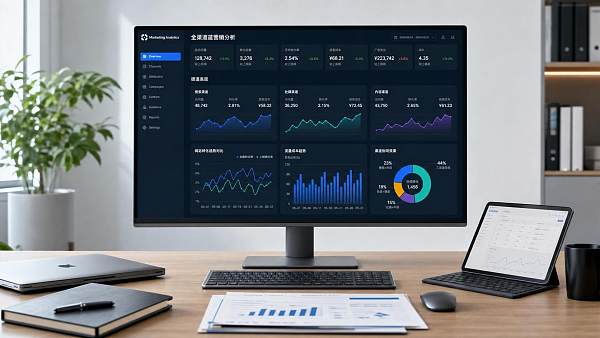
How to view the pricing of the global traffic ecosystem has indeed become more complex over the past two years。On the surface,it is the fluctuation of quotations across search,social media,and content channels;at a deeper level,what determines cost is no longer a single bid on a certain platform,but the conversion efficiency of the entire customer acquisition chain。
For integrated website and marketing services,the assessment of traffic pricing must return to landing results。Whether search traffic can accumulate inquiries,whether social media traffic can generate return visits,and whether content traffic can reduce customer acquisition costs over a longer cycle,these are the core factors that truly affect budget decisions。
Judging from recent market changes,the pricing of the global traffic ecosystem shows three clear signals:high-intent traffic is more expensive,low-barrier exposure is more fragmented,and cross-channel collaboration is replacing single-point advertising。In other words,price comparisons cannot only look horizontally at channels,but also vertically at the website’s ability to receive traffic and subsequent conversion。
The cost logic of search,social media,and content channels is diverging
The pricing of search channels is usually the easiest to see。Keyword bidding,organic ranking development,and brand term defense can all directly reflect cost changes。The issue is that search traffic has strong intent,but competition for high-commercial-value terms continues to intensify,especially in North America,Europe,and mature overseas expansion industries,where click prices generally remain at high levels。
Social media channels follow another logic。Their advantages lie in fast scaling,wide coverage,and flexible testing,but cost fluctuations are often affected by creative fatigue,targeting precision,and platform algorithms。In many cases,surface-level clicks appear inexpensive,but actual lead quality is unstable,causing a gap between the book value and real transaction value of global traffic ecosystem pricing。
Content channels are more like a slow-variable competition。Whether it is industry content,short video content,or content assets built around search visibility and generative search deployment,upfront investment is often higher than the expectation for a single campaign,but once website content structure,page indexing,and topic coverage accumulate,subsequent marginal costs will gradually decline。
Behind this round of price changes,it is not just platform price increases
If the rise in global traffic ecosystem pricing is understood only as platform traffic becoming more expensive,the judgment will be distorted。The more real reason is that traffic supply and demand,user decision-making paths,and technical tools are all changing at the same time。
- First,the attention of high-quality users is being diverted by more content,and the same budget brings less effective dwell time。
- Second,competition in cross-border business is deepening,and keywords,audience packages,and placements in popular markets and popular industries continue to become crowded。
- Third,generative search,short video recommendations,and closed-loop social media transactions are rewriting the original traffic allocation model。
- Fourth,differences in website traffic-receiving capabilities are being amplified,and page speed,multilingual structure,and content relevance directly affect real customer acquisition costs。
It is precisely because of this that,with the same search advertising investment,some projects see lead costs continue to rise,while others can remain stable。The difference often does not lie in the bid,but in whether the front-end website is suitable for promotion,whether the pages can be indexed,and whether the content matches search needs in different regions。
This is also why more and more companies are beginning to value collaboration among website building,SEO,advertising,and social media。After traffic prices rise,the returns brought by single-point optimization begin to narrow,while systematic improvement becomes more effective。
The impact has already been transmitted from the advertising side to the website and conversion side
The most direct impact of changes in global traffic ecosystem pricing is not that budgets become larger,but that the budget tolerance for errors becomes lower。In the past,growth could be obtained through simple scaling;now,a more common situation is that once a channel starts to scale,the shortcomings of the website’s traffic-receiving capability are immediately exposed。
For example,after obtaining precise visits from the search side,if the page structure is chaotic and the conversion entry is unclear,the real inquiry rate will quickly decline。The same applies to social media;it is not difficult for creative content to attract clicks,but the challenge is to bring interest-based traffic to an independent website that is trustworthy,easy to read,and capable of conversion。
The impact of content channels is more long-tail。If content merely piles up information and cannot form clear topic clusters and page hierarchies,it will be difficult to continuously gain visibility in Google SEO and AI search scenarios。As a result,content costs may appear to have been invested,but the pricing of the global traffic ecosystem has not truly been diluted。
From the perspective of actual business,the value of integrated website and marketing services is being reassessed。A system that can simultaneously take website building,indexing,promotion,conversion,and multi-region adaptation into account is better able to cope with price fluctuations than purchasing a single traffic channel separately。
To judge whether advertising is worth it,first look at these more practical metrics
Many budget discussions get stuck on the cost of a single click,but in fact this is only part of global traffic ecosystem pricing。What is more valuable as a reference is the complete performance after a channel enters the website。
- The conversion rate from visit to inquiry determines whether a seemingly low price is truly inexpensive。
- First-visit dwell time and the proportion of second visits reflect whether the channel brings users with real interest。
- Differences in indexing and bounce rates across language pages in different regions determine whether international market advertising requires separate strategies。
- Changes in the ratio of organic traffic to paid traffic can help judge whether subsequent costs are controllable。
- The reuse rate of content assets is related to whether short videos,social media,and search can share materials and topics。
This set of views is also consistent with the practices of many mature service providers today。Taking 易营宝,which has long been deeply engaged in overseas growth,as an example,what the market is increasingly emphasizing is no longer just advertising itself,but whether cloud intelligent website building,SEO/GEO optimization,advertising systems,and multi-channel data collaboration can form a closed loop。The reason is simple:only when the closed loop is established does global traffic ecosystem pricing have room for optimization。
For subsequent judgment,budgets can be placed in areas that are more resistant to fluctuations
Over the next period of time,global traffic ecosystem pricing will most likely remain differentiated。High-intent search traffic will not fall significantly,social media traffic will continue to fluctuate under the influence of platform mechanisms,and investment related to content channels and AI search will continue to heat up。
A more prudent approach is not to bet on a certain channel being cheaper,but to prioritize the allocation of foundational capabilities that can withstand channel fluctuations。This includes multilingual website architecture,promotable landing pages,SEO- and GEO-compatible content,advertising data feedback mechanisms,and localized materials adapted to different markets。
If the business covers multiple regions such as North America,Europe,Southeast Asia,and the Middle East,the pricing of the global traffic ecosystem should also be broken down by regional dimensions。Search competition,social media penetration,and content acceptance methods differ across markets,and a unified budget model often masks real problems。
The next step that is more worth doing is to first sort out existing website and channel data,clarify which costs are high on the traffic side and which are high on the receiving side,and then establish phased advertising and content collaboration plans。After seeing this structure clearly,global traffic ecosystem pricing will no longer be merely cost pressure,but will become a reference coordinate for optimizing the quality of growth。
Related Articles



Related Products
 Yiyingbao SaaS Intelligent Website Building and Marketing SystemYiyingbao SaaS Intelligent Website Building and Marketing System, AI-powered no-code website building, rapid creation of multilingual B2B international websites in 10 minutes, global server acceleration, AI-powered SEO optimization, helping businesses connect efficiently with global markets. The perfect integration of technology and operation makes building an international trade website remarkably simple
 AI+SEM Intelligent Advertising Marketing SystemAI+SEM drives intelligent ad creation, empowering full-funnel precision advertising marketing. The system automatically generates weekly/monthly reports, AI recommends keywords and target countries, monitors core metrics in real-time with intelligent alerts, and enables one-click high-conversion ad solutions to help quickly acquire customers and improve ROI.
 AI+SEO Dual-Engine System Optimization ServicesYiyingbao’s AI+SEO dual-engine optimization system helps foreign trade enterprises acquire high-quality organic traffic through AI-powered keyword research, content generation, and comprehensive technical optimization, significantly improving search rankings and conversion rates.
 AI+SNS Social Media Marketing SystemYingbao AI+SNS Social Media Marketing System - Precision social capture for the social media era. Supports one-click content synchronization across major platforms like Facebook and LinkedIn. AI intelligently rewrites posts for enhanced relevance. 24/7 AI customer service and user profiling analysis empower businesses to efficiently expand into global markets.
 AI+SEO营销解决方案易营宝AI+SEO营销解决方案,通过AI批量写作、智能生成TDK、精准关键词扩词等功能,全面优化网站SEO效果,提升流量与转化率。助力企业构建高效智能网站新生态。
 AI+SEM Advertising Marketing SolutionsAI+SEM Advertising Marketing Solution leverages AI technology to deeply empower SEM ad campaigns. It automatically generates weekly/monthly reports using AI, presenting account data across multiple dimensions for comprehensive insights into campaign performance and trends. The system precisely recommends keywords and target countries, intelligently generates high-conversion ad copy, and enables one-click activation of efficient campaign plans to help businesses rapidly acquire customers. Simultaneously, it monitors core metrics in real time, intelligently identifies abnormal fluctuations, and issues timely alerts to ensure stable, high-return advertising results.
 Domain Name ServicesEasyWin provides professional domain name services, including intelligent queries, one-stop registration, brand protection, and full lifecycle management, helping businesses build a digital brand image.
 EasyOperate B2C Cross-Border E-Commerce Platform & Independent WebsiteEasyStore B2C Cross-border E-commerce Independent Store is an intelligent website building and cross-border e-commerce integrated solution independently developed by EasyStore Information Technology (Beijing) Co., Ltd. The system is specially designed for small and medium-sized as well as large export enterprises, integrating 'website building, operation, marketing, advertising, and conversion' into one, helping enterprises quickly establish cross-border e-commerce independent stores to achieve brand globalization and global sales growth.
The platform supports multiple languages, multiple currencies, and multi-channel marketing, with built-in AI intelligent translation and SEO optimization systems, suitable for mainstream markets such as Southeast Asia, Europe and America, Latin America, and the Middle East, assisting Chinese manufacturing enterprises in efficiently deploying international e-commerce strategies. SSL证书易营宝提供专业SSL安全证书服务,包括单域名和泛域名证书,确保网站数据传输加密、身份验证和完整性保护,助力企业建立安全可信的在线业务环境。









