









- What Does a Global Traffic Ecosystem Service Provider Do? What Are the Differences from a Single Advertising AgencyJul 16, 2026View details
- What should you focus on in the latest enterprise SaaS report? From renewal rates and delivery costs to overseas growth opportunitiesJul 12, 2026View details
- What signals are worth paying attention to in a cross-border marketing trend report? B2B companies should look at these 6 signalsJul 11, 2026View details
- How to Read a Cross-Border Marketing Trends Report? Five Key Dimensions for Evaluating Channel OpportunitiesJul 11, 2026View details
- Which channel has the highest ROI in the global traffic ecosystem? Comparative analysis of search, social media, and advertisingJul 10, 2026View details
- What multilingual website services are available in Sanya? Which model is more suitable for local businesses going global?Jul 08, 2026View details
- How to view the complete list of China SaaS companies in the top 100? Practical methods for screening website-building and marketing service providersJul 08, 2026View details
- How to view pricing in the global traffic ecosystem? Cost comparison of search, social media, and content channel advertisingJul 06, 2026View details
Which pages are affected by search engine ranking algorithm changes
Search engine ranking algorithms continue to change, often affecting first the pages with weak content quality, poor technical foundations, and stagnant updates. Only by understanding search engine ranking factors and combining search engine optimization services with website traffic analysis tools can businesses identify risks faster and formulate optimization plans.
Which pages are most likely to lose rankings first after algorithm changes

For most corporate websites, algorithm changes do not mean that “the entire site is affected at the same time,” but rather that they first impact several types of pages with weak fundamentals. Common situations include: high content duplication, slow loading speed, poor mobile experience, broken internal links, pages not updated for more than 6 months, and pages built only around keyword stuffing but unable to answer user questions.
Information researchers usually care about “why pages that originally had traffic suddenly declined,” while technical evaluators pay more attention to crawling, rendering, structured information, and log fluctuations. Business decision-makers need to know that a ranking drop does not necessarily mean the brand has lost competitiveness, but often indicates that some part of the website no longer aligns with the current search engine understanding logic.
In an integrated website + marketing service scenario, the risk levels of the homepage, category pages, product pages, case pages, news pages, and landing pages are not the same. Usually within 7 to 30 days after an algorithm adjustment, pages with thin product descriptions, abnormal bounce rates, and confusing conversion paths are more likely to show a decline in exposure first, which then affects inquiries and lead collection stages.
Easy-Biz Information Technology (Beijing) Co., Ltd. has long served enterprises in multiple industries for overseas expansion and localized growth. In practice, it first conducts layered page diagnostics, distinguishing and handling high-value pages, traffic-driving pages, brand pages, and conversion pages separately instead of making one-size-fits-all changes across the whole site. This approach is more suitable for project managers and decision-makers to control optimization pace, budget, and delivery risks.
High-risk pages usually share these 4 characteristics
- Thin content: the main text is not enough to cover users’ decision-making questions, for example, only parameters are provided, with no application scenarios, common questions, or purchasing suggestions.
- Weak technology: slow above-the-fold loading, uncompressed images, mobile buttons that are hard to tap, and the presence of 404 errors or duplicate title tags.
- Stalled updates: the page has had no new information added for 3 to 12 months, causing search engines to judge it as insufficiently timely.
- Intent mismatch: the page is written for search engines rather than real users, resulting in lower dwell time and conversion actions.
If a company operates a brand website, campaign microsites, and multiple advertising landing pages at the same time, then during algorithm changes, the most vulnerable are usually not the homepage but those pages launched for short-term promotion and left without follow-up maintenance. Especially when the URL hierarchy is confusing and the copy is highly similar, search engines will have a harder time judging page value.
How to determine whether it is a content issue, a technical issue, or a site structure issue

After ranking fluctuations, many teams react first by changing titles and replacing keywords, but in fact this often only addresses the surface. A more effective method is to investigate along 4 dimensions: “content quality—technical crawlability—page structure—user behavior.” Usually within 1 to 2 weeks, the main risk points can be identified, and then it can be decided whether partial fixes or systematic restructuring are needed.
For technical evaluators, it is recommended to first check crawl coverage, index status, response speed of core pages, and mobile interaction; for after-sales maintenance personnel, the focus should be on whether old links have become invalid after revisions, whether there are script conflicts, and whether forms have failed; for business managers, the key is to determine which pages directly affect inquiry cost and brand trust.
The table below is suitable for initial page risk screening. It does not replace an in-depth audit, but it can help different roles classify issues within 3 working days and avoid the common misunderstanding that “all problems are SEO problems.”
If a website simultaneously experiences reduced indexing, increased bounce rate, and declining inquiries, it is usually not a single-point issue but an overlap of at least 2 dimensions. For example, if both category structure and content quality are weak at the same time, it will make it difficult for search engines to identify topical authority and also make it difficult for users to continue browsing.
Which signals deserve priority attention
Look at the page level first, not just the sitewide level
Page-level fluctuations usually appear earlier than sitewide fluctuations. It is recommended to compare exposure, clicks, average rankings, and conversion actions over the past 28 days and the past 90 days. If a certain type of page declines over 2 consecutive periods while branded keywords remain stable, this indicates that the problem is more likely with content relevance or page experience rather than a collapse of the site’s overall authority.
Then check whether revisions and ad placements are interfering with each other
When many companies simultaneously push website revisions, advertising campaigns, and social media traffic generation, they often overlook page version consistency. This is where the value of integrated website + marketing services lies: website building, SEO optimization, content operations, and campaign handoff need unified management in order to reduce the chain losses caused by algorithm changes.
How different page types should be optimized to reduce the impact of algorithm fluctuations
Different pages undertake different business tasks, so the optimization sequence should also differ. The homepage emphasizes brand credibility and topic aggregation more, product pages emphasize specifications, scenarios, and conversions more, article pages are responsible for acquiring traffic, case pages are responsible for building trust, and campaign pages serve short-term marketing activities. If one writing approach is used for all pages, rankings are usually difficult to stabilize.
Taking product pages as an example, many companies only list configurations and images while ignoring what users truly care about: “who it is suitable for, how to choose, how long delivery takes, and whether customization is possible.” If the page also adds technical specification modules, application explanations, FAQ, and social interaction sections, search engines will have a more complete understanding of the page topic, and user dwell time and inquiry intent will also be higher.
For example, in a corporate portal scenario, some display-oriented pages can learn from the expression style of automotive campaign pages: by using immersive visual storytelling, asymmetrical dynamic layouts, large minimalist banners, and tab-style product galleries, complex information can be broken down into easier-to-understand browsing paths. This structure is especially effective for high-ticket products and branded communication.
For end consumers and distributors, content such as real owner review modules, dynamic data monitoring dashboards, and technical specification modules is not just “visually rich,” but can also reduce comparison costs. For decision-makers, this means the website can not only be understood by search engines but can also shorten the path from brand awareness to business conversion more quickly.
The table below can be used to set page priorities and optimization actions, and is especially suitable for project leaders to allocate resources in a 4-step implementation process: first protect core pages, then fix traffic-driving pages, and finally update long-tail content pages.
The core idea of the table is: first identify page responsibilities, then match optimization actions. This can avoid the structural mismatch of “writing traffic pages like brand pages and brand pages like manuals.” Usually within 2 to 6 weeks after completing the first round of reorganization, page quality signals become more stable than simply changing wording.
3 priorities to reference during execution
- First protect revenue-related pages, including core product pages, inquiry pages, distributor cooperation pages, and quotation pages.
- Then fix pages with high exposure but low conversion, directing traffic into clearer inquiry paths.
- Finally update long-tail article pages to form topic clusters that support the long-term rankings of the main pages.
If a company is building an industry portal, product center, or brand site, it can also refer to high-contrast visual solutions such as red and black and the logic of overhead-detail presentation, combining technical selling points with aesthetic expression to improve page recognizability, but the premise remains a clear structure, authentic information, and controllable loading speed.
When procuring and implementing, how should companies choose search engine optimization services
When algorithm changes affect rankings and inquiries, many companies temporarily look for service providers, but what truly affects results is not “high or low quotation,” but the depth of understanding of websites, content, technology, data, and marketing collaboration. Especially for B2B companies, doing only keywords is often not enough to solve the complete chain problem from exposure to transaction.
A reasonable evaluation method usually includes 5 key checkpoints: whether site diagnostics can be performed, whether a layered page strategy can be provided, whether both website building and content can be handled together, whether data changes can be explained, and whether sales conversion needs can be supported. If more than 2 of these 5 items are missing, the project is likely to require repeated rework during implementation.
Since its establishment in 2013, Easy-Biz Information Technology (Beijing) Co., Ltd. has formed an integrated solution around intelligent website building, SEO optimization, social media marketing, and advertising placement. For companies seeking global growth, this combination of “technological innovation + localized services” is better suited to handling multilingual websites, regional market differences, and consistency in marketing handoff.
For quality control personnel and security managers, attention should also be paid to whether page changes affect compliance expression, whether form information collection is clear, and whether external links and third-party scripts are controllable. A revision that looks ordinary may, if lacking process review, lead to multiple rounds of repair costs after just 1 launch.
What to focus on when choosing a service provider
- Whether website structure, content strategy, campaign handoff, and data analysis can be placed within the same project framework.
- Whether phased delivery is provided, such as 7-day diagnosis, 30-day first-round fixes, and quarterly reviews, instead of only quoting an annual plan.
- Whether page template design and conversion path planning can be carried out according to different scenarios such as corporate portals,招商站, and product sites.
- Whether cross-department communication capability is available to connect simultaneously with marketing, technical, sales, and management teams.
Common implementation process
A more reliable implementation rhythm is usually divided into 4 stages: Stage 1 is diagnosis and priority ranking, Stage 2 completes technical and structural fixes, Stage 3 supplements content and conversion modules, and Stage 4 combines traffic analysis tools for continuous review. This approach can both control risk and make it easier for the procuring party to verify the results of each step.
Common misconceptions and must-ask questions before consultation
After algorithm updates, companies are most likely to fall into 3 misconceptions: first, only watching keyword rankings without looking at page conversions; second, making large-scale changes to the whole site at once, causing originally effective pages to fluctuate as well; third, separating content production from website maintenance, resulting in a situation where “the copy can be published, but the page won’t get indexed.”
For information researchers, it is recommended to first clarify service boundaries; for technical evaluators, it is recommended to confirm whether code, templates, redirects, and log analysis are involved; for business decision-makers, more attention should be paid to 3 types of results after investment: whether the traffic structure becomes healthier, whether inquiry quality improves, and whether subsequent maintenance costs decline.
If preparing to launch a project, at least 6 basic pieces of information should be organized before consultation: the current website architecture, key markets, target page types, traffic changes over the past 90 days, historical revision records, and core conversion actions. The more complete the information, the easier it is to eliminate ineffective actions in the first round of evaluation.
For multi-role websites serving distributors, agents, and end consumers, it is also necessary to confirm whether the content is layered. Because if one page tries to serve inquirers, technical personnel, and ordinary visitors at the same time, the information depth needs to be structurally divided; otherwise, it is neither conducive to search engine understanding nor to users making quick decisions.
FAQ: These are the most frequently asked questions
How long after rankings drop can repair effects be seen?
If the issues are concentrated in titles, internal links, indexing, and page experience, preliminary changes can usually be seen within 2 to 4 weeks; if they involve site structure reconstruction, template adjustments, and content system updates, then the more common observation period is 1 to 3 months. The key is not “how long until recovery,” but first judging the level of the problem.
Do all declining pages need to be rewritten?
No. Priority should be given to high-value pages and high-exposure low-conversion pages. If the core topic of the page is still accurate but the expression is incomplete, it can be strengthened by adding FAQ, cases, parameters, and scenarios rather than completely tearing it down and rewriting it. Large-scale rewriting may instead disrupt the existing indexing foundation.
Are newly built sites more easily affected than old sites?
New sites rely more on technical stability and topic focus during the first 3 to 6 months, while old sites are more easily affected by historical content redundancy, outdated page invalidation, and structural aging. The risks of the two are different, but both require continuous updates and data reviews rather than remaining unchanged for a long time after launch.
Why choose us: from diagnosis to execution, reducing business losses caused by ranking fluctuations
When facing changes in search engine ranking algorithms, what companies truly need is not scattered advice, but a practical mechanism for diagnosis, optimization, implementation, and review. Leveraging artificial intelligence and big data capabilities, Easy-Biz Information Technology (Beijing) Co., Ltd. integrates intelligent website building, SEO optimization, social media marketing, and advertising placement into the same growth chain, helping companies reduce the repeated occurrence of page problems.
If you are evaluating declining website traffic, abnormal page indexing, weak product page conversion, ranking fluctuations after revisions, or chaotic handoff in multilingual markets, we can assist in sorting page priorities, confirming parameters and structures, evaluating delivery cycles, and providing customized solutions better aligned with business goals.
You can focus your consultation on the following: the diagnostic scope of core pages, product and service page selection logic, regular optimization cycles, revision migration risks, content update plans, regional market adaptation, quotation communication methods, and whether coordination is needed with existing advertising placement and social media operations.
When companies place website construction, search engine optimization services, and marketing handoff within the same system, algorithm changes are no longer just a risk, but can also become an opportunity to eliminate low-quality pages and amplify the value of high-quality content. The earlier a systematic mechanism is established, the better traffic, inquiries, and long-term growth can be stabilized.
Related Articles
 Attention! Builders' must-see: Yibingbao AI components updated, design efficiency directly doubled!
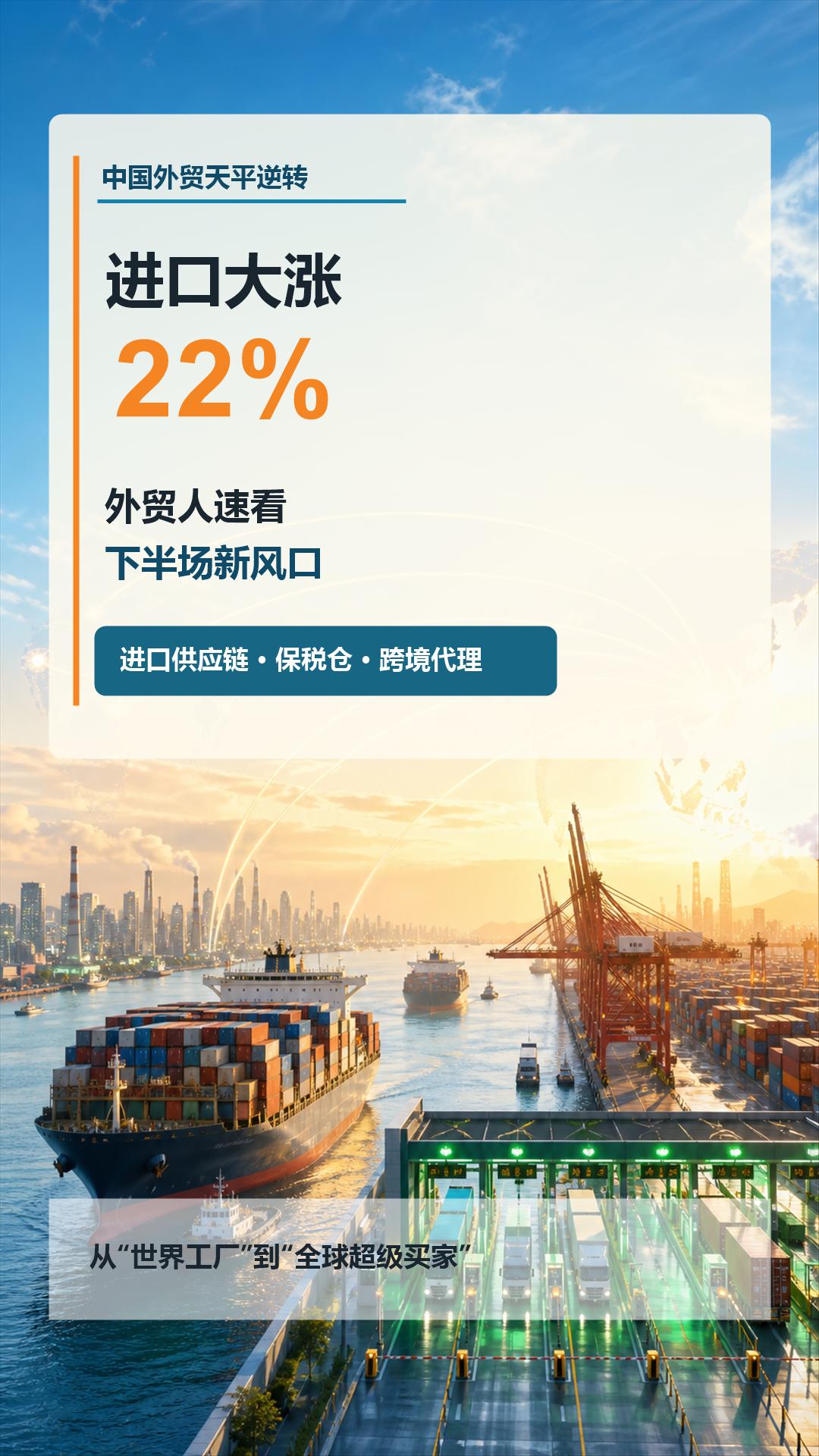
 China's foreign trade sees a turnaround: imports surge by 22%! Foreign trade professionals should quickly take note of the new trends in the second half of the year
 What Does a Global Traffic Ecosystem Service Provider Do? What Are the Differences from a Single Advertising Agency

Related Products
 EasyCamp SaaS Smart Website Marketing SystemE-Yingbao SaaS Smart Website Marketing System: AI-powered, zero-code website building. Rapidly launch multilingual independent e-commerce sites in just 10 minutes. Global server acceleration and AI-driven SEO optimization empower businesses to efficiently connect with global markets. The seamless integration of technology and user-friendly operation makes building e-commerce sites incredibly simple.
 AI+SEM Intelligent Advertising Marketing SystemAI+SEM drives intelligent ad creation, empowering full-funnel precision advertising marketing. The system automatically generates weekly/monthly reports, AI recommends keywords and target countries, monitors core metrics in real-time with intelligent alerts, and enables one-click high-conversion ad solutions to help quickly acquire customers and improve ROI.
 AI+SEO Dual Engine Optimization ServiceEasyWin AI+SEO Dual Engine Optimization System leverages AI-powered keyword mining, content generation, and comprehensive technical optimization to help foreign trade enterprises acquire high-quality organic traffic, significantly improving search rankings and conversion rates.
 AI+SNS Social Media Marketing SystemYingbao AI+SNS Social Media Marketing System - Precision social capture for the social media era. Supports one-click content synchronization across major platforms like Facebook and LinkedIn. AI intelligently rewrites posts for enhanced relevance. 24/7 AI customer service and user profiling analysis empower businesses to efficiently expand into global markets.
 AI+SEO营销解决方案易营宝AI+SEO营销解决方案,通过AI批量写作、智能生成TDK、精准关键词扩词等功能,全面优化网站SEO效果,提升流量与转化率。助力企业构建高效智能网站新生态。
 AI+SEM Advertising Marketing SolutionsAI+SEM Advertising Marketing Solution leverages AI technology to deeply empower SEM ad campaigns. It automatically generates weekly/monthly reports using AI, presenting account data across multiple dimensions for comprehensive insights into campaign performance and trends. The system precisely recommends keywords and target countries, intelligently generates high-conversion ad copy, and enables one-click activation of efficient campaign plans to help businesses rapidly acquire customers. Simultaneously, it monitors core metrics in real time, intelligently identifies abnormal fluctuations, and issues timely alerts to ensure stable, high-return advertising results.
 Domain Name ServicesEasyWin provides professional domain name services, including intelligent queries, one-stop registration, brand protection, and full lifecycle management, helping businesses build a digital brand image.
 EasyOperate B2C Cross-Border E-Commerce Platform & Independent WebsiteEasyStore B2C Cross-border E-commerce Independent Store is an intelligent website building and cross-border e-commerce integrated solution independently developed by EasyStore Information Technology (Beijing) Co., Ltd. The system is specially designed for small and medium-sized as well as large export enterprises, integrating 'website building, operation, marketing, advertising, and conversion' into one, helping enterprises quickly establish cross-border e-commerce independent stores to achieve brand globalization and global sales growth.
The platform supports multiple languages, multiple currencies, and multi-channel marketing, with built-in AI intelligent translation and SEO optimization systems, suitable for mainstream markets such as Southeast Asia, Europe and America, Latin America, and the Middle East, assisting Chinese manufacturing enterprises in efficiently deploying international e-commerce strategies. SSL证书易营宝提供专业SSL安全证书服务,包括单域名和泛域名证书,确保网站数据传输加密、身份验证和完整性保护,助力企业建立安全可信的在线业务环境。









